The Mind-Body-Emotion Circuit: Learning How to Respond on Purpose

By Jill Szoo Wilson

In acting, emotion is often treated as the goal. Many students arrive hoping to unlock a secret reservoir of feeling, as if tears or rage or heartbreak could be summoned by force of will alone. Yet experienced artists and psychological researchers alike know that emotion resists direct manipulation. The human heart refuses to be commanded. Instead, emotion tends to emerge as a consequence of the way we think and move through the world. This reality, long understood intuitively by actors, has now been documented in cognitive and behavioral science. As Meisner observed, performance becomes truthful only when the actor lives with authenticity inside imagined circumstances rather than attempting to manufacture emotional display on cue (Meisner & Longwell, 1987).

This understanding is essential in my work as an acting teacher. One of my current private students, whom I will call Paige, embodies the determination required to bridge intellect, body, and imagination. She asks thoughtful questions, listens without pretense, and possesses a grounded confidence that draws others toward her. In the studio, she is learning that the actor’s instrument is not the voice alone, nor the body alone, nor even the mind alone, but the constant interplay among them. When that interplay is disrupted, performance becomes flat and disconnected. When it flows, the actor’s work becomes alive.

To explain this interplay, I teach what I call the mind-body circuit, a cycle rooted in both performance pedagogy and psychology: thought → emotion → action → new thought → emotion → action, and so on. The sequence appears simple, yet it reveals something profound. The actor can enter it through thought or action, but rarely through emotion alone. Emotion depends on a catalyst. It responds to meaning and circumstance. This is why actors who begin with the desire to “feel sad” or “play anger” inevitably fall into generalization. They are grasping at the byproduct rather than engaging the cause.

Directors and psychologists alike recognize that embodied behavior shapes inner life. Neuroscientist Antonio Damasio describes the body as a “theater of feeling,” where emotion is both generated and displayed through motion and sensation (1999). Onstage, this principle becomes visible in dramatic form. To demonstrate this, I once handed a student a hammer and instructed him to break scrap wood in character for thirty seconds. The task was intentionally physical, forceful, and resistant, because the body cannot remain neutral when exerting strength against an object that pushes back. There was no discussion of backstory or psychology. The action demanded urgency and focus, which silenced self-consciousness and awakened the nervous system. As the student swung the hammer, his breath shifted, muscles tensed, and emotion surfaced unbidden. Within moments, he found himself articulating thoughts and personal stakes that had felt inaccessible when he tried to intellectualize his way toward feeling. Stanislavski identified this phenomenon nearly a century ago: “In the beginning, you must not settle matters of feeling. Begin with the action” (1936).

There are other occasions when thought becomes the most generative entry point into the mind-body circuit. During rehearsals for Hamlet, Paige and I worked through a scene in which Ophelia confronts a lover who, until recently, adored her. Before this scene, Hamlet has pursued Ophelia with gentle attention and romantic promise. He has spoken of love and a future together. Then suddenly, with no explanation she can understand, he turns on her. He tells her she should enter a convent, that she should never marry, never bear children, never bring more life into a world he now condemns. At first, Paige named her character’s feelings: confusion, concern, hurt. These were legitimate emotional states, but they did not yet clarify what Ophelia believed was happening or what she needed in response. We returned to the text to articulate the specific rupture: this is not Hamlet being odd or distracted; this is Hamlet erasing their entire future with a single, devastating reversal. Once Paige understood that she was experiencing rejection not only of affection but of identity, legacy, and security, her body changed. Her posture leaned forward, breath tightened, and she instinctively reached toward her scene partner, trying to recover the man she once knew. Thought created meaning. Meaning triggered emotion. Emotion propelled action. The circuit closed into a continuous chain.

Psychologist Richard Lazarus offers a framework in which emotion arises from the mind’s effort to interpret and evaluate experience. He proposed that individuals engage in a form of cognitive appraisal, a rapid assessment of what an event means for one’s safety, identity, or sense of belonging, followed by an assessment of whether one has the capacity to respond (Lazarus, 1991). Through this process, emotion becomes a reflection of significance. Fear signals the presence of danger. Grief testifies to the worth of what was lost. Anger reveals a boundary that matters. These meanings take shape first in the mind, then move through the body as behavior and physiological response. Acting technique embraces this sequence. When the actor fully recognizes the stakes—the value of the moment, the cost of failure, and the depth of desire—inner life begins to organize itself accordingly. The heartbeat quickens, posture shifts, and voice carries urgency. Stella Adler emphasized this principle in her own vocabulary, insisting that powerful performance grows from vivid circumstances and clearly drawn stakes. “You have to have a life,” she wrote, “so that you can bring something to the stage” (Adler, 2000). Through this kind of interpretation, the actor does not strive for emotion; instead, the emotional experience grows naturally from an understanding of what the story demands.

The insights found in performance theory also apply broadly to human interaction. Consider a common moment of betrayal between friends. One friend learns that another has broken confidence. Immediately, thought begins to organize meaning: She violated our trust. That thought produces feeling: anger, hurt, humiliation. The emotion then provokes action: perhaps a confrontational text or a cold withdrawal. In ordinary life, we navigate this circuit constantly, often unconsciously. Acting simply requires that we notice, name, and render the process visible.

Actors become investigators of cause and effect, tracing the thread from impulse to action with the curiosity of scientists and the sensitivity of artists. Within the rehearsal room, questions take on the weight of inquiry: What shift redefines the moment? What desire rises beneath the surface of my breath? What force complicates that desire? Which strategy carries the greatest hope of success? These questions reach beyond technique. They cultivate a heightened awareness of the subtle negotiations between inner experience and outward behavior. Through this discipline, actors recognize emotion as a current generated by the convergence of thought, intention, and physical choice. When these elements align, audiences engage instinctively with the authenticity of the performance, sensing a unified direction in every gesture and word. Emotional truth grows from coherence, and the stage becomes a place where meaning moves through a living body.

When Paige recently completed a difficult scene, she paused and said with surprise, “I finally felt something I wasn’t trying to feel! That was amazing! And terrifying.” In that moment, she encountered the paradox that defines the work. Emotion, once chased, becomes elusive. Emotion, once approached through purposeful action and clarified meaning, becomes inevitable. The mind-body circuit had connected, and she no longer had to reach for authenticity. It arrived.

Actors remind us that the human body carries intelligence of its own. Thought shapes emotion. Emotion prepares movement. Action generates new meaning. The circuit continues, alive and responsive. When actors understand this relationship, they work with the grain of their own humanity rather than pushing against it. They can shape a truthful inner life by pursuing clear objectives, taking bold physical action, and recognizing what matters in each moment of the story.

This is the heartbeat of the craft. Acting trains us to observe how feelings arise, how impulses travel, how the body communicates meaning long before words appear. Performers practice this awareness with intention, so audiences can recognize themselves in the characters before them. The mind-body circuit is not only a technique; it is a reminder of how people operate in the real world. We feel because something has happened. We respond because something matters.

Paige experienced this discovery in rehearsal. She did not demand emotion. She followed the logic of the moment, committed to the physical truth of the scene, and allowed meaning to do its work. The emotion arrived when it had something to say.

References

  • Adler, S. (2000). The Art of Acting. Applause Books.
  • Damasio, A. (1999). The Feeling of What Happens: Body and Emotion in the Making of Consciousness. Harcourt.
  • Lazarus, R. (1991). Emotion and Adaptation. Oxford University Press.
  • Meisner, S., & Longwell, D. (1987). Sanford Meisner on Acting. Vintage Books.
  • Stanislavski, K. (1936). An Actor Prepares. Theatre Arts.
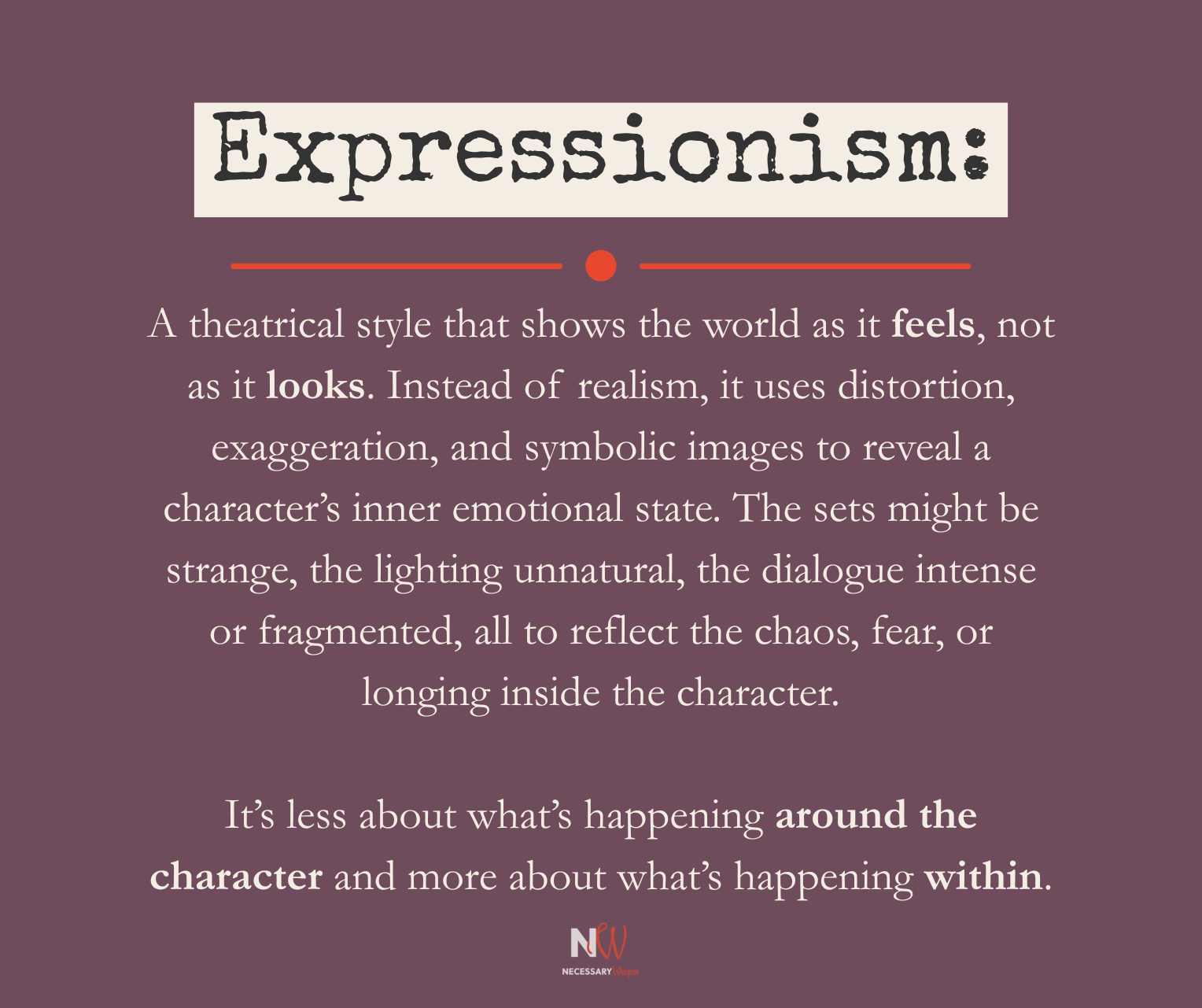
Expressionism in Storytelling: The Graduate as Psychological Landscape


By Jill Szoo Wilson

The early twentieth century cracked most of us wide open. World War I had just annihilated an entire generation of young men. Empires collapsed. The old order—monarchies, religious authority, philosophical certainty—gave way to disillusionment, cynicism, and grief. In the ashes of this upheaval, Europe faced a spiritual crisis. The machine age promised progress but brought with it dehumanization. Capitalism swelled. Cities exploded. Laborers were alienated from their work, and communities from one another. Even language seemed to falter under the weight of so much loss.

Expressionism emerged not just as an aesthetic reaction but as a psychological necessity. It rose in Germany just before and after the First World War, when artists, writers, and thinkers could no longer trust polite forms or representational art to convey the depth of their unrest. The goal was no longer to describe the world, but to reveal what it felt like to live inside its unraveling.

Expressionism didn’t aim to reflect reality. It aimed to confront it. To scream. To force the invisible into view. It distorted shape and color. It abandoned polite storytelling. It turned theatre into a site of emotional exposure. Art no longer asked to be admired. It demanded to be felt.

Playwrights like Georg Kaiser and Ernst Toller wrote not from detachment, but from fever. Their characters howled, wandered, broke open. In From Morn to Midnight, Kaiser’s bank clerk steals a fortune in search of meaning, only to spiral into surreal chaos. Toller’s Man and the Masses, written from a prison cell, thrusts its characters into revolution and despair. These weren’t dramas about individuals so much as spiritual X-rays. The characters bled longing and confusion. Their journeys didn’t resolve. They collapsed under the weight of their own yearning.

Expressionist theatre rejected realism’s comfort. Sets twisted into unnatural angles. Shadows devoured space. Costumes hinted at archetype, not personality. Actors moved like puppets or machines, tracing patterns that suggested they weren’t free but shaped, warped by invisible forces. The stage no longer depicted a living room. It became a mind under pressure, a soul under siege.

And that pressure had a point. Expressionism didn’t aim to confuse. It aimed to rupture numbness. When language failed, characters shouted. When logic failed, time fractured. These stories didn’t ask the audience to observe. They asked them to wake up.

In America, Expressionism evolved but kept its urgency. Elmer Rice’s The Adding Machine followed Mr. Zero, an accountant replaced by a machine. Rice filled the play with grotesque figures and abstract settings. Mr. Zero’s afterlife felt as soulless as the office he left behind. Rice didn’t mourn Zero’s death. He exposed the deeper loss, his humanity erased long before he died.

Eugene O’Neill pushed further. In The Hairy Ape, a laborer named Yank fights to belong. Society mocks him. His voice frays. His movements grow brutal. By the final scene, he collapses in the arms of a caged gorilla, an image that cuts through metaphor. O’Neill doesn’t leave us with an explanation. He leaves us with an ache.

Expressionism isn’t hopeless. It hungers for clarity. It distorts not to destroy but to reveal. Its jagged lines point toward the truth realism can’t hold. When a character screams, the play doesn’t collapse. It breaks open. When light slants the wrong way or dialogue shatters, the illusion doesn’t fail. The truth steps in.

We still feel Expressionism’s pulse. Sarah Kane’s ferocity. Caryl Churchill’s fragmentation. Tony Kushner’s haunted tenderness. Expressionism slips into modern theatre whenever the world grows too quiet in the face of pain, whenever the surface hides too much.

It isn’t just a style. It is a reckoning. A fever. A mirror held not to the face but to the soul. It asks: What happens when we can no longer live in the shape the world gives us?

Expressionism dares to answer.

Rather than linger in Expressionism’s most extreme forms, I turn to a work that adapts its methods into a form I deeply admire, Mike Nichols’s 1967 film The Graduate. The film’s visual style, psychological tone, and narrative dissonance make it a compelling case study in the expressionist tradition.

Expressionism in The Graduate

At first glance, The Graduate appears to follow the conventions of a coming-of-age film. A young man, freshly graduated, faces an uncertain future and becomes entangled in an ill-advised affair. Beneath this seemingly straightforward narrative, however, lies a visual and emotional language rooted in Expressionism. The film does not simply tell Benjamin Braddock’s story. It externalizes his interior confusion, dread, and alienation. The world around him is not stable, neutral, or whole. It reflects his fragmentation, and in doing so, the film belongs squarely in the lineage of Expressionistic art.

Acting: Detachment as Performance

Dustin Hoffman’s performance as Benjamin is notable for its restraint, bordering at times on paralysis. His movements are minimal. His facial expressions often remain blank or subtly off-beat. Rather than embodying a dynamic protagonist, he seems to shrink from action, as though something larger and oppressive is pressing in on him. This is not naturalism. It is stylized inertia. His presence becomes a kind of void, an anti-performance that reflects his disorientation and disengagement from the roles others assign him.

Consider the scene in which Benjamin lies motionless on a pool float, wearing dark sunglasses, while adult voices fade into indistinct murmurs. His body drifts passively, and his detachment becomes the performance itself. Rather than reacting with visible distress, he absorbs the world silently, embodying the alienation that defines expressionistic characterizations. The acting here is not a mirror to life. It is a mirror to inner collapse.

Cinematography: Psychological Dissonance in the Frame

Expressionism often distorts physical reality to convey inner emotion. The Graduate achieves this not through gothic architecture or grotesque sets, but through the camera’s choices. Director Mike Nichols and cinematographer Robert Surtees use framing, lens distortion, and mise-en-scène to make the real feel unreal. We are not merely observing Benjamin’s life. We are trapped in the geometry of his unease.

Wide-angle shots often dwarf Benjamin within sterile, oversized rooms, rendering him absurdly small in the frame. Hallways stretch unnaturally long. Mrs. Robinson is sometimes shot from above, with Benjamin framed below her knee, heightening the power imbalance and psychological tension. In one iconic transition, Benjamin jumps onto a pool raft, and without warning, the cut places him landing on top of Mrs. Robinson in bed. This dreamlike crossfade collapses time and logic. It does not follow realism. It follows Benjamin’s unmoored state of mind.

Mirrors, glass, and reflections appear frequently, creating fractured images and optical illusions that heighten the sense of internal dissonance. In one moment, Benjamin is framed through an aquarium tank, the water warping the view, the fish circling indifferently. He is submerged even when dry. He is drowning in plain air.

This moment distills Expressionism’s essence in cinematic form.

This is a brilliant moment of Expressionism in The Graduate

Story Structure: Alienation Disguised as Plot

While the plot moves forward, Benjamin does not. This, too, is expressionistic. In traditional dramatic structure, a character undergoes change. In Expressionist storytelling, the outer events expose the inner stasis. Benjamin tries to follow the story expected of him, graduate, choose a career, marry a girl, but each step is undertaken without conviction. His decisions feel reactive, almost dreamlike, more compelled than chosen. This passivity echoes the Expressionist stage tradition, in which characters function less as agents and more as vessels for existential commentary.

The film’s climax offers no catharsis. Benjamin interrupts Elaine’s wedding, they flee together, and they board a bus. But the camera lingers. Their triumphant smiles fade. The silence stretches. They look ahead, unsure of what they have actually done. This ending, unresolved, haunting, and deflated, refuses the narrative closure of romance or rebellion. It reasserts the alienation that has haunted the entire film.

As the bus carries them into an uncertain future, the film closes not with hope, but with a question. Who are we when all our roles are abandoned? What remains when we are no longer performing?

Conclusion: Expressionism’s Living Legacy

The Graduate draws from Expressionism not only in style but in spirit. It resists realism’s promise of resolution and instead immerses the viewer in a fractured world shaped by emotional truth. It belongs to the same lineage that birthed The Hairy Ape and The Adding Machine, a lineage that does not ask us to observe but to awaken. Though the techniques have evolved, the impulse remains the same. Expressionism endures wherever truth refuses to stay flat, wherever form bends to reflect feeling, and wherever art dares to reveal the soul behind the surface.

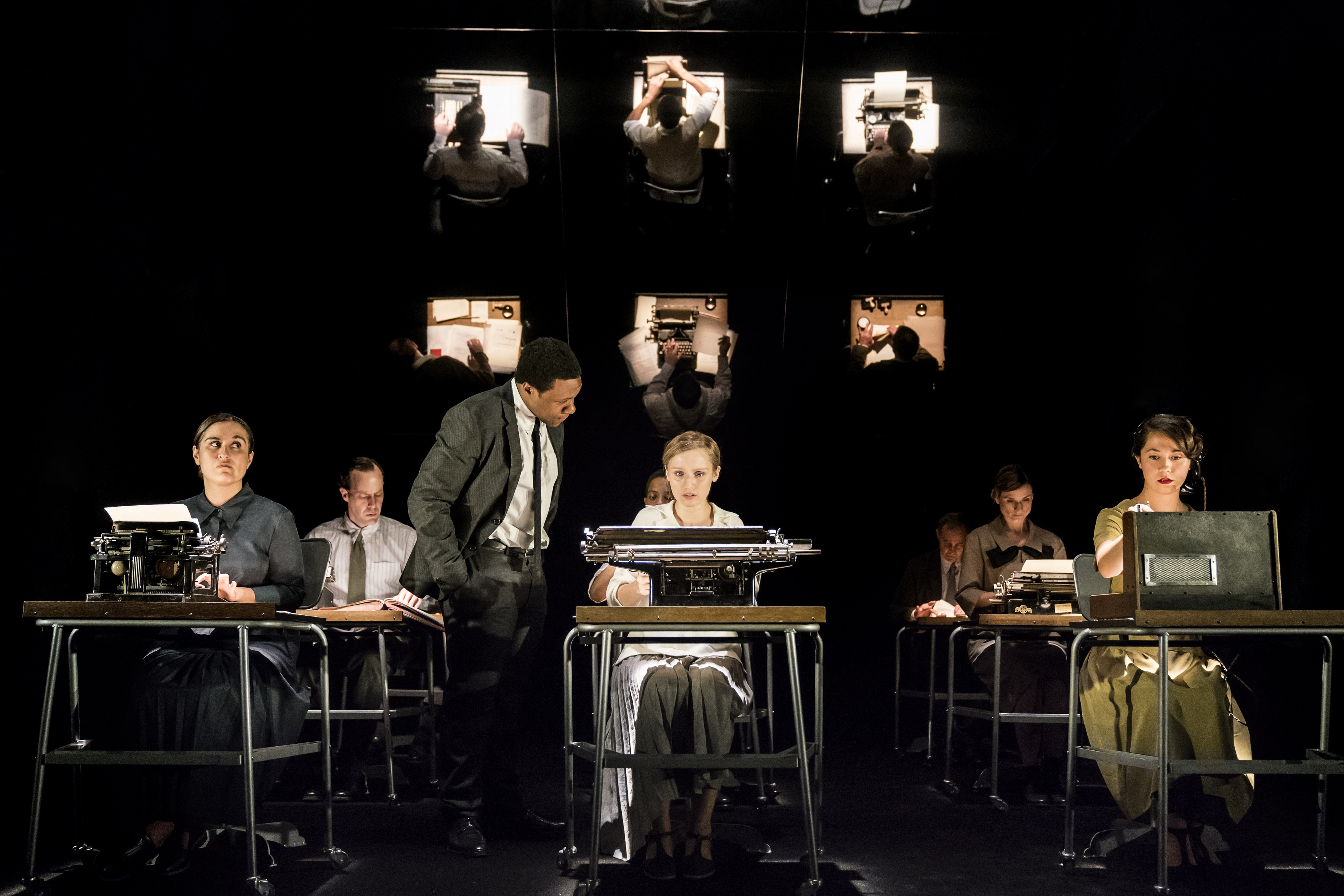
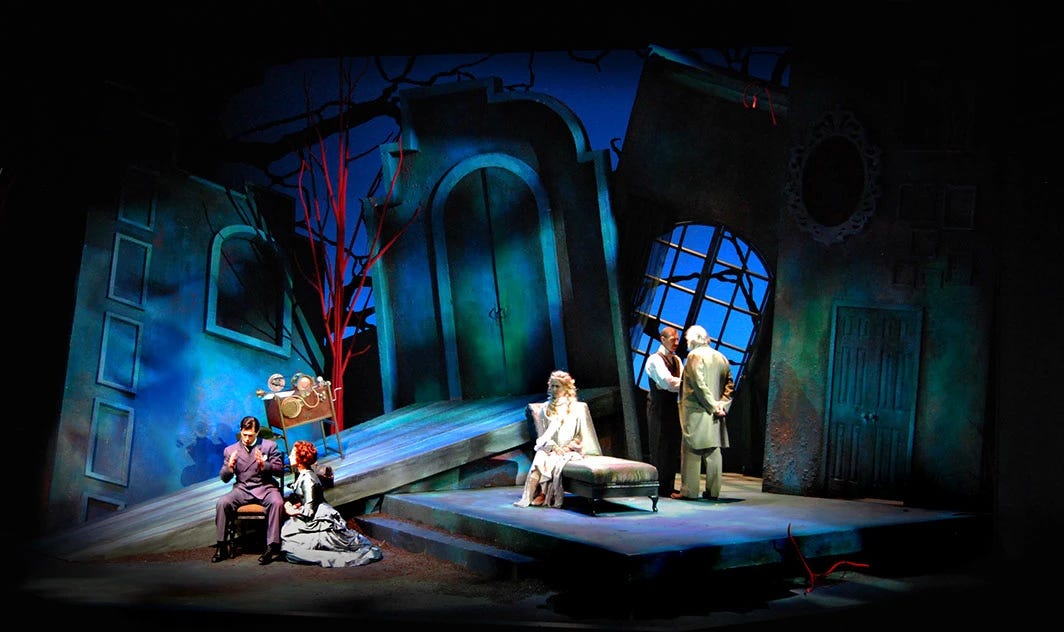
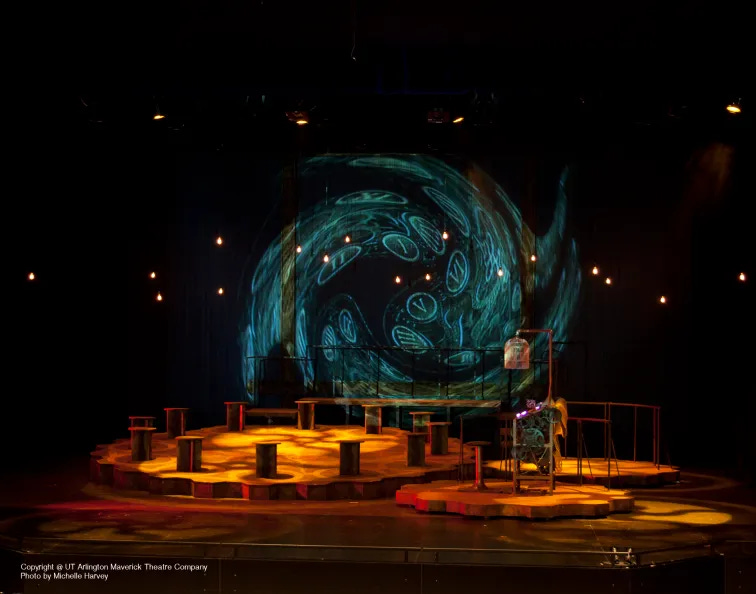
Examples of Expressionistic Set Designs

Machinal, Set Designer Miriam Buether
Dracula, Set Designer Kim A. Tolman
The Adding Machine

✨ If you’d like to keep reading more essays like this, you can also find Jill Szoo Wilson on Substack: https://substack.com/@jillszoowilson

The Courage to Imagine: Acting, Attention, and the Recovery of Interior Life


By Jill Szoo Wilson

Prologue

What follows are some specific thoughts on the role of the imagination and how I’m witnessing a slow decline in students’ ability to stick with a moment of “play” or creative imagination long enough to reach the truth embedded in the script.

When I began as a private acting coach a couple of decades ago, nearly all my students were either homeschooled or from Christian backgrounds. This was largely due to the environment in which I began. I had just graduated from a Christian university with my MFA in Acting and Directing for Theatre. During my time there, I helped design and launch a summer theatre camp, which drew a large following from the homeschool community. Many of those kids continued lessons with me long after camp was over.

Today, most of my students are no longer homeschooled, but many are still Christian. This is probably because many of my students already share a Christian worldview, and my teaching naturally aligns with it. I teach them how to act with technical skill, emotional honesty, and respect for the craft, as well as how to be artists and professionals in what is often a dark industry. We talk openly about integrity, boundaries, and how to navigate the pressures and temptations that come with performance culture. My goal is not just to prepare them for auditions or roles, but to help them become thoughtful, resilient artists who can carry the light of Christ into places where it’s often absent. I don’t market specifically to Christian students, but we have plenty of reasons to find each other and to enjoy working together.

That said, I do find that young Christian students tend to struggle with guilt and shame to a particularly high degree during the rehearsal process. We talk about it often. While I always choose material that is age-appropriate and content-appropriate for every student (and for myself, as I don’t enjoy lascivious or graphic pieces either), those who grew up in the church—Catholic, Lutheran, Evangelical, etc.—often feel very self-conscious as actors when they begin.

Girls are taught to be kind, service-oriented, loving, and demure. Boys are taught to be tough, heroic, good, and sensitive to the needs of others. These are all admirable traits. To be a man or woman of virtue, exhibiting the Fruit of the Spirit, should lie at the heart of our longing to be more like Christ. I could easily veer into an essay about how to marry our faith with our work, but for the sake of this particular piece, I’ll return to the central idea:

Christian students often struggle to play characters who don’t look like themselves or like those they aspire to become. Fair enough. But here’s the truth: life is full of good and evil. Villains and heroes. Builders and those who destroy. Most of us, over the course of a lifetime, are both. We’re all villains to some and heroes to others. We know what it is to build, and we know what it is to wound. To pretend otherwise is to whitewash life and ourselves, which usually leads to hiding in one way or another. So, it’s important for me to talk about redemptive stories with my students so they can confront this dichotomy rather than fearing it.

There are two kinds of redemptive stories: those that show us the good things that happen when we choose well, and those that show us the damage that occurs when we don’t.

That’s a simplified way to put it, but given that my students range in age from eight to fifty-five, the universality of this statement is often helpful to everyone for different reasons.

So, what do we do with the villains in the plays we read? What do we do when we agree to play Lady Macbeth in Macbeth, Regan in King Lear, or Medea in the title role? And what about Iago in Othello, Richard III, or Judge Turpin in Sweeney Todd? Do we flatten the character to fit inside our comfort zone? Do we avoid even considering the thought process of a conniver? Do we soften Medea’s rage to make the role more “Christian”?

I certainly hope not! If we do, we’re not being truthful. We’re pretending we never act with malice, selfishness, or harm. And if we refuse to embody those moments in a role—if we never stop to consider the villain’s position—we are denying ourselves an opportunity to understand something essential: that evil is not always monstrous or distant. Sometimes it begins with resentment. Or jealousy. Or the belief that we deserve more than we’ve received. Sometimes it begins with a wound. To engage that truth in rehearsal is not to condone it, but to confront it honestly. That kind of imaginative empathy sharpens discernment. It invites self-examination. It strengthens our ability to recognize corruption when it appears in ourselves or others. To avoid this work is not only to limit our range as actors, but to remain shallow as people.

Most of us will never seize power and destroy our father like Regan. Most of us will never seduce a woman named Lady Anne over her father-in-law’s corpse like Richard III. But if we take the time to understand the goodness of God and the brokenness of the world, we can, as Aristotle suggested, experience catharsis and reason together: I will not seduce. I will not murder. I’ve seen what happens when people do.

What follows are thoughts on the role of imagination in the life of an actor. To live truthfully in imaginary circumstances, we must first be willing to imagine.

The Studio and the Threshold of Imagination

This morning, I sat across from a college-aged student in a small studio, the kind with a well-worn rehearsal floor and no mirrors to distract. She was working through a dramatic monologue from King John, trying to locate the inner grief of Constance as she mourns the disappearance of her son, Arthur. The lines are some of Shakespeare’s most anguished:

“I am not mad; I would to heaven I were, For then ’tis like I should forget myself. O, if I could, what grief should I forget!”

My student is brilliant. She’s bright-eyed, classically educated, and emotionally intuitive. She understands the language and the circumstances. She grasps the weight of the moment intellectually. And yet, she struggles to connect with it fully. Her technique is solid. She found the beats and shifted breath and focus in the right places. The anguish, however, stayed on the surface and heightened. Her performance was more inferred than embodied, and she remained ungrounded.

So I gave her a note I’ve given many actors before her: “Particularize your son.” She nodded. She knew what I meant.

In actor training, particularly within the Meisner tradition, particularization is a foundational method for grounding performance in emotional truth, and it’s often misunderstood. Particularization in Meisner’s framework is not the same as the imaginative substitution associated with Stanislavski’s “Magic If.” The “Magic If” asks the actor to imagine themselves in the character’s situation—”What would I do if my son were taken from me?”—and then to act from that imagined scenario. This technique can be useful, as it encourages imaginative entry into a character’s world. But it relies on hypothetical identification; on asking ‘what if’ rather than anchoring the moment in lived emotional truth.

Meisner’s approach is different. It does not rely on imagining how one might feel in a fictional situation. It asks the actor to bring something real into the room. Something personal, visceral, and emotionally immediate. When I asked my student to particularize her son, I was not asking her to pretend to be a grieving mother. I was asking her to locate, in her own life, a person whose loss would pierce her. It could be a nephew, a younger brother, a godchild; anyone she has known and loved. Particularization is not fantasy. It is emotional preparation. The actor identifies a core emotional truth and allows that truth to live inside the moment.

This act is deliberate and vulnerable. It involves risk, attention, and a willingness to be seen. Because the actor is not pretending to feel, they are allowing themselves to feel. They are not trying to generate an emotion; they are giving themselves permission to respond to something that already holds weight in their inner world. Meisner insisted that acting lives in behavior, not in ideas. The words of a script are not the truth. The behavior underneath the words is where the truth resides.

When an actor says, “My son is gone,” the goal is not to deliver the line convincingly. The goal is to experience the truth of the line in real time. To say it while bearing the weight of one’s own emotional stakes. Particularization enables this. It shifts the actor from performing to being.

Still, something was missing. Despite her strong technique, something in her body remained disengaged. The truth hovered at the edges of the performance but never fully arrived. She wore the grief like a garment, but it had not yet reached her center.

This is a moment I have seen many times before. The student understands everything intellectually. The beats are there. The breath work is honest. And still, something inside hesitates. The mind approaches something emotionally risky, and the body pulls back. It happens quickly, often invisibly. A short-circuit. A retreat from vulnerability.

They stop mid-imagining. Mid-feeling. Mid-play.

This phenomenon is increasingly common. The cause appears to be cultural. We are watching a generation experience limited access to its imaginative life, not from apathy or lack of talent, but from being conditioned to remain just outside the threshold of deep interiority.

What fractures their concentration? What prevents them from crossing into full imaginative immersion?

Several things come to mind.

Sanford Meisner defined good acting as “living truthfully under imaginary circumstances.” Acting depends on entering. The actor allows themselves to be changed by what they imagine. In those moments, fiction becomes felt reality.

Meisner’s exercises do not focus on displaying emotion. They create conditions in which emotion arises organically. The goal is to engage the body before the mind intervenes with commentary or self-protection. Acting, in this view, requires attention; deep, sustained, emotional attention.

This is where the struggle appears.

Many students today experience difficulty maintaining emotional attention beyond a few seconds. Their minds are quick. Their instincts are strong. Yet under the weight of prolonged inner focus, their attention fractures. This does not stem from apathy, but from exhaustion. Their habits have been shaped by technologies and cultural rhythms that favor speed, fragmentation, and external validation over interior stillness.

A 2022 study published in Nature Communications found that global attention spans as measured by patterns of media engagement, have diminished over the past two decades. Our minds now pursue novelty more than depth. This shift influences more than productivity. It reshapes presence itself. It reconfigures the architecture of imagination.

Where actors once learned to build an imagined world and dwell in it, students today often find themselves pulled back by an invisible thread. They experience the impulse to check, to hesitate, to self-correct. Even in silence, they sense an audience. When external attention dominates, internal vision struggles to take root.

What I observe in the studio speaks to more than acting. It reflects a broader cultural wound. A drifting away from solitude. A quiet that grows more elusive. A loss of what the educator Charlotte Mason called “the habit of the reflective life.” In Mason’s view, imagination is a moral capacity. To imagine well is to love well. The capacity to enter another’s experience nurtures empathy, endurance, and attention. Like any virtue, it strengthens through practice.

How does one train imagination in a world of interruption?

This erosion of imaginative endurance presents a pressing concern. It reaches beyond the artist. It speaks to anyone seeking a meaningful existence amid constant noise. The deep spaces where empathy takes form, convictions clarify, and quiet truths surface depend on interior cultivation. A society that nurtures imagination forms individuals who respond with discernment and depth.

Classical educators have long understood the affinity between imagination and truth. Plato, though cautious of the poets, affirmed that metaphor helps the soul ascend toward the Good. Aristotle praised catharsis as a soul-cleansing process through imitation. Centuries later, C. S. Lewis called imagination the “organ of meaning.” Through it, knowledge gains emotional resonance. Facts become deeply known.

Contemporary students navigate a world full of information and comparisons. Previous generations may have asked, “Will I do something meaningful?” Today’s students often wonder, “Can I create something distinct enough to matter?”

This is the cost of saturation. So many voices, so many images, so many claims on the imagination cause silence to feel irrelevant. Stillness begins to feel misaligned with progress. In such an environment, the long breath required for full imaginative entry feels like a rarity.

And yet that long breath must return. We can help restore it.

Imagination brings shape to stories. It deepens relationships. It sustains a sense of mystery, sacredness, beauty, and possibility. Rather than vanishing, imagination waits. It remains present beneath the surface noise. It endures through fractured attention and abandoned moments of thought. It waits for breath. For solitude. For the courage to enter again.

In my work with students, I encourage them to slow down, not as a strategy, but as a way of being. They are learning to stay present inside a moment, linger with an image, and let silence stretch. Not everything needs to resolve quickly. Some truths arrive only through stillness, and meaning often deepens through sustained practice rather than polished execution.

Imagination does not pull us away from the world. It grounds us more deeply in it. It sharpens perception. It draws our focus toward what lasts. This is why Shakespeare continues to speak, and why Meisner’s invitation to live truthfully in imagined circumstances still carries weight. These are not artistic artifacts. They are instruments of renewal.

✨ If you’d like to keep reading more essays like this, you can also find me on Substack: https://substack.com/@jillszoowilson

The Cost of Becoming: Willy Loman and the Collapse of the Performed Self


By Jill Szoo Wilson

Prologue: Playing Willy Loman

Before one analyzes Willy Loman, one must attempt to inhabit him. The work of the actor offers more than interpretation; it offers a way into his psychology. The Meisner technique, which trains actors to live truthfully under imaginary circumstances, demands that a character be approached not as a symbol or a mood, but as a person with specific objectives. The actor does not play a man who is sad, but a man trying to appear happy. One does not play drunkenness, but the effort to walk in a straight line. One does not play collapse, but the relentless pursuit of control.

This approach becomes essential in performing Willy. He cannot be played as someone unraveling. He must be played as someone still trying to climb. He is not aware of his disintegration. He is fighting it. The tension in his voice, the urgency in his gait, and the rhythm of his speech can all reveal a man still chasing validation, still working to prove himself, still trying to matter.

Just as a villain does not see himself as a villain, the actor playing Willy must believe in the truth of the character’s motivations. Willy believes in the story he tells. The sales pitch is not a metaphor to him; it’s survival. Every gesture carries the imprint of past successes. Every pause contains the weight of unseen failure. His tragedy is not that he has given up, but that he cannot. His pursuit has become his identity.

The actor must approach each moment with this in mind. Willy is not asking for pity. He is asking to be heard, to be remembered, to be great. Even in his most fractured scenes, he is still performing the role of the man he once hoped to be. That performance is what ultimately breaks him.

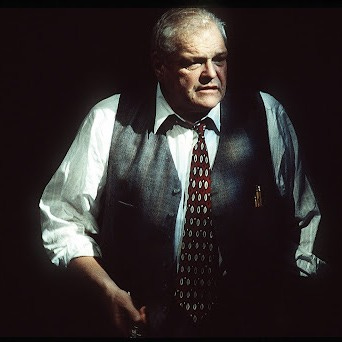
Brian Dennehy played Willy Loman on Broadway in the early 2000s. I had the pleasure of seeing this production in person.

Introduction

In the years following World War II, American culture embraced the idea that prosperity would generate both comfort and cohesion: a sense of stability, belonging, and self-worth rooted in home ownership, upward mobility, and steady employment. The war had ended in victory, the suburbs were blooming, and economic expansion offered a vision of order that felt both new and enduring. This was a time of rising optimism, when the pursuit of the American Dream—embodied in hard work, domestic life, and professional success—was framed as a moral ideal. To believe in that dream was to place oneself inside a shared national story. A meaningful life, it seemed, could be earned through effort and aspiration.

Arthur Miller’s Death of a Salesman confronts the unraveling of that story. At its center stands Willy Loman, a traveling salesman whose crisis begins in the workplace and spills into the core of his identity. His crisis is not only economic but existential. As the play unfolds, we encounter a man whose inner life begins to dissolve: his memories crowd the present, his sense of time becomes unstable, and his relationships erode. Miller’s dramatic world offers more than a critique of economic pressure; it becomes a crucible in which identity itself bends and breaks.

This essay explores how Death of a Salesman dramatizes the collapse of identity when it is built on an external ideal. Through its fragmented structure, expressionist form, and intergenerational tension, the play traces the unraveling of Willy Loman, a man whose self-worth depends on a version of success shaped by visibility, wealth, and admiration. Though rooted in social realism, the play frequently breaks from naturalistic conventions, blending realism with expressionism to capture the fragmentation of Willy’s mind. Cultural messages about achievement, the burden of familial expectation, and the seductive pull of nostalgia all conspire to distort his self-concept. At its heart, Miller’s work raises a haunting question: What remains of the self when it is built on a dream that was never truly one’s own?

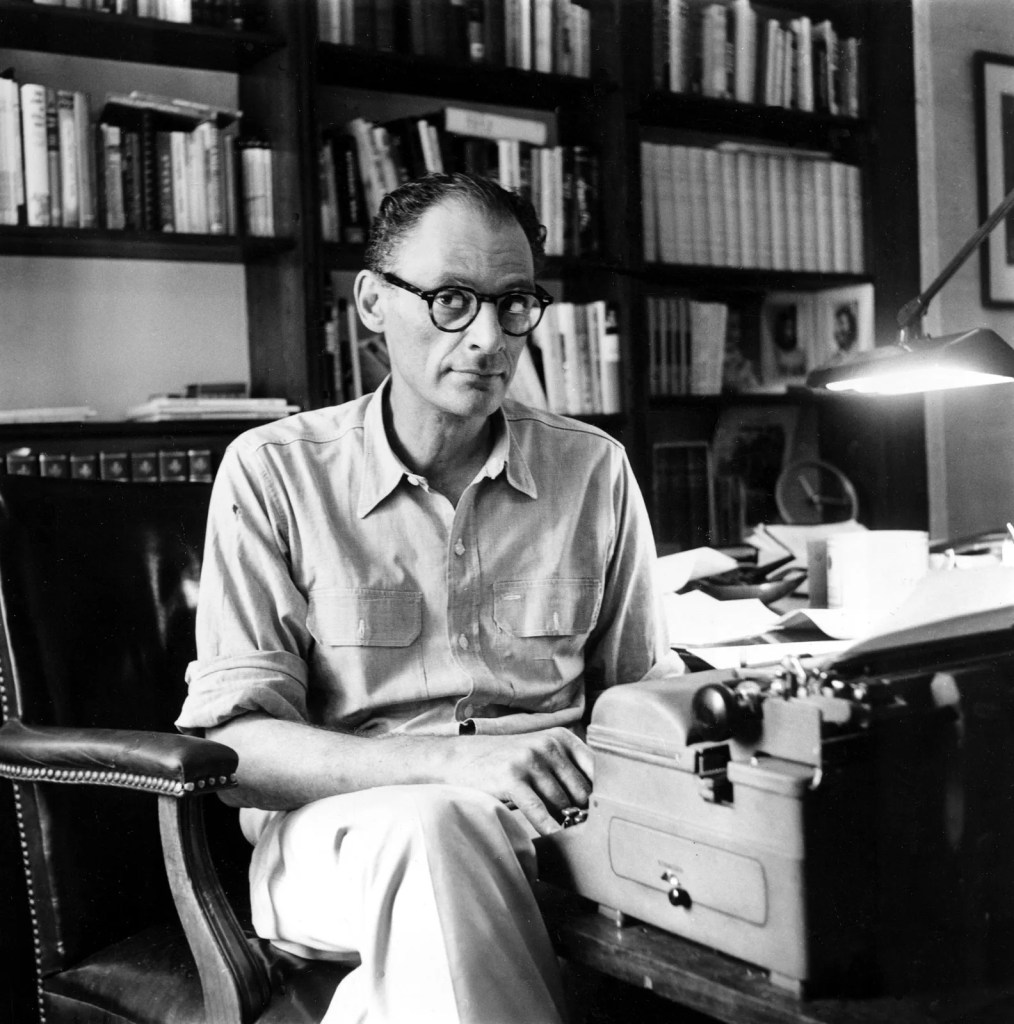
Arthur Miller, playwright.

Section I: Early Formations of Selfhood

Willy Loman emerges as a man profoundly shaped by the cultural messages of postwar America. From the outset, his understanding of worth is externalized. He believes that being well-liked is the key to success, repeating the idea that popularity and personal charisma matter more than skill. This philosophy informs the way he raises his sons and evaluates his own life. Developmental psychologist Erik Erikson writes that “identity is formed through the interplay of biological givens and societal roles” (Identity: Youth and Crisis, 1968). For Willy, that interplay is dangerously out of sync. He confuses approval with value and presentation with substance.

His identity becomes performative, reliant on others’ perceptions. In his frequent recollections of his brother Ben, Willy shows how deeply he clings to mythic narratives. Ben represents everything Willy wishes he had become: wealthy, decisive, and respected. “When I walked into the jungle, I was seventeen. When I walked out, I was twenty-one. And, by God, I was rich!” (Miller 48). For Willy, this anecdote is more than family lore; it is a talisman against failure. In Ben, he sees proof that success is a singular, dazzling act, not a long process, but a moment of transformation. And so, Willy waits for his moment like a lion stalking prey already devoured by another. The instinct remains, but the opportunity has vanished. His belief in the singular triumph blinds him to the slow work of becoming.

Psychologist Carl Rogers suggests that when individuals base their self-worth on “conditions of worth” imposed by others, they lose touch with their authentic selves (On Becoming a Person, 1961). Willy embodies this distortion. Rather than cultivating a stable internal identity, he attaches his sense of self to external validation. He cannot separate his inner value from his outer performance.

Section II: The Rise and Fracture of Familial Expectations

Willy places immense hope in Biff, his eldest son. He does not dream for Biff so much as he dreams through him. Biff becomes a vessel for Willy’s projected success. In adolescence, Biff appears to mirror his father’s charisma and confidence. He is popular, athletic, and adored. Willy sees this as evidence that Biff will fulfill the dream he himself could not. “He’s liked, but not—well liked,” Willy says of Bernard, dismissing the boy’s academic seriousness in favor of Biff’s charm (23). The phrase reveals more than Willy intends. In his world, being “well liked” carries spiritual weight. It’s not just a social advantage; it’s a measure of worth. To be well liked is to be blessed, chosen, and affirmed by the invisible hand of success. Bernard’s intelligence is treated as a liability because it lacks sparkle. Biff’s charm, by contrast, is seen as currency. The line crystallizes Willy’s lifelong confusion: he mistakes attention for esteem, applause for substance.

Yet Biff’s admiration is shattered during a business trip to Boston, when he discovers his father in a hotel room with another woman. The moment of betrayal is not just personal. It is psychological. Biff loses the man he admired, and with him, the sense of self that admiration supported. “You fake! You phony little fake!” he cries (95). In that rupture, the illusion collapses. Willy is not the great man Biff thought him to be, and Biff is no longer sure who he is without that image.

Attachment theorist John Bowlby notes that disruptions in trust between parent and child can result in identity disturbance, particularly if the child has built his self-understanding on idealized images (Attachment and Loss, 1969). Biff’s identity fractures because it was co-authored by a man whose own foundation was false. The fallout of this moment ripples across the rest of the play. Biff wanders, lost in purpose and direction, while Willy clings harder to the fading vision of success.

Yet Biff’s wandering is not aimless. Unlike his father, who remains trapped in denial, Biff begins to pursue a kind of difficult truth. His disillusionment, though painful, marks the beginning of a reckoning. In the final scenes, Biff confronts the family’s illusions with unflinching honesty, declaring that they have “never told the truth for ten minutes in this house” (103). This attempt at truth-telling, however raw, becomes a redemptive thread. While Willy doubles down on fantasy, Biff reaches for clarity even if it costs him the dream.

Section III: Memory, Time, and Psychological Regression

Miller does not portray Willy’s collapse as linear. Instead, he creates a psychological architecture in which memory intrudes on the present. Walls dissolve. Characters from the past arrive as though no time has passed. This expressionist structure captures the erosion of Willy’s psychological boundaries. He no longer revisits memories; he inhabits them. They become both a refuge and a trap.

Freud’s theory of repetition compulsion provides a compelling psychological lens for understanding Willy’s psychological breakdown. Introduced in Beyond the Pleasure Principle (1920), the theory describes a phenomenon in which individuals unconsciously repeat painful or traumatic experiences, not in pursuit of pleasure, but in an attempt to gain mastery over a past that remains unresolved. The repetition is not intentional; it emerges from the psyche’s attempt to regain control by recreating the conditions of the original wound. The individual returns to the same emotional terrain again and again, hoping—without realizing it—to alter the outcome.

In Willy’s case, the past does not visit him as memory but as lived experience. He does not recall; he reinhabits. Conversations with Ben, moments with Biff, echoes of earlier days surface with increasing urgency. These scenes carry the weight of regret, but they also offer him temporary refuge. Within them, he can reassert his authority, recover the image of success, and briefly inhabit the man he once believed himself to be. Unfortunately for Willy, his compulsion to return does not resolve the trauma. It deepens it. Each reenactment sharpens the ache. The life he wants to rewrite instead writes over him.

As the play progresses, these revisitations grow more urgent. He speaks to voices no one else can hear. He replays conversations aloud. The present loses its clarity. Psychologist Aaron Beck writes that depression often leads to cognitive distortions that warp time perception and induce emotional paralysis (Cognitive Therapy of Depression, 1979). Willy exhibits these distortions. He cannot live in the now. His present is filled with regret and inadequacy. His past gleams with untouchable promise.

Section IV: The Psychology of Shame and Withdrawal

Shame is the undercurrent of Willy’s emotional decline. Though he claims to be working for his family, he increasingly isolates himself from them. Linda, his wife, tries to reach him, but he bristles at her concern. When she encourages him to ask his boss for a non-traveling job, he responds with irritation, accusing her of planting ideas in his head, as if her care undermines his dignity. Happy, his younger son, is met with indifference. Willy rarely engages him beyond superficial conversation and often overlooks him entirely in favor of Biff. Even Biff, who offers a kind of brutal honesty, is met with deflection. When Biff attempts to confront the family’s long-standing illusions, declaring that they have never told the truth for more than ten minutes in the house, Willy interrupts and retreats, unwilling to accept what his son is beginning to understand.

These fractured interactions are not just defensive. They are symptomatic of shame. Willy withdraws not out of malice but out of an internalized belief that he has failed the people he loves. The more he feels exposed, the more he distances himself.

Psychologist Brené Brown defines shame as the belief that one is unworthy of love and belonging (Daring Greatly, 2012). Willy lives inside that belief. He feels he has failed as a provider, as a father, and as a man. Rather than face these feelings directly, he retreats. He speaks more to the past than to the people around him.

This retreat mirrors what psychiatrist Thomas Joiner identifies as “perceived burdensomeness” in his theory of suicidal desire (Why People Die by Suicide, 2005). Willy begins to believe that his death will serve his family better than his life. He rationalizes that his life insurance payout will redeem him in Biff’s eyes. “That boy is going to be magnificent!” he declares, convinced that death can function as a final gift (135).

Miller frames this moment with compassion, not justification. He does not glorify Willy’s decision. Instead, he lets the audience feel the ache of a man who could not see his own worth without applause.

Section V: Aftermath and Absence

The play closes not with resolution, but with absence. Willy dies believing that his sacrifice will redeem him in the eyes of his son and secure his family’s future. The imagined narrative is one of triumph: insurance money replacing lost income, Biff transformed by grief into the man Willy hoped he would become, the family finally recognizing the value of the man who died for them. It is, in Willy’s mind, the final performance—the last act of a salesman who believes his death will sell the very life he could not live.

What unfolds instead is a quiet, almost unbearable scene. Willy’s funeral is sparsely attended. No grand send-off, no chorus of admiration. Just a few family members and Charley, the neighbor whom Willy often disdained. The world does not gather to mourn the man who chased recognition his entire life. There is no validation, no final applause. The silence speaks louder than any eulogy.

At the center of this silence is Linda. Her grief does not erupt in fury or lamentation. It arrives as confusion. As a quiet disbelief. “I made the last payment on the house today,” she says, standing at his grave. “Today, dear. And there’ll be nobody home” (139). The line is devastating in its simplicity. The home they struggled to keep is now fully theirs, but the man who fought so hard to pay for it is gone. The achievement is hollow. The security came too late. The dream was achieved, but the dreamer did not survive it.

Linda’s mourning captures the full weight of the tragedy. She has stood by Willy through every descent, every contradiction, every delusion. She believed in his goodness, even when he could not believe in himself. Her sorrow is not only for the man she lost, but for the meaning he sought and never found. She cannot understand why he chose to go. Her words are not angry. They are bewildered. “Why did you do it?” she asks into the silence. “I can’t cry. It seems to me that you’re just on another trip” (139). Her grief is suspended between denial and realization, between the role she has always played and the irrevocable truth of what has happened.

Through Linda’s final words, Miller reveals the true cost of Willy’s collapse. The tragedy is not only the loss of his life, but the emotional wreckage left behind. The dream he chased—of being remembered, admired, and secure—comes to nothing. In its place is a widow talking to a headstone, a son trying to reclaim his own name, and a home that now stands empty.

The curtain falls not on resolution, but on the unanswerable questions that linger after loss.

Conclusion: The Dreamer and the Dream

Willy Loman’s tragedy is not rooted in villainy. It is rooted in a lifelong confusion about what makes a person valuable. He sought love through achievement, identity through performance, and belonging through admiration. These ideals were not his alone; they were etched into the fabric of postwar America, offered as promises of fulfillment. Yet for Willy, they remained just out of reach. The harder he chased them, the more his sense of self unraveled.

Arthur Miller does not simply critique capitalism or expose the instability of the American Dream. He offers something more intimate: a study of how a man can lose himself in a story he did not write, a story that told him who he had to be in order to matter. Willy’s longing is not ignoble. His devotion to family, to legacy, to being remembered are deeply human impulses. What makes the play so devastating is not that he failed, but that the very metrics by which he measured success were never meant to hold the weight of a soul. Had he altered those metrics—had he measured worth by presence rather than praise, by connection rather than conquest—his life might have been marked by meaning rather than collapse.

In the end, Death of a Salesman is not only about the disintegration of one man, but the disorientation left behind. Willy’s life is marked by performance, but his death forces those who loved him to ask not only what it was all for, but who he truly was beneath the roles he played. Why wasn’t the life they shared enough? Why wasn’t he enough, as he was? Why weren’t they enough, without the illusion? The play offers no final answer, only the echo of a question: What becomes of a person whose dream was never truly his own?

✨ If you’d like to keep reading more essays like this, you can also find me on Substack: https://substack.com/@jillszoowilson

Further Reading

  • Aaron T. Beck. Cognitive Therapy of Depression. Guilford Press, 1979.
  • John Bowlby. Attachment and Loss, Vol. 1. Basic Books, 1969.
  • Brené Brown. Daring Greatly. Gotham Books, 2012.
  • Erik H. Erikson. Identity: Youth and Crisis. Norton, 1968.
  • Sigmund Freud. Beyond the Pleasure Principle. Translated by James Strachey, Norton, 1961.
  • Thomas Joiner. Why People Die by Suicide. Harvard University Press, 2005.
  • Arthur Miller. Death of a Salesman. Penguin Books, 1998.
  • Carl Rogers. On Becoming a Person. Houghton Mifflin, 1961.

Beauty and Destruction in the Work of Sam Shepard: A Theatrical Collision

By Jill Szoo Wilson

Introduction

In the plays of Sam Shepard, beauty and destruction are not opposing forces so much as interdependent elements, continually coexisting, colliding, and reconstituting one another. His characters, often broken men in desolate landscapes or fraying domestic spaces, search for transcendence but are tethered to the ruins of family, memory, and myth. This essay explores Shepard’s use of beauty and destruction as thematic counterpoints and mutually generative forces in works such as Buried Child (1978), True West (1980), and Fool for Love (1983). In Buried Child, a child’s corpse buried in the backyard serves as a symbol of familial disintegration that resurfaces through surreal harvests. In True West, the kitchen becomes a battleground where toast and typewriters fly, and in Fool for Love, the rhythm of two doomed lovers is rendered audible through physical contact with a set built from drum skin. Each play demands intense physical and emotional presence, and together they form a trilogy of destruction drawn in poetry, silence, and sound. This essay considers the structural and performative demands these themes place on both text and actor.

In contrast to playwrights who treat destruction as a moral end or beauty as a redemptive balm, Shepard constructs a theatrical world in which the two often co-occur. In Shepard’s work, we see raw violence framed in lyricism and spiritual longing undercut by physical collapse. His stage directions read like prose poems. His dialogue pulses with the tension of characters reaching for something sublime while pulling the trigger on their own undoing. This paradox resonates deeply with the teachings of Sanford Meisner, who insisted that “acting is the ability to live truthfully under imaginary circumstances.” In Shepard’s imaginary worlds, the truth is frequently unbearable and, at the same time, luminous.

Destruction as Inheritance — Buried Child

In Buried Child, Shepard excavates the American family mythos, exposing its rotted core beneath the pastoral iconography of the Midwest. The play opens with Dodge, an alcoholic patriarch, coughing on a couch while rain lashes the windows of his decaying farmhouse. The setting is already decomposing; destruction is not merely happening, it has happened, and its aftermath persists like mold on the American Dream.

What makes this destruction poetic rather than gratuitous is Shepard’s language. Dodge’s sardonic wit and Tilden’s fractured monologues evoke a kind of haunted beauty. When Tilden carries in freshly harvested corn and carrots, impossibly, from land long presumed fallow, the vegetables function as both an eerie miracle and a symbol of buried truth. The farm yields again, but only as a sign that the past cannot stay buried.

This return of growth serves as a central metaphor in the play: the truth, once buried, has taken root. It now pushes upward in ways the characters cannot fully comprehend or control. The new growth is ambiguous—both miraculous and monstrous, both a sign of life and a symptom of rot. As the character Shelly remarks, “You can’t force a thing to grow.” Her observation, offered with both innocence and frustration, frames one of the play’s central tensions: the futility of control. What has been buried, especially when traumatic or unacknowledged, does not remain dormant. It germinates in silence, demanding recognition. The corn and carrots become emblems of this paradox in that the land produces life not in celebration, but in indictment. The soil remembers.

As acting theorist Uta Hagen writes in Respect for Acting, “the objective must always be rooted in the truth of the moment, however elusive that truth may be.” In Buried Child, the actor’s task is to embody emotional disorientation within a physical world that no longer obeys rational laws. The characters’ denial of the unspeakable crime (an incestuous child murdered and buried in the backyard) structures their entire relational dynamic, making truth both the threat and the only possible redemption. Destruction in this play is not explosive but ambient; it lingers, infects, and ultimately demands to be unearthed. When Dodge mutters, “He’s not dead. He’s lying out there in the rain,” or when Tilden brings in armfuls of crops and states flatly, “I picked it. I picked it all,” the audience begins to grasp the scale of denial wrapped in ritual and decay. The crime at the heart of the family has not simply been buried; it has become atmospheric, altering everything it touches.

Beauty on the Brink — True West

If Buried Child presents destruction as something buried within the familial structure, True West stages it as a volatile performance, immediate, escalating, and bound by an unstable intimacy. The play centers on two estranged brothers, Austin and Lee, whose identities slowly collapse into one another in a taut, absurdist spiral. Their interactions shift from passive aggression to full-blown physical chaos, culminating in a nearly feral regression.

What emerges, paradoxically, is a strange kind of beauty: a dark symmetry between the brothers, a primal dance of dominance and dependence. Their chaotic exchanges echo Meisner’s call for emotional truth: “Don’t do anything until something happens to make you do it.” Every gesture in True West is reactive, impulsive, and dangerously real. The play becomes a study in what happens when actors are fully present within characters who are fully unraveling.

In one of the play’s quieter yet more hauntingly resonant moments, Austin asks his mother if he can take some of her china with him into the desert. The request, almost absurd given the play’s building chaos, reflects a deeply human impulse: to carry something civil, refined, and domestic into a wild and untamed place. It is a moment of tragic tenderness. Austin, whose identity has begun to dissolve under the pressure of his brother’s presence and the unraveling of his life, tries to hold on to something emblematic of order. The china becomes an anchor, a symbolic plea for beauty in a world rapidly losing form. But the attempt to impose civility on chaos is ultimately futile.

This desire to preserve the daily rituals of safety, represented by dishes, meals, and domestic customs, is swallowed by the very wilderness he is stepping into. The destruction of the daily order becomes, paradoxically, an act of liberation: a refusal to replicate the emotional sterility and performative masculinity modeled by their father. Their unraveling, though chaotic, is also an act of anti-inheritance. It’s a way of rejecting the rigid, lifeless structures passed down to them. In destroying the structure, the brothers reach, however destructively, for something that might be more authentic.

Their final confrontation, circling each other with cords and toasters, lit in a harsh wash of kitchen light, culminates not in resolution but in a mutual snarl of recognition. As the lights go down, they are frozen, both caught in mirrored stances, each a grotesque reflection of the other. The beauty here is not in their harmony but in the stark exposure of their inherited chaos. It is the raw, unvarnished honesty of the moment—the shedding of illusion, the physical embodiment of the emotional lineage they have both tried to escape—that becomes beautiful. In seeing themselves reflected in each other’s ruin, they finally confront the truth that has been simmering beneath the surface all along. The symmetry is terrible, but it is real. In Shepard’s world, reality, no matter how brutal, carries its own strange and terrible grace.

Shepard writes the destruction of these men with startling elegance. Their violence is framed in precise stage directions and taut, almost musical dialogue. Beauty resides not in the content of their actions, but in the way the play choreographs collapse with clarity and control. The kitchen, once a place of order and domesticity, becomes the site of total disorder. Toast burns, typewriters smash, and identities merge. And yet, in this implosion, Shepard captures something elemental: the deep, even mythic pull toward self-annihilation in the search for meaning.

Desire on the Edge of Ruin — Fool for Love

In Fool for Love, Shepard explores the entanglement of beauty and destruction through the lens of obsessive love. The play unfolds in a Mojave motel room where May and Eddie, bound by shared history and irrevocable desire, attempt to extricate themselves from a relationship that has long since passed the point of salvation. Their love is violent, cyclical, and relentless: a collision of longing and despair.

Here, destruction takes the shape of repetition. Eddie leaves, returns, makes promises, and breaks them. May pulls away, only to be drawn back in. Their intimacy is a closed circuit, sparking and sparking but never resolving. The presence of Martin, a well-meaning outsider, introduces a strategic third element, used by May to reestablish her autonomy and disrupt the intensity between herself and Eddie.

Martin becomes a foil, not only to Eddie but to the rhythm of the couple’s collapse. He functions less as a romantic rival and more as a symbol of distance, a grasp at sanity, and an invitation to something less volatile. In Martin’s calm and steadiness, Eddie’s chaos becomes unmistakable, and for a moment, May can see it for what it is and see herself as someone who might choose differently.

In one unforgettable scene, Martin asks simple questions—about Eddie, about the past—but is met with silence or deflection. He becomes a quiet observer, watching the frayed edges of a relationship he cannot fully comprehend. When Eddie returns with rope and a motel bedpost in mind, Martin shifts from passive guest to unwitting witness, positioned just outside the emotional violence unfolding before him. His bafflement mirrors the audience’s own, offering a point of contrast: where Eddie and May are entangled in a closed circuit of obsession, Martin represents the rational world. He is detached, orderly, and unprepared for the depth of their volatility. In this way, Martin’s presence underscores the gulf between emotional entrapment and emotional clarity.

The language of the play is undeniably beautiful. Shepard allows lyricism to rise through the violence, crafting lines that vibrate with poetic realism. In the original production, that lyricism was made visceral through sound. The set design included walls made of stretched drum material, allowing the actors to fall against, roll against, and hit the surfaces. Their bodies created percussion with each physical interaction resonating audibly in the space. In one key moment, May launches herself against the wall in anguish, and the reverberation stuns both the audience and her scene partner, making the violence not just visible but visceral. The drum-like resonance blurs the line between action and underscoring, allowing the architecture itself to speak the unspeakable. The walls held their pain, amplified their pulses, and gave form to the emotional choreography that defined their bond. In this way, the set itself became an instrument, conducting the music of destruction.

Uta Hagen reminds us that “the best performances are those in which the actor ceases to act and begins to live.” Fool for Love demands exactly that. The actors must inhabit emotional extremes without ever veering into melodrama. They must make devastation look inevitable but never rehearsed. It is step by step that Eddie and May unravel. The characters are not caricatures of dysfunction; they are portraits of the human impulse to chase beauty (love) even when it leads to ruin.

Conclusion

In Shepard’s theatrical universe, beauty is never pristine, and destruction is rarely complete. The two are fused in an uneasy duet with one rising through the other, undoing and remaking what came before. His characters do not simply live in the aftermath of chaos; they create it, inherit it, resist it, and remake themselves through it. They destroy what they love in the same breath that they reach for transcendence. Truth, in this world, is not a final destination but something that emerges only through rupture and rebirth.

For actors, Shepard’s work is both an invitation and a crucible. It demands presence without pretense, risk without rehearsal, and emotional exposure without easy catharsis. As Sanford Meisner reminds us, the actor’s task is to live truthfully under imaginary circumstances, and in Shepard’s plays, those circumstances are often brutal. The performer must inhabit contradictions so fully that they cease to be contradictions and become character. For audiences, the reward is a visceral encounter with the kind of upheaval that often defines real life, rendered before them with clarity, immediacy, and form. Shepard’s plays are not about fixing what’s broken. They are about what is revealed when the breaking is allowed to speak.

If you’d like to keep reading more essays like this, you can also find me on Substack: https://substack.com/@jillszoowilson