Eva Mozes Kor and the Price of Forgiveness

By Jill Szoo Wilson

Eva Mozes Kor often said, “Anger is a seed for war, forgiveness is a seed for peace.” It was more than a slogan. It was a theology, a philosophy, and a daily discipline forged from one of the darkest chapters in human history. As a child imprisoned in Auschwitz and subjected to the medical experiments of Josef Mengele, Eva discovered that survival demanded a defiant hope. Decades later, she chose forgiveness as a form of liberation that offered survivors a path toward healing. Her decision inspired admiration and deep respect, and it also sparked fierce debate about justice, memory, and the boundaries of human compassion. The peace she pursued required extraordinary courage, because every step forward in forgiveness carried a cost.

I recently revisited one of Eva’s emails, a message filled with the kind of raw honesty that few people ever achieve. It was written in her unmistakable, unpolished style: urgent, passionate, and deeply personal. In it, she reflected on the consequences of her decision to forgive a former Nazi doctor, Dr. Hans Münch, and the relentless challenges she faced in opening CANDLES Holocaust Museum.

Reading it now, years after her passing, I am struck by how unyielding she was in the face of criticism, injustice, and personal danger. She did not simply speak about forgiveness. She lived it, even when it cost her dearly.
The Controversy Over Forgiving a Nazi

In 1995, on the 50th anniversary of the liberation of Auschwitz, Eva Mozes Kor did something unthinkable to many: she publicly forgave the Nazis. More than that, she stood beside Dr. Hans Münch, a former SS doctor at Auschwitz, and signed a declaration of forgiveness.

The backlash was immediate and fierce.

Israeli media framed the moment as a betrayal. Footage of Eva walking with Münch was broadcast again and again, without the context behind it.

A major Israeli newspaper published a scathing article, questioning whether any publicity was better than being ignored entirely.

In 1998, journalist Bruno Schirra published an interview with Münch in Der Spiegel, where the former SS doctor made remarks about his time in Auschwitz. The interview triggered a criminal investigation in Germany.

Around the same time, a French radio interview with Münch led to an even more explosive controversy. His derogatory remarks about Roma and Sinti people resulted in criminal charges in France for inciting racial hatred.

The consequences were devastating.

Münch and his family faced public scrutiny, threats, and harassment. In Germany, legal action pushed toward trial despite his diagnosis of Alzheimer’s disease.

In a personal email to me, Eva shared that Münch’s home was firebombed three times after his address was published in an article, requiring police protection for his family. I have not been able to verify this in any public record or independent source. It was her own account, offered behind the scenes, reflecting the weight she felt over what was happening to Münch and his loved ones.

Eva was horrified by what was unfolding. She had spent years advocating for justice. Now, she found herself advocating for mercy.

She sent more than 50 letters pleading with authorities to drop the lawsuits against Münch, but the legal proceedings continued.

In 2001, Münch was convicted in France. His sentence was waived due to his age and deteriorating mental state. He passed away later that year.

Eva felt a complicated kind of relief. Münch’s family was finally free from further attacks, and she no longer carried the guilt of contributing to their suffering.

The Fight to Build CANDLES Holocaust Museum

By 1995, Eva Mozes Kor had already reinvented herself many times: Holocaust survivor, public speaker, and founder of CANDLES (Children of Auschwitz Nazi Deadly Lab Experiments Survivors) in 1984. That year, she took on yet another role as a museum founder.

The CANDLES Holocaust Museum and Education Center was an extension of Eva’s mission to teach others about the Holocaust and the experiments performed on her and other Mengele Twins. She wanted to create a permanent place of education, remembrance, and dialogue.

Opening the museum was no small feat.

She found a commercial building in Terre Haute, Indiana, but it was too large and too expensive for the original client she was working with as a realtor. Instead, she made a bold and risky decision to secure financing under her own name, her husband’s name, and a partner’s name to purchase the building herself.

At 61 years old, she signed a $168,000 mortgage, despite her husband’s hesitation.

With limited funds for exhibits, she handmade decorations, including a wall of blue paper strips that read:

“LET US REMOVE ALL HATRED AND PREJUDICE IN THE WORLD, AND LET IT BEGIN WITH ME!”

When the museum opened on April 30, 1995, it quickly became a vital educational resource, drawing teachers, students, and community members eager to learn from Eva’s story.

Then everything changed after 9/11.

Her business partner, who owned a travel agency, struggled to keep her business afloat. The economic downturn was crushing. Eva was forced to buy out her partner’s share of the building at a much higher price, not to expand but simply to save the museum.

By 2002, at age 68, she and her husband took out a $222,000 mortgage to keep CANDLES alive.

The Fire That Could Not Destroy Her Mission

In November 2003, Eva Mozes Kor received a phone call in the middle of the night.

“Mrs. Kor, this is the police department. You need to come to the museum. There is a fire.”

She and her husband rushed to the scene. By the time they arrived, flames were already devouring the building. Firefighters battled the blaze, but it was too late. Everything inside was lost: photographs, historical documents, survivor testimonies, and artifacts.

She stood there watching as the place she had built with her own hands, her own money, and her own pain collapsed into smoldering rubble.

Investigators then found a message spray-painted on an exterior wall in black:

“REMEMBER TIMMY MCVEIGH.”

Timothy McVeigh, the domestic terrorist behind the 1995 Oklahoma City bombing, had been executed in Terre Haute just two years earlier. The implication was chilling. This was an act of hatred and intimidation meant to silence her.

But Eva had spent her entire life surviving the worst of humanity.

The next morning, standing in front of the ashes, she made a decision.

“We will rebuild.”

And she did.

With support from the community, from Holocaust educators, and from donors around the world, CANDLES Holocaust Museum rose from the ruins and reopened in 2005, stronger than before.

You can burn down a building. You cannot destroy a mission.

The Legacy of a Fighter

Most people would have stopped. Most would have looked at the destruction of their museum as a sign to walk away.

But Eva rebuilt.

The email she sent me that recounted this event, full of spelling errors, fragmented sentences, and scattered thoughts, perfectly reflected who she was:

Unpolished, yet utterly real.
Wounded, yet relentless.
Misunderstood, yet unwilling to back down.

Eva Mozes Kor understood something most people do not. Forgiveness does not rewrite the past. It does not fix what was broken. But it allows a person to stop carrying what cannot be undone.

She was never naive. She knew the world was cruel, unjust, indifferent.

She fought anyway.

She did not stop.

What This Means for Us

Eva’s story is not only about forgiveness. It is about resilience in the face of resistance. It is about choosing to build when the world wants to destroy.

Her words still challenge me.

Could I have made the same choices? Would I have kept going? Would I have had the courage to stand alone?

Perhaps that is the lesson she left for us.

Forgiveness is a gift. The fight for something bigger than yourself is what makes history.

© Jill Szoo Wilson, 2025

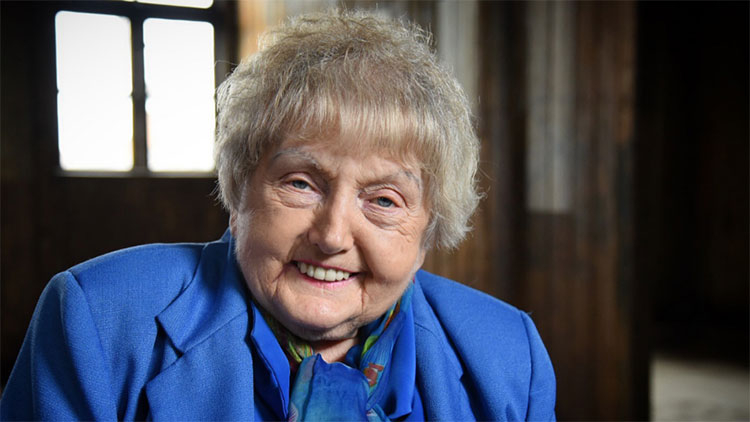
Featured Image photo credit: WFYI Indianapolis, 2021
The Question of Justice: Forgiveness vs. Accountability

In conversations about forgiveness, Eva Mozes Kor, Holocaust Survivor and Mengele Twin, was often asked tough questions about justice, especially regarding criminals, terrorists, and those who have killed. One such question came from a UK film director, who asked, “Should we just forgive them and let them go?” This question challenged Eva’s own ideas of forgiveness and set her on a path to delve deeper into the complexities of justice and forgiveness.

Her response to this challenge was powerful: “We must decide what we want the end result to be,” she explained. If the goal is punishment, then “we just hang him/her,” because after all, she had spent her life hearing the statement, “Justice must be done.” But Eva quickly challenged that notion, pointing out that while justice sounds simple, the reality is far more complicated.

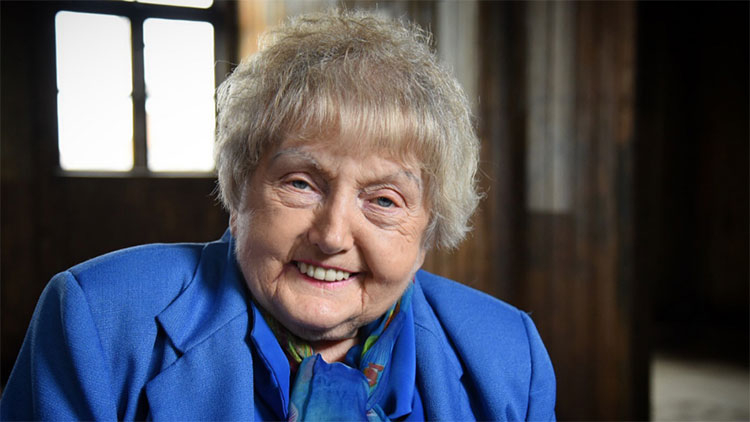
Eva Mozes Kor, Holocaust Survivor and Mengele Twin

The Search for Justice: Mengele’s Escape

Eva shared her concerns about how justice was sought for the Nazis after World War II, focusing specifically on Dr. Josef Mengele, the infamous Nazi doctor who performed experiments on Eva and her twin sister, Miriam. Mengele’s arrest under his name by the American forces, only to be released a day later due to a mistake, underscored the failure of justice. Despite his heinous crimes, Mengele’s name was never included in the Nuremberg Trials, and it wasn’t until 1985 that serious efforts were made to find him.

Eva had long been suspicious of the official accounts of Mengele’s death. In 1985, after taking a group of Mengele twins to Auschwitz to mark the 40th anniversary of the camp’s liberation, the search for Mengele’s whereabouts became an international story. Governments like those of Germany and the U.S. announced that Mengele’s bones had been found in Embu, Brazil, but Eva remained skeptical. The rushed, secretive nature of the investigation raised red flags for her.

The Inquest: Investigating Mengele’s Death

Eva’s suspicions led her to take action. Determined that survivors had the right to examine the truth, she organized an inquest into Mengele’s death, inviting forensic experts, historians, and survivors of Auschwitz, including Mengele twins. Eva could not raise funds for the inquest, so she took out a second mortgage on her house to pay for the investigation. This decision highlighted Eva’s unwavering commitment to finding the truth.

Just days before the inquest was set to begin on November 15, 1985, Eva received what she said was a threatening phone call from Neal Sher, the director of the U.S. Justice Department’s Office of Special Investigations. He demanded that Eva provide the names of those who had seen Mengele alive after 1979, or face the possibility of U.S. Marshals visiting her. Eva stood firm, refusing to yield to threats and continuing with the inquest.

The Inquest Findings: The Mystery Deepens

During the three-day inquest, experts including pathologist Dr. Michael Baden, psychologist Dr. Nancy Segal, and German-educated physician Dr. Werner Loewenstein examined the evidence. Dr. Loewenstein, who had translated Mengele’s SS files, was pivotal in uncovering discrepancies in the investigation. He revealed that the bones found in Brazil could not be Mengele’s because they lacked evidence of osteomyelitis, a condition documented in Mengele’s medical history. This revelation cast doubt on the official story and bolstered Eva’s belief that the investigation had been a rushed cover-up.

The panel of experts, including Eva herself, reviewed the U.S. Justice Department’s forensic report and called for further investigation. They raised serious concerns about the findings, including discrepancies in the identification of the bones and the absence of investigations into post-1979 sightings of Mengele. Despite this, the official stance remained that Mengele had died in 1979.

The Call for Justice: Victims’ Rights and Compensation

Beyond the questions surrounding Mengele’s death, Eva also highlighted the ongoing suffering of survivors of his experiments. Many of Mengele’s victims, particularly the twins, suffered from chronic medical conditions such as kidney issues, heart problems, and spinal degeneration, all due to the unscientific and inhumane experiments Mengele conducted at Auschwitz. Despite the immense suffering, the German government had yet to offer compensation to these survivors.

Eva used her platform to call for justice for the victims of Mengele’s experiments, urging the German government to compensate them for their pain and medical costs. She made it clear that the failure to offer compensation was an embarrassment to the German government and a further injustice to those who had already endured so much.

The Power of Forgiveness: A Call to Action

Throughout her efforts, Eva remained steadfast in her belief in the power of forgiveness, a principle that had defined her personal healing since she forgave the Nazis in 1995. In the face of betrayal, deception, and injustice, Eva continued to advocate for forgiveness as a means of healing, not just for herself but for the world.

Eva’s call to action extended beyond the personal. She proposed an addendum to the Universal Declaration of Human Rights that would include the right to emotional healing, emphasizing forgiveness as a necessary act for personal and societal well-being. Through forgiveness, Eva believed that victims could transcend their suffering and reclaim their emotional freedom.

Conclusion: A Legacy of Justice and Healing

Eva’s journey to uncover the truth about Mengele’s death and the suffering of his victims was not just about seeking justice for the past. It was about ensuring a future where forgiveness, healing, and emotional freedom were recognized as fundamental human rights. Her efforts to shine a light on the long-term pain caused by atrocities and the need for healing through forgiveness resonate as deeply today as they did in 1985.

Eva Mozes Kor’s legacy continues to inspire those who seek justice, understanding, and healing, teaching us that while forgiveness is a personal journey, it also has the power to shape a more just and compassionate world.

© Jill Szoo Wilson, 2025

Read more by Jill Szoo Wilson on Substack.

The Power of Forgiveness: Eva Mozes Kor’s Call for a New Human Right

In the fall of 2006, Eva Mozes Kor, Holocaust survivor and Mengele twin, received an unexpected invitation that would set her on a new path in her journey to advocate for forgiveness as a human right. Dr. Joan Lescinski, president of Saint Mary-of-the-Woods College in Terre Haute, Indiana, invited Eva to a private lunch. Eva, ever curious, arrived dressed in her favorite bright blue suit, eager to learn more. Little did she know, this would be the beginning of an incredible journey, one that would shape not only her legacy but also the conversation around emotional healing and forgiveness on a global scale.

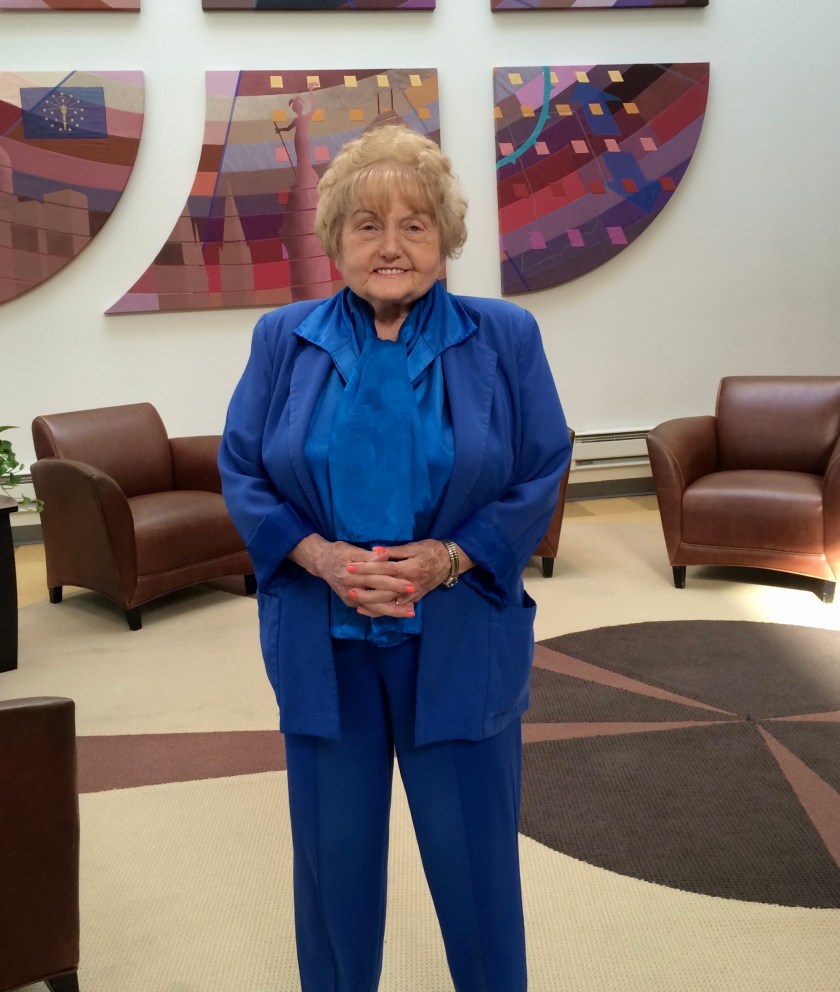
Eva Mozes Kor, photo taken by Jill Szoo Wilson
Eva Mozes Kor. Jill Szoo Wilson took this photo at an NBC studio in Indiana.

A Life-Changing Invitation

As Eva stepped onto the campus, the vibrant fall colors of the trees created a beautiful backdrop for the day ahead. Dr. Lescinski explained that the board of directors had voted to honor Eva with an honorary doctorate for her work in forgiveness and had chosen her to be the commencement speaker in May 2008. It was a rare and deeply meaningful recognition, one that both humbled and surprised Eva, knowing the weight of the responsibility that lay ahead of her.

But this honor would not come quickly. The process took almost a year and a half to prepare. During this time, Eva decided to dive deeper into the Universal Declaration of Human Rights (UDHR), especially since the declaration did not address the emotional pain inflicted on survivors and victims of atrocities.

The Idea of an Addendum

Eva, alongside Kiel Majewski, researched the UDHR and realized that while the declaration addressed the physical and civil rights of individuals, it failed to address the emotional trauma that people, especially victims of genocide, carry for most of their lives. This led Eva to propose an addendum to the UDHR, one that would acknowledge the human right to live free of emotional pain inflicted by others and by life itself.

A Legacy of Resilience: Saint Mother Theodore Guerin

As Eva prepared for her speech, she reflected on the perseverance and strength of those who built the foundation of the institution she was addressing. One such person was Saint Mother Theodore Guerin, the founder of Saint Mary-of-the-Woods College. Guerin’s own journey, filled with adversity and relentless determination, resonated deeply with Eva.

Saint Mother Theodore Guerin, a French nun, traveled across the Atlantic Ocean in 1840 to establish what would later become Saint Mary-of-the-Woods College in Terre Haute, Indiana. She was part of a group of Sisters of Providence sent by the Superior General of the Congregation of the Sisters of Providence in France to open a mission in the United States.

She and her fellow sisters arrived in the United States at a time when the country was still relatively young, and the area around Terre Haute was largely undeveloped. Despite facing numerous challenges, including language barriers, limited resources, and harsh conditions, Mother Theodore Guerin persevered and founded the college in 1840. Her vision and determination to provide education for women in the midwestern United States became a reality, and Saint Mary-of-the-Woods College was established.

Eva often reflected on how one person’s determination could spark lasting change. Guerin’s commitment to education, even in the face of hardship, was the very kind of perseverance Eva hoped to embody in her own work. As Guerin had never given up on her dream, Eva refused to give up on her vision for a world where emotional healing was recognized as a fundamental human right.

Eva’s Commencement Speech

In May 2008, Eva arrived at the commencement ceremony, accompanied by her son Dr. Alex Kor and her husband, Marius Kor (“Mickey”). The ceremony felt like another survival test, but Eva was resolute. She stood before the graduates, faculty, and board members, prepared to speak from her heart.

During her speech, Eva took a moment to reflect on her past, on the unimaginable horrors she endured as a ten-year-old girl in Auschwitz. Separated from her parents and two older sisters, Eva, along with her twin sister Miriam, was thrust into an environment of unspeakable cruelty. She shared the vivid memories of being shoved into filthy, overcrowded barracks, deprived of food, and subjected to the terrifying medical experiments led by Dr. Josef Mengele. But she also spoke of her defiance, the way she managed to survive after Mengele’s chilling prediction that she would be dead within two weeks following his lethal injection. Against all odds, Eva lived, and in the process, she learned the profound strength that kept her going (Kor, Surviving the Angel of Death).

Below is an excerpt from her speech:

You have come a long way, and so have I. Sixty four years ago at this time, I was a ten-year-old little girl, huddled with my twin sister, Miriam, in our filthy bunk beds crawling with lice and rats. We were starved for food, starved for human kindness, and starved for the love of the mothers and fathers we once had. We did know then that there was a United States of America. But I knew nothing about the state of Indiana, Terre Haute, Indiana, Saint-Mary-of-the-Woods-College, nor did I dream of receiving an honorary doctorate. In those days I dreamed of food and freedom, so all my energies focused on living one more day and surviving one more experiment [. . .] We arrived in Auschwitz in the Spring of 1944. Within 30 minutes we were ripped apart from my parents and two older sisters. Only my twin sister and I survived Auschwitz. I defied Mengele who said that I would be dead in two weeks after he injected me with a deadly germ, I defied Auschwitz, a factory of death, because I never gave up on myself nor on my dreams.

As she spoke to the graduates, she drew a powerful parallel between her survival and their own journeys. She reminded them that, like herself, they had persevered through challenges. The graduates had worked hard, faced their own struggles, and overcome personal obstacles to reach this moment of triumph. Eva’s words connected their achievements in the classroom to her own perseverance in the face of unspeakable violence. Both, she emphasized, were the result of relentless strength, the kind of resilience that endures and thrives even in the face of overwhelming adversity.

The Power of Forgiveness

Eva then shared a life lesson that she held dear: “Forgive your worst enemy, and forgive everybody who has hurt you. It will heal your soul and set you free.” Her journey to forgiveness, which began on January 27, 1995, was pivotal not only in her own healing but in her advocacy for others to release emotional pain through forgiveness (Kor, CANDLES Foundation).

As part of her speech, Eva called upon the students, faculty, and staff at Saint Mary-of-the-Woods College to sign an addendum to the UDHR, which would advocate for the right to emotional healing through forgiveness. This proposed addendum would be sent to the United Nations, the President of the United States, and the Helsinki Human Rights Commission. Eva felt confident that Saint Mother Theodore Guerin, the founder of the college, was smiling down in approval of this effort.

The Addendum to the Universal Declaration of Human Rights

Eva’s proposed addendum stated the following:

  • Right to Freedom from Emotional Pain: Every person has the human right to live free from the emotional pain and burden imposed by others, society, or life itself.
  • Forgiveness as a Path to Freedom: Forgiveness is a viable option for achieving that freedom and the human right to emotional well-being.
  • Personal and Universal: Forgiveness is a personal act of self-healing, a right that every person must claim for themselves. Each person has the right to forgive in their own time and on their own terms.
  • The Power of the Addendum: This addendum would serve as a beacon for anyone who has endured pain, offering them the right to transcend their suffering by choosing forgiveness.

Conclusion: A Call for Healing

As the panel of faculty and students signed the addendum, Eva felt a sense of hope. It was not just a symbolic gesture; it was a call to action for everyone who has suffered. Eva’s speech was not only about her own personal forgiveness but also about empowering others to take control of their emotional freedom.

“I did not want to carry the burden of hatred with me. I wanted to live and not just survive.” – Eva Mozes Kor

The event and the addendum were a culmination of Eva’s belief that emotional healing, through the act of forgiveness, was just as vital as any civil or political right. She challenged everyone to embrace forgiveness, not only to heal themselves but to contribute to a world that acknowledges the emotional scars we carry and the universal right to find peace.

  • Kiel Majewski worked as the Director of Research at the CANDLES Holocaust Museum and Education Center. His role involved conducting research related to the Holocaust, specifically focusing on the Mengele Twins and other aspects of the museum’s mission.

© Jill Szoo Wilson, 2025

Further Reading

  • Arendt, Hannah. The Human Condition. University of Chicago Press, 1958.
  • Guerin, Mother Theodore. Journals and Letters. Sisters of Providence of Saint Mary-of-the-Woods, 1996.
  • Kor, Eva Mozes, with Lisa Rojany Buccieri. Surviving the Angel of Death: The Story of a Mengele Twin in Auschwitz. Tanglewood, 2009.
  • Kor, Eva Mozes. Echoes from Auschwitz: Dr. Mengele’s Twins. CANDLES, 2000.
  • United Nations. Universal Declaration of Human Rights. United Nations, 1948.

Forgiveness After the Battle: Eva Mozes Kor’s Path to Reclaiming Peace

The problem with survival is that there are other people in the world. If we were simply dropped off in the middle of this jungle called life, with a go-bag, some water, and a means to make fire, we would most certainly get through life with stressful stories but hardly any trauma. For example, if I had to wrestle a bear to the ground because he took my last piece of food, I would come out of that fight banged up but not traumatized. Nearly dead, yes, but with scratches on my arms that would eventually heal. Bears are not the problem. It is people. Wolves in sheep’s clothing.

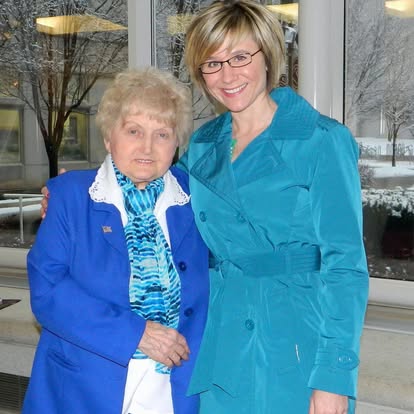
Eva Mozes Kor and Jill Szoo Wilson met for the first time in Springfield, Missouri, in 2013.

When people get involved, survival shifts. We move from survival as an instinct (wrestling bears for food because we have to eat) to survival despite our instincts, fighting human perpetrators because the violence they bring is not just something we recover from; it is something we live with, long after the battle is over. This is where justice comes in. As humans, we have a strong need for justice. Our first instinct is not usually forgiveness, but rather to seek an equally proportional measure of punishment for those who have wronged us. “An eye for an eye,” right?

I have heard it said that forgiveness is about taking someone off your hook and putting them onto God’s hook. I believe that to be true. But for the sake of this article, let us focus on the hook itself. How can we find peace if we are still holding someone in contempt in a court of our own? How can we find peace when we are the judge, jury, and executioner?

This brings us to forgiveness, a concept that can feel both impossible and liberating. It is not about erasing the past; it is about freeing ourselves from its hold. I began to understand this through my time with Holocaust survivor and Mengele Twin Eva Mozes Kor. In her words and actions, Eva taught me that forgiveness is not an act of excusing the wrongs done to us; it is about choosing to free ourselves from the weight of anger and resentment, allowing us to heal and move forward.

Eva spent her life sharing a powerful message: forgiveness can free us from the pain of the past. But forgiveness is not a simple act, nor is it always possible in the heat of survival. In candid reflections, she discussed how complex and difficult it is to find peace, not just for oneself but for future generations.

Eva was often criticized by fellow survivors for her approach to forgiveness, which she saw as a conscious decision to move beyond the traditional idea of simply “forgive and forget.” For Eva, forgiveness was not about erasing the past or excusing the wrongs committed; it was about choosing to release the grip that hatred and resentment held on her, giving herself the freedom to heal.

She also emphasized that forgiveness cannot be rushed. It is not something one can jump into in the heat of battle or while still fighting for survival. Only after we feel safe, after the danger has passed, can we even begin to consider forgiveness. This understanding was central to Eva’s belief that forgiveness is a long, deliberate process that only becomes possible when we feel secure. For her, the journey did not even begin until four decades after liberation from the camps (Kor). That delay is a testament to the time it takes to heal and to reclaim one’s sense of safety before forgiveness becomes possible.

Psychological research on trauma supports Eva’s view that forgiveness is often a complex and gradual process, particularly when individuals are still grappling with the effects of trauma. Dr. Bessel van der Kolk explains that “trauma robs you of the capacity to forgive, because forgiveness requires a sense of safety, and trauma creates a world where safety is impossible” (The Body Keeps the Score, 2014). This aligns with Eva’s belief that forgiveness only becomes possible when the individual feels secure enough to step away from the “battlefield mentality” of survival.

Similarly, Dr. Judith Herman emphasizes the critical role safety plays in the recovery process. She asserts that trauma survivors must first find safety and regain a sense of control before they can begin processing and healing their wounds (Trauma and Recovery, 1992). Only after this foundational stage can they consider forgiveness, not as an immediate reaction but as part of a longer journey toward reclaiming their emotional well-being and sense of power.

Survival First: The Battlefield Mentality

Eva’s message begins with a clear understanding of human nature. She explains that the survival instinct is innate: “We are all born to maintain life at any cost.” This survival instinct shapes our actions in profound ways, particularly when our lives are at risk.

For example, she argued that forgiving someone who is pointing a gun at your head would make no sense, because you would be dead before you could even say the words. The instinct to protect oneself overrides any consideration of forgiveness in that moment. Eva called this the “battlefield mentality.” In this context, forgiveness is impossible until the threat has passed, the battle is over, and we feel secure again. Only then can we begin to consider forgiveness.

This aligns with the fight-or-flight response, first described by Dr. Walter Cannon (Bodily Changes in Pain, Hunger, Fear and Rage, 1915). Cannon’s research explains how the body’s instinctive reaction to danger prioritizes survival over all other actions, including the cognitive decision to forgive. Only once the immediate threat has passed and we feel safe can we process our emotions and consider forgiveness.

Forgiveness After the Battle: When We Are Safe

Eva believed that for Holocaust survivors living in Israel, or those still coping with the immediate concerns of survival, forgiveness was often out of reach. Many survivors continue to face the realities of their trauma, and for some, the environment in which they live, still grappling with insecurity and violence, means they are not yet able to move beyond the pain. The challenges they face are not just historical; they are still navigating a present shaped by fear, uncertainty, and the need for protection. Eva recognized this complexity and believed that forgiveness could not be forced while survivors are still in a state of ongoing defense, where survival is still their top priority.

Historical context supports Eva’s view. The post-war period in Israel, for example, was one where many survivors faced not only the trauma of their past but also the pressures of rebuilding in a country still fighting for its survival. In such an environment, the idea of forgiveness or reconciliation often took a back seat to the immediate needs for safety and security. Scholars like Hannah Arendt (The Human Condition, 1958) and Natan P. Lasky (Holocaust and Memory, 2001) note that forgiveness in the face of unresolved trauma and ongoing conflict is incredibly difficult, if not impossible, because the wounds remain fresh and the environment does not offer the conditions for healing.

Eva also pointed to the cycle of pain that continues when survivors, unable to forgive, pass on their hatred and distrust. Survivors who choose not to forgive often reject anything related to their oppressors, such as avoiding German products, refusing to visit Germany, or not trusting Germans. This perpetuates the pain and prevents healing. Eva challenged them: “Do you want your children and grandchildren to carry and feel your pain for the rest of their lives, or would you like to give them another inheritance?”

The Inheritance of Forgiveness

Eva reflected on her own family, explaining how her two children responded differently to her philosophy of forgiveness. One embraced it, while the other did not. Despite the differences, Eva believed forgiveness was a choice that could be discovered later in life, even if not immediately embraced. She always said, “I forgive in my name only.” For Eva, forgiveness was a personal decision, one that could not be imposed on others. She recognized that each person must find their own path to healing, and that path may look different for everyone.

She urged survivors of any trauma, whether Holocaust survivors or survivors of child abuse, neglect, or molestation, to consider the possibility of forgiveness. Eva shared how the deep pain caused by betrayal can linger long after the event, but also how releasing that pain is possible. Her advice for those suffering from trauma was simple: imagine how it would feel if the pain had never occurred. Then, shift your perspective and ask, “How would you feel if you could overcome that pain by forgiving those who caused it?”

The Letter of Forgiveness: A Path Toward Freedom

For those struggling to forgive, Eva had a practical suggestion: write a letter to the person who caused the pain. The letter did not need to be sent; it was a personal act of release. Writing a letter of forgiveness allows the survivor to work through the pain, step by step, with the intention of breaking free from its grip.

Research in expressive writing supports Eva’s approach. Dr. James Pennebaker has found that writing about traumatic experiences can significantly reduce stress and improve emotional well-being (Opening Up by Writing It Down, 2016). In his studies, he demonstrated that individuals who write about their emotions and trauma often experience greater emotional clarity and a decrease in physical symptoms related to stress. This form of writing helps individuals process difficult emotions in a controlled, private way, which can be especially beneficial for survivors of trauma who may find it difficult to talk about their pain.

Eva reassured her audience: “What can this silly letter accomplish? Try it, what can you lose? Only your pain. And if you don’t like how it feels without that pain, you can always take it back, but you will not miss it.” This simple act, she believed, could free people from the constant burden of past trauma and open the door to healing. Studies have shown that writing can lead to emotional relief, helping individuals feel lighter and less burdened by their past. By putting the pain into words, survivors can begin to regain control over their emotions and take steps toward freedom.

A Call to Action

Eva’s message is about reclaiming your freedom. She taught me that forgiveness is not about excusing the past; it is about letting go of the weight that keeps you from moving forward. Traveling with her through Poland, Hungary, and Romania from 2013 to 2017, I saw how forgiveness gave her the power to heal, to find peace where pain once lived.

Her words often echoed in my mind as I confronted my own pain. “What would my life be like if I could forgive?” I realized that forgiveness is not just about releasing anger or resentment; it is about letting go of fear and the weight of trying to fix things I cannot control. I spent so much time feeling responsible for making everything right, but I realized that I cannot be in charge of justice across the world. What I can do is release my obligation to correct things beyond my reach. Forgiveness became the key to letting go of that burden, and in doing so, I was able to reclaim peace for myself.

June Hunt defines forgiveness as “a deliberate choice to release feelings of resentment or vengeance toward a person or group who has harmed you” (How to Forgive… When You Don’t Feel Like It, 2008). Hunt emphasizes that forgiveness is not about condoning the offense but choosing to release the hold that the hurt has over your life. This aligns with Eva’s perspective, where forgiveness is an act of personal freedom, not an act of excusing past wrongs. For Eva, forgiveness was about freeing herself from the weight of past pain, and choosing peace over the perpetuation of hurt.

Through her example, I understood that forgiveness is a choice, a choice that lets you take back the power lost to fear, anger, and the constant desire to control outcomes. It is not an easy choice, but it is one worth making. Because in the end, forgiveness is a powerful act of reclaiming your life, of releasing the past’s grip on your soul and embracing the peace you deserve. It is not about excusing the wrongs or forgetting the pain; it is about choosing to rise above them, to break free from the chains of resentment and fear, and to step forward into a future unburdened by what you cannot change.

© Jill Szoo Wilson, 2025


Further Reading

  • Arendt, Hannah. The Human Condition. University of Chicago Press, 1958.
  • Cannon, Walter. Bodily Changes in Pain, Hunger, Fear and Rage. Appleton, 1915.
  • Herman, Judith. Trauma and Recovery. Basic Books, 1992.
  • Hunt, June. How to Forgive… When You Don’t Feel Like It. Harvest House, 2008.
  • Kor, Eva Mozes. Surviving the Angel of Death: The True Story of a Mengele Twin in Auschwitz. Tanglewood, 2009.
  • Lasky, Natan P. Holocaust and Memory. Yale University Press, 2001.
  • Pennebaker, James W. Opening Up by Writing It Down. Guilford Press, 2016.
  • van der Kolk, Bessel. The Body Keeps the Score: Brain, Mind, and Body in the Healing of Trauma. Viking, 2014.