
By Jill Szoo Wilson
Prologue: Playing Willy Loman
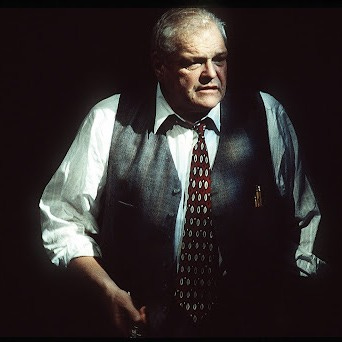
Before one analyzes Willy Loman, one must attempt to inhabit him. The work of the actor offers more than interpretation; it offers a way into his psychology. The Meisner technique, which trains actors to live truthfully under imaginary circumstances, demands that a character be approached not as a symbol or a mood, but as a person with specific objectives. The actor does not play a man who is sad, but a man trying to appear happy. One does not play drunkenness, but the effort to walk in a straight line. One does not play collapse, but the relentless pursuit of control.
This approach becomes essential in performing Willy. He cannot be played as someone unraveling. He must be played as someone still trying to climb. He is not aware of his disintegration. He is fighting it. The tension in his voice, the urgency in his gait, and the rhythm of his speech can all reveal a man still chasing validation, still working to prove himself, still trying to matter.
Just as a villain does not see himself as a villain, the actor playing Willy must believe in the truth of the character’s motivations. Willy believes in the story he tells. The sales pitch is not a metaphor to him; it’s survival. Every gesture carries the imprint of past successes. Every pause contains the weight of unseen failure. His tragedy is not that he has given up, but that he cannot. His pursuit has become his identity.
The actor must approach each moment with this in mind. Willy is not asking for pity. He is asking to be heard, to be remembered, to be great. Even in his most fractured scenes, he is still performing the role of the man he once hoped to be. That performance is what ultimately breaks him.
Introduction
In the years following World War II, American culture embraced the idea that prosperity would generate both comfort and cohesion: a sense of stability, belonging, and self-worth rooted in home ownership, upward mobility, and steady employment. The war had ended in victory, the suburbs were blooming, and economic expansion offered a vision of order that felt both new and enduring. This was a time of rising optimism, when the pursuit of the American Dream—embodied in hard work, domestic life, and professional success—was framed as a moral ideal. To believe in that dream was to place oneself inside a shared national story. A meaningful life, it seemed, could be earned through effort and aspiration.
Arthur Miller’s Death of a Salesman confronts the unraveling of that story. At its center stands Willy Loman, a traveling salesman whose crisis begins in the workplace and spills into the core of his identity. His crisis is not only economic but existential. As the play unfolds, we encounter a man whose inner life begins to dissolve: his memories crowd the present, his sense of time becomes unstable, and his relationships erode. Miller’s dramatic world offers more than a critique of economic pressure; it becomes a crucible in which identity itself bends and breaks.
This essay explores how Death of a Salesman dramatizes the collapse of identity when it is built on an external ideal. Through its fragmented structure, expressionist form, and intergenerational tension, the play traces the unraveling of Willy Loman, a man whose self-worth depends on a version of success shaped by visibility, wealth, and admiration. Though rooted in social realism, the play frequently breaks from naturalistic conventions, blending realism with expressionism to capture the fragmentation of Willy’s mind. Cultural messages about achievement, the burden of familial expectation, and the seductive pull of nostalgia all conspire to distort his self-concept. At its heart, Miller’s work raises a haunting question: What remains of the self when it is built on a dream that was never truly one’s own?

Section I: Early Formations of Selfhood
Willy Loman emerges as a man profoundly shaped by the cultural messages of postwar America. From the outset, his understanding of worth is externalized. He believes that being well-liked is the key to success, repeating the idea that popularity and personal charisma matter more than skill. This philosophy informs the way he raises his sons and evaluates his own life. Developmental psychologist Erik Erikson writes that “identity is formed through the interplay of biological givens and societal roles” (Identity: Youth and Crisis, 1968). For Willy, that interplay is dangerously out of sync. He confuses approval with value and presentation with substance.
His identity becomes performative, reliant on others’ perceptions. In his frequent recollections of his brother Ben, Willy shows how deeply he clings to mythic narratives. Ben represents everything Willy wishes he had become: wealthy, decisive, and respected. “When I walked into the jungle, I was seventeen. When I walked out, I was twenty-one. And, by God, I was rich!” (Miller 48). For Willy, this anecdote is more than family lore; it is a talisman against failure. In Ben, he sees proof that success is a singular, dazzling act, not a long process, but a moment of transformation. And so, Willy waits for his moment like a lion stalking prey already devoured by another. The instinct remains, but the opportunity has vanished. His belief in the singular triumph blinds him to the slow work of becoming.
Psychologist Carl Rogers suggests that when individuals base their self-worth on “conditions of worth” imposed by others, they lose touch with their authentic selves (On Becoming a Person, 1961). Willy embodies this distortion. Rather than cultivating a stable internal identity, he attaches his sense of self to external validation. He cannot separate his inner value from his outer performance.
Section II: The Rise and Fracture of Familial Expectations
Willy places immense hope in Biff, his eldest son. He does not dream for Biff so much as he dreams through him. Biff becomes a vessel for Willy’s projected success. In adolescence, Biff appears to mirror his father’s charisma and confidence. He is popular, athletic, and adored. Willy sees this as evidence that Biff will fulfill the dream he himself could not. “He’s liked, but not—well liked,” Willy says of Bernard, dismissing the boy’s academic seriousness in favor of Biff’s charm (23). The phrase reveals more than Willy intends. In his world, being “well liked” carries spiritual weight. It’s not just a social advantage; it’s a measure of worth. To be well liked is to be blessed, chosen, and affirmed by the invisible hand of success. Bernard’s intelligence is treated as a liability because it lacks sparkle. Biff’s charm, by contrast, is seen as currency. The line crystallizes Willy’s lifelong confusion: he mistakes attention for esteem, applause for substance.
Yet Biff’s admiration is shattered during a business trip to Boston, when he discovers his father in a hotel room with another woman. The moment of betrayal is not just personal. It is psychological. Biff loses the man he admired, and with him, the sense of self that admiration supported. “You fake! You phony little fake!” he cries (95). In that rupture, the illusion collapses. Willy is not the great man Biff thought him to be, and Biff is no longer sure who he is without that image.
Attachment theorist John Bowlby notes that disruptions in trust between parent and child can result in identity disturbance, particularly if the child has built his self-understanding on idealized images (Attachment and Loss, 1969). Biff’s identity fractures because it was co-authored by a man whose own foundation was false. The fallout of this moment ripples across the rest of the play. Biff wanders, lost in purpose and direction, while Willy clings harder to the fading vision of success.
Yet Biff’s wandering is not aimless. Unlike his father, who remains trapped in denial, Biff begins to pursue a kind of difficult truth. His disillusionment, though painful, marks the beginning of a reckoning. In the final scenes, Biff confronts the family’s illusions with unflinching honesty, declaring that they have “never told the truth for ten minutes in this house” (103). This attempt at truth-telling, however raw, becomes a redemptive thread. While Willy doubles down on fantasy, Biff reaches for clarity even if it costs him the dream.
Section III: Memory, Time, and Psychological Regression
Miller does not portray Willy’s collapse as linear. Instead, he creates a psychological architecture in which memory intrudes on the present. Walls dissolve. Characters from the past arrive as though no time has passed. This expressionist structure captures the erosion of Willy’s psychological boundaries. He no longer revisits memories; he inhabits them. They become both a refuge and a trap.
Freud’s theory of repetition compulsion provides a compelling psychological lens for understanding Willy’s psychological breakdown. Introduced in Beyond the Pleasure Principle (1920), the theory describes a phenomenon in which individuals unconsciously repeat painful or traumatic experiences, not in pursuit of pleasure, but in an attempt to gain mastery over a past that remains unresolved. The repetition is not intentional; it emerges from the psyche’s attempt to regain control by recreating the conditions of the original wound. The individual returns to the same emotional terrain again and again, hoping—without realizing it—to alter the outcome.
In Willy’s case, the past does not visit him as memory but as lived experience. He does not recall; he reinhabits. Conversations with Ben, moments with Biff, echoes of earlier days surface with increasing urgency. These scenes carry the weight of regret, but they also offer him temporary refuge. Within them, he can reassert his authority, recover the image of success, and briefly inhabit the man he once believed himself to be. Unfortunately for Willy, his compulsion to return does not resolve the trauma. It deepens it. Each reenactment sharpens the ache. The life he wants to rewrite instead writes over him.
As the play progresses, these revisitations grow more urgent. He speaks to voices no one else can hear. He replays conversations aloud. The present loses its clarity. Psychologist Aaron Beck writes that depression often leads to cognitive distortions that warp time perception and induce emotional paralysis (Cognitive Therapy of Depression, 1979). Willy exhibits these distortions. He cannot live in the now. His present is filled with regret and inadequacy. His past gleams with untouchable promise.
Section IV: The Psychology of Shame and Withdrawal
Shame is the undercurrent of Willy’s emotional decline. Though he claims to be working for his family, he increasingly isolates himself from them. Linda, his wife, tries to reach him, but he bristles at her concern. When she encourages him to ask his boss for a non-traveling job, he responds with irritation, accusing her of planting ideas in his head, as if her care undermines his dignity. Happy, his younger son, is met with indifference. Willy rarely engages him beyond superficial conversation and often overlooks him entirely in favor of Biff. Even Biff, who offers a kind of brutal honesty, is met with deflection. When Biff attempts to confront the family’s long-standing illusions, declaring that they have never told the truth for more than ten minutes in the house, Willy interrupts and retreats, unwilling to accept what his son is beginning to understand.
These fractured interactions are not just defensive. They are symptomatic of shame. Willy withdraws not out of malice but out of an internalized belief that he has failed the people he loves. The more he feels exposed, the more he distances himself.
Psychologist Brené Brown defines shame as the belief that one is unworthy of love and belonging (Daring Greatly, 2012). Willy lives inside that belief. He feels he has failed as a provider, as a father, and as a man. Rather than face these feelings directly, he retreats. He speaks more to the past than to the people around him.
This retreat mirrors what psychiatrist Thomas Joiner identifies as “perceived burdensomeness” in his theory of suicidal desire (Why People Die by Suicide, 2005). Willy begins to believe that his death will serve his family better than his life. He rationalizes that his life insurance payout will redeem him in Biff’s eyes. “That boy is going to be magnificent!” he declares, convinced that death can function as a final gift (135).
Miller frames this moment with compassion, not justification. He does not glorify Willy’s decision. Instead, he lets the audience feel the ache of a man who could not see his own worth without applause.
Section V: Aftermath and Absence
The play closes not with resolution, but with absence. Willy dies believing that his sacrifice will redeem him in the eyes of his son and secure his family’s future. The imagined narrative is one of triumph: insurance money replacing lost income, Biff transformed by grief into the man Willy hoped he would become, the family finally recognizing the value of the man who died for them. It is, in Willy’s mind, the final performance—the last act of a salesman who believes his death will sell the very life he could not live.
What unfolds instead is a quiet, almost unbearable scene. Willy’s funeral is sparsely attended. No grand send-off, no chorus of admiration. Just a few family members and Charley, the neighbor whom Willy often disdained. The world does not gather to mourn the man who chased recognition his entire life. There is no validation, no final applause. The silence speaks louder than any eulogy.
At the center of this silence is Linda. Her grief does not erupt in fury or lamentation. It arrives as confusion. As a quiet disbelief. “I made the last payment on the house today,” she says, standing at his grave. “Today, dear. And there’ll be nobody home” (139). The line is devastating in its simplicity. The home they struggled to keep is now fully theirs, but the man who fought so hard to pay for it is gone. The achievement is hollow. The security came too late. The dream was achieved, but the dreamer did not survive it.
Linda’s mourning captures the full weight of the tragedy. She has stood by Willy through every descent, every contradiction, every delusion. She believed in his goodness, even when he could not believe in himself. Her sorrow is not only for the man she lost, but for the meaning he sought and never found. She cannot understand why he chose to go. Her words are not angry. They are bewildered. “Why did you do it?” she asks into the silence. “I can’t cry. It seems to me that you’re just on another trip” (139). Her grief is suspended between denial and realization, between the role she has always played and the irrevocable truth of what has happened.
Through Linda’s final words, Miller reveals the true cost of Willy’s collapse. The tragedy is not only the loss of his life, but the emotional wreckage left behind. The dream he chased—of being remembered, admired, and secure—comes to nothing. In its place is a widow talking to a headstone, a son trying to reclaim his own name, and a home that now stands empty.
The curtain falls not on resolution, but on the unanswerable questions that linger after loss.
Conclusion: The Dreamer and the Dream
Willy Loman’s tragedy is not rooted in villainy. It is rooted in a lifelong confusion about what makes a person valuable. He sought love through achievement, identity through performance, and belonging through admiration. These ideals were not his alone; they were etched into the fabric of postwar America, offered as promises of fulfillment. Yet for Willy, they remained just out of reach. The harder he chased them, the more his sense of self unraveled.
Arthur Miller does not simply critique capitalism or expose the instability of the American Dream. He offers something more intimate: a study of how a man can lose himself in a story he did not write, a story that told him who he had to be in order to matter. Willy’s longing is not ignoble. His devotion to family, to legacy, to being remembered are deeply human impulses. What makes the play so devastating is not that he failed, but that the very metrics by which he measured success were never meant to hold the weight of a soul. Had he altered those metrics—had he measured worth by presence rather than praise, by connection rather than conquest—his life might have been marked by meaning rather than collapse.
In the end, Death of a Salesman is not only about the disintegration of one man, but the disorientation left behind. Willy’s life is marked by performance, but his death forces those who loved him to ask not only what it was all for, but who he truly was beneath the roles he played. Why wasn’t the life they shared enough? Why wasn’t he enough, as he was? Why weren’t they enough, without the illusion? The play offers no final answer, only the echo of a question: What becomes of a person whose dream was never truly his own?
✨ If you’d like to keep reading more essays like this, you can also find me on Substack: https://substack.com/@jillszoowilson
Further Reading
- Aaron T. Beck. Cognitive Therapy of Depression. Guilford Press, 1979.
- John Bowlby. Attachment and Loss, Vol. 1. Basic Books, 1969.
- Brené Brown. Daring Greatly. Gotham Books, 2012.
- Erik H. Erikson. Identity: Youth and Crisis. Norton, 1968.
- Sigmund Freud. Beyond the Pleasure Principle. Translated by James Strachey, Norton, 1961.
- Thomas Joiner. Why People Die by Suicide. Harvard University Press, 2005.
- Arthur Miller. Death of a Salesman. Penguin Books, 1998.
- Carl Rogers. On Becoming a Person. Houghton Mifflin, 1961.

 Jill Szoo Wilson