“The sad truth is that most evil is done by people who never make up their minds to be good or evil.” — Hannah Arendt
In the summer of 1942, Reserve Police Battalion 101 assembled outside the village of Józefów in Nazi-occupied Poland. The men who stood in formation were not professional soldiers. Only months earlier, they had been running hardware shops, repairing trucks, keeping business accounts, and returning home to their families each evening. They were fathers and neighbors, men in their thirties and forties who had aged out of frontline service before the war began. Their conscription into a reserve police unit had interrupted ordinary routines, not fulfilled ambitions for combat.
Major Wilhelm Trapp, their commander, stepped before them. Witnesses later described him as unsettled, his face unusually pale. He spoke without military rhetoric or ideological preface. The battalion, he said, would enter Józefów and collect its Jewish residents. They were to remove people from their homes: women, children, the elderly, and the sick. The residents would then be taken to the nearby forest, where the battalion would carry out “necessary measures.”
Only after giving these instructions did Trapp add a final detail that stands out in the historical record. Any man who felt unable to participate could step out of formation without punishment.
The battalion remained still. No one protested or sought clarification. After a moment, a few men stepped out of line, then a few more. In all, out of nearly five hundred, only twelve removed themselves from the formation.
The rest marched toward Józefów.
How should we account for the decision of so many men drawn from familiar routines to stay in formation without protest?
Scholars have focused on this moment because it disrupts familiar explanations for how violence begins. Reserve Police Battalion 101 was not composed of ideologues or trained executioners, but of ordinary men whose lives had previously consisted of work, family, and routine. Their choice to remain in formation cannot be explained primarily by coercion or conviction. Most stood still not because they wanted to exact harm, but because they did not want to stand apart, be seen refusing, or face the uncertainty of acting alone. Therefore, the residents of Józefów were not killed by men set apart as specialists in violence, but by neighbors who failed to refuse when refusal was still possible. In this context, participation arose less from intent than from hesitation. The killing did not require their belief, only their compliance.
What happened in Józefów suggests that violence can advance not only through conviction, but through the avoidance of refusal and the desire to remain safely within the group. Harm is sustained when no one interrupts it.
What happened outside Józefów reveals a pattern that extends far beyond wartime and history. Once obedience becomes the easiest way forward, responsibility begins to feel negotiable, something that can be handed off to whoever stands above us or beside us. People rarely wake up intending to harm others; they drift into it when the cost of refusal feels heavier than the cost of compliance.
Decades after the war, a psychologist named Stanley Milgram invited ordinary adults into a small laboratory at Yale University. He told them they were there to help with a study on memory. A mild-mannered man in a gray lab coat instructed them to administer electric shocks to a stranger in the next room if the stranger answered questions incorrectly. The shocks were fake, but the participants did not know that. Immediately following their press of the button, they heard screams, protests, and pounding on the wall. Many feared they were seriously hurting someone. A few protested, a few tried to stop, several shook or wept, but most continued when the man in the lab coat reassured them that the responsibility was his own. Their distress did not prevent their obedience. Being told they were “not the ones in charge” became a relief.
A few years later, another researcher, Philip Zimbardo, converted the basement of Stanford’s psychology building into a mock prison. Volunteers were assigned roles: some became “guards,” others “prisoners.” The assignment came with no training, no ideology, and no instruction to be harsh. The guards were merely told to maintain order.
At first, the volunteers treated their roles loosely. Some joked, others followed the script half-heartedly, unsure how seriously to take the experiment. They carried traces of their everyday lives with them: the habits of students, sons, and roommates. But as the hours passed, their uniforms changed the way they moved. The mirrored sunglasses hid their eyes, and the separation between “guards” and “prisoners” encouraged them to speak with authority. They began to issue commands more sharply. They enforced rules more strictly. What started as playing a role shifted into performance with stakes, and each act of control made the next one easier.
The shift did not arise from hatred or conviction. It unfolded as the guards realized what the role allowed—and chose to use it. No one corrected their tone. No one questioned the rules they invented. Each act of control felt like permission for the next. Within days, they relied on humiliation and psychological pressure, not because they had entered the experiment with cruelty in mind, but because they discovered they could act this way and decided to keep doing it. The situation offered authority without limits, and they stepped into that freedom. Their choices, small at first, accumulated into harm.
Around the same time, a quieter experiment unfolded in a hospital ward. A researcher named Charles Hofling phoned nurses during their shifts, pretending to be a physician giving a prescription. The dosage he ordered violated hospital policy and put the patient at clear risk. The nurses knew this. They hesitated. Yet almost all of them prepared to administer the medication. They were not driven by disregard for the patient or by carelessness. It was the voice on the other end of the phone—authoritative, insistent, claiming responsibility—that tipped the scale. To obey felt safer than to refuse.
The people in these experiments were not sadists or zealots. They were parents, students, nurses, and everyday workers who did not want to cause harm but wanted even less to bear the discomfort of resisting it. They felt anxiety, confusion, even moral distress, yet continued anyway. They were relieved when to believe that the responsibility in their given scenarios did not belong to them. In a forest outside Józefów, this same pattern played out on a scale that cost innocent people their lives.
Cowardice is not the same as fear. Every person feels fear, and it arrives with its own shape, rising from uncertainty, from unanswered questions, from the risks that come with being alive. Fear can warn, protect, or humble us. Cowardice begins only when fear chooses its strategy. It places the cost of one’s actions onto someone else. Instead of carrying the weight of responsibility, it hands that weight to another person and walks away. Cowardice keeps its own reputation polished while letting others absorb its impact. It asks to be understood and excuses itself from being accountable. It allows the consequences of one’s choices to settle on those who cannot escape them.
We often imagine evil as something committed by those who crave it, yet most of the harm in history has been carried out by people who felt uneasy, reluctant, even afraid. The men in Józefów did not wake with murderous desire. They stayed in formation and let someone else decide what their fear would cost. The question Józefów leaves us with is not who among us would choose violence, but who among us would choose the discomfort of refusing it.
“Silence in the face of evil is itself evil.” — Dietrich Bonhoeffer
In contemporary higher education, a surprising harmony emerges between two pedagogical lineages often perceived as distinct: constructivist teaching philosophy and the Socratic Method. One grounds itself in cognitive development and social learning theory; the other traces its heritage to ancient Greece. Yet together, they form one of the most intellectually generative combinations available to the modern classroom. Both treat learning not as passive absorption but as active inquiry. Both assume that students arrive with prior knowledge, internal frameworks, and tacit assumptions that shape how they understand new information. Most importantly, both contend that education is not simply the transfer of content, but the transformation of the learner.
Constructivist thinkers argue that students build knowledge rather than receive it. Jean Piaget, the Swiss developmental psychologist, described this process as a dynamic interplay between assimilation and accommodation, a continual restructuring of cognitive architecture as learners encounter new experiences (The Origins of Intelligence in Children). Lev Vygotsky, the Russian social psychologist, extended this idea by emphasizing the social dimensions of learning. His concept of the Zone of Proximal Development proposed that understanding flourishes when learners engage in dialogue with a more capable peer or mentor. John Dewey, the American philosopher of education, echoed this view, asserting that “knowledge is not something which exists apart from experience” (Democracy and Education). Their scholarship provides the intellectual foundation for constructivist pedagogy: students learn by doing, by reflecting, and by negotiating meaning in community.
The Socratic Method shares this commitment to meaning-making through dialogue. Though separated by millennia from contemporary cognitive theory, Socrates, the Athenian philosopher, had already intuited that learning requires active mental engagement. His method—probing questions, conceptual clarification, and disciplined reasoning—invites students to articulate, examine, and ultimately revise their assumptions. Mortimer Adler, the American educational philosopher, writes in The Paideia Proposal that the Socratic classroom is defined by its refusal to reduce ideas to mere facts. Instead, it seeks to refine the mind through inquiry. Similarly, Nel Noddings, the influential scholar of ethics and education, observed that Socratic questioning “challenges students to consider why they believe what they believe” and requires an educator to listen closely, ask precisely, and build questions that reveal the architecture of a student’s thinking (Educating Moral People).
Although constructivism and the Socratic Method arise from different intellectual traditions, their meeting point is the conviction that learning is constructed, not delivered. When paired, they generate a classroom that is both rigorous and learner-centered.
Constructivism in Practice: Learning as a Process of Meaning-Making
Constructivist pedagogy begins with a simple premise: students bring a world with them. Prior experiences, cultural narratives, internalized scripts, emotional histories, and unspoken values become part of the classroom’s cognitive landscape. Jerome Bruner, a central figure in cognitive constructivism, argued that learning occurs when students “go beyond the information given” (The Process of Education). He believed that education should not simply prepare students for future life; it should cultivate their ability to interpret and re-interpret their world.
This orientation toward interpretation requires instructors to move from transmission to facilitation. In a transmission model, the teacher is positioned as the primary source of knowledge who delivers information for students to receive, record, and reproduce. In a facilitative model, the teacher instead designs learning experiences, poses questions, and structures interactions through which students actively construct understanding for themselves. Jerome Bruner, the American cognitive psychologist, argued that learning occurs most powerfully when students are guided to “go beyond the information given,” a process that requires thoughtful scaffolding and inquiry-based engagement (The Process of Education). Stephen Brookfield, a leading scholar in adult learning, similarly contends that facilitation encourages learners to examine their assumptions, engage in reflection, and build insight through structured dialogue (Teaching for Critical Thinking).
These theorists converge on one central claim: meaning is co-constructed. Students learn not only from lectures and readings, but from the interplay of questions, reflections, and interpretive tensions that arise during discussion.
In the college classroom, this creates a pedagogical environment that values nuance over finality. Students learn to test ideas, articulate interpretations, and reconsider or solidify earlier conclusions. The instructor becomes an architect of inquiry, designing learning experiences to provoke reflection rather than prescribing answers. Constructivism thus offers the philosophical soil in which Socratic teaching can take root.
Socratic Questioning: Inquiry as Intellectual Discipline
If constructivism provides the philosophical ground, the Socratic Method supplies the structure. Socratic pedagogy is not spontaneous conversation; it is purposeful inquiry. Christopher Phillips, founder of the modern Socrates Café movement, describes Socratic questioning as “a shared search for understanding” where each question functions as both challenge and invitation (Socrates Café). Allan Bloom characterizes this process as the cultivation of the “examined life,” where intellectual discomfort is not an obstacle but an essential component of learning (The Closing of the American Mind).
At its core, the Socratic Method rests on three types of inquiry:
Clarification questions, which refine imprecise statements.
Assumption questions, which uncover the beliefs beneath a claim.
Implication questions, which reveal the consequences of those beliefs.
Together, they encourage students to build a more precise conceptual vocabulary. This practice strengthens not only critical thinking but also metacognition, the process by which learners examine their own thinking and monitor how understanding develops. By articulating how they know what they know, students begin to understand the architecture of their own reasoning.
Stephen Brookfield notes that Socratic inquiry helps students identify “assumptions that are taken for granted and rarely examined” (Teaching for Critical Thinking). These moments of self-interrogation are often destabilizing, yet profoundly generative. The student shifts from absorbing knowledge to inhabiting it.
Within the college classroom, the Socratic Method functions as both compass and catalyst. It directs students toward deeper understanding and accelerates the cognitive processes described by constructivist theorists. It requires students to participate actively in their own intellectual development.
Where the Traditions Converge: Dialogue as Pedagogical Architecture
Constructivism and the Socratic Method converge in their shared conviction that learning emerges through intentional interaction. Both approaches resist the notion that knowledge is acquired through answers alone; instead, they emphasize the intellectual labor of forming, testing, and refining those answers. Dialogue becomes the medium through which understanding is shaped, not merely communicated.
In a constructivist–Socratic classroom, dialogue serves as an architectural framework that supports and directs cognitive growth. Questions are not interruptions to learning but the mechanisms that move it forward. They guide students from initial uncertainty toward increasingly complex interpretations, prompting them to articulate assumptions, revisit earlier conclusions, and trace the logic of their own thinking. It is in this movement that Vygotsky’s insight becomes visible: learning accelerates in the space between what a student can already do and what becomes possible through carefully guided interaction. The Zone of Proximal Development is not a chart or a formula in this setting. It is the lived moment when a question arrives at just the right level of difficulty, when a peer’s interpretation stretches a student’s own, when the instructor’s prompt nudges thought into a new configuration. As students respond to questions situated just beyond their current mastery, they test hypotheses, negotiate meaning with peers, and begin to inhabit the intellectual habits of inquiry.
Such a classroom is relational, reflective, and rigorously engaged. It honors the individuality of student experience while drawing learners into a shared pursuit of understanding. Within this environment, the instructor becomes a designer of intellectual movement and a structurer of dialogue so that students can recognize themselves as co-authors of their learning. The result is not merely the acquisition of knowledge but the cultivation of an interpretive stance that endures far beyond the course’s boundaries.
Conclusion
As these traditions come together in practice, the college classroom becomes a setting where inquiry deepens and understanding gains structure. Their shared commitment to reflection and the active construction of meaning encourages students to interpret ideas with increasing precision and to recognize the habits of thought that guide interpretation itself. Through this integrated approach, dialogue emerges as a sustained intellectual practice, inviting students into the slow, disciplined work of questioning, analyzing, and revising their thinking.
This work reaches far beyond the mastery of course content. The interpretive habits cultivated in a constructivist and Socratic classroom form the foundation for adult intellectual life. They strengthen the ability to discern patterns, evaluate competing claims, and approach complexity with patience rather than haste. In a culture shaped by constant information and rapid exchange, these habits create a practice of attentiveness. They help students recognize nuance, situate themselves within ongoing conversations, and contribute thoughtfully to the civic, professional, and relational worlds they will inhabit.
Viewed in this light, the purpose of higher education expands beyond the acquisition of knowledge. It becomes an invitation to develop a way of thinking characterized by curiosity, rigor, and a readiness to dwell in questions. When instructors adopt a pedagogy that affirms the social construction of understanding and the disciplined inquiry associated with the Socratic tradition, they help students cultivate a lifelong interpretive stance. This stance, more than any discrete skill or body of information, equips learners to encounter a complex world with insight, discernment, and intellectual courage
Further Reading
Adler, Mortimer J. The Paideia Proposal. Macmillan, 1982.
Bloom, Allan. The Closing of the American Mind. Simon & Schuster, 1987.
Bruner, Jerome. The Process of Education. Harvard UP, 1960.
Brookfield, Stephen. Teaching for Critical Thinking. Jossey-Bass, 2012.
Dewey, John. Democracy and Education. Macmillan, 1916.
Noddings, Nel. Educating Moral People: A Caring Alternative to Character Education. Teachers College Press, 2002.
Phillips, Christopher. Socrates Café: A Fresh Taste of Philosophy. Norton, 2001.
Piaget, Jean. The Origins of Intelligence in Children. International Universities Press, 1952.
Plato. Meno. Translated by G.M.A. Grube, Hackett Publishing, 1997.
Plato. The Republic. Translated by G.M.A. Grube, revised by C.D.C. Reeve, Hackett Publishing, 1992. (Book I)
Vygotsky, Lev. Mind in Society: The Development of Higher Psychological Processes. Harvard UP, 1978.
Eva Mozes Kor often said, “Anger is a seed for war, forgiveness is a seed for peace.” It was more than a slogan. It was a theology, a philosophy, and a daily discipline forged from one of the darkest chapters in human history. As a child imprisoned in Auschwitz and subjected to the medical experiments of Josef Mengele, Eva discovered that survival demanded a defiant hope. Decades later, she chose forgiveness as a form of liberation that offered survivors a path toward healing. Her decision inspired admiration and deep respect, and it also sparked fierce debate about justice, memory, and the boundaries of human compassion. The peace she pursued required extraordinary courage, because every step forward in forgiveness carried a cost.
I recently revisited one of Eva’s emails, a message filled with the kind of raw honesty that few people ever achieve. It was written in her unmistakable, unpolished style: urgent, passionate, and deeply personal. In it, she reflected on the consequences of her decision to forgive a former Nazi doctor, Dr. Hans Münch, and the relentless challenges she faced in opening CANDLES Holocaust Museum.
Reading it now, years after her passing, I am struck by how unyielding she was in the face of criticism, injustice, and personal danger. She did not simply speak about forgiveness. She lived it, even when it cost her dearly.
The Controversy Over Forgiving a Nazi
In 1995, on the 50th anniversary of the liberation of Auschwitz, Eva Mozes Kor did something unthinkable to many: she publicly forgave the Nazis. More than that, she stood beside Dr. Hans Münch, a former SS doctor at Auschwitz, and signed a declaration of forgiveness.
The backlash was immediate and fierce.
Israeli media framed the moment as a betrayal. Footage of Eva walking with Münch was broadcast again and again, without the context behind it.
A major Israeli newspaper published a scathing article, questioning whether any publicity was better than being ignored entirely.
In 1998, journalist Bruno Schirra published an interview with Münch in Der Spiegel, where the former SS doctor made remarks about his time in Auschwitz. The interview triggered a criminal investigation in Germany.
Around the same time, a French radio interview with Münch led to an even more explosive controversy. His derogatory remarks about Roma and Sinti people resulted in criminal charges in France for inciting racial hatred.
The consequences were devastating.
Münch and his family faced public scrutiny, threats, and harassment. In Germany, legal action pushed toward trial despite his diagnosis of Alzheimer’s disease.
In a personal email to me, Eva shared that Münch’s home was firebombed three times after his address was published in an article, requiring police protection for his family. I have not been able to verify this in any public record or independent source. It was her own account, offered behind the scenes, reflecting the weight she felt over what was happening to Münch and his loved ones.
Eva was horrified by what was unfolding. She had spent years advocating for justice. Now, she found herself advocating for mercy.
She sent more than 50 letters pleading with authorities to drop the lawsuits against Münch, but the legal proceedings continued.
In 2001, Münch was convicted in France. His sentence was waived due to his age and deteriorating mental state. He passed away later that year.
Eva felt a complicated kind of relief. Münch’s family was finally free from further attacks, and she no longer carried the guilt of contributing to their suffering.
The Fight to Build CANDLES Holocaust Museum
By 1995, Eva Mozes Kor had already reinvented herself many times: Holocaust survivor, public speaker, and founder of CANDLES (Children of Auschwitz Nazi Deadly Lab Experiments Survivors) in 1984. That year, she took on yet another role as a museum founder.
The CANDLES Holocaust Museum and Education Center was an extension of Eva’s mission to teach others about the Holocaust and the experiments performed on her and other Mengele Twins. She wanted to create a permanent place of education, remembrance, and dialogue.
Opening the museum was no small feat.
She found a commercial building in Terre Haute, Indiana, but it was too large and too expensive for the original client she was working with as a realtor. Instead, she made a bold and risky decision to secure financing under her own name, her husband’s name, and a partner’s name to purchase the building herself.
At 61 years old, she signed a $168,000 mortgage, despite her husband’s hesitation.
With limited funds for exhibits, she handmade decorations, including a wall of blue paper strips that read:
“LET US REMOVE ALL HATRED AND PREJUDICE IN THE WORLD, AND LET IT BEGIN WITH ME!”
When the museum opened on April 30, 1995, it quickly became a vital educational resource, drawing teachers, students, and community members eager to learn from Eva’s story.
Then everything changed after 9/11.
Her business partner, who owned a travel agency, struggled to keep her business afloat. The economic downturn was crushing. Eva was forced to buy out her partner’s share of the building at a much higher price, not to expand but simply to save the museum.
By 2002, at age 68, she and her husband took out a $222,000 mortgage to keep CANDLES alive.
The Fire That Could Not Destroy Her Mission
In November 2003, Eva Mozes Kor received a phone call in the middle of the night.
“Mrs. Kor, this is the police department. You need to come to the museum. There is a fire.”
She and her husband rushed to the scene. By the time they arrived, flames were already devouring the building. Firefighters battled the blaze, but it was too late. Everything inside was lost: photographs, historical documents, survivor testimonies, and artifacts.
She stood there watching as the place she had built with her own hands, her own money, and her own pain collapsed into smoldering rubble.
Investigators then found a message spray-painted on an exterior wall in black:
“REMEMBER TIMMY MCVEIGH.”
Timothy McVeigh, the domestic terrorist behind the 1995 Oklahoma City bombing, had been executed in Terre Haute just two years earlier. The implication was chilling. This was an act of hatred and intimidation meant to silence her.
But Eva had spent her entire life surviving the worst of humanity.
The next morning, standing in front of the ashes, she made a decision.
“We will rebuild.”
And she did.
With support from the community, from Holocaust educators, and from donors around the world, CANDLES Holocaust Museum rose from the ruins and reopened in 2005, stronger than before.
You can burn down a building. You cannot destroy a mission.
The Legacy of a Fighter
Most people would have stopped. Most would have looked at the destruction of their museum as a sign to walk away.
But Eva rebuilt.
The email she sent me that recounted this event, full of spelling errors, fragmented sentences, and scattered thoughts, perfectly reflected who she was:
Unpolished, yet utterly real. Wounded, yet relentless. Misunderstood, yet unwilling to back down.
Eva Mozes Kor understood something most people do not. Forgiveness does not rewrite the past. It does not fix what was broken. But it allows a person to stop carrying what cannot be undone.
She was never naive. She knew the world was cruel, unjust, indifferent.
She fought anyway.
She did not stop.
What This Means for Us
Eva’s story is not only about forgiveness. It is about resilience in the face of resistance. It is about choosing to build when the world wants to destroy.
Her words still challenge me.
Could I have made the same choices? Would I have kept going? Would I have had the courage to stand alone?
Perhaps that is the lesson she left for us.
Forgiveness is a gift. The fight for something bigger than yourself is what makes history.
The story that follows is told in Holocaust survivor and Mengele Twin Eva Mozes Kor’s voice. This is a story she shared with me as we traveled together from Kraków to Oświęcim, the Polish town where Auschwitz was built. Along the way, I listened as she recounted her journey back to Auschwitz for the 50th anniversary of its liberation. It was a moment in history few people remember, yet one that reveals the depth of her courage, the radical nature of her forgiveness, and the unwavering strength with which she bore witness to the truth.
When Eva told me this story, I could hear in her voice the weight of the moment; the way history and memory collided as she stepped back into Auschwitz, not as a prisoner, but as a witness. She had spent decades making sure the world never forgot what happened there, but on that day, she had something different to say.
Marking 50 Years Since Liberation
On January 27, 1995, the world gathered at Auschwitz to mark the 50th anniversary of its liberation.
Leaders from across the globe stood in front of the infamous barbed wire fences and crumbling barracks, delivering solemn speeches about the horrors of the past in tones that varied from hushed to bellowing. A thread of solemnity wove through the crowd, pulling us into one another like a tightening rope around our waists. Once captive, now captured by the stories being retold.
Holocaust survivors—our numbers dwindling—listened as our memories were etched into the cold Oświęcim air. One man’s narrative is another man’s memory, which is to say that when I hear someone else recount what has been on endless replay in my mind for decades, I often feel as though I am watching my own past from the outside. Even as we stood shoulder to shoulder, bound by this shared history, our experiences were never the same. Auschwitz was a microcosm of the world. A place where suffering was universal, yet deeply individual.
There were ceremonies, memorials, and moments of silence. Each event lined up like dominoes, one after another, predictably falling in order. But what I had planned for the day was outside anyone’s expectations. I was the lone domino, waiting to begin a new movement altogether.
I had come back to Auschwitz this time not just as a survivor, but as a witness. I was standing beside a man who had once served the very system that tried to erase me. Dr. Hans Münch, a former Nazi doctor who had worked at the camp, had agreed to return with me, not to justify or deny, but to publicly confirm the existence and operation of the gas chambers.
It was a moment of historical significance; a Nazi doctor and a survivor standing together.
Not as enemies, but as two people willing to confront the truth.
And yet, as it would turn out, almost no one wanted to hear it.
A Historic Day at Auschwitz and Birkenau
On this anniversary, the official ceremonies took place at Auschwitz I, where German President Roman Herzog, Polish President Lech Wałęsa, and Holocaust survivor Elie Wiesel stood before the infamous “Arbeit Macht Frei” gate. They spoke of memory and responsibility, of the scars left on generations and the duty to remember. Their words did not merely recount the past—they pressed upon the present, urging the world to acknowledge its capacity for both devastation and conscience, and to ensure that such horrors never happen again.
Commemoration stretched beyond the main camp. Survivors also returned to Birkenau (Auschwitz II), the vast extermination site where nearly a million Jews were murdered. They walked the long, desolate paths between the barracks, stood before the ruins of the gas chambers, and faced the remnants of the crematoria—structures the Nazis had tried to destroy in an attempt to erase evidence of their crimes. Yet the absence of intact buildings did nothing to lessen the presence of those who had perished there.
For many survivors, this was more than a visit to a memorial; it was a return to the last place their parents, siblings, and children had drawn breath. They stood where their families had vanished into smoke, stepping into the hollowness of birthdays never celebrated, anniversaries never reached, and futures that had been stolen before they had a chance to unfold. Some whispered names into the air, speaking to their loved ones who had no graves, only this earth—this soil heavy with the petrified ash and unending goodbyes.
Birkenau is where I spent most of my time as a prisoner in the barracks set apart for Mengele Twins.
As I listened to the speeches, I respected the calls to remembrance and responsibility. But I was also remembering something else.
Fifty years earlier, I had sensed a shift in the camp. There weren’t as many Nazi soldiers around. Some of the guard towers stood empty for hours at a time. More planes flew overhead. The atmosphere felt different, and for the first time in years, I let myself wonder if something was about to change.
That flickering hope had finally ignited the moment I saw the Soviet soldiers come through the gates.
They were big men with kind faces, their shock evident as they took in the horrors around them. For so long, every uniform had meant danger, every stranger had been a threat. But then—of all things—they handed us chocolate, cookies, and hugs. They treated us not as prisoners but as children. Like human beings. And in that moment, for the first time in years, I let myself believe that I was safe. Or at least rescued.
Fifty years later, I was back. Of my own choosing. With a Nazi doctor.
Life certainly is surprising.
Who Was Dr. Hans Münch?
Dr. Hans Münch was one of the very few Nazi doctors at Auschwitz who refused to participate in mass murder, which is a distinction that set him apart but did not absolve him from the system he served.
Unlike Dr. Josef Mengele, who conducted horrific experiments on children—including myself and my twin sister, Miriam—Münch refused to take part in selections at the gas chambers. Instead, he focused on medical research and was known to falsify documents to help prisoners avoid execution.
After the war, he stood among other SS doctors at the Dachau Trials in 1947, facing accusations of war crimes. He was the only Nazi physician acquitted. Survivors had testified on his behalf, describing how he had, in small but deliberate ways, tried to save lives.
When I first met Dr. Münch, I did not know what to expect. I knew the facts, including his acquittal, and the testimonies in his defense. But I also knew this: he had still worn the uniform. He had still walked free while so many had perished.
I asked him a single question.
“Do you remember what happened in the gas chambers at Auschwitz?”
He did not hesitate.
“It’s the nightmare I live with every day of my life.”
In that moment, something shifted.
Until then, I had never imagined that a Nazi doctor could carry the weight of Auschwitz. That one of them could feel remorse—not performative, not evasive, but real. And, most importantly, he did not deny it.
He was not rewriting history. He was not justifying his actions. He was acknowledging the truth.
And that was why I asked him to sign a statement confirming the existence of the gas chambers.
He agreed.
A Story No One Wanted to Hear
I spent the day walking through the camp with my group, handing out leaflets about our press conference.
A survivor of Auschwitz had forgiven a Nazi. A Nazi was speaking openly about the crimes of his own regime. This should have been important.
And yet, as I passed out the leaflets, people turned away.
Some refused to meet my eyes. Others shook their heads, waved me off, hurried past. A few took the paper from my hands but crumpled it before they had even read the words. It was as if they couldn’t bear to hold it, as if touching the idea itself was too much.
They didn’t want to hear about forgiveness.
I turned to my group and said, “If I had shot or killed a Nazi, the entire world press would want to talk to me.”
And I knew I was right.
The world is far more comfortable with stories of revenge and punishment than it is with stories of forgiveness and reconciliation.
The Press Didn’t Show Up
That evening, we held our press conference–a once-in-a-lifetime event.
There were hundreds of journalists at Auschwitz for the 50th anniversary. Cameras flashed. Reporters scribbled into their notepads. They had spent the day capturing solemn reflections, moments of silence, and speeches delivered from podiums draped in flags. They had written their headlines before they even arrived.
But what we were about to share didn’t fit the story they had come to tell.
Only six showed up.
A reporter from an Israeli newspaper. A German magazine journalist. TV reporters from France, Sweden, Israel, and the Netherlands.
That was it.
I wasn’t expecting a standing ovation. I wasn’t expecting a Nobel Peace Prize. But I had hoped for a fair discussion.
Instead, the questions felt like tiny knives.
They didn’t ask Dr. Münch about what he had witnessed. They didn’t ask about his knowledge of the gas chambers. They didn’t ask why he had agreed to stand beside me and bear witness.
Instead, they turned on me.
They questioned my decision to meet with him. They asked how he had avoided prosecution, ignoring the fact that he had been tried three times and saved by the testimony of thirty Auschwitz inmates.
I had expected the press to be interested in his testimony.
I had hoped they would want to document the facts he had come to share.
Instead, all they wanted to know was how he had escaped punishment.
I left feeling drained, disappointed, and frustrated.
But what I didn’t know was that the next day, the moment that mattered most was still waiting for me.
A Candle No One Expected
The next day, on January 28, we gathered at the Auschwitz I crematorium to light candles in memory of those who were killed there. If you’ve never been to this place, there are some intangible details that defy anything photography or video could capture. And I don’t think that’s only because walking through the small entry roughly cut out of the cement brings to mind everything you already know about what happened here. The crematorium isn’t heavy with memories alone. It isn’t a place where our minds lead the way with well established ideas and theories on how to process tragedy. Instead, it’s a place where the atmosphere takes over and your mind bows itself in reverance to that which already exists there.
Speaking as Jill now: the first time I laid eyes on the crematorium at Auschwitz I hestitated. This moment occurred right after the docent giving us a tour of the camp stood below the gallows at which Rudolph Hoess was hanged for his crimes against humanity. Looking up at where a noose was once tied, I squinted into the sun, shielded my eyes with my hands, and I imagined the moment. Oddly enough, it wasn’t satisfying at all. Almost as if the docent heard my thoughts, he said, “Though he was killed here, we have to ask ourselves if justice has been achieved. What is justice? Does it exist in this world? One man’s life for 6 million lives? What exactly happened at this gallow?” Exactly. What happened here? Whatever it was, it wasn’t justice. This was the moment I began to learn that justice doesn’t really exist in this world. Though I fully believe justice comes in the next.
It was with those thoughts tumbling through my brain that I saw the crematorium. And hesitated. Moments later, I was standing on the very ground from which an army of souls traded their earthly comfort, dreams, relationships, trust, and breath for a new existence that flew them far above the screams and into a reality void of the suffocating presence in this place.
Now back to Eva’s re-telling.
The air was sharp, the kind of cold that tightened in your chest. Each of us had been given a candle. One by one, we stepped forward, shielding the small flames from the wind as we placed them near the ovens.
I was standing in silence, watching the flickering light, when I heard Dr. Münch’s voice behind me.
“Eva,” he said, his tone almost hesitant. “Everyone has received a candle to light. How come I did not receive one?”
I turned to face him, surprised.
“I didn’t know you wanted one,” I said honestly. “But if you do, I will be glad to give you one.”
I handed him a candle.
And then, without hesitation, he walked to the ovens and lit it.
The moment was already heavy, but then, in a voice that stopped us all in our tracks, he said:
“I light this candle in the memory of all the people I watched die in the gas chambers.”
The air shifted.
For a moment, no one spoke.
There was no script for this. No press cameras rolling. No speeches prepared. No audience waiting for a perfectly crafted moment.
Just a former Nazi doctor standing before the ruins of the crematorium, bearing witness to the truth—openly, voluntarily, without hesitation.
And in that instant, something happened that could never be undone.
In that simple act, he had spoken the words that history demanded to be heard.
Bearing Witness
For fifty years, survivors had pleaded for the world to believe what had happened within these barbed-wire fences.
For decades, deniers had attempted to rewrite history, erasing the voices of the murdered.
But here stood a man who had once been inside the system, admitting it for all the world to hear.
And yet, what moved me most was not just that he had spoken the truth.
It was that he had done it there.
On that soil.
The very ground where I had once stood as a child, stripped of everything—my home, my parents, my dignity, my name.
The same ground where I had fought to stay alive, where the ashes of those who did not survive still clung to the earth beneath our feet.
I had come back to Auschwitz to prove something.
To prove that the Nazis had not won.
To prove that despite everything—despite the unimaginable suffering—I was still here.
I had reclaimed my life.
I had reclaimed my power.
And in that moment, I saw that Dr. Münch had done something similar.
He had stepped forward—not as a prisoner, but as a man once protected by the very system that had tried to destroy me.
He had been part of it, shielded by its power.
And yet, standing before the crematorium, he did not hide.
He did not justify.
He did not excuse.
He acknowledged.
He bore witness.
He stood in the place where so many had perished, and instead of cowering behind silence, he chose to speak.
Above is a photo of Gas Chamber #2 that I took when I was at Birkenau in 2015 for the 70th anniversary of the liberation of the death camp.
Featured Image photo credit: I took that photo during my first visit to Birkenau with Eva in the summer of 2013.
In 2015, Holocaust survivor and Mengele Twin, Eva Mozes Kor sent me an email recounting one of the most harrowing experiences of her later years: an encounter in the West Bank that left her feeling vulnerable in a way she hadn’t since Auschwitz. The email was raw, unfiltered, and deeply personal.
As I revisit her words, I have chosen to write this piece in her own voice, staying true to the way she described the events to me. It offers a glimpse into the complexities she faced, not only as a Holocaust survivor and educator but as someone who, even decades after her liberation, found herself in situations that tested her sense of safety, trust, and resilience.
This is her account.
In July 2005, I traveled to Israel as part of the filming process for Forgiving Dr. Mengele, a documentary about my journey as a Holocaust survivor and my philosophy of forgiveness. The trip was filled with emotional moments: revisiting the agricultural school in Magdiel where I lived after Auschwitz, reconnecting with my sister Miriam’s family, and filming an interview with fellow Mengele Twin survivor, Jona Laks, at the Jewish Heritage Museum. But nothing prepared me for one of the most harrowing experiences I had since liberation.
Bob and Cheri, the filmmakers, had arranged for me to meet with a group of Palestinian educators to discuss a book written collaboratively by Israeli and Palestinian teachers. The book aimed to help students from both sides better understand each other’s histories. It seemed like an interesting and worthwhile project, and I was open to hearing their perspectives. But as the meeting approached, I found myself increasingly uneasy.
I had been under the impression that we would be meeting these teachers in Jerusalem. Instead, we suddenly arrived at a border checkpoint, where we were told we had to cross into the West Bank on foot. I had no idea this was part of the plan, and panic set in. Refusing to cross would cause problems, but I couldn’t shake the feeling that I was walking into something dangerous.
On the other side, a Palestinian professor named Sami met us, surrounded by a group of young Arab men speaking in Arabic. It was clear that they were discussing me, but I couldn’t understand what they were saying. That alone made me feel incredibly vulnerable. I had dressed modestly out of respect for their customs, wearing a long skirt instead of my usual pants, but that did little to ease my growing discomfort.
Sami took me to a bombed-out building and told me, “See, this is what the Israelis did to us.” I had seen the destruction before; it had been there for three years. “Why haven’t you cleaned it up?” I asked. Sami said they didn’t have the money. “You don’t need money to clean up a site,” I replied. “You need strong young men, and you have plenty of them.” I saw what he was doing. He assumed I was a naïve, bleeding-heart liberal who would unquestioningly accept his victim narrative. But I had been an Israeli soldier. I knew the conflict was far more complicated than he wanted me to believe.
The real ordeal began when I was taken to an Arab school in Bethlehem, where I was introduced to eight Palestinian teachers and one Israeli professor. The Israeli professor, the one who had convinced Bob to set up this meeting, never showed up. I felt abandoned, surrounded by people who saw me not as a Holocaust survivor, not as an individual, but simply as an Israeli and a Jew.
I took this photo of Eva Mozes Kor outside Block 10 in Auschwitz I.
As we began filming, the conversation had nothing to do with the book I had come to discuss. Instead, the teachers launched into a four-hour tirade about how Israel had made their lives miserable. I wanted to ask why the restrictions they complained about had been put in place, but I was afraid to say anything. I was in their hands. Bob and Cheri had no power to protect me. The fear was paralyzing. I felt like a hostage, unable to speak, unable to defend myself, unable to leave.
Eventually, I ran out of the room, sobbing uncontrollably. I hadn’t felt so trapped and powerless since Auschwitz. Bob and Cheri were apologetic, but it was too late. My goodwill had been exploited for a political agenda, and my trust had been shattered. The final humiliation was sitting down to eat with the teachers. I pretended to take a few bites so as not to offend them, but all I could think about was escaping.
It was nearly 10:30 p.m. before I was finally back on Israeli soil. Only then could I breathe again. Only then did I feel safe.
This experience reinforced something I have always believed: Many Holocaust survivors who live in Israel are still on the battlefield every single day. Their war did not end in 1945. The trauma of persecution never truly fades when you must still fight for your right to exist.
As for me, I survived yet again. But I will never trust so easily again.
In conversations about forgiveness, Eva Mozes Kor, Holocaust Survivor and Mengele Twin, was often asked tough questions about justice, especially regarding criminals, terrorists, and those who have killed. One such question came from a UK film director, who asked, “Should we just forgive them and let them go?” This question challenged Eva’s own ideas of forgiveness and set her on a path to delve deeper into the complexities of justice and forgiveness.
Her response to this challenge was powerful: “We must decide what we want the end result to be,” she explained. If the goal is punishment, then “we just hang him/her,” because after all, she had spent her life hearing the statement, “Justice must be done.” But Eva quickly challenged that notion, pointing out that while justice sounds simple, the reality is far more complicated.
Eva Mozes Kor, Holocaust Survivor and Mengele Twin
The Search for Justice: Mengele’s Escape
Eva shared her concerns about how justice was sought for the Nazis after World War II, focusing specifically on Dr. Josef Mengele, the infamous Nazi doctor who performed experiments on Eva and her twin sister, Miriam. Mengele’s arrest under his name by the American forces, only to be released a day later due to a mistake, underscored the failure of justice. Despite his heinous crimes, Mengele’s name was never included in the Nuremberg Trials, and it wasn’t until 1985 that serious efforts were made to find him.
Eva had long been suspicious of the official accounts of Mengele’s death. In 1985, after taking a group of Mengele twins to Auschwitz to mark the 40th anniversary of the camp’s liberation, the search for Mengele’s whereabouts became an international story. Governments like those of Germany and the U.S. announced that Mengele’s bones had been found in Embu, Brazil, but Eva remained skeptical. The rushed, secretive nature of the investigation raised red flags for her.
The Inquest: Investigating Mengele’s Death
Eva’s suspicions led her to take action. Determined that survivors had the right to examine the truth, she organized an inquest into Mengele’s death, inviting forensic experts, historians, and survivors of Auschwitz, including Mengele twins. Eva could not raise funds for the inquest, so she took out a second mortgage on her house to pay for the investigation. This decision highlighted Eva’s unwavering commitment to finding the truth.
Just days before the inquest was set to begin on November 15, 1985, Eva received what she said was a threatening phone call from Neal Sher, the director of the U.S. Justice Department’s Office of Special Investigations. He demanded that Eva provide the names of those who had seen Mengele alive after 1979, or face the possibility of U.S. Marshals visiting her. Eva stood firm, refusing to yield to threats and continuing with the inquest.
The Inquest Findings: The Mystery Deepens
During the three-day inquest, experts including pathologist Dr. Michael Baden, psychologist Dr. Nancy Segal, and German-educated physician Dr. Werner Loewenstein examined the evidence. Dr. Loewenstein, who had translated Mengele’s SS files, was pivotal in uncovering discrepancies in the investigation. He revealed that the bones found in Brazil could not be Mengele’s because they lacked evidence of osteomyelitis, a condition documented in Mengele’s medical history. This revelation cast doubt on the official story and bolstered Eva’s belief that the investigation had been a rushed cover-up.
The panel of experts, including Eva herself, reviewed the U.S. Justice Department’s forensic report and called for further investigation. They raised serious concerns about the findings, including discrepancies in the identification of the bones and the absence of investigations into post-1979 sightings of Mengele. Despite this, the official stance remained that Mengele had died in 1979.
The Call for Justice: Victims’ Rights and Compensation
Beyond the questions surrounding Mengele’s death, Eva also highlighted the ongoing suffering of survivors of his experiments. Many of Mengele’s victims, particularly the twins, suffered from chronic medical conditions such as kidney issues, heart problems, and spinal degeneration, all due to the unscientific and inhumane experiments Mengele conducted at Auschwitz. Despite the immense suffering, the German government had yet to offer compensation to these survivors.
Eva used her platform to call for justice for the victims of Mengele’s experiments, urging the German government to compensate them for their pain and medical costs. She made it clear that the failure to offer compensation was an embarrassment to the German government and a further injustice to those who had already endured so much.
The Power of Forgiveness: A Call to Action
Throughout her efforts, Eva remained steadfast in her belief in the power of forgiveness, a principle that had defined her personal healing since she forgave the Nazis in 1995. In the face of betrayal, deception, and injustice, Eva continued to advocate for forgiveness as a means of healing, not just for herself but for the world.
Eva’s call to action extended beyond the personal. She proposed an addendum to the Universal Declaration of Human Rights that would include the right to emotional healing, emphasizing forgiveness as a necessary act for personal and societal well-being. Through forgiveness, Eva believed that victims could transcend their suffering and reclaim their emotional freedom.
Conclusion: A Legacy of Justice and Healing
Eva’s journey to uncover the truth about Mengele’s death and the suffering of his victims was not just about seeking justice for the past. It was about ensuring a future where forgiveness, healing, and emotional freedom were recognized as fundamental human rights. Her efforts to shine a light on the long-term pain caused by atrocities and the need for healing through forgiveness resonate as deeply today as they did in 1985.
Eva Mozes Kor’s legacy continues to inspire those who seek justice, understanding, and healing, teaching us that while forgiveness is a personal journey, it also has the power to shape a more just and compassionate world.
From the festival stages of ancient Athens to the minimalist black boxes of the modern age, theatre has never merely been a mirror held up to nature. It has served as a site of moral tension, philosophical debate, and spiritual inquiry. For the Greeks, whose tragedies laid the foundation for Western drama and whose philosophers shaped the roots of Western thought, theatre was not neutral ground. It was divisive, provocative, and volatile. What is the purpose of theatre? Is it ethical instruction or emotional indulgence? Is it a path to wisdom or a distraction from truth?
This essay explores the philosophical tensions surrounding theatre in the writings of Plato, Socrates (as portrayed by Plato), and Aristotle. In their competing visions—suspicion, interrogation, and celebration—we encounter a triptych of enduring questions about the role of art in civic and moral life. Their disagreements are not confined to the past. They still echo in conversations about education, politics, and the power of performance.
These tensions are not relics of antiquity. They continue to animate our understanding of what theatre is and what it ought to be. When a play unsettles us, when a performance asks us to feel more deeply or consider a truth we have avoided, we are stepping into the same territory the Greeks once debated. The question is not only what theatre shows, but what it stirs and what it asks of us as thinking, feeling, moral beings.
Plato on Theatre: Emotion Without Reason
In The Republic, Plato’s distrust of theatre is unmistakable. For him, mimesis, or imitation, is not a creative virtue but a philosophical deficiency. According to his theory of Forms, the material world is already a shadow of a higher, eternal reality. Every physical object—a tree, a table, a human face—is merely an imperfect reflection of its ideal Form, which exists outside time and space. Knowledge, in this view, involves turning the soul away from sensory appearances and toward the realm of intelligible truth.
Art, and especially theatre, compounds the problem. A dramatic performance does not depict the Form of justice or courage; it portrays a person who appears to be just or courageous, often in highly distorted or emotionally exaggerated terms. Theatrical representation, then, becomes an imitation of an imitation: once removed from the eternal Forms by material reality, and once more by the artist’s interpretation of that reality. It is, in Plato’s words, “thrice removed from the truth.” As a result, art risks misleading the soul rather than educating it.
In Book X, Plato writes:
“We must remain firm in our conviction that no poetry should be admitted save hymns to the gods and encomia of good men” (Republic X.607a).
His condemnation is not primarily aesthetic but moral. The poet does not possess true knowledge of justice or the good, and therefore cannot be entrusted with shaping public consciousness. Tragedy, in particular, inflames the irrational parts of the soul. By encouraging audiences to identify with characters who suffer, fail, or behave disgracefully, drama bypasses the rational faculties that Plato considers essential to the formation of a virtuous life. It does not guide the audience toward reasoned understanding; it captivates and unsettles through spectacle. The result, he fears, is a citizenry more attuned to feeling than to thinking.
Plato’s anxiety is ultimately a question of power. Theatre, with its ability to move collective emotion, poses a threat to the philosopher’s authority as the rightful guide of the polis. In the ideal republic, governed by philosopher-kings, the stage has no place unless it can be strictly controlled. Plato imagines no version of poetry that does not require censorship, for the poetic voice competes with philosophy in shaping public values.
This suspicion of theatricality finds a distant but resonant echo in the work of Judith Butler, who argues in Excitable Speech that performative acts are not merely expressive but constitutive. This is to say, they do not simply reflect existing truths; they produce new realities through repetition and societal normalization. Although Butler’s focus is on gender, power, and language, her argument shares with Plato a central concern: speech and performance are not neutral. They are acts of world-making. Plato feared this generative capacity. For him, theatre does not merely mirror emotion; it incites it, destabilizes reason, and reshapes the soul without its consent. Both thinkers recognize that performance does not stay on the stage. It has the power to enter the world and alter it.
Socrates (via Plato): Interrogation Over Imitation
Socrates, who left no writings of his own, appears in Plato’s dialogues as a relentless questioner. As such, he is a figure more disruptor than dramatist, and a kind of anti-poet. In Ion, Gorgias, and The Apology, Socrates consistently distances himself from theatricality, often drawing sharp distinctions between genuine knowledge and rhetorical display. In Ion, for example, he confronts a rhapsode—a professional performer of epic poetry—who claims to interpret Homer:
“You speak of Homer, not as one having knowledge, but as one inspired… possessed” (Ion 533d).
Here, the artist is not a sage but a conduit. The rhapsode, though perhaps divinely touched, does not speak from knowledge but from inspiration. He performs poetry with passion, yet cannot explain its meaning. He moves others, but cannot account for his own words. For Socrates, this is a problem. Without understanding, performance becomes a kind of possession rather than a practice of reason.
Socratic philosophy demands more. It requires individuals to examine their beliefs, define their terms, and refine their views through conversation and debate. Knowledge, in this framework, is earned through dialogue. It is a process of discovery, not delivery. Truth must be questioned into existence.
By contrast, theatre tends to offer conclusions. It presents complete gestures, polished arcs, and emotional resolution. It engages the audience through emotion first, which, for Socrates, risks replacing reflection with identification. This kind of passivity may satisfy the appetite for entertainment, but it does little to cultivate wisdom. Art that stirs the soul without engaging the mind falls short of philosophy’s aim.
Yet the Socratic method itself is deeply performative. While Socrates critiques theatre for offering conclusions without examination, his own philosophical practice unfolds in forms that closely resemble dramatic encounter. Plato’s dialogues are structured not as essays but as scenes—carefully shaped exchanges between characters, full of tension, irony, and reversal. These are not lectures. They are dramatizations of inquiry. Characters enter with confidence and leave in confusion. Positions are tested, undermined, and reframed. The reader, like a spectator, witnesses the friction of minds in motion.
Even Socrates’ death, as recorded in The Apology and Phaedo, bears the marks of theatrical form. He drinks the hemlock not in solitude, but before a gathered public. His final words are neither anguished nor sentimental. They are measured, even instructive. The moment resists catharsis and refuses spectacle. If Greek tragedy aims for emotional release, Socrates’ death stages something else entirely: philosophical resolve. It becomes a kind of anti-tragedy, where the central figure does not unravel but remains fully composed, fully Socratic. In this light, Socrates does not reject performance altogether. He reclaims it for philosophy. His form of theatre is not emotional, but dialectical. It’s not a medium for answers, but for recursive questions, meaning questions that generate more questions rather than definitive answers. For example: What is justice? What is courage? What is the good life? In posing these questions again and again, Socrates transforms the act of dialogue into a space where inherited beliefs are challenged and thinking is tested.
This mode of engagement anticipates the work of later thinkers such as Bertolt Brecht, who sought to break the illusion of conventional theatre and replace it with critical distance. Brecht’s concept of the Verfremdungseffekt, or alienation effect, aims to interrupt emotional immersion and redirect the audience toward thought. His theatre invites discomfort and deliberately reminds the audience that what they are seeing is constructed, not natural, encouraging reflection rather than emotional immersion. In Socratic terms, Brechtian drama becomes a modern rehearsal of philosophical dialogue. It is deliberately unresolved, designed not to console, but to provoke.
Aristotle: Theatre Teaches Us How to Feel Wisely
If Plato regarded theatre with suspicion, Aristotle regarded it as a potential instrument of moral education. In Poetics, he does not dismiss tragedy; rather, he categorizes and defends it through careful analysis. For Aristotle, art does not distract from reality. It orders it. He defines tragedy as follows:
“An imitation of an action that is serious, complete, and of a certain magnitude… through pity and fear effecting the proper purgation of these emotions” (Poetics 1449b24–28).
The concept of catharsis, a cornerstone of Aristotle’s theory, anchors his defense of tragedy. Though notoriously difficult to translate, the term is often understood as a kind of purgation or purification of the emotions, specifically pity and fear. But catharsis is not simply the release of emotion. It is the transformation of emotional experience into a clearer understanding of human nature.
According to Aristotle, tragedy does not lead the audience into irrationality or emotional excess. It invites them to feel deeply in a structured and meaningful way. By observing characters who confront moral dilemmas, endure consequences, and wrestle with forces beyond their control, the audience participates in a kind of ethical rehearsal. The emotions that arise are not random or indulgent. They are guided and shaped by the dramatic structure.
In this process, pity and fear are not seen as weaknesses to be suppressed. They are part of what it means to be human. Tragedy does not eliminate these feelings. It refines them. The result is not a detachment from emotion, but a deeper engagement with it. Rather than leaving the theatre in confusion, the audience emerges with moral clarity. They are not simply moved. They are moved toward insight.
In this respect, Aristotle’s position bears resemblance to that of Martha Nussbaum, who argues in The Fragility of Goodness that literature and drama prepare us to live within the limits of human vulnerability. For Nussbaum, emotional exposure is not a threat to reason. It is a precondition for ethical development. The spectator does not learn through abstraction alone, but through attachment. The pain of watching Antigone bury her brother, or Lear descend into madness, or Willy Loman fracture under the weight of illusion, is not incidental. It is formative.
Aristotle’s account of mimesis differs markedly from Plato’s. He does not see imitation as mimicry. He sees it as clarification. The artist, in Aristotle’s view, imitates not what has already occurred, but what might occur according to the logic of probability or necessity. Theatre becomes a site not of replication but of distillation. It does not merely show reality; it interprets and refines it. The stage is not a place of deception. It is a space of recognition. Within a functioning polis, that kind of shared recognition is essential.
The Core Divide: Emotion, Truth, and the Function of Story
Beneath the disagreements among Plato, Socrates, and Aristotle is a question that continues to shape how we teach, interpret, and respond to art: Does it distort reality or reveal it? The answer, for each thinker, depends on how one understands the relationship between emotion and truth, imitation and insight, and individual perception and collective good.
Plato feared that the stage lured audiences away from the pursuit of truth by appealing to the unstable regions of the soul. Drama, in his view, persuades through illusion rather than reason. It encourages spectators to empathize with flawed characters and to feel emotions that are disproportionate or misdirected. This response, far from virtuous, is seen as corrosive to civic health. The mimetic arts, according to Plato, should be kept at a distance from the education of citizens, for they nurture confusion rather than clarity. As he insists in Republic X, the dramatist “has no knowledge worth mentioning” and yet may powerfully influence public emotion (X.600e–601a). The danger lies not only in the content of the play, but in the seductive form itself.
By contrast, Aristotle defends tragedy as a morally clarifying experience. Rather than pulling the spectator away from reason, it guides emotion toward understanding. In Poetics, he writes that through the emotions of pity and fear, tragedy effects the catharsis of these passions, a term often interpreted as purification, clarification, or release. Where Plato sees manipulation, Aristotle sees education. Art imitates action, not to deceive but to distill. It reveals the structures of human behavior, especially the consequences of ethical decisions, in ways that theoretical argument alone cannot. The tragic stage becomes a moral laboratory, offering spectators the opportunity to experience complex situations without suffering their real-life consequences.
Socrates, as depicted in Plato’s dialogues, withholds approval from artistic forms that do not provoke or permit rigorous dialectical examination. His skepticism emerges not from aesthetic disdain but from moral urgency. Truth, for Socrates, cannot be received passively; it must be earned through confrontation, reflection, and intellectual unrest. The Apology dramatizes this position through Socrates’ trial, where his refusal to perform repentance for the sake of appeasing the jury becomes a final defense of truth over spectacle. Even so, the dialogues in which he appears are themselves theatrical in structure; rich with irony, characterization, and rhetorical tension. Plato thus stages Socratic resistance within a literary form, a paradox that suggests the possibility of art not as deception, but as a vehicle for inquiry.
This tension between emotion and reason, between spectacle and scrutiny, persists well beyond antiquity. In the nineteenth century, the German philosopher G. W. F. Hegel revisits these ancient concerns in his Lectures on Aesthetics, offering one of the most influential modern accounts of art’s function. Where Plato feared illusion and Aristotle defended catharsis, Hegel seeks to reconcile both positions by proposing that art reveals Spirit (Geist), which he defines as the evolving self-awareness of human freedom as it unfolds through culture, history, and form. For Hegel, art is not merely decorative or moralizing. It is a mode of truth-telling, one that gives shape to the contradictions at the heart of human existence.
Tragedy, in particular, becomes the site where such contradictions are made visible. It is not a story of simple right and wrong, but of clashing ethical claims, including freedom versus necessity, private loyalty versus public duty, and the moral individual versus the lawful state. In Sophocles’ Antigone, for instance, Hegel sees no clear hero or villain. Instead, he finds what he calls a tragic collision (tragischer Konflikt), where “both are right, and both are wrong.” Antigone is justified in honoring her brother; Creon is justified in upholding the law. The tragedy lies in the fact that these principles, though noble on their own, cannot coexist. The power of the play does not lie in its resolution, but in its ability to embody irreconcilable truths and force the audience to bear witness to them.
Later thinkers, such as Martha Nussbaum, draw upon this tradition to argue for the ethical necessity of literature and drama in cultivating the moral imagination. In Love’s Knowledge and The Fragility of Goodness, Nussbaum asserts that emotions are not irrational intrusions upon reason, but modes of knowing in themselves. The capacity to feel pity, fear, grief, or admiration within a dramatic framework expands one’s understanding of the human condition. The arts, she argues, teach us not only what choices matter, but what it feels like to make them. This fusion of emotion and cognition positions theatre as a vital contributor to ethical development, not as its enemy.
Even the philosopher Hans-Georg Gadamer, whose work on hermeneutics emphasizes the dialogical nature of understanding, identifies aesthetic experience as an event of truth. In Truth and Method, he describes art as something that addresses the interpreter, not merely as an object of scrutiny, but as a partner in a conversation. Theatrical performance, in this light, is not simply a representation to be watched, but a provocation to which the audience must respond.
Across these traditions, the core divide remains sharply felt. Is theatre a seduction that disrupts reason, or a reckoning that illuminates it? Does it offer clarity, or does it merely entertain? Plato fears its capacity to bypass intellect. Aristotle defends its ability to deepen it. Socrates insists on its subordination to the examined life. Yet each, in different ways, acknowledges that theatre is never neutral. It touches the soul, shapes the city, and provokes the mind.
What theatre reveals may not always be comfortable or conclusive. Still, it remains one of the few places where contradiction is not only permitted, but required. Its purpose may never be singular. Its truth, however, continues to be hard-earned, unsettling, and urgently human.
Conclusion: The Curtain Rises on an Ancient Argument
The question of theatre’s purpose is not new. It has echoed through centuries of aesthetic theory and moral philosophy. This essay has explored how three foundational thinkers—Plato, Socrates, and Aristotle—approached the question from markedly different perspectives, each illuminating distinct tensions between representation, emotion, and truth.
Plato regarded theatre with deep suspicion. He saw it as twice removed from reality, capable of stirring emotion without offering knowledge. For him, the stage was not a place for moral formation, but a threat to it.
Socrates, as portrayed in Plato’s dialogues, was less dismissive than demanding. He withheld approval from artistic forms that did not submit to dialectical examination. Knowledge, in his view, could not be passively received; it had to be interrogated into existence. Only when performance provoked philosophical inquiry did it begin to serve a worthy end.
Aristotle, by contrast, offered a systematic defense of tragedy. He argued that theatre refines emotion rather than inflames it. Through catharsis, spectators undergo a kind of ethical rehearsal, arriving not at illusion but at recognition. For Aristotle, mimesis was not mimicry, but a form of clarification.
These positions continue to shape how we think about the function of storytelling: whether art should comfort or confront, reflect or refine, entertain or educate. Later philosophers such as Hegel, Nussbaum, and Gadamer have extended this conversation, suggesting that theatre remains relevant not because it resolves these tensions, but because it invites us to dwell within them.
To study theatre alongside philosophy is to treat art not as decoration, but as a mode of thought. The question of its purpose resists final answers. What the Greeks understood—and what these thinkers help us recover—is that the stage is never neutral. It is a site of consequence, where emotion and reason meet, and where the ethical stakes of representation are always in play.
In the fall of 2006, Eva Mozes Kor, Holocaust survivor and Mengele twin, received an unexpected invitation that would set her on a new path in her journey to advocate for forgiveness as a human right. Dr. Joan Lescinski, president of Saint Mary-of-the-Woods College in Terre Haute, Indiana, invited Eva to a private lunch. Eva, ever curious, arrived dressed in her favorite bright blue suit, eager to learn more. Little did she know, this would be the beginning of an incredible journey, one that would shape not only her legacy but also the conversation around emotional healing and forgiveness on a global scale.
Eva Mozes Kor. Jill Szoo Wilson took this photo at an NBC studio in Indiana.
A Life-Changing Invitation
As Eva stepped onto the campus, the vibrant fall colors of the trees created a beautiful backdrop for the day ahead. Dr. Lescinski explained that the board of directors had voted to honor Eva with an honorary doctorate for her work in forgiveness and had chosen her to be the commencement speaker in May 2008. It was a rare and deeply meaningful recognition, one that both humbled and surprised Eva, knowing the weight of the responsibility that lay ahead of her.
But this honor would not come quickly. The process took almost a year and a half to prepare. During this time, Eva decided to dive deeper into the Universal Declaration of Human Rights (UDHR), especially since the declaration did not address the emotional pain inflicted on survivors and victims of atrocities.
The Idea of an Addendum
Eva, alongside Kiel Majewski, researched the UDHR and realized that while the declaration addressed the physical and civil rights of individuals, it failed to address the emotional trauma that people, especially victims of genocide, carry for most of their lives. This led Eva to propose an addendum to the UDHR, one that would acknowledge the human right to live free of emotional pain inflicted by others and by life itself.
A Legacy of Resilience: Saint Mother Theodore Guerin
As Eva prepared for her speech, she reflected on the perseverance and strength of those who built the foundation of the institution she was addressing. One such person was Saint Mother Theodore Guerin, the founder of Saint Mary-of-the-Woods College. Guerin’s own journey, filled with adversity and relentless determination, resonated deeply with Eva.
Saint Mother Theodore Guerin, a French nun, traveled across the Atlantic Ocean in 1840 to establish what would later become Saint Mary-of-the-Woods College in Terre Haute, Indiana. She was part of a group of Sisters of Providence sent by the Superior General of the Congregation of the Sisters of Providence in France to open a mission in the United States.
She and her fellow sisters arrived in the United States at a time when the country was still relatively young, and the area around Terre Haute was largely undeveloped. Despite facing numerous challenges, including language barriers, limited resources, and harsh conditions, Mother Theodore Guerin persevered and founded the college in 1840. Her vision and determination to provide education for women in the midwestern United States became a reality, and Saint Mary-of-the-Woods College was established.
Eva often reflected on how one person’s determination could spark lasting change. Guerin’s commitment to education, even in the face of hardship, was the very kind of perseverance Eva hoped to embody in her own work. As Guerin had never given up on her dream, Eva refused to give up on her vision for a world where emotional healing was recognized as a fundamental human right.
Eva’s Commencement Speech
In May 2008, Eva arrived at the commencement ceremony, accompanied by her son Dr. Alex Kor and her husband, Marius Kor (“Mickey”). The ceremony felt like another survival test, but Eva was resolute. She stood before the graduates, faculty, and board members, prepared to speak from her heart.
During her speech, Eva took a moment to reflect on her past, on the unimaginable horrors she endured as a ten-year-old girl in Auschwitz. Separated from her parents and two older sisters, Eva, along with her twin sister Miriam, was thrust into an environment of unspeakable cruelty. She shared the vivid memories of being shoved into filthy, overcrowded barracks, deprived of food, and subjected to the terrifying medical experiments led by Dr. Josef Mengele. But she also spoke of her defiance, the way she managed to survive after Mengele’s chilling prediction that she would be dead within two weeks following his lethal injection. Against all odds, Eva lived, and in the process, she learned the profound strength that kept her going (Kor, Surviving the Angel of Death).
Below is an excerpt from her speech:
You have come a long way, and so have I. Sixty four years ago at this time, I was a ten-year-old little girl, huddled with my twin sister, Miriam, in our filthy bunk beds crawling with lice and rats. We were starved for food, starved for human kindness, and starved for the love of the mothers and fathers we once had. We did know then that there was a United States of America. But I knew nothing about the state of Indiana, Terre Haute, Indiana, Saint-Mary-of-the-Woods-College, nor did I dream of receiving an honorary doctorate. In those days I dreamed of food and freedom, so all my energies focused on living one more day and surviving one more experiment [. . .] We arrived in Auschwitz in the Spring of 1944. Within 30 minutes we were ripped apart from my parents and two older sisters. Only my twin sister and I survived Auschwitz. I defied Mengele who said that I would be dead in two weeks after he injected me with a deadly germ, I defied Auschwitz, a factory of death, because I never gave up on myself nor on my dreams.
As she spoke to the graduates, she drew a powerful parallel between her survival and their own journeys. She reminded them that, like herself, they had persevered through challenges. The graduates had worked hard, faced their own struggles, and overcome personal obstacles to reach this moment of triumph. Eva’s words connected their achievements in the classroom to her own perseverance in the face of unspeakable violence. Both, she emphasized, were the result of relentless strength, the kind of resilience that endures and thrives even in the face of overwhelming adversity.
The Power of Forgiveness
Eva then shared a life lesson that she held dear: “Forgive your worst enemy, and forgive everybody who has hurt you. It will heal your soul and set you free.” Her journey to forgiveness, which began on January 27, 1995, was pivotal not only in her own healing but in her advocacy for others to release emotional pain through forgiveness (Kor, CANDLES Foundation).
As part of her speech, Eva called upon the students, faculty, and staff at Saint Mary-of-the-Woods College to sign an addendum to the UDHR, which would advocate for the right to emotional healing through forgiveness. This proposed addendum would be sent to the United Nations, the President of the United States, and the Helsinki Human Rights Commission. Eva felt confident that Saint Mother Theodore Guerin, the founder of the college, was smiling down in approval of this effort.
The Addendum to the Universal Declaration of Human Rights
Eva’s proposed addendum stated the following:
Right to Freedom from Emotional Pain: Every person has the human right to live free from the emotional pain and burden imposed by others, society, or life itself.
Forgiveness as a Path to Freedom: Forgiveness is a viable option for achieving that freedom and the human right to emotional well-being.
Personal and Universal: Forgiveness is a personal act of self-healing, a right that every person must claim for themselves. Each person has the right to forgive in their own time and on their own terms.
The Power of the Addendum: This addendum would serve as a beacon for anyone who has endured pain, offering them the right to transcend their suffering by choosing forgiveness.
Conclusion: A Call for Healing
As the panel of faculty and students signed the addendum, Eva felt a sense of hope. It was not just a symbolic gesture; it was a call to action for everyone who has suffered. Eva’s speech was not only about her own personal forgiveness but also about empowering others to take control of their emotional freedom.
“I did not want to carry the burden of hatred with me. I wanted to live and not just survive.” – Eva Mozes Kor
The event and the addendum were a culmination of Eva’s belief that emotional healing, through the act of forgiveness, was just as vital as any civil or political right. She challenged everyone to embrace forgiveness, not only to heal themselves but to contribute to a world that acknowledges the emotional scars we carry and the universal right to find peace.
Kiel Majewski worked as the Director of Research at the CANDLES Holocaust Museum and Education Center. His role involved conducting research related to the Holocaust, specifically focusing on the Mengele Twins and other aspects of the museum’s mission.
From 2013 to 2017, I traveled with Holocaust survivor and Mengele Twin Eva Mozes Kor, following her story across Poland, Hungary, and Romania. I wanted to learn, not just from her words, but from the places themselves. I walked the dirt roads where she grew up in Romania, stood on the concrete where her family waited to be shoved into cattle cars in Șimleu Silvaniei, and pressed my hand against the cold stone of Block 10 in Auschwitz, where Dr. Mengele once looked down at her and said, “It’s a shame she’s so young. She only has a couple weeks to live.”
Eva never told me what to think. She never tied things up neatly. She only asked me to look, to listen, to understand: survival, real survival, was never just about strength. It was in the details. The ability to step over a dead body and keep moving, because stopping meant risking your own. The skill of slipping a potato from the commissary without getting caught. The discipline to dissociate, not from the rats that scurried over her at night, but from the fear of them, because sleep was necessary, and fear could not be allowed to strip her of the strength sleep afforded her.
It’s easy to imagine survival as something straightforward, a matter of strength or willpower. But in Auschwitz, survival was a negotiation, a constant weighing of the impossible.
“What would you do to survive? You can’t really know until your life is actually in danger. It was easy to die here. Survival took every ounce of strength you could muster.”
Standing in the humid summer breeze at Auschwitz-Birkenau, I contemplated Eva Kor’s words.
It is easy to die. It is difficult to live. Life is fragile. We come from the dust and to the dust we return. Beginnings and endings are consistently marked by celebration, comedy, tragedy, and pathos. Middles are different. The middle of a thing is where the human spirit grows. Middles churn with questions, collide with conflicting purposes, strain toward progress, and wrestle with the weight of stagnation.
Birkenau was an epicenter where middles and endings met. Survival was not simply a contest won by the fittest. It was a succession of choices; choices that rang in the soul of each individual, like the sound of a train dragging its way through the countryside on tracks of steel. Some survived by cultivating their minds to be like the birds that flew above the blood and mire. Some survived by making themselves useful. Some survived by climbing into a trough of human waste to escape the eye of the enemy. Because even here, in filth, there was something worth grasping, something worth staying alive for.
Latrines: A Place of Filth and Refuge
The Nazis allowed prisoners two visits to the latrines per day, one in the morning, one in the evening. That was it. The rest of the time, men, women, and children had to relieve themselves wherever they stood. The ground they walked on bore witness to their labor, their suffering, and the last remnants of their dignity.
The air of Birkenau was thick with an unholy stench: human waste, rancid sweat, the sharp tang of blood, and the sickly-sweet rot of decay. It clung to the skin, crawled into the lungs, and settled deep in the gut like a living thing, an inescapable reminder that suffering here had a scent. And with every breath, sickness followed. Dysentery oozed through the camp, rotting stomachs from the inside out, turning each bite of watery broth into a calculated risk, each swallow a step closer to collapse.
And yet, there was an odd paradox: working in the latrines was considered one of the best jobs in the camp.
Imagine a world where standing in human waste meant protection. In Auschwitz, it did.
The Paradox of the Latrine Workers
The latrines were a guard-free zone. And so, in this rancid, airless place, there was something invaluable: privacy.
For those assigned to the latrines, the absence of guards offered a rare and fragile freedom. In the stench and shadows, prisoners bartered stolen scraps, exchanged whispered news, and conspired in low voices. Some sought fleeting moments of physical intimacy, an urgent defiance against a world that had stripped them of choice. In a place built to erase them, the latrines became one of the few spaces where prisoners could still claim their own existence.
Here, in the thick of filth, they remembered they were still human.
The Work of the Scheisskommando
Their job was simple: lift the heavy concrete slabs covering the waste pits, lower themselves inside, and scoop out the accumulated filth.
If you’ve ever gagged while cleaning out your refrigerator after leaving leftovers for too long, imagine standing waist-deep in a sea of decay. The air was thick, humid, and alive with flies. The stench coated everything, clinging to their skin and settling into the creases of their clothes like an unshakable second skin.
But for those who had this job, it was a lifeline. They weren’t being worked to death in the fields. They weren’t being lined up for random executions. They weren’t subjected to the relentless gaze of the SS officers who delighted in tormenting prisoners for sport.
The latrines, for all their horrors, offered something rare in Auschwitz: predictability.
A Dignity That Refused to Die
Powerlessness is a disease that seeps into the soul. Strip away respect, dignity, and basic rights, and two things happen: the perpetrator swells with power, and the victim shrinks.
Allowing prisoners to stand ankle-deep in their own filth was not just a byproduct of poor sanitation, it was an act of control. The SS guards didn’t have to lift their legs and urinate on the prisoners to show their dominance. They merely had to stand still while the prisoners did it to themselves.
But in the darkest places, even where dignity was supposed to die, the will to live persisted. The latrine workers of Auschwitz-Birkenau found ways to carve out a space for themselves, to steal back fragments of their humanity, to keep moving forward when everything around them said they should fall.
Consider if you will, a woman falling from the sky into the deep ocean. She is surrounded by foreign creatures, disoriented by the sounds and weight of the water. She is not a fish. She has no gills. The water is her enemy. It presses on her lungs, reminding her with each second that this place does not belong to her.
She has a choice. She can panic and sink, or she can swim.
This is the paradox of survival. This is the choice of the Scheisskommando.
The Final Question
Eva Mozes Kor once asked a group of people this question as we stood inside a latrine at Birkenau:
“How many of you could survive here? What would you do to survive?”
Survival in the death camps was never about dignity. The prisoners carried that within them, untouchable even in the face of brutality. What was at stake was something else entirely. Life in exchange for one more day. Hopelessness held at bay for a sliver of hope. The certainty of an ending deferred, just long enough to stay in the middle a little longer.
We like to think we know ourselves. That in the face of unspeakable horror, we would know what to do. That we would have a plan. A way to resist. A way to bring order to chaos.
But the truth is, we don’t know.
We can’t know.
Not until we’re the ones at the edge of the pit, staring into the void.
Not until survival is no longer a question, but the only thing left.

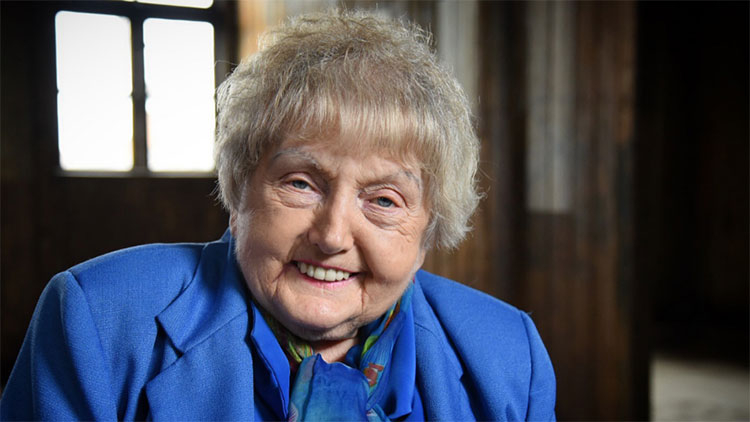


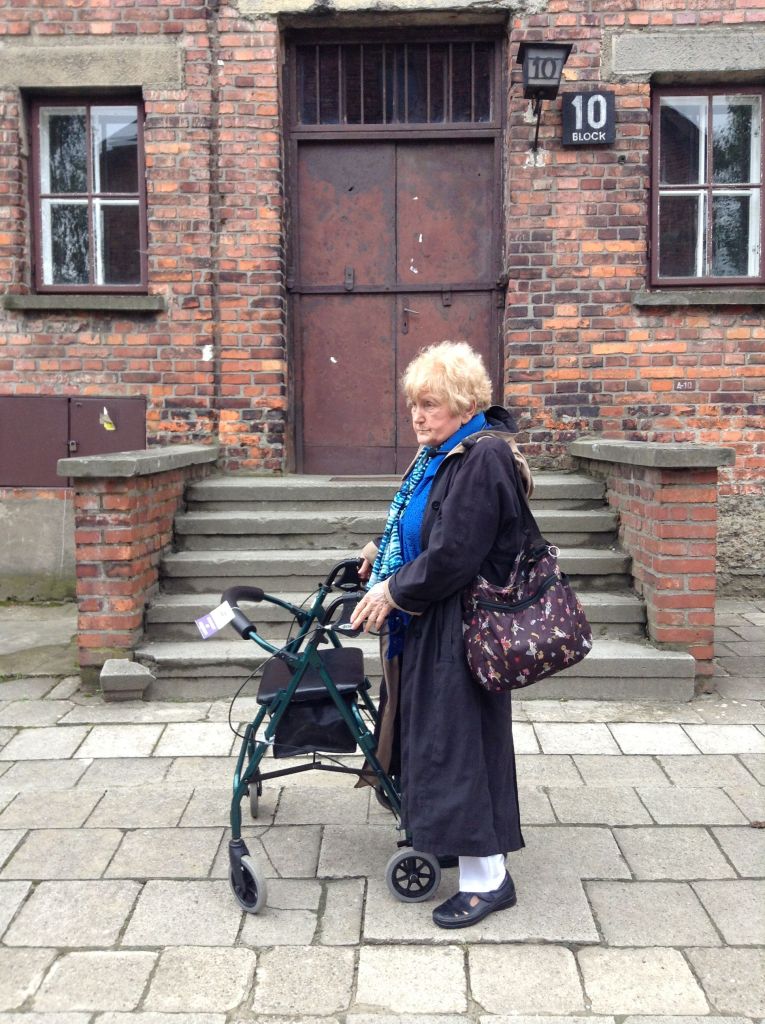
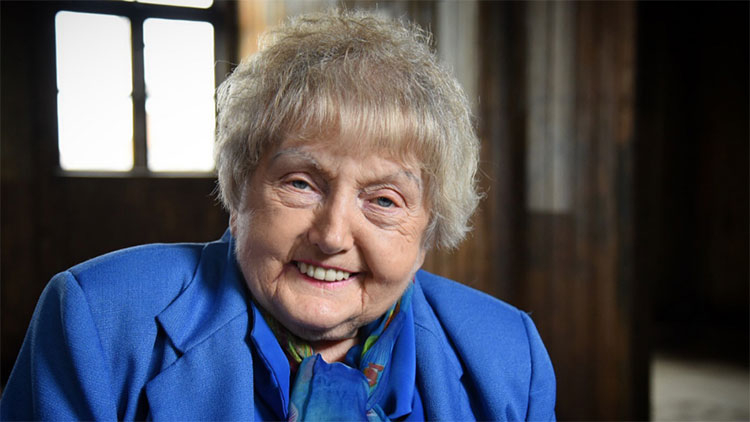

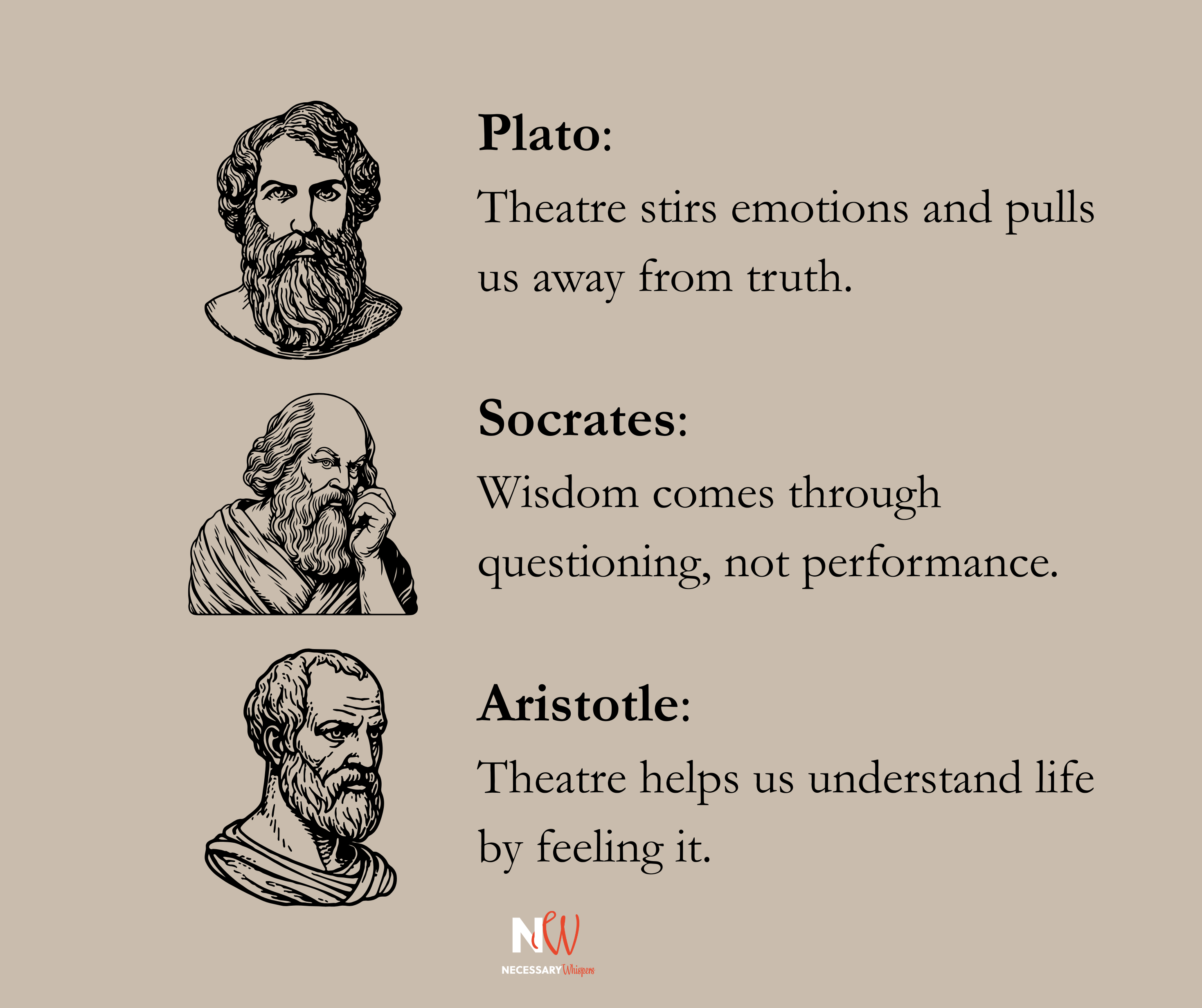
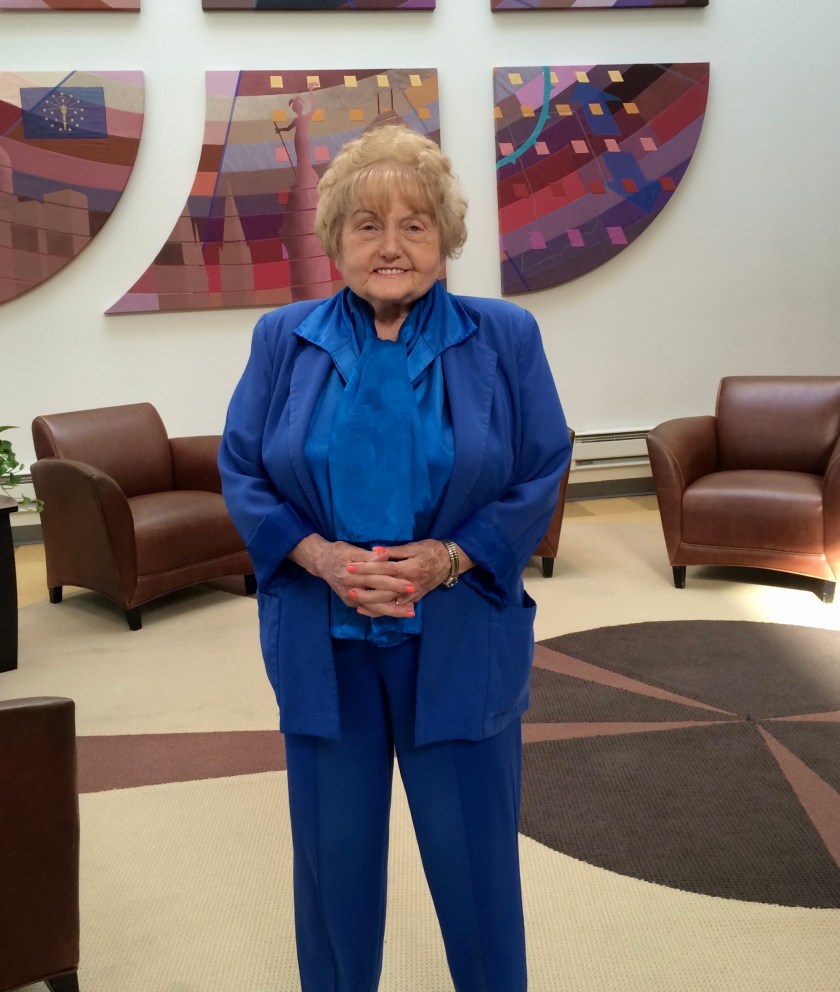
 Jill Szoo Wilson