A Candle at Auschwitz: Lit By a Former Nazi

By Jill Szoo Wilson

The story that follows is told in Holocaust survivor and Mengele Twin Eva Mozes Kor’s voice. This is a story she shared with me as we traveled together from Kraków to Oświęcim, the Polish town where Auschwitz was built. Along the way, I listened as she recounted her journey back to Auschwitz for the 50th anniversary of its liberation. It was a moment in history few people remember, yet one that reveals the depth of her courage, the radical nature of her forgiveness, and the unwavering strength with which she bore witness to the truth.

When Eva told me this story, I could hear in her voice the weight of the moment; the way history and memory collided as she stepped back into Auschwitz, not as a prisoner, but as a witness. She had spent decades making sure the world never forgot what happened there, but on that day, she had something different to say.

Marking 50 Years Since Liberation

On January 27, 1995, the world gathered at Auschwitz to mark the 50th anniversary of its liberation.

Leaders from across the globe stood in front of the infamous barbed wire fences and crumbling barracks, delivering solemn speeches about the horrors of the past in tones that varied from hushed to bellowing. A thread of solemnity wove through the crowd, pulling us into one another like a tightening rope around our waists. Once captive, now captured by the stories being retold.

Holocaust survivors—our numbers dwindling—listened as our memories were etched into the cold Oświęcim air. One man’s narrative is another man’s memory, which is to say that when I hear someone else recount what has been on endless replay in my mind for decades, I often feel as though I am watching my own past from the outside. Even as we stood shoulder to shoulder, bound by this shared history, our experiences were never the same. Auschwitz was a microcosm of the world. A place where suffering was universal, yet deeply individual.

There were ceremonies, memorials, and moments of silence. Each event lined up like dominoes, one after another, predictably falling in order. But what I had planned for the day was outside anyone’s expectations. I was the lone domino, waiting to begin a new movement altogether.

I had come back to Auschwitz this time not just as a survivor, but as a witness. I was standing beside a man who had once served the very system that tried to erase me. Dr. Hans Münch, a former Nazi doctor who had worked at the camp, had agreed to return with me, not to justify or deny, but to publicly confirm the existence and operation of the gas chambers.

It was a moment of historical significance; a Nazi doctor and a survivor standing together.

Not as enemies, but as two people willing to confront the truth.

And yet, as it would turn out, almost no one wanted to hear it.

A Historic Day at Auschwitz and Birkenau

On this anniversary, the official ceremonies took place at Auschwitz I, where German President Roman Herzog, Polish President Lech Wałęsa, and Holocaust survivor Elie Wiesel stood before the infamous “Arbeit Macht Frei” gate. They spoke of memory and responsibility, of the scars left on generations and the duty to remember. Their words did not merely recount the past—they pressed upon the present, urging the world to acknowledge its capacity for both devastation and conscience, and to ensure that such horrors never happen again.

Commemoration stretched beyond the main camp. Survivors also returned to Birkenau (Auschwitz II), the vast extermination site where nearly a million Jews were murdered. They walked the long, desolate paths between the barracks, stood before the ruins of the gas chambers, and faced the remnants of the crematoria—structures the Nazis had tried to destroy in an attempt to erase evidence of their crimes. Yet the absence of intact buildings did nothing to lessen the presence of those who had perished there.

For many survivors, this was more than a visit to a memorial; it was a return to the last place their parents, siblings, and children had drawn breath. They stood where their families had vanished into smoke, stepping into the hollowness of birthdays never celebrated, anniversaries never reached, and futures that had been stolen before they had a chance to unfold. Some whispered names into the air, speaking to their loved ones who had no graves, only this earth—this soil heavy with the petrified ash and unending goodbyes.

Birkenau is where I spent most of my time as a prisoner in the barracks set apart for Mengele Twins.

As I listened to the speeches, I respected the calls to remembrance and responsibility. But I was also remembering something else.

Fifty years earlier, I had sensed a shift in the camp. There weren’t as many Nazi soldiers around. Some of the guard towers stood empty for hours at a time. More planes flew overhead. The atmosphere felt different, and for the first time in years, I let myself wonder if something was about to change.

That flickering hope had finally ignited the moment I saw the Soviet soldiers come through the gates.

They were big men with kind faces, their shock evident as they took in the horrors around them. For so long, every uniform had meant danger, every stranger had been a threat. But then—of all things—they handed us chocolate, cookies, and hugs. They treated us not as prisoners but as children. Like human beings. And in that moment, for the first time in years, I let myself believe that I was safe. Or at least rescued.

Fifty years later, I was back. Of my own choosing. With a Nazi doctor.

Life certainly is surprising.

Who Was Dr. Hans Münch?

Dr. Hans Münch was one of the very few Nazi doctors at Auschwitz who refused to participate in mass murder, which is a distinction that set him apart but did not absolve him from the system he served.

Unlike Dr. Josef Mengele, who conducted horrific experiments on children—including myself and my twin sister, Miriam—Münch refused to take part in selections at the gas chambers. Instead, he focused on medical research and was known to falsify documents to help prisoners avoid execution.

After the war, he stood among other SS doctors at the Dachau Trials in 1947, facing accusations of war crimes. He was the only Nazi physician acquitted. Survivors had testified on his behalf, describing how he had, in small but deliberate ways, tried to save lives.

When I first met Dr. Münch, I did not know what to expect. I knew the facts, including his acquittal, and the testimonies in his defense. But I also knew this: he had still worn the uniform. He had still walked free while so many had perished.

I asked him a single question.

“Do you remember what happened in the gas chambers at Auschwitz?”

He did not hesitate.

“It’s the nightmare I live with every day of my life.”

In that moment, something shifted.

Until then, I had never imagined that a Nazi doctor could carry the weight of Auschwitz. That one of them could feel remorse—not performative, not evasive, but real. And, most importantly, he did not deny it.

He was not rewriting history.
He was not justifying his actions.
He was acknowledging the truth.

And that was why I asked him to sign a statement confirming the existence of the gas chambers.

He agreed.

A Story No One Wanted to Hear

I spent the day walking through the camp with my group, handing out leaflets about our press conference.

A survivor of Auschwitz had forgiven a Nazi. A Nazi was speaking openly about the crimes of his own regime. This should have been important.

And yet, as I passed out the leaflets, people turned away.

Some refused to meet my eyes. Others shook their heads, waved me off, hurried past. A few took the paper from my hands but crumpled it before they had even read the words. It was as if they couldn’t bear to hold it, as if touching the idea itself was too much.

They didn’t want to hear about forgiveness.

I turned to my group and said, “If I had shot or killed a Nazi, the entire world press would want to talk to me.”

And I knew I was right.

The world is far more comfortable with stories of revenge and punishment than it is with stories of forgiveness and reconciliation.

The Press Didn’t Show Up

That evening, we held our press conference–a once-in-a-lifetime event.

There were hundreds of journalists at Auschwitz for the 50th anniversary. Cameras flashed. Reporters scribbled into their notepads. They had spent the day capturing solemn reflections, moments of silence, and speeches delivered from podiums draped in flags. They had written their headlines before they even arrived.

But what we were about to share didn’t fit the story they had come to tell.

Only six showed up.

A reporter from an Israeli newspaper. A German magazine journalist. TV reporters from France, Sweden, Israel, and the Netherlands.

That was it.

I wasn’t expecting a standing ovation. I wasn’t expecting a Nobel Peace Prize. But I had hoped for a fair discussion.

Instead, the questions felt like tiny knives.

They didn’t ask Dr. Münch about what he had witnessed.
They didn’t ask about his knowledge of the gas chambers.
They didn’t ask why he had agreed to stand beside me and bear witness.

Instead, they turned on me.

They questioned my decision to meet with him. They asked how he had avoided prosecution, ignoring the fact that he had been tried three times and saved by the testimony of thirty Auschwitz inmates.

I had expected the press to be interested in his testimony.

I had hoped they would want to document the facts he had come to share.

Instead, all they wanted to know was how he had escaped punishment.

I left feeling drained, disappointed, and frustrated.

But what I didn’t know was that the next day, the moment that mattered most was still waiting for me.

A Candle No One Expected

The next day, on January 28, we gathered at the Auschwitz I crematorium to light candles in memory of those who were killed there. If you’ve never been to this place, there are some intangible details that defy anything photography or video could capture. And I don’t think that’s only because walking through the small entry roughly cut out of the cement brings to mind everything you already know about what happened here. The crematorium isn’t heavy with memories alone. It isn’t a place where our minds lead the way with well established ideas and theories on how to process tragedy. Instead, it’s a place where the atmosphere takes over and your mind bows itself in reverance to that which already exists there.

Speaking as Jill now: the first time I laid eyes on the crematorium at Auschwitz I hestitated. This moment occurred right after the docent giving us a tour of the camp stood below the gallows at which Rudolph Hoess was hanged for his crimes against humanity. Looking up at where a noose was once tied, I squinted into the sun, shielded my eyes with my hands, and I imagined the moment. Oddly enough, it wasn’t satisfying at all. Almost as if the docent heard my thoughts, he said, “Though he was killed here, we have to ask ourselves if justice has been achieved. What is justice? Does it exist in this world? One man’s life for 6 million lives? What exactly happened at this gallow?” Exactly. What happened here? Whatever it was, it wasn’t justice. This was the moment I began to learn that justice doesn’t really exist in this world. Though I fully believe justice comes in the next.

It was with those thoughts tumbling through my brain that I saw the crematorium. And hesitated. Moments later, I was standing on the very ground from which an army of souls traded their earthly comfort, dreams, relationships, trust, and breath for a new existence that flew them far above the screams and into a reality void of the suffocating presence in this place.

Now back to Eva’s re-telling.

The air was sharp, the kind of cold that tightened in your chest. Each of us had been given a candle. One by one, we stepped forward, shielding the small flames from the wind as we placed them near the ovens.

I was standing in silence, watching the flickering light, when I heard Dr. Münch’s voice behind me.

“Eva,” he said, his tone almost hesitant. “Everyone has received a candle to light. How come I did not receive one?”

I turned to face him, surprised.

“I didn’t know you wanted one,” I said honestly. “But if you do, I will be glad to give you one.”

I handed him a candle.

And then, without hesitation, he walked to the ovens and lit it.

The moment was already heavy, but then, in a voice that stopped us all in our tracks, he said:

“I light this candle in the memory of all the people I watched die in the gas chambers.”

The air shifted.

For a moment, no one spoke.

There was no script for this. No press cameras rolling. No speeches prepared. No audience waiting for a perfectly crafted moment.

Just a former Nazi doctor standing before the ruins of the crematorium, bearing witness to the truth—openly, voluntarily, without hesitation.

And in that instant, something happened that could never be undone.

In that simple act, he had spoken the words that history demanded to be heard.

Bearing Witness

For fifty years, survivors had pleaded for the world to believe what had happened within these barbed-wire fences.

For decades, deniers had attempted to rewrite history, erasing the voices of the murdered.

But here stood a man who had once been inside the system, admitting it for all the world to hear.

And yet, what moved me most was not just that he had spoken the truth.

It was that he had done it there.

On that soil.

The very ground where I had once stood as a child, stripped of everything—my home, my parents, my dignity, my name.

The same ground where I had fought to stay alive, where the ashes of those who did not survive still clung to the earth beneath our feet.

I had come back to Auschwitz to prove something.

To prove that the Nazis had not won.

To prove that despite everything—despite the unimaginable suffering—I was still here.

I had reclaimed my life.

I had reclaimed my power.

And in that moment, I saw that Dr. Münch had done something similar.

He had stepped forward—not as a prisoner, but as a man once protected by the very system that had tried to destroy me.

He had been part of it, shielded by its power.

And yet, standing before the crematorium, he did not hide.

He did not justify.

He did not excuse.

He acknowledged.

He bore witness.

He stood in the place where so many had perished, and instead of cowering behind silence, he chose to speak.


Above is a photo of Gas Chamber #2 that I took when I was at Birkenau in 2015 for the 70th anniversary of the liberation of the death camp.

Featured Image photo credit: I took that photo during my first visit to Birkenau with Eva in the summer of 2013.

To read more by Jill Szoo Wilson visit my Substack.
Forgiving a Nazi Doctor: Eva Mozes Kor’s Life-Changing Decision

I traveled to Auschwitz, Hungary, and Romania with Holocaust survivor and Mengele Twin Eva Mozes Kor to learn her story so I could write a play about her journey toward forgiveness. I listened as she recounted her experiences, watched how she carried the weight of her past, and witnessed firsthand the strength it took to forgive. Now, I am sharing what I learned in her own words because her voice is not only history. It is a call to action, and it is more important than ever.

Before she ever considered forgiving Dr. Josef Mengele, Eva made the decision to forgive Dr. Hans Münch, a Nazi doctor who had worked at Auschwitz. Unlike other former SS officers, Münch openly acknowledged the existence of the gas chambers and signed a document confirming how they were used. For Eva, his willingness to tell the truth was significant, and she wanted to give him a meaningful gift. That decision led her to write a letter of forgiveness, a choice that changed her life forever.

Searching for the Right Gift

I did not tell anyone about my idea of thanking Dr. Hans Münch, a former Nazi doctor, because I thought people would think I was crazy. How do you thank a Nazi doctor? What kind of gift could possibly be appropriate?

I decided to start at a Hallmark store, hoping that the “Thank You” card section might offer some inspiration. But as I stood there reading card after card, I felt uneasy. I did not want anyone to know what I was looking for. I spent more than two hours searching, and twice the store employees approached me.

“Are you finding what you’re looking for?” one asked.

“Not really,” I replied.

“So what are you looking for? I’d love to help you find it.”

For just a second, I considered telling her. But I knew she would never understand. My search was not normal. Instead, I said, “Thank you for asking, but I cannot tell you,” and I left the store empty-handed.

A Life Lesson in Forgiveness

Even though I could not find a gift that day, I refused to give up. I reminded myself of the life lessons I often shared in my lectures:

  • Never give up on yourself or your dreams. If I could survive Auschwitz without knowing how, then no one should ever give up on their own future.
  • Treat people with respect and fairness, and judge them by their actions, not their past.
  • Forgiveness is a personal power, one that no one can give or take away from you.

For ten months, I thought about what I could give Dr. Münch. Whether I was cooking, cleaning, driving, or doing laundry, the question lingered: how do you thank a Nazi doctor?

Then, in June 1994, the answer came to me. A simple but powerful idea: what if I wrote him a letter of forgiveness?

Immediately, I knew it was the right choice. It was not only a gift for him, it was a revelation for me. I discovered that I had the power to forgive. No one could grant me that power, and no one could take it away. I had spent my life reacting to what others had done to me. Now I was initiating action. I did not need permission. I was not hurting anyone. So why could I not do it?

I was trembling with excitement. For the first time, I felt like I had control, not just over my past but over my present and future. I had spent so many years holding onto pain, sadness, and anger, and now I saw a way to release it.

Writing the Letter

I sat down to write my letter of forgiveness, but it was not easy. At first, I addressed Dr. Münch as an evil monster. But I kept reminding myself of my goal: to reclaim my own power. I wanted to stop feeling like a victim. I wanted to stop yelling at my children out of misplaced anger. I wanted to be free from the weight of my past.

I worked on that letter for four months, revising it whenever I had time between my real estate appointments. I thought about reaching out to other Mengele Twins, but I was afraid they would not understand or might try to talk me out of it. I wanted to disarm my enemies in the most unexpected way, by forgiving them.

A Challenge from My Professor

Once I finished the letter, I could see that my spelling in English was poor. Not wanting to be embarrassed in front of Dr. Münch or anyone else who might read it, I reached out to Dr. Susan Kaufman, my former English professor at Eastern Illinois University. She was excited about my forgiveness ideas and helped me refine the letter, correcting my spelling and working through multiple drafts as I shaped my message.

Then, in her matter-of-fact tone, Dr. Kaufman said, “Eva, it is nice that you are forgiving Dr. Münch, but you really should forgive Dr. Mengele.”

I responded quickly, “This is just a thank-you letter for Dr. Münch!”

She did not listen. “When you get home tonight, pretend that you are talking to Dr. Mengele, telling him that you forgive him, and see how it makes you feel.”

My mind reeled back to Auschwitz. To the man in the crisp SS uniform, standing tall and expressionless as he looked down at me. I was 10 years old, a child, sitting in a makeshift examination room in Block 10. I could not move. Steel rods forced my eyelids open as he poured a burning liquid into my eyes, blinding me with pain. I could not cry, could not blink. All I could do was stare up at him as he conducted his experiment, cold and detached, as if I were nothing more than an insect pinned under glass.

That night, Dr. Kaufman’s challenge would not leave me. I closed my eyes and summoned the image of Dr. Mengele. Then I said aloud:

“You son of a gun, evil monster, Nazi doctor, I forgive you because I have power over you, and you have no power over me.”

And then I felt it. Relief.

For the first time, I was in control. Mengele had dictated so much of my suffering, but in that moment, I took something back. I was not hurting anyone by saying it. I was not rewriting history or erasing the horrors he had committed. But I was stripping him of the power he still had over me.

If I could forgive him, the worst of the worst, then what about the others?

The kids who harassed me for eleven years on Halloween, banging on my door, mocking me, tormenting me.

The Capitol police who grabbed me, tore my rotator cuff, and left me with permanent damage when they arrested me in the Capitol Rotunda on May 6, 1986. All because I stood up and demanded justice, shouting: “Memorial services are not enough. We need an open hearing on Mengele-Gate!”

If I could forgive Mengele, then what power did any of these people have over me?

That was the turning point. I rewrote my forgiveness letter, not just for Dr. Münch, but for every person who had ever hurt me.

A Historic Moment at Auschwitz

On January 27, 1995, I returned to Auschwitz with Dr. Münch. It was the 50th anniversary of the camp’s liberation. I knew other survivors would be there, but I arrived with an unusual group: Dr. Münch, his family, and my own family and friends. I was not worried about his presence; after all, he was there to document the gas chambers and provide historical confirmation of what had happened.

But I underestimated how others would react. My son, Alex, and my friend Mary Wright asked, “What do we do if someone attacks Dr. Münch?” I had not considered that possibility. I expected resistance, maybe even disapproval, but not hostility.

Security at Auschwitz was strict. We were a few minutes late, and they refused to let us in. “Fifty years ago, I was a prisoner here, and they would not let me out,” I told them. “Now, they will not let me in.” Eventually, we were allowed through.

At the ruins of Gas Chamber #2, I read my letter of forgiveness out loud. The words hung in the frozen air. Dr. Münch’s face was unreadable at first, then slowly shifted. He was stunned. Finally, he turned to me and said, simply, “Thank you.”

Throughout the day, he kept trying to walk arm-in-arm with me. I hesitated, wondering how that would look to other survivors. Later in the day, I slipped on the icy road and he caught me before I fell. Suddenly, I was grateful he was close enough to steady me. Not everything is as it appears.

That day, we handed out 400 copies of a press release about the two documents we had created, one related to Dr. Münch’s testimony about the gas chambers at Auschwitz, and one expressing forgiveness. Only six journalists showed up.

The Power of Choice

I have been criticized for my decision to forgive. Some survivors and their families have protested against me, insisting that my forgiveness was an insult to their pain. But when I asked how my choice to forgive hurt them, they could not explain.

The truth is, forgiveness is a personal choice. It is not about excusing evil or forgetting history. It is about reclaiming power over our own lives. It is about refusing to let the past dictate our future.

No one could give me that power. No one could take it away. It was mine, and mine alone, to claim, to use, and to reclaim my own freedom.

© Jill Szoo Wilson, 2025

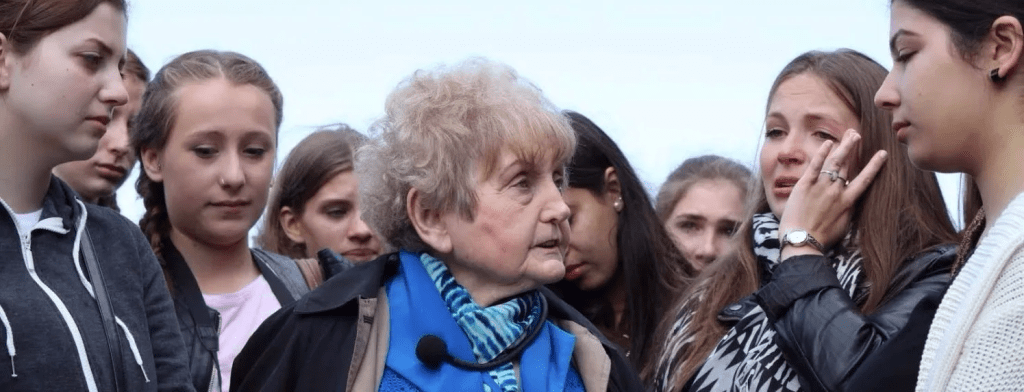
Photo credit: I am not sure who took this particular photo, but I was there when it was taken in 2013. We were standing inside Birkenau on the selection platform, near the cattle car that still stands there today. Eva was speaking to a small group that had gathered around her when this group of young German students stopped to listen from outside the circle. When Eva realized they were German, she invited them into the circle. It was then that the girls began to apologize to Eva on behalf of their ancestors. She told them they did not owe her an apology because they had done absolutely nothing wrong. She encouraged them to simply learn from their mistakes and to be light and love in the world. This was one of my favorite public moments with Eva.

Read more by Jill Szoo Wilson on Substack.

Trapped in the West Bank: Eva Mozes Kor’s Harrowing Encounter

In 2015, Holocaust survivor and Mengele Twin, Eva Mozes Kor sent me an email recounting one of the most harrowing experiences of her later years: an encounter in the West Bank that left her feeling vulnerable in a way she hadn’t since Auschwitz. The email was raw, unfiltered, and deeply personal.

As I revisit her words, I have chosen to write this piece in her own voice, staying true to the way she described the events to me. It offers a glimpse into the complexities she faced, not only as a Holocaust survivor and educator but as someone who, even decades after her liberation, found herself in situations that tested her sense of safety, trust, and resilience.

This is her account.


In July 2005, I traveled to Israel as part of the filming process for Forgiving Dr. Mengele, a documentary about my journey as a Holocaust survivor and my philosophy of forgiveness. The trip was filled with emotional moments: revisiting the agricultural school in Magdiel where I lived after Auschwitz, reconnecting with my sister Miriam’s family, and filming an interview with fellow Mengele Twin survivor, Jona Laks, at the Jewish Heritage Museum. But nothing prepared me for one of the most harrowing experiences I had since liberation.

Bob and Cheri, the filmmakers, had arranged for me to meet with a group of Palestinian educators to discuss a book written collaboratively by Israeli and Palestinian teachers. The book aimed to help students from both sides better understand each other’s histories. It seemed like an interesting and worthwhile project, and I was open to hearing their perspectives. But as the meeting approached, I found myself increasingly uneasy.

I had been under the impression that we would be meeting these teachers in Jerusalem. Instead, we suddenly arrived at a border checkpoint, where we were told we had to cross into the West Bank on foot. I had no idea this was part of the plan, and panic set in. Refusing to cross would cause problems, but I couldn’t shake the feeling that I was walking into something dangerous.

On the other side, a Palestinian professor named Sami met us, surrounded by a group of young Arab men speaking in Arabic. It was clear that they were discussing me, but I couldn’t understand what they were saying. That alone made me feel incredibly vulnerable. I had dressed modestly out of respect for their customs, wearing a long skirt instead of my usual pants, but that did little to ease my growing discomfort.

Sami took me to a bombed-out building and told me, “See, this is what the Israelis did to us.” I had seen the destruction before; it had been there for three years. “Why haven’t you cleaned it up?” I asked. Sami said they didn’t have the money. “You don’t need money to clean up a site,” I replied. “You need strong young men, and you have plenty of them.” I saw what he was doing. He assumed I was a naïve, bleeding-heart liberal who would unquestioningly accept his victim narrative. But I had been an Israeli soldier. I knew the conflict was far more complicated than he wanted me to believe.

The real ordeal began when I was taken to an Arab school in Bethlehem, where I was introduced to eight Palestinian teachers and one Israeli professor. The Israeli professor, the one who had convinced Bob to set up this meeting, never showed up. I felt abandoned, surrounded by people who saw me not as a Holocaust survivor, not as an individual, but simply as an Israeli and a Jew.

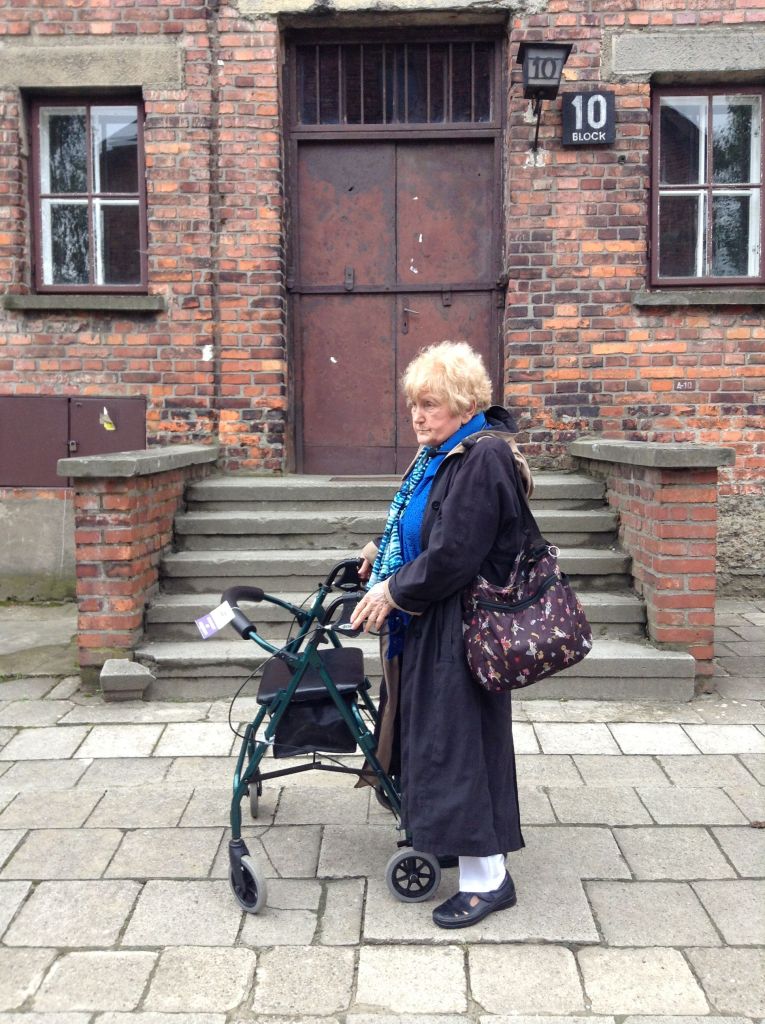
I took this photo of Eva Mozes Kor outside Block 10 in Auschwitz I.

As we began filming, the conversation had nothing to do with the book I had come to discuss. Instead, the teachers launched into a four-hour tirade about how Israel had made their lives miserable. I wanted to ask why the restrictions they complained about had been put in place, but I was afraid to say anything. I was in their hands. Bob and Cheri had no power to protect me. The fear was paralyzing. I felt like a hostage, unable to speak, unable to defend myself, unable to leave.

Eventually, I ran out of the room, sobbing uncontrollably. I hadn’t felt so trapped and powerless since Auschwitz. Bob and Cheri were apologetic, but it was too late. My goodwill had been exploited for a political agenda, and my trust had been shattered. The final humiliation was sitting down to eat with the teachers. I pretended to take a few bites so as not to offend them, but all I could think about was escaping.

It was nearly 10:30 p.m. before I was finally back on Israeli soil. Only then could I breathe again. Only then did I feel safe.

This experience reinforced something I have always believed: Many Holocaust survivors who live in Israel are still on the battlefield every single day. Their war did not end in 1945. The trauma of persecution never truly fades when you must still fight for your right to exist.

As for me, I survived yet again. But I will never trust so easily again.

© Jill Szoo Wilson, 2025

Read more by Jill Szoo Wilson on Substack.

The Question of Justice: Forgiveness vs. Accountability

In conversations about forgiveness, Eva Mozes Kor, Holocaust Survivor and Mengele Twin, was often asked tough questions about justice, especially regarding criminals, terrorists, and those who have killed. One such question came from a UK film director, who asked, “Should we just forgive them and let them go?” This question challenged Eva’s own ideas of forgiveness and set her on a path to delve deeper into the complexities of justice and forgiveness.

Her response to this challenge was powerful: “We must decide what we want the end result to be,” she explained. If the goal is punishment, then “we just hang him/her,” because after all, she had spent her life hearing the statement, “Justice must be done.” But Eva quickly challenged that notion, pointing out that while justice sounds simple, the reality is far more complicated.

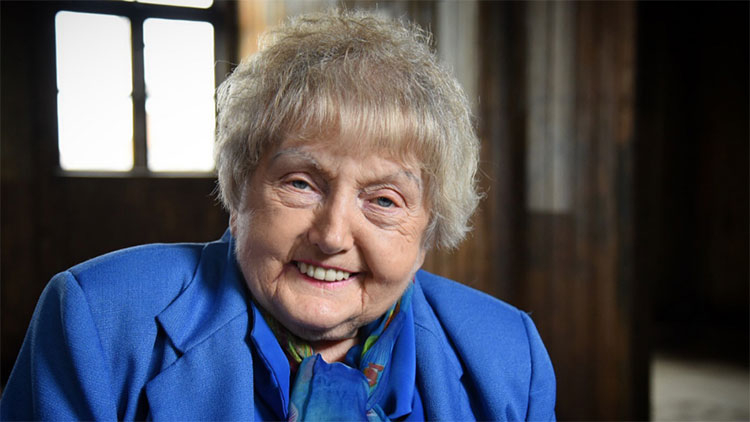
Eva Mozes Kor, Holocaust Survivor and Mengele Twin

The Search for Justice: Mengele’s Escape

Eva shared her concerns about how justice was sought for the Nazis after World War II, focusing specifically on Dr. Josef Mengele, the infamous Nazi doctor who performed experiments on Eva and her twin sister, Miriam. Mengele’s arrest under his name by the American forces, only to be released a day later due to a mistake, underscored the failure of justice. Despite his heinous crimes, Mengele’s name was never included in the Nuremberg Trials, and it wasn’t until 1985 that serious efforts were made to find him.

Eva had long been suspicious of the official accounts of Mengele’s death. In 1985, after taking a group of Mengele twins to Auschwitz to mark the 40th anniversary of the camp’s liberation, the search for Mengele’s whereabouts became an international story. Governments like those of Germany and the U.S. announced that Mengele’s bones had been found in Embu, Brazil, but Eva remained skeptical. The rushed, secretive nature of the investigation raised red flags for her.

The Inquest: Investigating Mengele’s Death

Eva’s suspicions led her to take action. Determined that survivors had the right to examine the truth, she organized an inquest into Mengele’s death, inviting forensic experts, historians, and survivors of Auschwitz, including Mengele twins. Eva could not raise funds for the inquest, so she took out a second mortgage on her house to pay for the investigation. This decision highlighted Eva’s unwavering commitment to finding the truth.

Just days before the inquest was set to begin on November 15, 1985, Eva received what she said was a threatening phone call from Neal Sher, the director of the U.S. Justice Department’s Office of Special Investigations. He demanded that Eva provide the names of those who had seen Mengele alive after 1979, or face the possibility of U.S. Marshals visiting her. Eva stood firm, refusing to yield to threats and continuing with the inquest.

The Inquest Findings: The Mystery Deepens

During the three-day inquest, experts including pathologist Dr. Michael Baden, psychologist Dr. Nancy Segal, and German-educated physician Dr. Werner Loewenstein examined the evidence. Dr. Loewenstein, who had translated Mengele’s SS files, was pivotal in uncovering discrepancies in the investigation. He revealed that the bones found in Brazil could not be Mengele’s because they lacked evidence of osteomyelitis, a condition documented in Mengele’s medical history. This revelation cast doubt on the official story and bolstered Eva’s belief that the investigation had been a rushed cover-up.

The panel of experts, including Eva herself, reviewed the U.S. Justice Department’s forensic report and called for further investigation. They raised serious concerns about the findings, including discrepancies in the identification of the bones and the absence of investigations into post-1979 sightings of Mengele. Despite this, the official stance remained that Mengele had died in 1979.

The Call for Justice: Victims’ Rights and Compensation

Beyond the questions surrounding Mengele’s death, Eva also highlighted the ongoing suffering of survivors of his experiments. Many of Mengele’s victims, particularly the twins, suffered from chronic medical conditions such as kidney issues, heart problems, and spinal degeneration, all due to the unscientific and inhumane experiments Mengele conducted at Auschwitz. Despite the immense suffering, the German government had yet to offer compensation to these survivors.

Eva used her platform to call for justice for the victims of Mengele’s experiments, urging the German government to compensate them for their pain and medical costs. She made it clear that the failure to offer compensation was an embarrassment to the German government and a further injustice to those who had already endured so much.

The Power of Forgiveness: A Call to Action

Throughout her efforts, Eva remained steadfast in her belief in the power of forgiveness, a principle that had defined her personal healing since she forgave the Nazis in 1995. In the face of betrayal, deception, and injustice, Eva continued to advocate for forgiveness as a means of healing, not just for herself but for the world.

Eva’s call to action extended beyond the personal. She proposed an addendum to the Universal Declaration of Human Rights that would include the right to emotional healing, emphasizing forgiveness as a necessary act for personal and societal well-being. Through forgiveness, Eva believed that victims could transcend their suffering and reclaim their emotional freedom.

Conclusion: A Legacy of Justice and Healing

Eva’s journey to uncover the truth about Mengele’s death and the suffering of his victims was not just about seeking justice for the past. It was about ensuring a future where forgiveness, healing, and emotional freedom were recognized as fundamental human rights. Her efforts to shine a light on the long-term pain caused by atrocities and the need for healing through forgiveness resonate as deeply today as they did in 1985.

Eva Mozes Kor’s legacy continues to inspire those who seek justice, understanding, and healing, teaching us that while forgiveness is a personal journey, it also has the power to shape a more just and compassionate world.

© Jill Szoo Wilson, 2025

Read more by Jill Szoo Wilson on Substack.