
By Jill Szoo Wilson
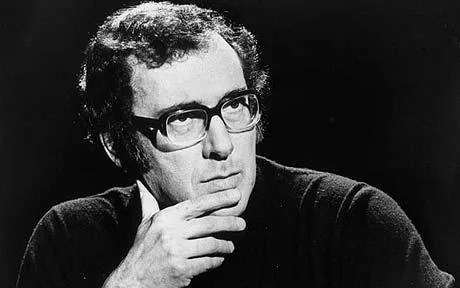
Harold Pinter once remarked, “There are two silences. One when no word is spoken. The other when perhaps a torrent of language is being employed.” Among modern dramatists, few have explored the implications and resonances of silence with the same persistence and precision as Pinter. His plays are distinguished not only by their linguistic sparseness but also by their charged quietude. In Betrayal (1978), The Homecoming (1964), and The Dumb Waiter (1957), Pinter deploys silence not as an absence but as a palpable and often overwhelming presence. This presence operates relationally, capable of extending an emotional invitation or delivering a brutal rejection. Through careful attention to dialogue, subtext, and performance, this essay will demonstrate how Pinter constructs a theatrical world where silence functions as a principal mode of meaning-making. Particular attention will be paid to textual examples, actorly demands, and the ways in which silence shapes power dynamics, vulnerability, and emotional intimacy.
Silence and Subtext: A Pinteresque Lexicon
Pinter’s contribution to twentieth-century drama is inseparable from his distinctive use of silence and subtext. Although he did not formally define the term, the “Pinter Pause” has become synonymous with his work. In script after script, these moments are carefully notated, drawing the reader and performer into the unspoken life of the character. Pauses and beats interrupt otherwise straightforward exchanges, drawing attention to what is not being said. These interstices are not neutral or empty. They are saturated with implication and possibility.
Pinter himself stated, “The speech we hear is an indication of that which we don’t hear” (Pinter, “Writing for the Theatre,” in Various Voices: Prose, Poetry, Politics 1948–2005). In his dramaturgy, language is not a transparent vehicle of communication. It is instead a defense mechanism, a smokescreen, and a performance of control. Within and around the spoken word exists an undercurrent of subtext—unvoiced thoughts, resisted emotions, or intentions obscured by fear or duplicity. In Pinter’s world, subtext is not an accessory to dialogue. It is the terrain upon which relationships unfold.
Actors and directors must contend with this layered approach. Every silence is a site of potential energy. A pause may represent hesitation, fear, contempt, longing, or calculation. The same moment may carry contradictory meanings, depending on context and performance. Subtext thus becomes a shifting field of interpretation. Its mutability is what grants Pinter’s work both its dramatic tension and its psychological complexity.
Betrayal: The Silence of What Goes Unsaid
The structure of Betrayal itself constitutes an act of subversion. Told in reverse chronology, the play invites the audience to move backward in time, tracing a failed affair to its inception. This narrative inversion heightens the impact of silence, as each scene is haunted by the knowledge of what will come. The silences in Betrayal are suffused with retrospective meaning. They are not only expressive of the characters’ present discomfort or confusion but also suggestive of what the audience already knows but the characters have not yet discovered.
In the opening scene of Betrayal, which takes place in 1977, Emma and Jerry meet in a pub, two years after the end of their affair. The audience quickly learns that Emma has just recently told her husband, Robert, about the affair—only two days before this meeting with Jerry. The chronology is emotionally disorienting: the affair has long ended, yet its consequences are still unfolding in real time. The meeting is steeped in residual tension and mutual discomfort, marked by Emma’s cryptic disclosures and Jerry’s halting responses. Their dialogue is spare, marked by hesitations and omissions. Emma says, “Yes. We had lunch.” A pause follows. She then adds, “He told me.” She is referring to the fact that Robert has told her he knows about the affair. Jerry responds with surprise: “He told you?” Emma confirms, “Yes.” Jerry, visibly shaken, asks, “When?” and Emma replies, “Two days ago.” The audience is made to linger in these brief silences, each one a site of compressed history. In those moments of quiet, the viewer is invited to contemplate the emotional cost of betrayal, the weight of unspoken guilt, and the residue of unresolved intimacy. These silences create a space in which the audience can sense the fragility of the relationship and the distance that now separates these former lovers. The emotional discomfort becomes palpable as the audience is asked to fill in what is deliberately left unsaid. These lines do not simply report a past event. They reopen a wound and expose the lingering tension beneath the surface civility. Emma’s short responses simultaneously invite Jerry into a shared reckoning and withhold the emotional clarity he seems to seek. Her reluctance to elaborate becomes a form of control, a means of resisting vulnerability while exposing the emotional rupture between them.
Jerry’s silences throughout the play are equally instructive. When confronted with uncomfortable truths, he often retreats into silence rather than risk emotional exposure. The pauses he employs do not indicate a lack of thought. On the contrary, they suggest an overabundance of conflicting feelings—regret, guilt, desire, and nostalgia. Silence, for him, becomes a form of resistance against both judgment and self-revelation.
As the play moves backward in time, the silences accumulate emotional weight. What is left unsaid becomes more significant than what is verbalized. The affair itself is not simply a story of physical intimacy or romantic connection. It is a narrative of missed opportunities, unspoken grievances, and repressed emotions. Silence, in this context, functions as the grammar of loss.
The Homecoming: Silence as Power and Resistance
While Betrayal explores the emotional dimensions of silence, The Homecoming foregrounds its political and psychological uses. Set in a working-class household in North London, the play revolves around the return of Teddy and his wife Ruth to Teddy’s family home. The male characters engage in ongoing contests of power, often articulated through cryptic dialogue and sudden silences. In this setting, speech is used as a form of assertion, while silence becomes an even more potent means of control.
Lenny, one of Teddy’s brothers, exemplifies this dynamic. In a particularly well-known monologue, he recounts an encounter with a woman in Soho. Midway through the speech, he pauses: “So I decided, all things considered, to take a walk round the park.” A silence follows. He continues, “On my way I passed a woman. I mean she was a girl, really.” The silence here performs multiple functions. It draws the listener in, interrupts the narrative flow, and heightens the suspense. More significantly, it allows Lenny to assert dominance over his audience. He controls not only the conversation but also the rhythm and emotional trajectory of the scene.
Ruth’s use of silence is markedly different. Throughout much of the play, she speaks little. Her stillness, however, unsettles the men. In scenes where she is questioned or spoken about, her refusal to respond transforms her into a figure of mystery and power. When she does speak, her words carry extraordinary weight precisely because they are so infrequent. In the climactic negotiation over whether she will remain in the house and under what terms, Ruth’s silences function as a form of authorship. Through her quiet, she exerts agency not by confrontation but by redirection. When the men in the household propose that she remain with them in a newly defined role, Ruth does not protest, negotiate, or assert power in any traditional sense. Instead, she listens, responds selectively, and maintains long stretches of silence that significantly shift the tone of the conversation. These silences draw attention to her presence and force the men to interpret her intentions without the benefit of clarification. In this way, she assumes control of the situation by unsettling their expectations and refusing to meet them on their terms. Her stillness becomes its own language; one that conveys dominance without defiance, and influence without aggression.
The silence in The Homecoming is not merely dramatic punctuation. It reveals the brutal economy of emotional exchange within the family. What is not said is often more violent than what is. The pauses expose resentments, alliances, and threats. In this environment, silence becomes a language of power.
The Dumb Waiter: Silence in the Absurd and the Menacing
Written more than a decade before Betrayal, The Dumb Waiter demonstrates Pinter’s early command of dramatic silence. The play features two hitmen, Ben and Gus, confined to a basement room as they await instructions from an unseen employer. Their exchanges are fragmented and mundane, yet frequently interrupted by long, uneasy silences. These silences are not incidental. They function as structural elements, shaping the play’s rhythm and establishing its psychological tone.
In one exchange, Gus asks, “What time is he getting in touch?” A silence follows. Ben replies, “He won’t be long now.” The simplicity of the dialogue conceals its emotional complexity. The pause that precedes Ben’s reply is not merely a moment of thought. It is a withholding—a quiet act of evasion that reveals more than it conceals. Earlier in the same scene, Gus ventures a more vulnerable question: “You ever get the feeling that the job’s getting a bit, well, out of hand?” Ben offers no response. A long pause ensues. These accumulating silences become progressively more charged, reflecting both a growing uncertainty about the nature of their assignment and a refusal—on Ben’s part—to confront the moral and emotional implications of their work.
As the tension escalates, Gus becomes increasingly unsettled. He presses for answers, asking, “Who’s it going to be today, then?” and “Why don’t we ever see them?” His questions, filled with quiet desperation, are met with clipped replies or deflection. Ben’s silences take on the quality of denial. He refuses to acknowledge the absurdity of their task, the fear that is gradually taking hold of Gus, or the deterioration of their professional rapport. His minimal responses and long pauses create emotional distance, allowing him to shield himself from reflection and discomfort.
Rather than engage with the rising tension or the ethical ambiguity of their assignment, Ben falls back on monosyllables and stoic quiet. In doing so, he preserves the appearance of order in a situation that is steadily unraveling. The silence between the two men is no longer an empty interval. It becomes a charged space—a manifestation of dread, estrangement, and the repression of conscience. Through this increasingly oppressive silence, Pinter dramatizes the collapse of not only language, but also of mutual understanding and moral coherence.
The dumb waiter apparatus itself introduces an additional layer of communicative breakdown. It delivers cryptic food orders from above, devoid of human presence or explanation. The absence of a voice renders the authority both faceless and omnipresent. Communication becomes mechanical, one-directional, and dehumanizing. The men are spoken to, but have no one to answer. This impersonal exchange heightens the atmosphere of menace and absurdity. Silence, in this context, is not passive. It is a form of control.
As the play progresses, the interplay between speech and silence reflects the characters’ deepening existential uncertainty. Their language fragments. Pauses lengthen. Repetitions proliferate. Meaning begins to disintegrate. In this context, silence becomes more than a tool of tension. It signals psychological erosion. The play’s final moments, stripped of meaningful dialogue, leave the audience suspended in a silence that points not to resolution, but to potential violence, left unspoken, yet palpably imminent.
Acting Pinter: Precision and Presence
To perform Pinter’s text is to engage in an exercise of rigorous restraint. Actors must imbue each silence with intention. Peter Hall, a longtime collaborator of Pinter’s, noted that “the pauses are not technical; they are emotional.” This observation captures the essence of the challenge. A pause must never be empty. It must always be inhabited by thought, memory, resistance, or desire.
In Betrayal, the actor portraying Jerry must balance conflicting emotions—longing, remorse, and confusion—often within a single line or beat. In The Homecoming, Ruth’s silences must destabilize the entire dramatic environment. The actor must convey strength, ambiguity, and erotic charge without overt display. In The Dumb Waiter, Gus’s gradual descent into fear must be readable in his stillness, his hesitations, and his silences.
This level of specificity demands not only technical skill but profound emotional awareness. The actor must trust the text and the audience. The silences are not gaps to be filled. They are spaces to be honored. Each beat must emerge from a lived internal process. Only then can the full resonance of Pinter’s language—and its absence—be realized.
Conclusion
Harold Pinter’s use of silence across Betrayal, The Homecoming, and The Dumb Waiter reveals a sophisticated dramaturgy rooted in the complexities of human communication. Silence in these works is never passive. It is always expressive, always consequential. It functions relationally, capable of drawing characters together or forcing them apart. It expresses vulnerability, power, resistance, and ambiguity.
For actors, these silences represent some of the most demanding material in modern theatre. They require a commitment to subtext, an understanding of emotional timing, and a capacity for internal stillness. For audiences, the experience of these plays becomes one of heightened attention. The silence insists on active listening. It challenges the expectation that meaning resides in speech alone.
In an age characterized by constant noise and distraction, Pinter’s theatrical silences stand as radical interventions. They create space: space for thought, for emotion, for recognition. In doing so, they reaffirm the power of theatre not only to represent but to embody the human condition. Silence, in Pinter’s hands, is not the absence of meaning. It is its most concentrated form.
 Jill Szoo Wilson