Museums invite looking, yet most visitors treat art the way they treat emails: a quick skim, a polite nod, and on to the next thing. We spot a recognizable subject or a pleasing color, think, “Ah yes, culture,” and keep walking. Studies suggest that viewers spend less than thirty seconds with a work of art before moving on. It is possible to tour an entire gallery without truly arriving anywhere at all.
Slow Art suggests another way to exist among masterpieces.
Rooted in the broader Slow Movement and formally organized with Slow Art Day in 2010, the practice encourages viewers to remain with a single artwork long enough for something meaningful to happen. The idea is simple: stop rushing. Stop conquering exhibitions like they’re errands. Let a painting interrupt the pace of your day.
Of course, the mind resists immediately. The moment we sit down and dare to look, our thoughts fling themselves into crisis: seventeen neglected texts, three unpurchased groceries, and the intrusive belief that productivity is our moral duty, and this bench is a crime scene. Apparently, stillness is very dramatic.
Yet if we continue to sit, the noise eventually settles. We start to notice the obvious things we missed when our thoughts were busy staging a coup: light falling across a shoulder, a line of color we would have sworn was not there a moment ago. Philosopher Maurice Merleau-Ponty argued that seeing is never passive; we do not merely observe the world. We are in conversation with it. Given time, a painting stops acting like an object and begins to behave like a presence. It answers back.
Meanwhile, neuroscience is offering evidence for what artists have always suspected. When we linger with an artwork, the brain does more than register shape and shade. Regions connected to memory, imagination, and empathy start sparking awake, as though the mind suddenly recalls it has a richer job than survival. Interpretation emerges. Emotion slips in without asking permission. You are no longer deciphering the art. You are encountering yourself.
Slow looking becomes a decision to let meaning unfold at its own pace.
It is a tiny rebellion against the cult of efficiency. Instead of demanding results from a painting — explain yourself, be profound, hurry up — we allow the experience to be unmeasurable. Sometimes revelation arrives. Sometimes quiet does. Both are victories over the museum sprint that ends with a gift shop purchase and no recollection of the gallery that preceded it.
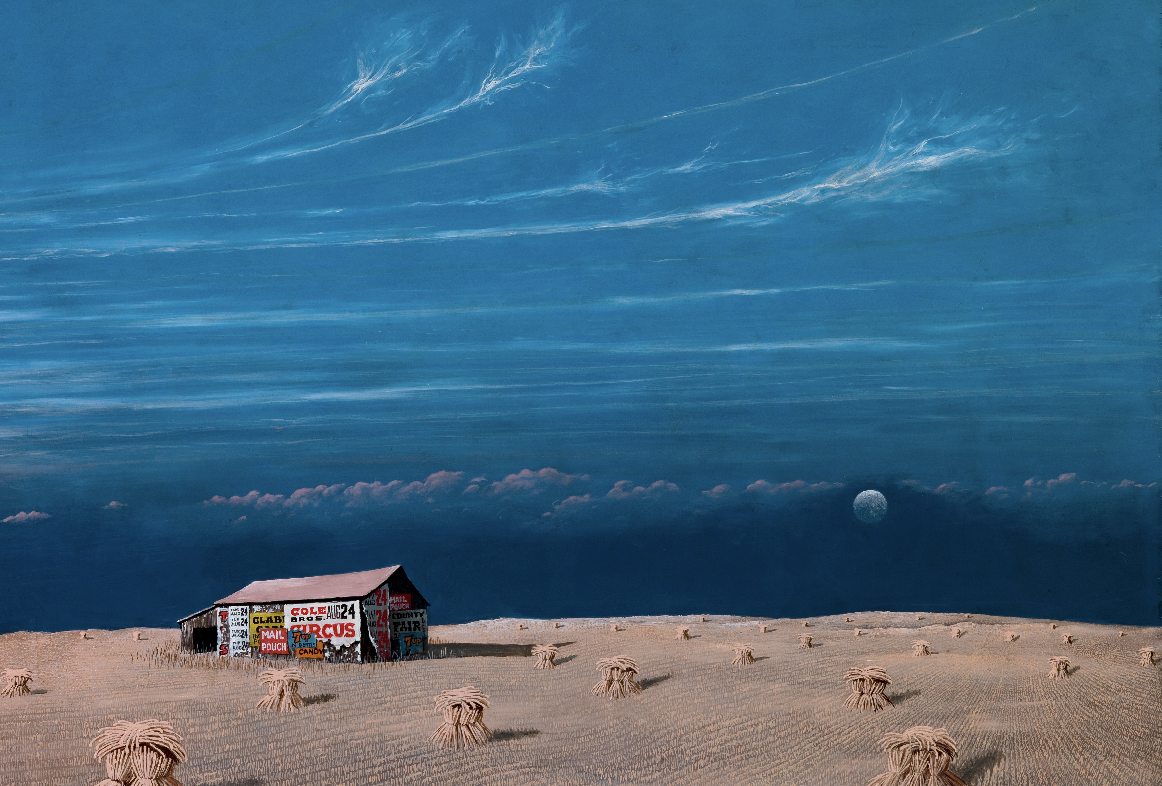
This week, I sat with a painting of moonlit fields and distant wind. Nothing moved, yet somehow everything did. The air itself seemed to stretch across my skin, my breath eased, and the horizon widened inside me. It felt like remembering how to be a person rather than a calendar.
I answered the art’s invitation in the only way I know: by writing.
Cloud Trails, by John Rogers Cox
Hush
By Jill Szoo Wilson

My dear, now hush. Unburden every care;
The silent fields invite your breath to slow.
The wind lifts strands of worry from your hair
And strokes your cheek with touches soft and low.

O moon, shine steady, hold your silver ground;
A lantern calm above the world’s unrest.
Pour down a peace too deep for any sound
And press a quiet knowing to the chest.

Kind wind — sweet wanderer — move as you will;
Let coolness glide along these open hands.
Brush thought from thought, invite my heart to still,
And ferry calm across the quiet lands.

Here, nothing strives. The wide horizon sighs—
At last, the soul grows spacious as the skies.
The early twentieth century cracked most of us wide open. World War I had just annihilated an entire generation of young men. Empires collapsed. The old order—monarchies, religious authority, philosophical certainty—gave way to disillusionment, cynicism, and grief. In the ashes of this upheaval, Europe faced a spiritual crisis. The machine age promised progress but brought with it dehumanization. Capitalism swelled. Cities exploded. Laborers were alienated from their work, and communities from one another. Even language seemed to falter under the weight of so much loss.
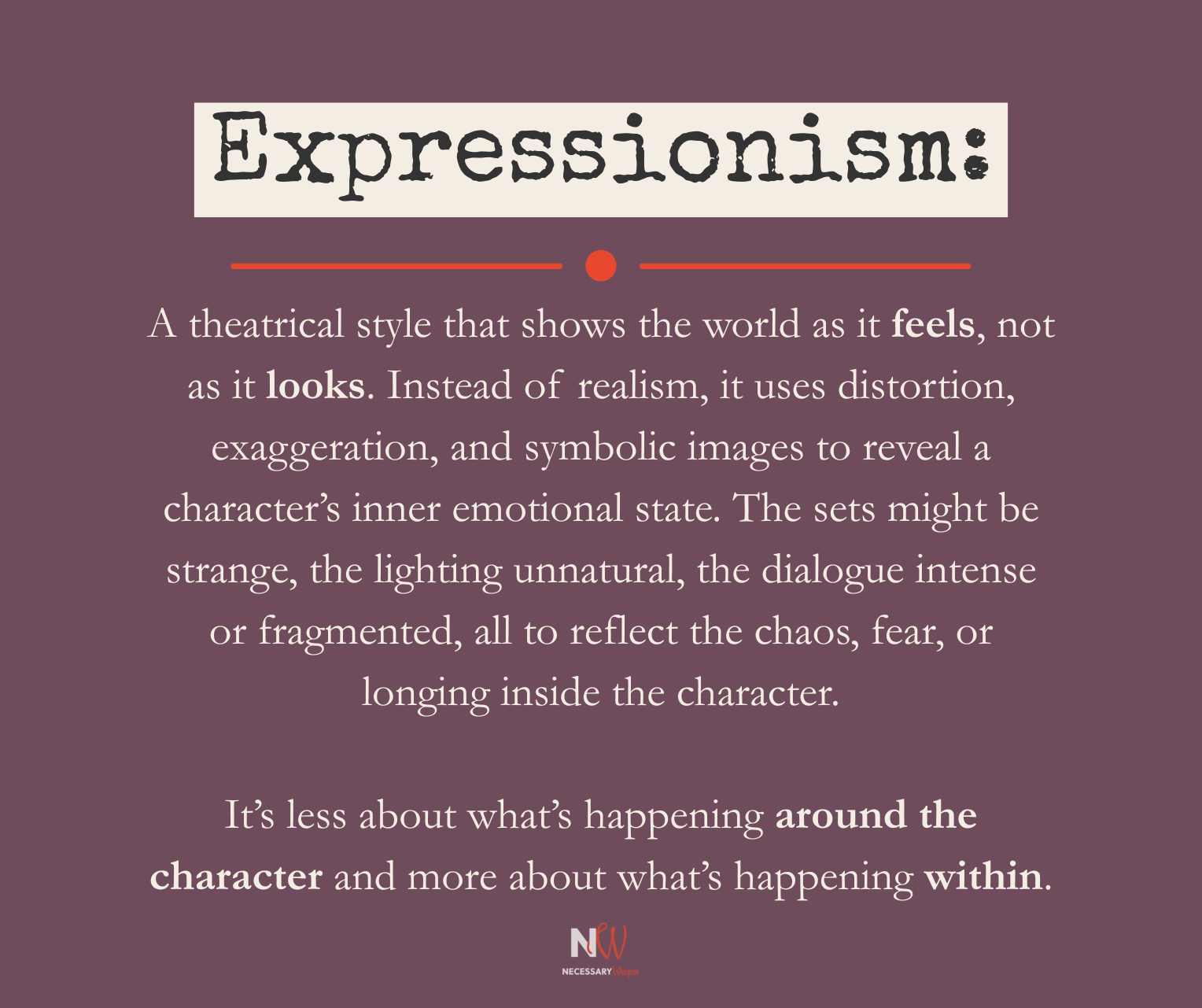
Expressionism emerged not just as an aesthetic reaction but as a psychological necessity. It rose in Germany just before and after the First World War, when artists, writers, and thinkers could no longer trust polite forms or representational art to convey the depth of their unrest. The goal was no longer to describe the world, but to reveal what it felt like to live inside its unraveling.
Expressionism didn’t aim to reflect reality. It aimed to confront it. To scream. To force the invisible into view. It distorted shape and color. It abandoned polite storytelling. It turned theatre into a site of emotional exposure. Art no longer asked to be admired. It demanded to be felt.
Playwrights like Georg Kaiser and Ernst Toller wrote not from detachment, but from fever. Their characters howled, wandered, broke open. In From Morn to Midnight, Kaiser’s bank clerk steals a fortune in search of meaning, only to spiral into surreal chaos. Toller’s Man and the Masses, written from a prison cell, thrusts its characters into revolution and despair. These weren’t dramas about individuals so much as spiritual X-rays. The characters bled longing and confusion. Their journeys didn’t resolve. They collapsed under the weight of their own yearning.
Expressionist theatre rejected realism’s comfort. Sets twisted into unnatural angles. Shadows devoured space. Costumes hinted at archetype, not personality. Actors moved like puppets or machines, tracing patterns that suggested they weren’t free but shaped, warped by invisible forces. The stage no longer depicted a living room. It became a mind under pressure, a soul under siege.
And that pressure had a point. Expressionism didn’t aim to confuse. It aimed to rupture numbness. When language failed, characters shouted. When logic failed, time fractured. These stories didn’t ask the audience to observe. They asked them to wake up.
In America, Expressionism evolved but kept its urgency. Elmer Rice’s The Adding Machine followed Mr. Zero, an accountant replaced by a machine. Rice filled the play with grotesque figures and abstract settings. Mr. Zero’s afterlife felt as soulless as the office he left behind. Rice didn’t mourn Zero’s death. He exposed the deeper loss, his humanity erased long before he died.
Eugene O’Neill pushed further. In The Hairy Ape, a laborer named Yank fights to belong. Society mocks him. His voice frays. His movements grow brutal. By the final scene, he collapses in the arms of a caged gorilla, an image that cuts through metaphor. O’Neill doesn’t leave us with an explanation. He leaves us with an ache.
Expressionism isn’t hopeless. It hungers for clarity. It distorts not to destroy but to reveal. Its jagged lines point toward the truth realism can’t hold. When a character screams, the play doesn’t collapse. It breaks open. When light slants the wrong way or dialogue shatters, the illusion doesn’t fail. The truth steps in.
We still feel Expressionism’s pulse. Sarah Kane’s ferocity. Caryl Churchill’s fragmentation. Tony Kushner’s haunted tenderness. Expressionism slips into modern theatre whenever the world grows too quiet in the face of pain, whenever the surface hides too much.
It isn’t just a style. It is a reckoning. A fever. A mirror held not to the face but to the soul. It asks: What happens when we can no longer live in the shape the world gives us?
Expressionism dares to answer.
Rather than linger in Expressionism’s most extreme forms, I turn to a work that adapts its methods into a form I deeply admire, Mike Nichols’s 1967 film The Graduate. The film’s visual style, psychological tone, and narrative dissonance make it a compelling case study in the expressionist tradition.
Expressionism in The Graduate
At first glance, The Graduate appears to follow the conventions of a coming-of-age film. A young man, freshly graduated, faces an uncertain future and becomes entangled in an ill-advised affair. Beneath this seemingly straightforward narrative, however, lies a visual and emotional language rooted in Expressionism. The film does not simply tell Benjamin Braddock’s story. It externalizes his interior confusion, dread, and alienation. The world around him is not stable, neutral, or whole. It reflects his fragmentation, and in doing so, the film belongs squarely in the lineage of Expressionistic art.
Acting: Detachment as Performance
Dustin Hoffman’s performance as Benjamin is notable for its restraint, bordering at times on paralysis. His movements are minimal. His facial expressions often remain blank or subtly off-beat. Rather than embodying a dynamic protagonist, he seems to shrink from action, as though something larger and oppressive is pressing in on him. This is not naturalism. It is stylized inertia. His presence becomes a kind of void, an anti-performance that reflects his disorientation and disengagement from the roles others assign him.
Consider the scene in which Benjamin lies motionless on a pool float, wearing dark sunglasses, while adult voices fade into indistinct murmurs. His body drifts passively, and his detachment becomes the performance itself. Rather than reacting with visible distress, he absorbs the world silently, embodying the alienation that defines expressionistic characterizations. The acting here is not a mirror to life. It is a mirror to inner collapse.
Cinematography: Psychological Dissonance in the Frame
Expressionism often distorts physical reality to convey inner emotion. The Graduate achieves this not through gothic architecture or grotesque sets, but through the camera’s choices. Director Mike Nichols and cinematographer Robert Surtees use framing, lens distortion, and mise-en-scène to make the real feel unreal. We are not merely observing Benjamin’s life. We are trapped in the geometry of his unease.
Wide-angle shots often dwarf Benjamin within sterile, oversized rooms, rendering him absurdly small in the frame. Hallways stretch unnaturally long. Mrs. Robinson is sometimes shot from above, with Benjamin framed below her knee, heightening the power imbalance and psychological tension. In one iconic transition, Benjamin jumps onto a pool raft, and without warning, the cut places him landing on top of Mrs. Robinson in bed. This dreamlike crossfade collapses time and logic. It does not follow realism. It follows Benjamin’s unmoored state of mind.
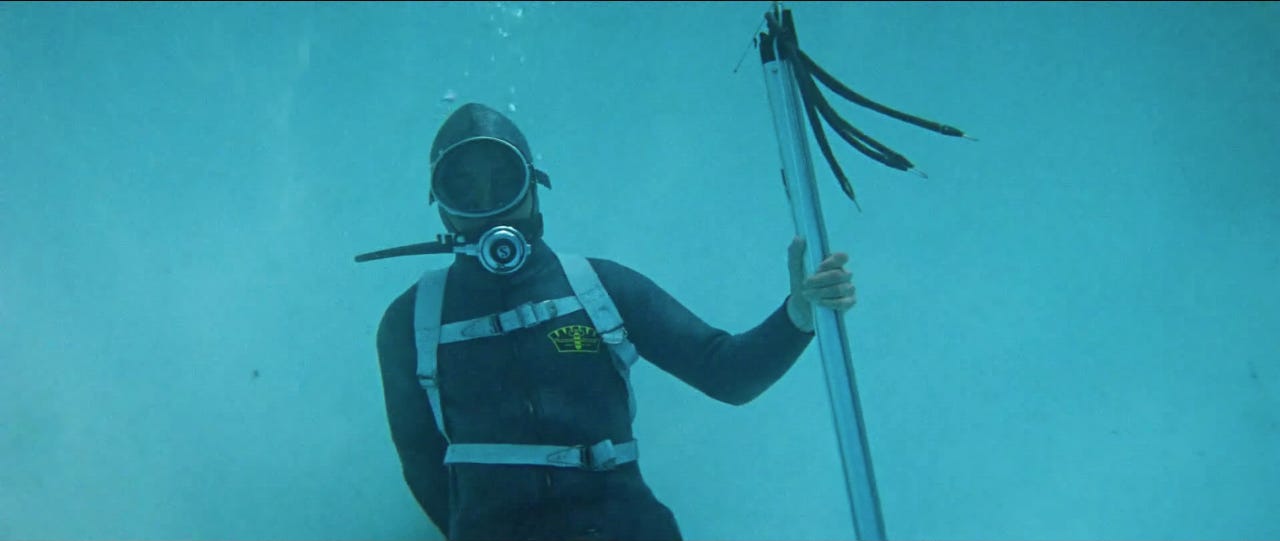
Mirrors, glass, and reflections appear frequently, creating fractured images and optical illusions that heighten the sense of internal dissonance. In one moment, Benjamin is framed through an aquarium tank, the water warping the view, the fish circling indifferently. He is submerged even when dry. He is drowning in plain air.
This moment distills Expressionism’s essence in cinematic form.
This is a brilliant moment of Expressionism in The Graduate
Story Structure: Alienation Disguised as Plot
While the plot moves forward, Benjamin does not. This, too, is expressionistic. In traditional dramatic structure, a character undergoes change. In Expressionist storytelling, the outer events expose the inner stasis. Benjamin tries to follow the story expected of him, graduate, choose a career, marry a girl, but each step is undertaken without conviction. His decisions feel reactive, almost dreamlike, more compelled than chosen. This passivity echoes the Expressionist stage tradition, in which characters function less as agents and more as vessels for existential commentary.
The film’s climax offers no catharsis. Benjamin interrupts Elaine’s wedding, they flee together, and they board a bus. But the camera lingers. Their triumphant smiles fade. The silence stretches. They look ahead, unsure of what they have actually done. This ending, unresolved, haunting, and deflated, refuses the narrative closure of romance or rebellion. It reasserts the alienation that has haunted the entire film.
As the bus carries them into an uncertain future, the film closes not with hope, but with a question. Who are we when all our roles are abandoned? What remains when we are no longer performing?
Conclusion: Expressionism’s Living Legacy
The Graduate draws from Expressionism not only in style but in spirit. It resists realism’s promise of resolution and instead immerses the viewer in a fractured world shaped by emotional truth. It belongs to the same lineage that birthed The Hairy Ape and The Adding Machine, a lineage that does not ask us to observe but to awaken. Though the techniques have evolved, the impulse remains the same. Expressionism endures wherever truth refuses to stay flat, wherever form bends to reflect feeling, and wherever art dares to reveal the soul behind the surface.
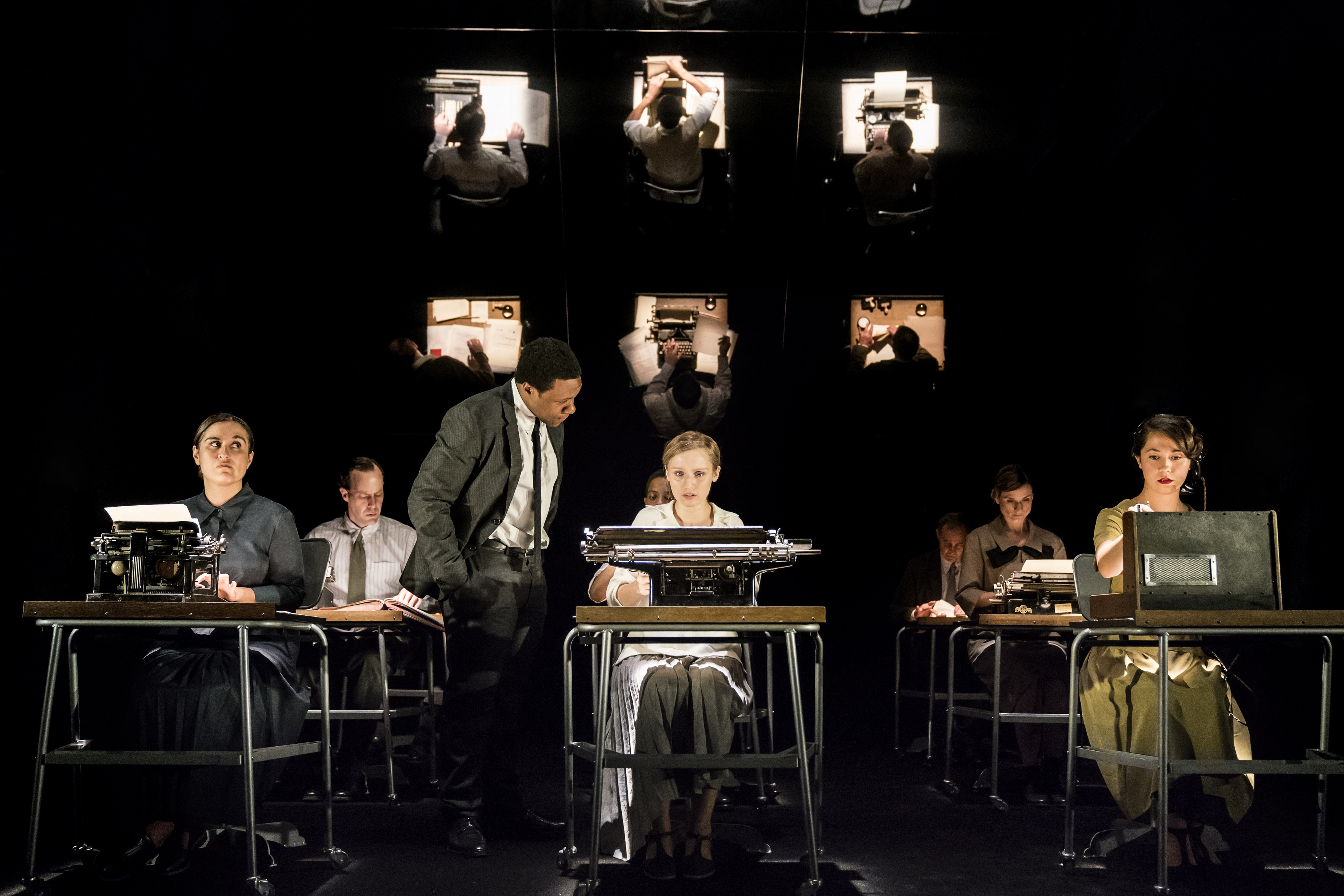
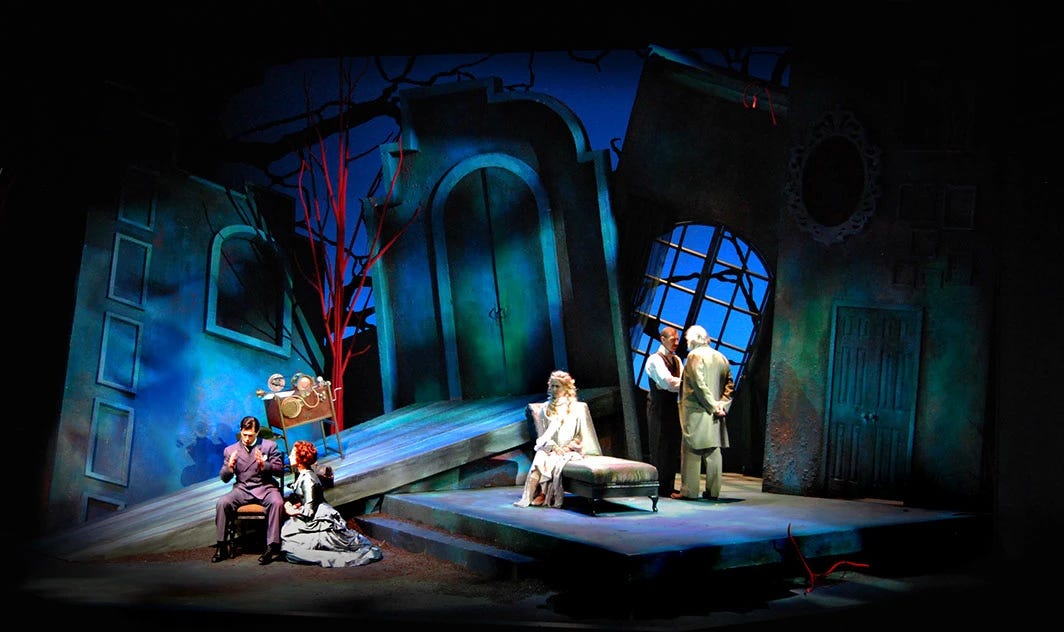
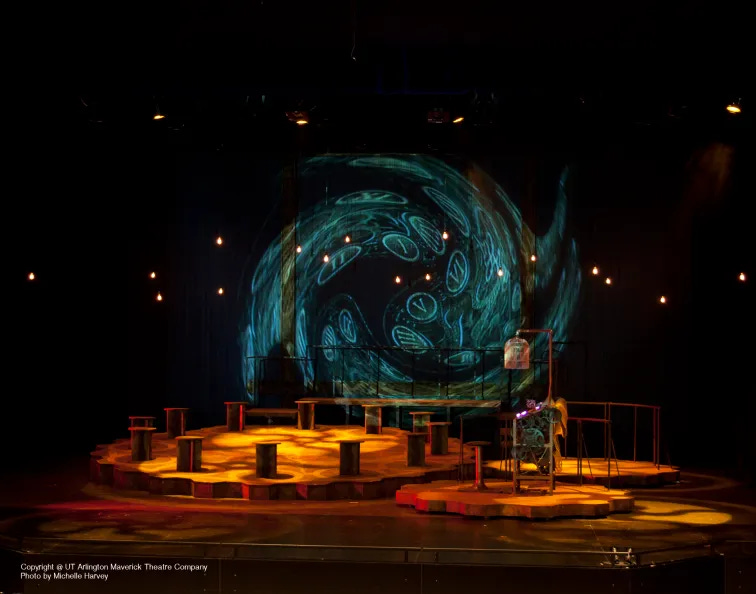
Examples of Expressionistic Set Designs
Machinal, Set Designer Miriam BuetherDracula, Set Designer Kim A. TolmanThe Adding Machine

 Jill Szoo Wilson