Faithfulness in the Face of Antisemitism: Covenant, Memory, and Christian Responsibility

By Jill Szoo Wilson

Author’s Note:
This is not an essay about forgiveness. I have written about Eva Mozes Kor, Holocaust survivor and forgiveness advocate, for years because I deeply respect her message. I honor her legacy here while condemning antisemitic violence without qualification and calling Christians to action in the present moment. Nothing in this piece is meant to soften, spiritualize, or diminish the reality of antisemitism today.

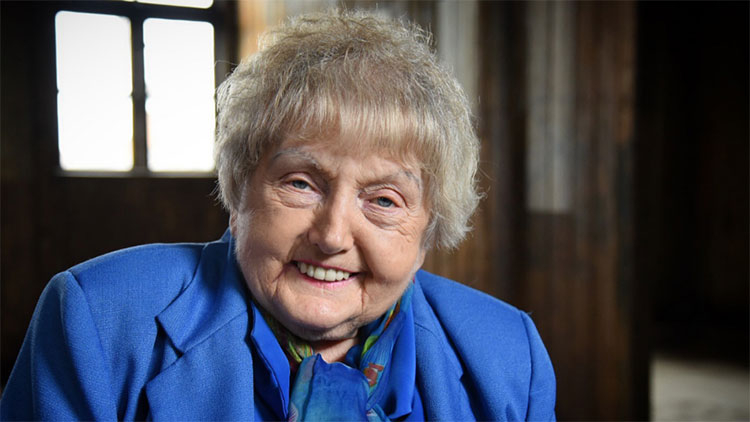
Nearly seventy years after the Holocaust, Eva Mozes Kor still looked at the world and saw a painful truth: antisemitism had not disappeared. The lessons of history, no matter how horrific, were not enough to prevent hatred from resurfacing. As a survivor of Auschwitz and a Mengele Twin, she carried both the burden of memory and the wisdom of experience. She often asked a simple but haunting question: What has changed since Auschwitz?

Eva often spoke about how Adolf Hitler rose to power not as an anomaly, but through a series of orchestrated events designed to achieve a singular goal, the extermination of the Jewish people and the establishment of an Aryan-dominated society. Hitler and his regime promoted the belief in Aryan racial superiority, claiming that Germans of “pure” Nordic descent were destined to rule over other groups they labeled as inferior. These ideas, rooted in eugenics and extreme nationalism, fueled policies that targeted Jews, Romani people, disabled individuals, Slavs, and others deemed unfit for their vision of a racially “pure” society. This ideology was systematically enforced through propaganda, education, and legislation, including the Nuremberg Race Laws of 1935.

The Nuremberg Race Laws consisted of two primary statutes:

The Reich Citizenship Law: This law declared that only individuals of German or related blood were eligible to be Reich citizens, effectively revoking Jews’ rights as citizens. It stated: A Reich citizen is a subject of the state who is of German or related blood, and proves by his conduct that he is willing and fit to faithfully serve the German people and Reich. (Source)

The Law for the Protection of German Blood and German Honor: This law prohibited marriages and extramarital relations between Jews and citizens of German or related blood, aiming to preserve the “purity” of German blood. It also forbade Jews from employing German females under 45 years of age in their households. (Source)

Germany, one of the most advanced and cultured societies of its time, fell under the influence of a leader who manipulated public fears and desires, offering promises of restoration and prosperity in exchange for obedience. Step by step, ordinary citizens became participants in a deadly machine, one that required gradual compromises until they found themselves complicit in atrocities. This transformation is hauntingly explored in the book Ordinary Men, which details how average individuals became executioners not out of inherent evil, but by following orders, rationalizing their actions, and failing to resist the system that consumed them.

Eva witnessed this transformation firsthand and spent decades ensuring people understood how easily it could happen again. She often emphasized that Hitler’s rise was not inevitable, nor was it the result of a single event. It was a gradual process, shaped by economic hardship, propaganda, and the willingness of ordinary people to accept small injustices until they became monstrous realities.

Five Factors That Allowed Hitler to Rise to Power

The Holocaust was not an accident of history. It was the result of a carefully constructed plan, built on a foundation of economic despair, propaganda, and the gradual erosion of moral resistance.

Economic Devastation: Germany faced severe unemployment, with rates soaring to 30 percent in the early 1930s. This economic turmoil created fertile ground for extremist ideologies. (encyclopedia.ushmm.org)

Scapegoating the Jews: The Nazi regime capitalized on existing antisemitic sentiments, blaming Jews for Germany’s economic and social woes and uniting the populace against a common, innocent enemy. (encyclopedia.ushmm.org)

Propaganda and Control: Through relentless propaganda, the Nazis dehumanized Jews, portraying them as subversive and dangerous, which facilitated public acceptance of discriminatory laws and actions. (encyclopedia.ushmm.org)

Apathy and Inaction: Many Germans and international observers remained passive or indifferent as antisemitic policies escalated, allowing hatred to fester unchallenged.

The Allure of Power: Hitler’s strategic political maneuvers, including exploiting democratic processes, enabled him to consolidate power and implement his radical agenda.

These historical conditions are not confined to the past. Alarmingly, antisemitism has seen a resurgence in recent years. A 2024 report highlighted a 340 percent increase in global antisemitic incidents compared to 2022. (timesofisrael.com) Furthermore, a 2025 Anti-Defamation League survey revealed that 46 percent of adults worldwide harbor significant antisemitic beliefs. (adl.org)

Despite comprising a small fraction of the global population, approximately 15 million Jews worldwide, many continue to advocate for oppressed communities, even when it entails personal risk. Eva marveled at this enduring commitment to justice and empathy.

The Ultimate Power: Forgiveness

Eva often said, “Anger is a seed for war, forgiveness is a seed for peace.” To her, forgiveness was never about excusing harm. It was about breaking the cycle of hatred.

Forgiveness does not take place on the battlefield. It is not something that happens in the midst of conflict, nor does it excuse or prevent the necessity of justice. Forgiveness comes later, when the dust has settled and when the victim is free to reclaim their own power. It is not about surrender. It is about refusing to let the past dictate the future.

While Eva never shied away from confronting the past, she was equally passionate about what came next. She believed that dwelling in anger, no matter how justified, only gave power to those who inflicted harm. “Forgiveness,” she said, “is the only power a victim has to heal, liberate, and reclaim their life.”

Eva was careful to say, “I forgive in my name only.” She never claimed to speak for other survivors, nor did she suggest that forgiveness was a requirement for healing.

Eva Mozes Kor often emphasized this declaration, reflecting both her personal journey and a deep respect for Jewish principles regarding forgiveness. In Jewish tradition, forgiveness, or mechila, is a profound process that hinges on sincere repentance from the wrongdoer. Maimonides, a preeminent Jewish scholar, outlined that true repentance (teshuva) involves the offender’s acknowledgment of wrongdoing, genuine remorse, and a committed effort to rectify the harm caused. Only after these steps is the victim encouraged to offer forgiveness.

This framework underscores that forgiveness cannot be granted on behalf of others. It is an intimate act between the victim and the penitent. In the context of the Holocaust, where six million Jews were murdered without any expression of remorse from the perpetrators, the notion of forgiveness becomes even more complex. Jewish law maintains that offenses against an individual require that individual’s forgiveness, making it impossible for survivors to forgive on behalf of those who perished. (utppublishing.com)

Eva’s careful articulation, that her forgiveness was solely her own, respected this principle. She did not presume to speak for other survivors or the deceased. Her act of forgiveness was a personal liberation, a means to free herself from the grip of anger and victimhood, without contravening the collective memory and enduring grief of the Jewish community. (candlesholocaustmuseum.org)

This distinction highlights the delicate balance between individual healing and communal responsibility. While Eva chose forgiveness as her path to peace, she acknowledged that such a choice is deeply personal and may not be appropriate or possible for others, especially when traditional avenues for repentance and atonement are absent.

Forgiveness, in her view, had nothing to do with the perpetrator. It did not condone, excuse, or endorse their actions. It was not about justice. It was about reclaiming control over one’s own life. “I call forgiveness the best revenge,” Eva said, “because once we forgive, the perpetrator no longer has any power over us, and our forgiveness overrides all their evil deeds.”

This idea was radical and not always welcomed. Many survivors could not accept it, and for good reason. Even outside the context of the Holocaust, many struggle with the idea that forgiveness does not mean forgetting or allowing injustice to continue. For Eva, forgiveness was deeply personal. It was about reclaiming power, not about absolving the guilty. But within Jewish tradition, memory itself is sacred: to remember is to bear witness, to demand justice, and to ensure that history does not repeat itself.

Am Yisrael Chai: The People of Israel Live

Throughout history, the Jewish people have faced oppression, displacement, and genocide, yet they have endured. The phrase Am Yisrael Chai, meaning “The People of Israel Live,” is more than just words. It is a declaration of survival, resilience, and hope. It is an anthem of defiance against those who have sought to erase Jewish existence and a testament to the enduring strength of a people who refuse to be defined by their suffering.

This phrase has been spoken in times of both devastation and triumph. During the Holocaust, Jews whispered it in ghettos and concentration camps, affirming that even in the darkest of times, their spirit remained unbroken. In the aftermath of World War II, it became a rallying cry for survivors who rebuilt their lives, many of whom found refuge in the newly established State of Israel in 1948.

Today, Am Yisrael Chai continues to hold deep significance. It is proclaimed at Holocaust memorials, sung in celebrations, and carried forward as a reminder that survival is not just about existing. It is about thriving, growing, and refusing to let history repeat itself. In the face of rising antisemitism, the phrase remains an unshakable affirmation that the Jewish people will continue to live, to contribute, and to stand up for justice, not only for themselves but for all who face oppression.

Remembering is an act of justice. It ensures that the past is neither erased nor repeated. Forgiveness, when chosen, does not diminish remembrance. It follows it. It does not mean forgetting, nor does it replace accountability. Instead, it allows individuals to reclaim the power to shape their own future, free from the weight of bitterness.

We’re on the Battlefield Again

We are on the battlefield again.

Now is the time to fight back. Antisemitism did not end with the Holocaust. It did not disappear with memory or education or vows of “never again.” It has returned openly and violently, and it is targeting Jewish people simply for existing. This is not abstract. It is not theoretical. It is happening now. Those of us who are not Jewish do not get to watch from the sidelines. I serve the God of Israel, the God of Abraham, Isaac, and Jacob, and I will stand with my Jewish brothers and sisters until the bitter end, or as long as God allows breath in my body. Silence is no longer neutral. To remain quiet is to abandon them on the battlefield.

Recent Antisemitic Attacks (2023–2025)

Below is a concise, verifiable list of documented incidents illustrating the resurgence of antisemitic violence and hate in recent years:

• Bondi Beach Hanukkah Shooting (Dec 14, 2025):
Gunmen opened fire during a Jewish “Chanukah by the Sea” event in Sydney, Australia, killing at least 11 and injuring dozens in what officials condemned as an antisemitic terrorist attack targeting Jews during a holiday celebration. (AP News)

• Timeline of Australian Antisemitic Incidents (2023–2025):
Jewish communities in Australia faced multiple threats including synagogue arsons, graffiti, and escalating antisemitic violence leading up to the Bondi incident. (The Forward)

• Manchester Synagogue Attack (Oct 2, 2025):
A vehicle and stabbing attack at the Heaton Park Hebrew Congregation in Manchester, England, resulted in three deaths and several injuries, confirmed by police as a terrorist targeting of Jews. (Wikipedia)

• Antisemitism Surge Worldwide (Post–Oct 7, 2023):
Global reports documented thousands of antisemitic incidents worldwide, including threats, harassment, and violent attacks in many countries, since the escalation of the Gaza conflict. (Combat Antisemitism Movement)

• Synagogue and Community Vandalism (2023–2024):
Multiple bomb threats, arson, and intimidation against synagogues were reported in Australia and elsewhere, part of a broader pattern of anti-Jewish hate following geopolitical tensions. (Wikipedia)

• Antisemitic Incidents in the UK (2023–2024):
The Community Security Trust documented thousands of antisemitic incidents in the UK, marking sustained high levels of anti-Jewish hate in recent years. (CST)

• Antisemitic Acts in the U.S. (2024):
The Anti-Defamation League’s audit reported record-high antisemitic incidents in the U.S., including harassment, threats, and violent acts occurring across all 50 states. (Congress.gov)

• Berlin Holocaust Memorial Stabbing (Feb 21, 2025):
A man attacked a person at the Holocaust Memorial in Berlin with a knife, injuring the victim in an incident with an antisemitic motive, according to police and press reporting. (Wikipedia)

Christians, What Will You Do?

For Christians, the connection between the God of Israel and the Christian faith is not symbolic, philosophical, or historical alone. It is covenantal and continuous. The God Christians worship is the same God who revealed Himself to Abraham, Isaac, and Jacob, who said, “I will establish my covenant between me and you and your offspring after you throughout their generations for an everlasting covenant” (Genesis 17:7). Scripture never records that covenant being revoked.

As Joel Richardson, a Christian author, Bible teacher, and filmmaker whose work focuses on biblical prophecy and God’s enduring covenant with Israel, has taught repeatedly, Christianity does not represent a departure from Israel’s story but its unfolding. The New Testament itself insists on this continuity. Paul writes that Gentile believers are not the root but the branches, grafted into a tree they did not plant, sustained by promises they did not originate (Romans 11:17–18). The Church, according to Scripture, does not replace Israel. It depends on her.

John Harrigan, a Christian writer and filmmaker who has examined the theological roots of Christian antisemitism, including through the documentary Covenant and Controversy, has argued that Christian antisemitism is not merely moral failure but theological collapse. Scripture bears this out. To sever Jesus from His Jewish identity is to sever Him from His genealogy, His Scriptures, and His covenantal mission. Jesus did not erase Israel’s story. He entered it. “Salvation is from the Jews,” He said plainly (John 4:22). The apostles did not preach a new God, but the fulfillment of what had already been spoken “by the mouth of all the prophets” (Acts 3:18).

Christianity does not make sense apart from Israel. The Messiah Christians proclaim was Jewish. The Scriptures they read were entrusted first to Jewish hands (Romans 3:2). The covenant they appeal to was never revoked. Paul is unequivocal: “The gifts and the calling of God are irrevocable” (Romans 11:29). Any theology that distances itself from Jewish suffering, or treats the Jewish people as spiritually obsolete, stands in direct contradiction to the very text it claims to honor.

This is why the present moment is vital. Scripture does not allow Christians to retreat into abstraction when the people of Israel are targeted. The call is older and clearer than modern politics: “I will bless those who bless you, and whoever curses you I will curse” (Genesis 12:3). Silence, in this light, is not neutrality. It is a theological choice.

Standing with the Jewish people is faithfulness to the God Christians claim to serve. It is obedience to Scripture. The God who keeps covenant does not abandon His people, and those who bear His name are called to stand with them.

So the question is no longer theoretical.

Where do you stand?
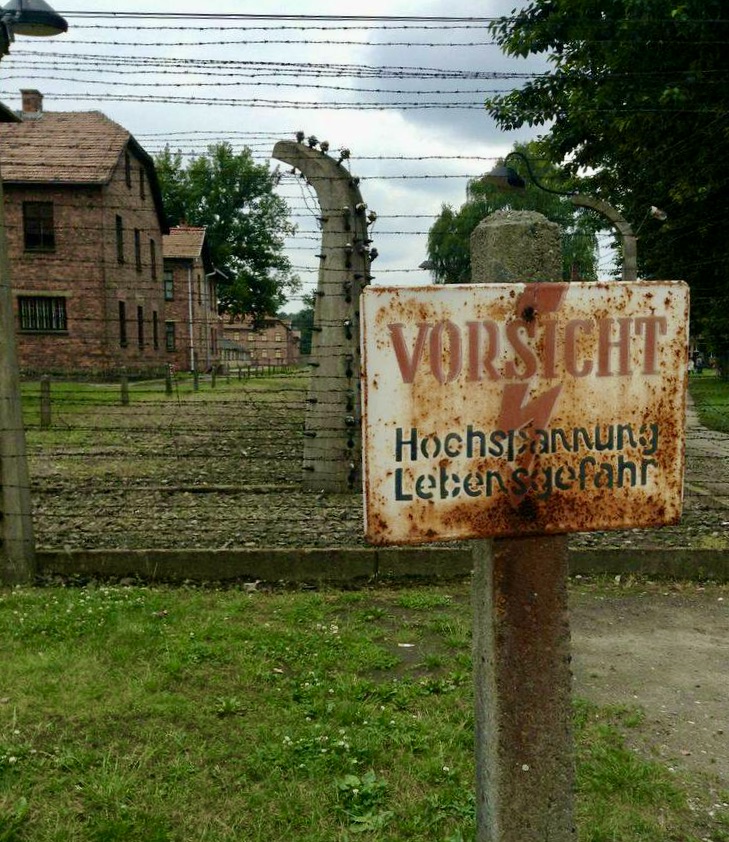
Danger sign in Auschwitz
I took this photo in Auschwitz in 2013.

Block 10 in Auschwitz

By Jill Szoo Wilson

At the end of our first day in Auschwitz I, after our hour-long bus ride back to the safety of our hotel, after a nourishing dinner shared with friends, after showers and moments of silence and feeling the safety of “the group” wrap around us like a blanket that protects not from cold but fright, we spoke. We questioned. We looked into one another’s eyes for answers that no one had—in this way, there were long stretches of time, like a ticking clock, during which the windows of the souls sharing this journey reflected both confusion and comfort back and forth. Back and forth.

During a discussion in the hotel lobby on this particular night, I felt a shift in our collective journey. At the beginning of the trip, we all understood the events of the Holocaust, some in more detail than others, and we knew the basic story that unfolded under the trees and sky, and over the dirt through which we were treading. We had seen Schindler’s List, read books carefully penned by survivors, poured over documentaries and songs and poetry . . . even with our individual knowledge and experience acting as tent poles to our individual decisions to travel to this place, there was one thing we could have never fully anticipated: Auschwitz I looks like an idyllic place to be and there is something terrifying about that. The beauty of the camp is more reminiscent of a college campus neatly organized for the sharing of ideas than for the ripping apart of lives. It’s like a lake whose surface grabs hold of the sun in tiny mirrors of brilliant warmth but swarms with leeches in the darkness below. The hypocrisy that exists between the visual stimulus and the cognitive understanding begs the question: What other places look perfect but are not? Can we ever really know what lies behind windows, doors and walls?

While all the buildings in Auschwitz I that are open to the public have been renovated and turned into memorial museums dedicated to different groups of victims, aspects of the Holocaust and exhibits that make connections between the past and the present, there is one building through which we walked that had not been touched for almost 70 years: Block 10. Even as I type those words, my breath changes. There is heaviness in my chest that isn’t dropped there merely by the memories of the building itself but also by the disconcerting and shadowy questions that pressed my understanding against its walls, like thumb tacks of fear, bewilderment and the kind of silence that is erected by the words, “If you tell anyone, I will kill your family.” The public is not welcome into this building as a means of respecting the lives that were lost there. Because we were with Eva, we were given entrance into this building, much like a cemetery, and we all tripped over the invisible headstones that filled the space where air would otherwise reside. Only 10 of us were allowed to enter the building at a time.

Block 10 is the building in which physical experiments and autopsies were performed. Eva and her sister Miriam were made to walk from Birkenau to Auschwitz I several times a week, no matter what the weather, knowing the physical scrutiny that awaited them.

Before I go on, I feel the need to explain that this particular blog has been the most difficult for me to compose. I have gone through so many starts and stops in trying to describe Block 10 that the place itself is growing larger in my mind as I fight the discomfort with which writing about it has plagued me. I admit this to you, my reader, not as a means of justifying any inadequacies in my descriptions but as an admission of how the mere topic is one from which I want to run. I want to stop writing, again. Alas, I am going to lean into the discomfort and shine a light on the darkness I witnessed there.

Walking into block 10 was like walking into a crowd of spectators circled around a little girl who had fallen from the top of a Ferris-wheel to her death on a dirty carnival ground. Picture men with dirty hair who smell of body odor and rancid chewing tobacco; tarnished silver rings bearing the images of skulls; moldy mobile homes filled with dishes heavy laden with crusted leftovers, and pornographic magazines tattered with use. None of this existed inside Block 10 but the atmosphere inside the building reminded me of the transient, restless nature of a traveling carnival. It was unsettled, foul, dark, obscene—and it echoed—those of us who walked through the cavernous space instinctively grew quiet as children trying to hide from an intruder and yet, somehow, our voices reverberated more loudly here than they did anywhere else in the camp.

The windows on one side of Block 10 are all covered with boards—the side of the building that faces the Execution Wall. The Auschwitz guide explained to us that the reason for the boards was to shield the eyes of those inside the building from seeing the fate of those standing on the other side of the glass. “Shielding” in this case was not an act of protection or extending comfort, it was simply a means of trying to avoid a heightened and spontaneous sense of panic. What this implies is that the doctors inside the building exacted control over their subjects in as much as they controlled their bodies, but they could not control their minds, their imaginations. For a subject to sit still while her eyes were being propped open by two pieces of steel was to control her by insinuating that her cooperation might keep her alive inside this makeshift doctor’s office—to let her shift her focus to the blatant executions 5 feet from her gaze might relinquish her motivation for compliance altogether. These boards that once shielded the eyes of those whose bodies were being used for experiments now serve to cast an eerie shadow on rooms that would be dark in the midst of a million candles lit in memorial to the lives that were lost there.

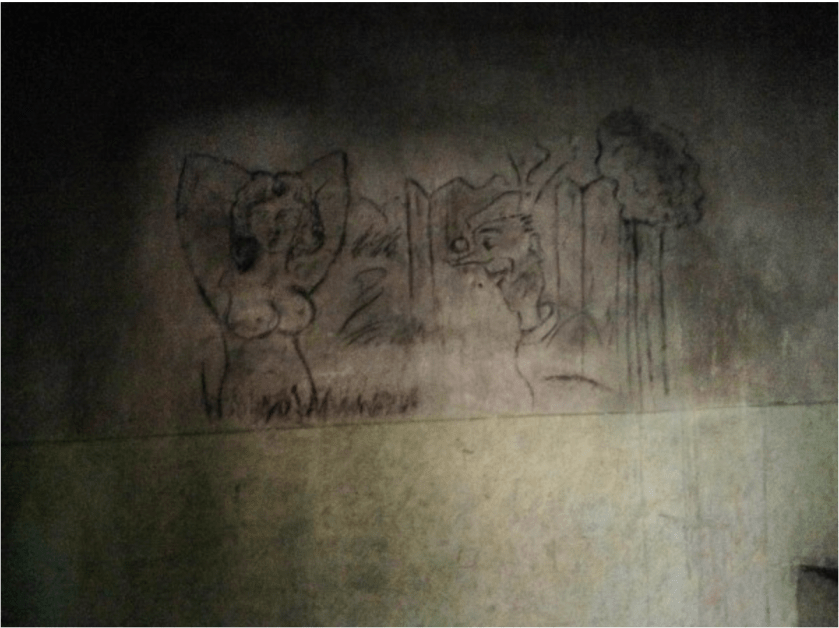
The hallways and each of the rooms have been stripped of the tables and chairs that once held prisoners there. Emptied except for one remaining table that sat, seemingly innocently at the end of one room. This table was used to conduct autopsies. The only other specific items existing in the space was a small windowless square room, about 7×7 feet, in which there was a concrete shower and what seemed to be a broken pipe hanging from the ceiling, and there were a series of drawings on the walls in two of the rooms. The first drawing I noticed was crassly drawn in the 7×7 room. It was an illustration of a man gawking at a woman’s bare chest. The second drawing I saw was of a small cottage sitting on what seemed to be a serene field. The first drawing made me angry. The second simply confused me. I could imagine the artist of the first but I had no idea whose hand to imagine as I looked at the second. This is to say that looking at the cartoonish pornography in the small square room as I felt the heaviness of evil that still rests upon that building like a fog filled with gnats and poison, the juxtaposition of the torture and the illustrated character made me feel like vomiting. I covered my mouth and squinted my eyes and shook my head and leaned back onto one of the walls . . . until I realized I was leaning back onto one of the walls. Quickly, I jolted my body away from the wall and felt dust particles and flakes of old, dead skin clawing at my back. The person who drew this image of a woman’s bare breasts was immersed in a world of bare breasts and naked bodies that were exposed to him in one of the most vulnerable and unwilling seasons of any number of women’s doomed lives—I was seeing sexual and physical abuse in its most raw form, without actually seeing it. What’s worse is that I could feel it inside that building. Even now, as I type these words my hands shake and my body feels cold. Being this close to the bawdiness of evil is an experience I will never forget. Nor should I.

The second drawing, as I stated above, simply confused me. I didn’t have any emotion left with which to interpret it after having been so repulsed by the first. I couldn’t tell whether it was drawn by a prisoner longing for home or by the same hand that had moments before drawn the naked woman. Either way, I came to hate the drawings on the walls.

There was a period of about 5 five minutes in which I stood by myself in one of the rooms whose windows were boarded. My eyes were wide as I studied the walls, the ceiling, the floor, the lighting fixtures. I noticed there was wallpaper on one side of the room. The presence of wallpaper struck me as laughable, so I laughed. Why in the world would someone find it necessary to cover this wall with wallpaper? Who were they kidding? Why decorate a room in which human souls were being stripped of their dignity and in some cases, their breath? I considered the sinful nature of man and the ways in which we paper over our own ugliness in an effort to either hide it or to numb ourselves from feeling the shame of our own indiscretions. Using the tools of my art as an actress I looked around the room as a child patient, then as an adult patient, then as a nurse, then as a doctor. I allowed the thoughts of each to build themselves in my mind—some of them constructed themselves quickly and with a strength that forced me to close my eyes. Some of these thoughts were quiet and slow—they peaked around the corners of my mind and then slid out the sides of my consciousness like children racing down laundry shoots and into dirty piles of laundry. I was inside the environment and the environment tried to force its way inside of me. The air punched me and the ghosts cried out to me for help and, eventually, the evil of the place began to laugh at me. It was in this moment, when the crescendo of reality drummed loudly in my ears that I stopped feeling the heaviness and I stood up straight, pounded my feet as I moved to the center of the room with the boarded windows and I prayed, “Jesus, I am sorry for what happened here. On behalf of humanity gone completely awry, I am sorry. You are omniscient, omnipresent and omnipotent . . . what did it do to your heart to watch all of this happen?” This was a turning point for me. Before this moment I was asking, “God, how did you let this happen? Why did you let this happen?” I wasn’t angry with God, but the deeper I walked into the horror, into the darkness, the more I looked for the Light. The more I looked for the Light, the darker the darkness became; until I stood in the darkest place in Auschwitz. That is when I tangibly felt the weight of sin and the absolute Love of God. My heart broke for the people who stood, sat, died in that room and I realized that what the Bible says is true, “God is near the broken hearted.” His heart breaks for us.

Inside Block 10, there was no hypocrisy existing between the visual stimulus and the cognitive understanding of what I saw. It was, and remains to this day, a haunted house lined with memories that shout through the revelation of pain; floorboards that creak with dried tears; walls that are shedding their floral patterns under the pressure of shame and anger; windows that shield their eyes from the sun and have lost their ability to see.

© Jill Szoo Wilson, 2024

Jill Szoo Wilson essay about Block 10 in Auschwitz
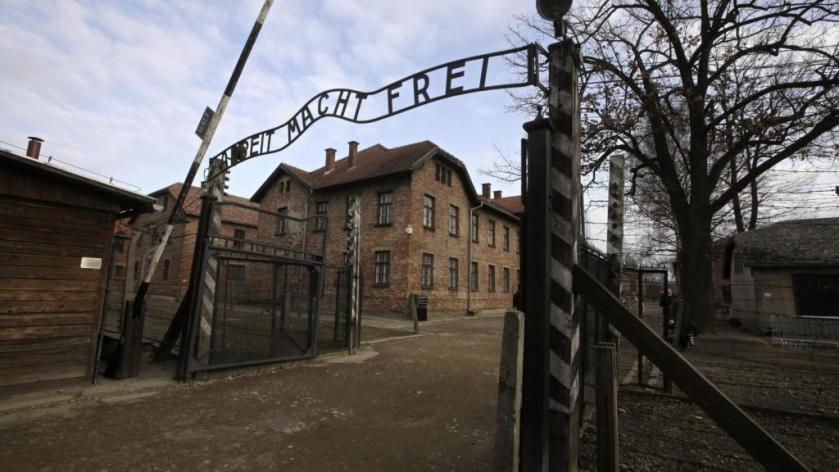
This is the entrance to Auschwitz I.
I took this photo inside Block 10

Eva Mozes Kor and the Price of Forgiveness

By Jill Szoo Wilson

Eva Mozes Kor often said, “Anger is a seed for war, forgiveness is a seed for peace.” It was more than a slogan. It was a theology, a philosophy, and a daily discipline forged from one of the darkest chapters in human history. As a child imprisoned in Auschwitz and subjected to the medical experiments of Josef Mengele, Eva discovered that survival demanded a defiant hope. Decades later, she chose forgiveness as a form of liberation that offered survivors a path toward healing. Her decision inspired admiration and deep respect, and it also sparked fierce debate about justice, memory, and the boundaries of human compassion. The peace she pursued required extraordinary courage, because every step forward in forgiveness carried a cost.

I recently revisited one of Eva’s emails, a message filled with the kind of raw honesty that few people ever achieve. It was written in her unmistakable, unpolished style: urgent, passionate, and deeply personal. In it, she reflected on the consequences of her decision to forgive a former Nazi doctor, Dr. Hans Münch, and the relentless challenges she faced in opening CANDLES Holocaust Museum.

Reading it now, years after her passing, I am struck by how unyielding she was in the face of criticism, injustice, and personal danger. She did not simply speak about forgiveness. She lived it, even when it cost her dearly.

The Controversy Over Forgiving a Nazi

In 1995, on the 50th anniversary of the liberation of Auschwitz, Eva Mozes Kor did something unthinkable to many: she publicly forgave the Nazis. More than that, she stood beside Dr. Hans Münch, a former SS doctor at Auschwitz, and signed a declaration of forgiveness.

The backlash was immediate and fierce.

Israeli media framed the moment as a betrayal. Footage of Eva walking with Münch was broadcast again and again, without the context behind it.

A major Israeli newspaper published a scathing article, questioning whether any publicity was better than being ignored entirely.

In 1998, journalist Bruno Schirra published an interview with Münch in Der Spiegel, where the former SS doctor made remarks about his time in Auschwitz. The interview triggered a criminal investigation in Germany.

Around the same time, a French radio interview with Münch led to an even more explosive controversy. His derogatory remarks about Roma and Sinti people resulted in criminal charges in France for inciting racial hatred.

The consequences were devastating.

Münch and his family faced public scrutiny, threats, and harassment. In Germany, legal action pushed toward trial despite his diagnosis of Alzheimer’s disease.

In a personal email to me, Eva shared that Münch’s home was firebombed three times after his address was published in an article, requiring police protection for his family. I have not been able to verify this in any public record or independent source. It was her own account, offered behind the scenes, reflecting the weight she felt over what was happening to Münch and his loved ones.

Eva was horrified by what was unfolding. She had spent years advocating for justice. Now, she found herself advocating for mercy.

She sent more than 50 letters pleading with authorities to drop the lawsuits against Münch, but the legal proceedings continued.

In 2001, Münch was convicted in France. His sentence was waived due to his age and deteriorating mental state. He passed away later that year.

Eva felt a complicated kind of relief. Münch’s family was finally free from further attacks, and she no longer carried the guilt of contributing to their suffering.

The Fight to Build CANDLES Holocaust Museum

By 1995, Eva Mozes Kor had already reinvented herself many times: Holocaust survivor, public speaker, and founder of CANDLES (Children of Auschwitz Nazi Deadly Lab Experiments Survivors) in 1984. That year, she took on yet another role as a museum founder.

The CANDLES Holocaust Museum and Education Center was an extension of Eva’s mission to teach others about the Holocaust and the experiments performed on her and other Mengele Twins. She wanted to create a permanent place of education, remembrance, and dialogue.

Opening the museum was no small feat.

She found a commercial building in Terre Haute, Indiana, but it was too large and too expensive for the original client she was working with as a realtor. Instead, she made a bold and risky decision to secure financing under her own name, her husband’s name, and a partner’s name to purchase the building herself.

At 61 years old, she signed a $168,000 mortgage, despite her husband’s hesitation.

With limited funds for exhibits, she handmade decorations, including a wall of blue paper strips that read:

“LET US REMOVE ALL HATRED AND PREJUDICE IN THE WORLD, AND LET IT BEGIN WITH ME!”

When the museum opened on April 30, 1995, it quickly became a vital educational resource, drawing teachers, students, and community members eager to learn from Eva’s story.

Then everything changed after 9/11.

Her business partner, who owned a travel agency, struggled to keep her business afloat. The economic downturn was crushing. Eva was forced to buy out her partner’s share of the building at a much higher price, not to expand but simply to save the museum.

By 2002, at age 68, she and her husband took out a $222,000 mortgage to keep CANDLES alive.

The Fire That Could Not Destroy Her Mission

In November 2003, Eva Mozes Kor received a phone call in the middle of the night.

“Mrs. Kor, this is the police department. You need to come to the museum. There is a fire.”

She and her husband rushed to the scene. By the time they arrived, flames were already devouring the building. Firefighters battled the blaze, but it was too late. Everything inside was lost: photographs, historical documents, survivor testimonies, and artifacts.

She stood there watching as the place she had built with her own hands, her own money, and her own pain collapsed into smoldering rubble.

Investigators then found a message spray-painted on an exterior wall in black:

“REMEMBER TIMMY MCVEIGH.”

Timothy McVeigh, the domestic terrorist behind the 1995 Oklahoma City bombing, had been executed in Terre Haute just two years earlier. The implication was chilling. This was an act of hatred and intimidation meant to silence her.

But Eva had spent her entire life surviving the worst of humanity.

The next morning, standing in front of the ashes, she made a decision.

“We will rebuild.”

And she did.

With support from the community, from Holocaust educators, and from donors around the world, CANDLES Holocaust Museum rose from the ruins and reopened in 2005, stronger than before.

You can burn down a building. You cannot destroy a mission.

The Legacy of a Fighter

Most people would have stopped. Most would have looked at the destruction of their museum as a sign to walk away.

But Eva rebuilt.

The email she sent me that recounted this event, full of spelling errors, fragmented sentences, and scattered thoughts, perfectly reflected who she was:

Unpolished, yet utterly real.
Wounded, yet relentless.
Misunderstood, yet unwilling to back down.

Eva Mozes Kor understood something most people do not. Forgiveness does not rewrite the past. It does not fix what was broken. But it allows a person to stop carrying what cannot be undone.

She was never naive. She knew the world was cruel, unjust, indifferent.

She fought anyway.

She did not stop.

What This Means for Us

Eva’s story is not only about forgiveness. It is about resilience in the face of resistance. It is about choosing to build when the world wants to destroy.

Her words still challenge me.

Could I have made the same choices? Would I have kept going? Would I have had the courage to stand alone?

Perhaps that is the lesson she left for us.

Forgiveness is a gift. The fight for something bigger than yourself is what makes history.

© Jill Szoo Wilson, 2025

Featured Image photo credit: WFYI Indianapolis, 2021

A Candle at Auschwitz: Lit By a Former Nazi

By Jill Szoo Wilson

The story that follows is told in Holocaust survivor and Mengele Twin Eva Mozes Kor’s voice. This is a story she shared with me as we traveled together from Kraków to Oświęcim, the Polish town where Auschwitz was built. Along the way, I listened as she recounted her journey back to Auschwitz for the 50th anniversary of its liberation. It was a moment in history few people remember, yet one that reveals the depth of her courage, the radical nature of her forgiveness, and the unwavering strength with which she bore witness to the truth.

When Eva told me this story, I could hear in her voice the weight of the moment; the way history and memory collided as she stepped back into Auschwitz, not as a prisoner, but as a witness. She had spent decades making sure the world never forgot what happened there, but on that day, she had something different to say.

Marking 50 Years Since Liberation

On January 27, 1995, the world gathered at Auschwitz to mark the 50th anniversary of its liberation.

Leaders from across the globe stood in front of the infamous barbed wire fences and crumbling barracks, delivering solemn speeches about the horrors of the past in tones that varied from hushed to bellowing. A thread of solemnity wove through the crowd, pulling us into one another like a tightening rope around our waists. Once captive, now captured by the stories being retold.

Holocaust survivors—our numbers dwindling—listened as our memories were etched into the cold Oświęcim air. One man’s narrative is another man’s memory, which is to say that when I hear someone else recount what has been on endless replay in my mind for decades, I often feel as though I am watching my own past from the outside. Even as we stood shoulder to shoulder, bound by this shared history, our experiences were never the same. Auschwitz was a microcosm of the world. A place where suffering was universal, yet deeply individual.

There were ceremonies, memorials, and moments of silence. Each event lined up like dominoes, one after another, predictably falling in order. But what I had planned for the day was outside anyone’s expectations. I was the lone domino, waiting to begin a new movement altogether.

I had come back to Auschwitz this time not just as a survivor, but as a witness. I was standing beside a man who had once served the very system that tried to erase me. Dr. Hans Münch, a former Nazi doctor who had worked at the camp, had agreed to return with me, not to justify or deny, but to publicly confirm the existence and operation of the gas chambers.

It was a moment of historical significance; a Nazi doctor and a survivor standing together.

Not as enemies, but as two people willing to confront the truth.

And yet, as it would turn out, almost no one wanted to hear it.

A Historic Day at Auschwitz and Birkenau

On this anniversary, the official ceremonies took place at Auschwitz I, where German President Roman Herzog, Polish President Lech Wałęsa, and Holocaust survivor Elie Wiesel stood before the infamous “Arbeit Macht Frei” gate. They spoke of memory and responsibility, of the scars left on generations and the duty to remember. Their words did not merely recount the past—they pressed upon the present, urging the world to acknowledge its capacity for both devastation and conscience, and to ensure that such horrors never happen again.

Commemoration stretched beyond the main camp. Survivors also returned to Birkenau (Auschwitz II), the vast extermination site where nearly a million Jews were murdered. They walked the long, desolate paths between the barracks, stood before the ruins of the gas chambers, and faced the remnants of the crematoria—structures the Nazis had tried to destroy in an attempt to erase evidence of their crimes. Yet the absence of intact buildings did nothing to lessen the presence of those who had perished there.

For many survivors, this was more than a visit to a memorial; it was a return to the last place their parents, siblings, and children had drawn breath. They stood where their families had vanished into smoke, stepping into the hollowness of birthdays never celebrated, anniversaries never reached, and futures that had been stolen before they had a chance to unfold. Some whispered names into the air, speaking to their loved ones who had no graves, only this earth—this soil heavy with the petrified ash and unending goodbyes.

Birkenau is where I spent most of my time as a prisoner in the barracks set apart for Mengele Twins.

As I listened to the speeches, I respected the calls to remembrance and responsibility. But I was also remembering something else.

Fifty years earlier, I had sensed a shift in the camp. There weren’t as many Nazi soldiers around. Some of the guard towers stood empty for hours at a time. More planes flew overhead. The atmosphere felt different, and for the first time in years, I let myself wonder if something was about to change.

That flickering hope had finally ignited the moment I saw the Soviet soldiers come through the gates.

They were big men with kind faces, their shock evident as they took in the horrors around them. For so long, every uniform had meant danger, every stranger had been a threat. But then—of all things—they handed us chocolate, cookies, and hugs. They treated us not as prisoners but as children. Like human beings. And in that moment, for the first time in years, I let myself believe that I was safe. Or at least rescued.

Fifty years later, I was back. Of my own choosing. With a Nazi doctor.

Life certainly is surprising.

Who Was Dr. Hans Münch?

Dr. Hans Münch was one of the very few Nazi doctors at Auschwitz who refused to participate in mass murder, which is a distinction that set him apart but did not absolve him from the system he served.

Unlike Dr. Josef Mengele, who conducted horrific experiments on children—including myself and my twin sister, Miriam—Münch refused to take part in selections at the gas chambers. Instead, he focused on medical research and was known to falsify documents to help prisoners avoid execution.

After the war, he stood among other SS doctors at the Dachau Trials in 1947, facing accusations of war crimes. He was the only Nazi physician acquitted. Survivors had testified on his behalf, describing how he had, in small but deliberate ways, tried to save lives.

When I first met Dr. Münch, I did not know what to expect. I knew the facts, including his acquittal, and the testimonies in his defense. But I also knew this: he had still worn the uniform. He had still walked free while so many had perished.

I asked him a single question.

“Do you remember what happened in the gas chambers at Auschwitz?”

He did not hesitate.

“It’s the nightmare I live with every day of my life.”

In that moment, something shifted.

Until then, I had never imagined that a Nazi doctor could carry the weight of Auschwitz. That one of them could feel remorse—not performative, not evasive, but real. And, most importantly, he did not deny it.

He was not rewriting history.
He was not justifying his actions.
He was acknowledging the truth.

And that was why I asked him to sign a statement confirming the existence of the gas chambers.

He agreed.

A Story No One Wanted to Hear

I spent the day walking through the camp with my group, handing out leaflets about our press conference.

A survivor of Auschwitz had forgiven a Nazi. A Nazi was speaking openly about the crimes of his own regime. This should have been important.

And yet, as I passed out the leaflets, people turned away.

Some refused to meet my eyes. Others shook their heads, waved me off, hurried past. A few took the paper from my hands but crumpled it before they had even read the words. It was as if they couldn’t bear to hold it, as if touching the idea itself was too much.

They didn’t want to hear about forgiveness.

I turned to my group and said, “If I had shot or killed a Nazi, the entire world press would want to talk to me.”

And I knew I was right.

The world is far more comfortable with stories of revenge and punishment than it is with stories of forgiveness and reconciliation.

The Press Didn’t Show Up

That evening, we held our press conference–a once-in-a-lifetime event.

There were hundreds of journalists at Auschwitz for the 50th anniversary. Cameras flashed. Reporters scribbled into their notepads. They had spent the day capturing solemn reflections, moments of silence, and speeches delivered from podiums draped in flags. They had written their headlines before they even arrived.

But what we were about to share didn’t fit the story they had come to tell.

Only six showed up.

A reporter from an Israeli newspaper. A German magazine journalist. TV reporters from France, Sweden, Israel, and the Netherlands.

That was it.

I wasn’t expecting a standing ovation. I wasn’t expecting a Nobel Peace Prize. But I had hoped for a fair discussion.

Instead, the questions felt like tiny knives.

They didn’t ask Dr. Münch about what he had witnessed.
They didn’t ask about his knowledge of the gas chambers.
They didn’t ask why he had agreed to stand beside me and bear witness.

Instead, they turned on me.

They questioned my decision to meet with him. They asked how he had avoided prosecution, ignoring the fact that he had been tried three times and saved by the testimony of thirty Auschwitz inmates.

I had expected the press to be interested in his testimony.

I had hoped they would want to document the facts he had come to share.

Instead, all they wanted to know was how he had escaped punishment.

I left feeling drained, disappointed, and frustrated.

But what I didn’t know was that the next day, the moment that mattered most was still waiting for me.

A Candle No One Expected

The next day, on January 28, we gathered at the Auschwitz I crematorium to light candles in memory of those who were killed there. If you’ve never been to this place, there are some intangible details that defy anything photography or video could capture. And I don’t think that’s only because walking through the small entry roughly cut out of the cement brings to mind everything you already know about what happened here. The crematorium isn’t heavy with memories alone. It isn’t a place where our minds lead the way with well established ideas and theories on how to process tragedy. Instead, it’s a place where the atmosphere takes over and your mind bows itself in reverance to that which already exists there.

Speaking as Jill now: the first time I laid eyes on the crematorium at Auschwitz I hestitated. This moment occurred right after the docent giving us a tour of the camp stood below the gallows at which Rudolph Hoess was hanged for his crimes against humanity. Looking up at where a noose was once tied, I squinted into the sun, shielded my eyes with my hands, and I imagined the moment. Oddly enough, it wasn’t satisfying at all. Almost as if the docent heard my thoughts, he said, “Though he was killed here, we have to ask ourselves if justice has been achieved. What is justice? Does it exist in this world? One man’s life for 6 million lives? What exactly happened at this gallow?” Exactly. What happened here? Whatever it was, it wasn’t justice. This was the moment I began to learn that justice doesn’t really exist in this world. Though I fully believe justice comes in the next.

It was with those thoughts tumbling through my brain that I saw the crematorium. And hesitated. Moments later, I was standing on the very ground from which an army of souls traded their earthly comfort, dreams, relationships, trust, and breath for a new existence that flew them far above the screams and into a reality void of the suffocating presence in this place.

Now back to Eva’s re-telling.

The air was sharp, the kind of cold that tightened in your chest. Each of us had been given a candle. One by one, we stepped forward, shielding the small flames from the wind as we placed them near the ovens.

I was standing in silence, watching the flickering light, when I heard Dr. Münch’s voice behind me.

“Eva,” he said, his tone almost hesitant. “Everyone has received a candle to light. How come I did not receive one?”

I turned to face him, surprised.

“I didn’t know you wanted one,” I said honestly. “But if you do, I will be glad to give you one.”

I handed him a candle.

And then, without hesitation, he walked to the ovens and lit it.

The moment was already heavy, but then, in a voice that stopped us all in our tracks, he said:

“I light this candle in the memory of all the people I watched die in the gas chambers.”

The air shifted.

For a moment, no one spoke.

There was no script for this. No press cameras rolling. No speeches prepared. No audience waiting for a perfectly crafted moment.

Just a former Nazi doctor standing before the ruins of the crematorium, bearing witness to the truth—openly, voluntarily, without hesitation.

And in that instant, something happened that could never be undone.

In that simple act, he had spoken the words that history demanded to be heard.

Bearing Witness

For fifty years, survivors had pleaded for the world to believe what had happened within these barbed-wire fences.

For decades, deniers had attempted to rewrite history, erasing the voices of the murdered.

But here stood a man who had once been inside the system, admitting it for all the world to hear.

And yet, what moved me most was not just that he had spoken the truth.

It was that he had done it there.

On that soil.

The very ground where I had once stood as a child, stripped of everything—my home, my parents, my dignity, my name.

The same ground where I had fought to stay alive, where the ashes of those who did not survive still clung to the earth beneath our feet.

I had come back to Auschwitz to prove something.

To prove that the Nazis had not won.

To prove that despite everything—despite the unimaginable suffering—I was still here.

I had reclaimed my life.

I had reclaimed my power.

And in that moment, I saw that Dr. Münch had done something similar.

He had stepped forward—not as a prisoner, but as a man once protected by the very system that had tried to destroy me.

He had been part of it, shielded by its power.

And yet, standing before the crematorium, he did not hide.

He did not justify.

He did not excuse.

He acknowledged.

He bore witness.

He stood in the place where so many had perished, and instead of cowering behind silence, he chose to speak.


Above is a photo of Gas Chamber #2 that I took when I was at Birkenau in 2015 for the 70th anniversary of the liberation of the death camp.

Featured Image photo credit: I took that photo during my first visit to Birkenau with Eva in the summer of 2013.

To read more by Jill Szoo Wilson visit my Substack.

Forgiving a Nazi Doctor: Eva Mozes Kor’s Life-Changing Decision

I traveled to Auschwitz, Hungary, and Romania with Holocaust survivor and Mengele Twin Eva Mozes Kor to learn her story so I could write a play about her journey toward forgiveness. I listened as she recounted her experiences, watched how she carried the weight of her past, and witnessed firsthand the strength it took to forgive. Now, I am sharing what I learned in her own words because her voice is not only history. It is a call to action, and it is more important than ever.

Before she ever considered forgiving Dr. Josef Mengele, Eva made the decision to forgive Dr. Hans Münch, a Nazi doctor who had worked at Auschwitz. Unlike other former SS officers, Münch openly acknowledged the existence of the gas chambers and signed a document confirming how they were used. For Eva, his willingness to tell the truth was significant, and she wanted to give him a meaningful gift. That decision led her to write a letter of forgiveness, a choice that changed her life forever.

Searching for the Right Gift

I did not tell anyone about my idea of thanking Dr. Hans Münch, a former Nazi doctor, because I thought people would think I was crazy. How do you thank a Nazi doctor? What kind of gift could possibly be appropriate?

I decided to start at a Hallmark store, hoping that the “Thank You” card section might offer some inspiration. But as I stood there reading card after card, I felt uneasy. I did not want anyone to know what I was looking for. I spent more than two hours searching, and twice the store employees approached me.

“Are you finding what you’re looking for?” one asked.

“Not really,” I replied.

“So what are you looking for? I’d love to help you find it.”

For just a second, I considered telling her. But I knew she would never understand. My search was not normal. Instead, I said, “Thank you for asking, but I cannot tell you,” and I left the store empty-handed.

A Life Lesson in Forgiveness

Even though I could not find a gift that day, I refused to give up. I reminded myself of the life lessons I often shared in my lectures:

  • Never give up on yourself or your dreams. If I could survive Auschwitz without knowing how, then no one should ever give up on their own future.
  • Treat people with respect and fairness, and judge them by their actions, not their past.
  • Forgiveness is a personal power, one that no one can give or take away from you.

For ten months, I thought about what I could give Dr. Münch. Whether I was cooking, cleaning, driving, or doing laundry, the question lingered: how do you thank a Nazi doctor?

Then, in June 1994, the answer came to me. A simple but powerful idea: what if I wrote him a letter of forgiveness?

Immediately, I knew it was the right choice. It was not only a gift for him, it was a revelation for me. I discovered that I had the power to forgive. No one could grant me that power, and no one could take it away. I had spent my life reacting to what others had done to me. Now I was initiating action. I did not need permission. I was not hurting anyone. So why could I not do it?

I was trembling with excitement. For the first time, I felt like I had control, not just over my past but over my present and future. I had spent so many years holding onto pain, sadness, and anger, and now I saw a way to release it.

Writing the Letter

I sat down to write my letter of forgiveness, but it was not easy. At first, I addressed Dr. Münch as an evil monster. But I kept reminding myself of my goal: to reclaim my own power. I wanted to stop feeling like a victim. I wanted to stop yelling at my children out of misplaced anger. I wanted to be free from the weight of my past.

I worked on that letter for four months, revising it whenever I had time between my real estate appointments. I thought about reaching out to other Mengele Twins, but I was afraid they would not understand or might try to talk me out of it. I wanted to disarm my enemies in the most unexpected way, by forgiving them.

A Challenge from My Professor

Once I finished the letter, I could see that my spelling in English was poor. Not wanting to be embarrassed in front of Dr. Münch or anyone else who might read it, I reached out to Dr. Susan Kaufman, my former English professor at Eastern Illinois University. She was excited about my forgiveness ideas and helped me refine the letter, correcting my spelling and working through multiple drafts as I shaped my message.

Then, in her matter-of-fact tone, Dr. Kaufman said, “Eva, it is nice that you are forgiving Dr. Münch, but you really should forgive Dr. Mengele.”

I responded quickly, “This is just a thank-you letter for Dr. Münch!”

She did not listen. “When you get home tonight, pretend that you are talking to Dr. Mengele, telling him that you forgive him, and see how it makes you feel.”

My mind reeled back to Auschwitz. To the man in the crisp SS uniform, standing tall and expressionless as he looked down at me. I was 10 years old, a child, sitting in a makeshift examination room in Block 10. I could not move. Steel rods forced my eyelids open as he poured a burning liquid into my eyes, blinding me with pain. I could not cry, could not blink. All I could do was stare up at him as he conducted his experiment, cold and detached, as if I were nothing more than an insect pinned under glass.

That night, Dr. Kaufman’s challenge would not leave me. I closed my eyes and summoned the image of Dr. Mengele. Then I said aloud:

“You son of a gun, evil monster, Nazi doctor, I forgive you because I have power over you, and you have no power over me.”

And then I felt it. Relief.

For the first time, I was in control. Mengele had dictated so much of my suffering, but in that moment, I took something back. I was not hurting anyone by saying it. I was not rewriting history or erasing the horrors he had committed. But I was stripping him of the power he still had over me.

If I could forgive him, the worst of the worst, then what about the others?

The kids who harassed me for eleven years on Halloween, banging on my door, mocking me, tormenting me.

The Capitol police who grabbed me, tore my rotator cuff, and left me with permanent damage when they arrested me in the Capitol Rotunda on May 6, 1986. All because I stood up and demanded justice, shouting: “Memorial services are not enough. We need an open hearing on Mengele-Gate!”

If I could forgive Mengele, then what power did any of these people have over me?

That was the turning point. I rewrote my forgiveness letter, not just for Dr. Münch, but for every person who had ever hurt me.

A Historic Moment at Auschwitz

On January 27, 1995, I returned to Auschwitz with Dr. Münch. It was the 50th anniversary of the camp’s liberation. I knew other survivors would be there, but I arrived with an unusual group: Dr. Münch, his family, and my own family and friends. I was not worried about his presence; after all, he was there to document the gas chambers and provide historical confirmation of what had happened.

But I underestimated how others would react. My son, Alex, and my friend Mary Wright asked, “What do we do if someone attacks Dr. Münch?” I had not considered that possibility. I expected resistance, maybe even disapproval, but not hostility.

Security at Auschwitz was strict. We were a few minutes late, and they refused to let us in. “Fifty years ago, I was a prisoner here, and they would not let me out,” I told them. “Now, they will not let me in.” Eventually, we were allowed through.

At the ruins of Gas Chamber #2, I read my letter of forgiveness out loud. The words hung in the frozen air. Dr. Münch’s face was unreadable at first, then slowly shifted. He was stunned. Finally, he turned to me and said, simply, “Thank you.”

Throughout the day, he kept trying to walk arm-in-arm with me. I hesitated, wondering how that would look to other survivors. Later in the day, I slipped on the icy road and he caught me before I fell. Suddenly, I was grateful he was close enough to steady me. Not everything is as it appears.

That day, we handed out 400 copies of a press release about the two documents we had created, one related to Dr. Münch’s testimony about the gas chambers at Auschwitz, and one expressing forgiveness. Only six journalists showed up.

The Power of Choice

I have been criticized for my decision to forgive. Some survivors and their families have protested against me, insisting that my forgiveness was an insult to their pain. But when I asked how my choice to forgive hurt them, they could not explain.

The truth is, forgiveness is a personal choice. It is not about excusing evil or forgetting history. It is about reclaiming power over our own lives. It is about refusing to let the past dictate our future.

No one could give me that power. No one could take it away. It was mine, and mine alone, to claim, to use, and to reclaim my own freedom.

© Jill Szoo Wilson, 2025

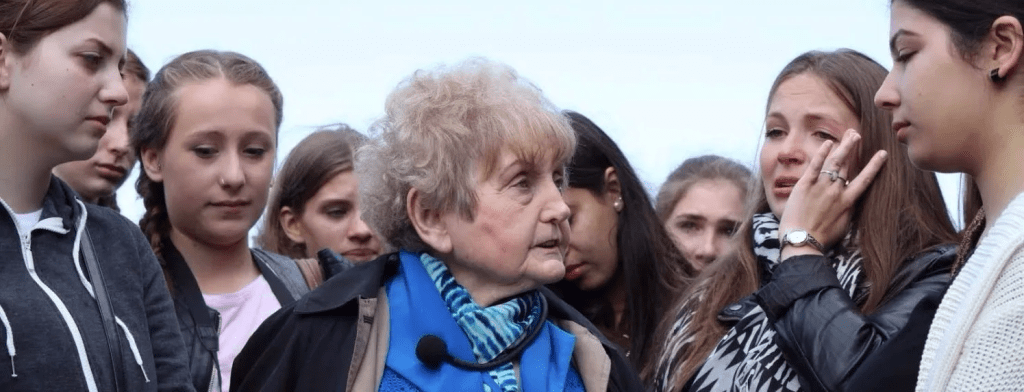
Photo credit: I am not sure who took this particular photo, but I was there when it was taken in 2013. We were standing inside Birkenau on the selection platform, near the cattle car that still stands there today. Eva was speaking to a small group that had gathered around her when this group of young German students stopped to listen from outside the circle. When Eva realized they were German, she invited them into the circle. It was then that the girls began to apologize to Eva on behalf of their ancestors. She told them they did not owe her an apology because they had done absolutely nothing wrong. She encouraged them to simply learn from their mistakes and to be light and love in the world. This was one of my favorite public moments with Eva.

Read more by Jill Szoo Wilson on Substack.

Trapped in the West Bank: Eva Mozes Kor’s Harrowing Encounter

In 2015, Holocaust survivor and Mengele Twin, Eva Mozes Kor sent me an email recounting one of the most harrowing experiences of her later years: an encounter in the West Bank that left her feeling vulnerable in a way she hadn’t since Auschwitz. The email was raw, unfiltered, and deeply personal.

As I revisit her words, I have chosen to write this piece in her own voice, staying true to the way she described the events to me. It offers a glimpse into the complexities she faced, not only as a Holocaust survivor and educator but as someone who, even decades after her liberation, found herself in situations that tested her sense of safety, trust, and resilience.

This is her account.


In July 2005, I traveled to Israel as part of the filming process for Forgiving Dr. Mengele, a documentary about my journey as a Holocaust survivor and my philosophy of forgiveness. The trip was filled with emotional moments: revisiting the agricultural school in Magdiel where I lived after Auschwitz, reconnecting with my sister Miriam’s family, and filming an interview with fellow Mengele Twin survivor, Jona Laks, at the Jewish Heritage Museum. But nothing prepared me for one of the most harrowing experiences I had since liberation.

Bob and Cheri, the filmmakers, had arranged for me to meet with a group of Palestinian educators to discuss a book written collaboratively by Israeli and Palestinian teachers. The book aimed to help students from both sides better understand each other’s histories. It seemed like an interesting and worthwhile project, and I was open to hearing their perspectives. But as the meeting approached, I found myself increasingly uneasy.

I had been under the impression that we would be meeting these teachers in Jerusalem. Instead, we suddenly arrived at a border checkpoint, where we were told we had to cross into the West Bank on foot. I had no idea this was part of the plan, and panic set in. Refusing to cross would cause problems, but I couldn’t shake the feeling that I was walking into something dangerous.

On the other side, a Palestinian professor named Sami met us, surrounded by a group of young Arab men speaking in Arabic. It was clear that they were discussing me, but I couldn’t understand what they were saying. That alone made me feel incredibly vulnerable. I had dressed modestly out of respect for their customs, wearing a long skirt instead of my usual pants, but that did little to ease my growing discomfort.

Sami took me to a bombed-out building and told me, “See, this is what the Israelis did to us.” I had seen the destruction before; it had been there for three years. “Why haven’t you cleaned it up?” I asked. Sami said they didn’t have the money. “You don’t need money to clean up a site,” I replied. “You need strong young men, and you have plenty of them.” I saw what he was doing. He assumed I was a naïve, bleeding-heart liberal who would unquestioningly accept his victim narrative. But I had been an Israeli soldier. I knew the conflict was far more complicated than he wanted me to believe.

The real ordeal began when I was taken to an Arab school in Bethlehem, where I was introduced to eight Palestinian teachers and one Israeli professor. The Israeli professor, the one who had convinced Bob to set up this meeting, never showed up. I felt abandoned, surrounded by people who saw me not as a Holocaust survivor, not as an individual, but simply as an Israeli and a Jew.

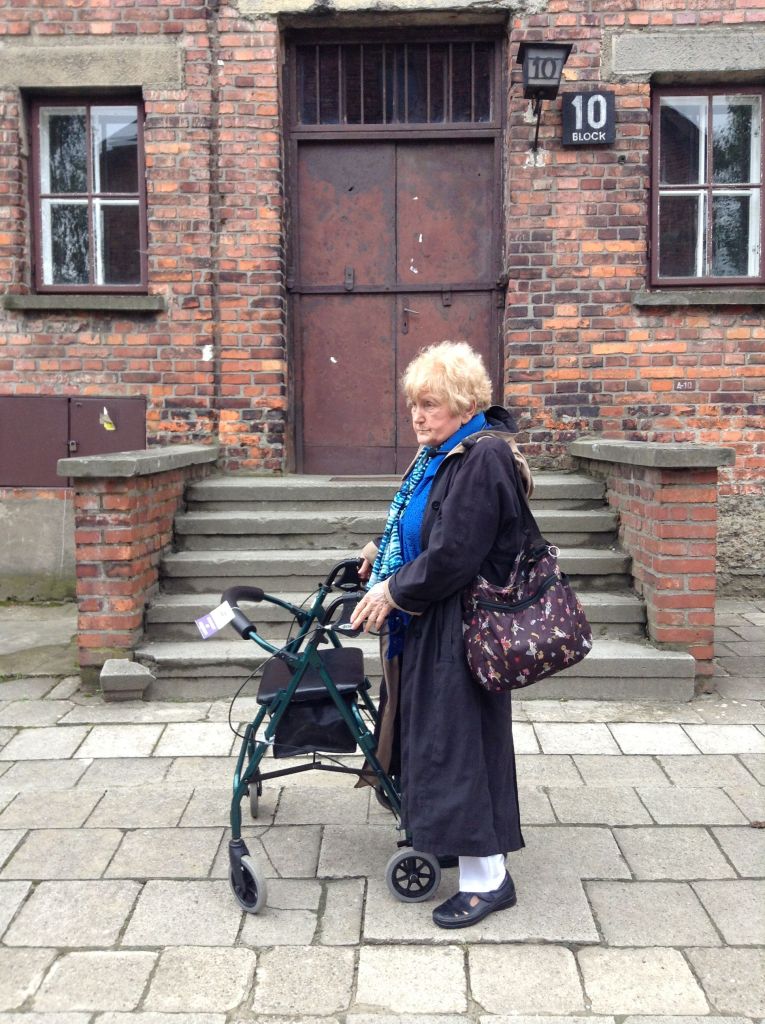
I took this photo of Eva Mozes Kor outside Block 10 in Auschwitz I.

As we began filming, the conversation had nothing to do with the book I had come to discuss. Instead, the teachers launched into a four-hour tirade about how Israel had made their lives miserable. I wanted to ask why the restrictions they complained about had been put in place, but I was afraid to say anything. I was in their hands. Bob and Cheri had no power to protect me. The fear was paralyzing. I felt like a hostage, unable to speak, unable to defend myself, unable to leave.

Eventually, I ran out of the room, sobbing uncontrollably. I hadn’t felt so trapped and powerless since Auschwitz. Bob and Cheri were apologetic, but it was too late. My goodwill had been exploited for a political agenda, and my trust had been shattered. The final humiliation was sitting down to eat with the teachers. I pretended to take a few bites so as not to offend them, but all I could think about was escaping.

It was nearly 10:30 p.m. before I was finally back on Israeli soil. Only then could I breathe again. Only then did I feel safe.

This experience reinforced something I have always believed: Many Holocaust survivors who live in Israel are still on the battlefield every single day. Their war did not end in 1945. The trauma of persecution never truly fades when you must still fight for your right to exist.

As for me, I survived yet again. But I will never trust so easily again.

© Jill Szoo Wilson, 2025

Read more by Jill Szoo Wilson on Substack.

The Question of Justice: Forgiveness vs. Accountability

In conversations about forgiveness, Eva Mozes Kor, Holocaust Survivor and Mengele Twin, was often asked tough questions about justice, especially regarding criminals, terrorists, and those who have killed. One such question came from a UK film director, who asked, “Should we just forgive them and let them go?” This question challenged Eva’s own ideas of forgiveness and set her on a path to delve deeper into the complexities of justice and forgiveness.

Her response to this challenge was powerful: “We must decide what we want the end result to be,” she explained. If the goal is punishment, then “we just hang him/her,” because after all, she had spent her life hearing the statement, “Justice must be done.” But Eva quickly challenged that notion, pointing out that while justice sounds simple, the reality is far more complicated.

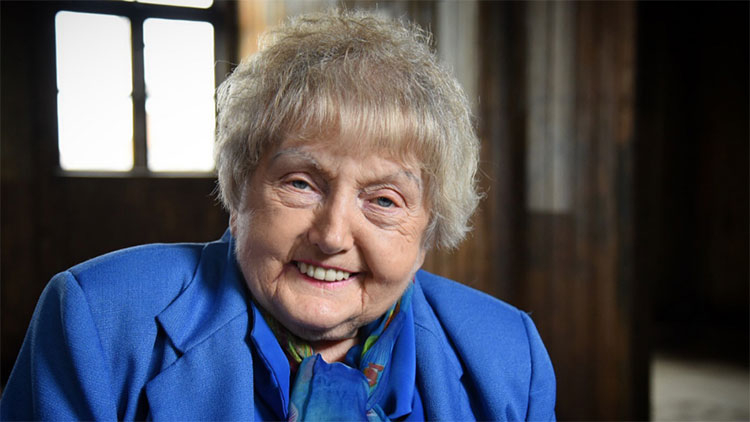
Eva Mozes Kor, Holocaust Survivor and Mengele Twin

The Search for Justice: Mengele’s Escape

Eva shared her concerns about how justice was sought for the Nazis after World War II, focusing specifically on Dr. Josef Mengele, the infamous Nazi doctor who performed experiments on Eva and her twin sister, Miriam. Mengele’s arrest under his name by the American forces, only to be released a day later due to a mistake, underscored the failure of justice. Despite his heinous crimes, Mengele’s name was never included in the Nuremberg Trials, and it wasn’t until 1985 that serious efforts were made to find him.

Eva had long been suspicious of the official accounts of Mengele’s death. In 1985, after taking a group of Mengele twins to Auschwitz to mark the 40th anniversary of the camp’s liberation, the search for Mengele’s whereabouts became an international story. Governments like those of Germany and the U.S. announced that Mengele’s bones had been found in Embu, Brazil, but Eva remained skeptical. The rushed, secretive nature of the investigation raised red flags for her.

The Inquest: Investigating Mengele’s Death

Eva’s suspicions led her to take action. Determined that survivors had the right to examine the truth, she organized an inquest into Mengele’s death, inviting forensic experts, historians, and survivors of Auschwitz, including Mengele twins. Eva could not raise funds for the inquest, so she took out a second mortgage on her house to pay for the investigation. This decision highlighted Eva’s unwavering commitment to finding the truth.

Just days before the inquest was set to begin on November 15, 1985, Eva received what she said was a threatening phone call from Neal Sher, the director of the U.S. Justice Department’s Office of Special Investigations. He demanded that Eva provide the names of those who had seen Mengele alive after 1979, or face the possibility of U.S. Marshals visiting her. Eva stood firm, refusing to yield to threats and continuing with the inquest.

The Inquest Findings: The Mystery Deepens

During the three-day inquest, experts including pathologist Dr. Michael Baden, psychologist Dr. Nancy Segal, and German-educated physician Dr. Werner Loewenstein examined the evidence. Dr. Loewenstein, who had translated Mengele’s SS files, was pivotal in uncovering discrepancies in the investigation. He revealed that the bones found in Brazil could not be Mengele’s because they lacked evidence of osteomyelitis, a condition documented in Mengele’s medical history. This revelation cast doubt on the official story and bolstered Eva’s belief that the investigation had been a rushed cover-up.

The panel of experts, including Eva herself, reviewed the U.S. Justice Department’s forensic report and called for further investigation. They raised serious concerns about the findings, including discrepancies in the identification of the bones and the absence of investigations into post-1979 sightings of Mengele. Despite this, the official stance remained that Mengele had died in 1979.

The Call for Justice: Victims’ Rights and Compensation

Beyond the questions surrounding Mengele’s death, Eva also highlighted the ongoing suffering of survivors of his experiments. Many of Mengele’s victims, particularly the twins, suffered from chronic medical conditions such as kidney issues, heart problems, and spinal degeneration, all due to the unscientific and inhumane experiments Mengele conducted at Auschwitz. Despite the immense suffering, the German government had yet to offer compensation to these survivors.

Eva used her platform to call for justice for the victims of Mengele’s experiments, urging the German government to compensate them for their pain and medical costs. She made it clear that the failure to offer compensation was an embarrassment to the German government and a further injustice to those who had already endured so much.

The Power of Forgiveness: A Call to Action

Throughout her efforts, Eva remained steadfast in her belief in the power of forgiveness, a principle that had defined her personal healing since she forgave the Nazis in 1995. In the face of betrayal, deception, and injustice, Eva continued to advocate for forgiveness as a means of healing, not just for herself but for the world.

Eva’s call to action extended beyond the personal. She proposed an addendum to the Universal Declaration of Human Rights that would include the right to emotional healing, emphasizing forgiveness as a necessary act for personal and societal well-being. Through forgiveness, Eva believed that victims could transcend their suffering and reclaim their emotional freedom.

Conclusion: A Legacy of Justice and Healing

Eva’s journey to uncover the truth about Mengele’s death and the suffering of his victims was not just about seeking justice for the past. It was about ensuring a future where forgiveness, healing, and emotional freedom were recognized as fundamental human rights. Her efforts to shine a light on the long-term pain caused by atrocities and the need for healing through forgiveness resonate as deeply today as they did in 1985.

Eva Mozes Kor’s legacy continues to inspire those who seek justice, understanding, and healing, teaching us that while forgiveness is a personal journey, it also has the power to shape a more just and compassionate world.

© Jill Szoo Wilson, 2025

Read more by Jill Szoo Wilson on Substack.