
A series exploring how the Tanakh and the Jewish world of Jesus and His earliest followers shape the New Testament’s covenantal and messianic story.
By Jill Szoo Wilson
Writer | Theatre Artist | Educator
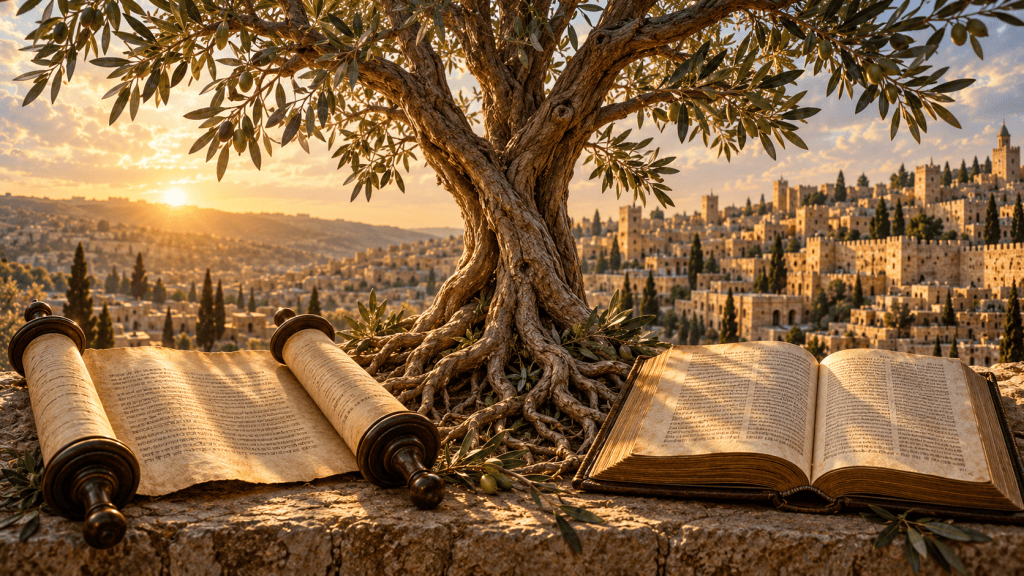
The New Testament does not step outside Israel’s Scriptures to begin another theological story. Its pages are filled with the language of the Tanakh, the Jewish Scriptures Christians commonly call the Old Testament. The name Tanakh comes from its three divisions: the Torah, or Law; the Nevi’im, or Prophets; and the Ketuvim, or Writings. The New Testament draws constantly upon their covenants, feasts, kingdom hopes, temple images and expectations of the Messiah.
Jesus of Nazareth and His earliest followers inhabited that story. They lived during the period of Second Temple Judaism, the centuries between the rebuilding of the Jerusalem Temple after the Babylonian exile and its destruction by Rome in AD 70. Israel’s Scriptures shaped how Jewish people during this period understood exile, redemption, resurrection, judgment, and the coming reign of God. When the apostles proclaimed what God had accomplished through Jesus, they drew upon this shared inheritance with extraordinary density, depth, and intentionality.
One Story. One Covenant. One Messiah. invites readers into that world with wonder, reverence, and discovery. The series begins with the conviction that the New Testament introduces no fundamentally new theological categories. It reveals the ongoing covenantal and messianic fulfillment of Israel’s story. No previous knowledge of Jewish history or specialized theological language is required. Unfamiliar terms and historical ideas are explained as they appear.
Within Scripture, there is no theological dividing wall between the Tanakh and the New Testament. Pentecost belongs to the story of Shavuot, the biblical Feast of Weeks, and recalls the giving of the Torah at Sinai. Jesus’ claim to be the Son of Man leads back to a vision in the book of Daniel. The promise of His return emerges from what the prophets called the Day of the Lord. Paul’s olive tree places Gentile believers within a covenant history they did not begin. The more clearly these connections come into view, the more unified and astonishing the biblical story becomes.
Begin Here
One Story. One Covenant. One Messiah.
How the Tanakh shapes every page of the New Testament
The opening essay introduces the conviction behind the series: the faith of Jesus and His earliest followers belongs to the covenantal and messianic story of Israel. The New Testament announces the fulfillment of that story and the extension of Abraham’s blessing to the nations through Israel’s Messiah.
The Covenant Story at a Glance
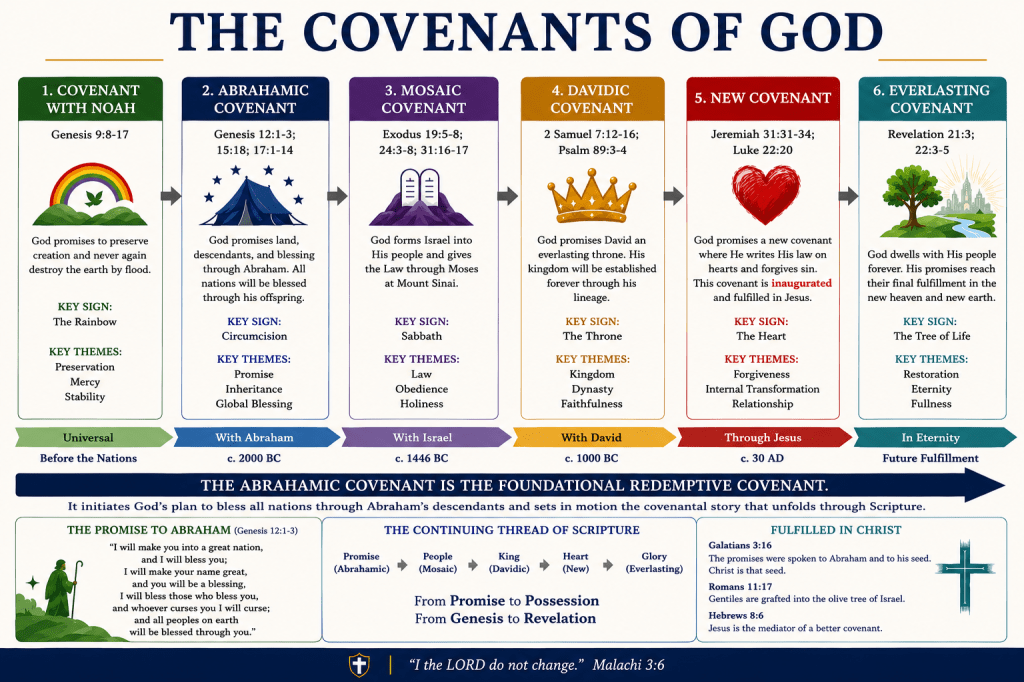
The biblical covenants provide the framework for the New Testament. Through Noah, God promises to preserve creation. Through Abraham, He promises descendants, land, and blessing for the nations. At Sinai, He forms Israel as His covenant people. Through David, He promises an enduring kingdom. The prophets then speak of a New Covenant marked by forgiveness, inward transformation, and renewed faithfulness to God.
These promises lead the biblical story toward the Messiah and the restoration of all things. The visual guide below traces that movement through Scripture, showing how each covenant contributes to one continuous redemptive history.
Continue Through the Series
The essays below appear in publication order. Together, they follow the covenants, images, and expectations that connect the Tanakh to the New Testament and shape its presentation of Jesus as Israel’s Messiah.
Shavuot and Pentecost: One Feast, One Story
The people gathered in Jerusalem in Acts 2 had come to observe Shavuot, an ancient feast rooted in Israel’s harvest and covenant life. Luke’s account draws together the memory of Sinai, the outpouring promised by Joel, the resurrection hope of the Psalms, and the gathering of Jewish pilgrims from across the diaspora. Pentecost emerges as Shavuot remembered, interpreted, and carried forward through Israel’s Messiah.
Abraham, Isaac, and Jacob: Why the Abrahamic Covenant Still Stands
God promises Abraham land, descendants, and blessing for the nations, then passes alone between the divided sacrifices in Genesis 15. The covenant rests upon His faithfulness and continues through Isaac, Jacob, and the people of Israel. Mary, Peter and Paul all return to these promises when they explain the coming of the Messiah and the inclusion of the nations in a covenantal story already underway.
One Root. Many Branches. Paul’s Answer in Romans 11
When Paul asks whether God has rejected His people, his answer is immediate: “By no means.” He points to himself, the remnant within Israel, and the cultivated olive tree as evidence that God’s covenant promises remain alive. Gentile believers are grafted into that tree through Israel’s Messiah, but Paul warns them to remember that the root supports them and that God’s gifts and calling are irrevocable.
From Sinai to Messiah: The Prophet Like Moses in Deuteronomy and the New Testament
As Moses prepares Israel to enter the land without him, he promises that God will raise up another prophet who will speak God’s words and mediate them faithfully. Deuteronomy closes with that promise still unresolved: no prophet like Moses has yet arisen. The New Testament identifies Jesus within this expectation through the Exodus patterns of the Gospels, Peter’s and Stephen’s appeals to Deuteronomy 18, and Hebrews’ presentation of Jesus as the greater covenant mediator.
The New Testament Was Written by Second Temple Jews
The New Testament enters a theological conversation that had already been unfolding for centuries. During the Second Temple period, Jewish communities searched Israel’s Scriptures for the promised restoration that remained incomplete after the exile, bringing renewed attention to Messiah, resurrection, kingdom, covenant renewal, and the Son of Man. The apostles used these existing categories to proclaim that Israel’s promises had been inaugurated in Jesus and would reach their fullness through His return and reign.
The Son of Man in the Tanakh: Why Jesus Called Himself the Son of Man
Jesus’ preferred title for Himself reaches back to Daniel’s vision of a human figure who comes with the clouds of heaven and receives everlasting dominion from the Ancient of Days. Jesus joins this heavenly ruler to Isaiah’s suffering servant, revealing that the path to the throne passes through suffering, death, and resurrection. His ascension marks the enthronement of the Son of Man, whose present reign will become fully visible when He returns to complete the restoration promised by the prophets.
The Day of the Lord, Part 1: Why the Prophets Expected God to Come Again
The prophetic Day of the Lord grows from Israel’s memory of God descending at Sinai in cloud, fire, earthquake, and the sound of a trumpet. Amos turns that expectation into a warning that God’s coming will expose covenant unfaithfulness, while Isaiah expands it into a vision of judgment upon human pride, the reign of a promised Davidic king, a Second Exodus, and the renewal of creation. Part 1 ends with Israel still waiting for these promises to be fulfilled.
The Day of the Lord, Part 2: What Was Israel Waiting For?
The Jewish people returned from Babylon and rebuilt the temple, but foreign powers still ruled, and the prophets’ promises of restoration remained incomplete. That unfinished hope shaped the world of Second Temple Judaism and gave John the Baptist’s call to repentance its urgency. Jesus announced that God’s kingdom had entered history through Him, while the apostles proclaimed that His resurrection had revealed the identity of the King and Judge who will return to complete the Day of the Lord.
What Is Replacement Theology? Why the Church Has Not Replaced Israel
Beginning with Martin Luther’s horrifying prescriptions against Jewish people, this essay places his hatred within a longer Christian tradition that taught that the Church had acquired Israel’s covenant identity. It follows that claim from influential early Christian teachers into modern descriptions of the Church as the “true” or “new” Israel, while carefully distinguishing those formulations from Luther’s hostility. Romans 11 offers another understanding: Gentile believers share Israel’s covenant blessings as grafted branches supported by a root they did not establish.
Antisemitism Today: How Christians Must Respond
Recent attacks on Jewish communities and the wider circulation of conspiratorial claims show how antisemitism moves between physical violence, collective blame, and suspicion presented as forbidden knowledge. This essay distinguishes legitimate criticism of Israel from hostility toward Jewish people, then examines how Christian teachings about Jewish rejection helped make such prejudice theologically intelligible. Scripture calls Christians to reject false reports, remember that Gentile believers are supported by Israel’s root, and stand publicly beside Jewish neighbors whose safety is threatened.
Martin Luther, Replacement Theology, and the “Jewish Question”
Martin Luther began by condemning Christian mistreatment of Jewish people, but later urged rulers to burn synagogues, destroy Jewish homes, confiscate religious books, and restrict Jewish life. This essay traces that transformation within a centuries-old Christian tradition that increasingly cast the Church as Israel’s successor. Luther’s story is set against Paul’s warning in Romans 11, where Gentile believers are reminded that they have been grafted into Israel’s olive tree by grace and warned against pride.
Bible Studies and Teaching Resources
God Has Not Rejected His People
This free adult Bible study and leader’s guide asks participants to investigate how Scripture describes the relationship of Gentile believers to Israel’s covenant story. The study follows God’s promise to Abraham, Israel’s experience of judgment and restoration, the Jewish world of Jesus and Paul, and the cultivated olive tree of Romans 11.
Rather than beginning with a lecture, the guide uses constructivist and Socratic questions to help participants examine the biblical texts, identify their assumptions, and support their conclusions with evidence from Scripture. It includes leader preparation, learning outcomes, discussion prompts, definitions of key terms, and guidance for difficult questions.
About the Project
One Story. One Covenant. One Messiah. grew from my study of God’s covenant with Abraham, Isaac, and Jacob and the Jewish world in which Jesus and His earliest followers lived. The deeper I entered that world, the more clearly I saw the New Testament drawing upon Israel’s Scriptures and carrying their covenantal and messianic expectations forward.
I created this project to share those connections with readers who want to understand the New Testament within the story that gave it meaning. As the series continues, I will add new essays, visual resources, and teaching materials to this page.
View the complete series archive.
New here? Visit About Jill Szoo Wilson to learn more about my writing, teaching, and other projects.

