
It started with one flake I mistook for a drop,
without asking my permission,
as snow often does.
By morning, the patio chair—
the one with the pale blue cushions I meant to bring in—
had accepted its fate
with the patience of an object that knows
humans forget things.

The snow took its time.
A thin first layer,
then another,
each one more certain than the last.
If the chair felt imposed upon,
it gave no sign.

From the maple,
a squirrel watched the slow takeover,
pressed flat against the trunk
in an embrace that invited romance, or,
at the very least,
warmth.
It twitched its tail once—
a gesture somewhere between
expectation and indifference—
then sighed a tiny puff of breath.

Meanwhile, at the back of the yard,
the pine tree leaned lower than yesterday.
The branches, loaded with fresh snow,
descended far enough
to touch the needles that had fallen weeks ago.
A quiet reunion.
If trees feel anything at such moments,
I imagine it’s something austere:
nostalgia, perhaps,
maybe even joy.

A grand ceremony,
and no one asked me to attend.
Still, I stood at the window,
unsummoned,
as winter arranged its small corrections:
the forgotten tucked in,
the living held close,
the fallen greeted by their own.

A world going on
perfectly well
without my remembering.

© Jill Szoo Wilson, 2025
Poem: In This Light
All summer the rubber tree misunderstood itself
as a subtropical creature with permanent rights to the patio.
Fall corrected that illusion.
I carried it inside
before the cold could finish the argument.

Now it stands beside the southeast window,
where the morning light arrives like a polite guest—
knocking first,
then slipping across the floorboards
in a thin, honeyed ribbon.

This light was not made for grandeur.
It does not flare, or boast,
or promise anything it cannot keep.
It simply lifts the room an inch or two,
enough that even the rubber tree notices—
its leaves catching the brightness
with the same shy greed
of someone receiving a compliment
they secretly hoped to hear.

I water it slowly,
as if pouring out a small confession.
The soil darkens, swells,
takes what it needs
without apology.

I do not tell the tree
that I admire its stubbornness,
or that something in its resilience
feels tender to me this morning.
Plants are suspicious of sentiment.
They prefer steady hands
and predictable light.

Still, the room shifts—
a quiet choreography
of leaf-shadow and sun-warmth.
And for a moment,
we are both content
to be exactly where the season
has delivered us.

Jill Szoo Wilson, 2025
A Fable: The Temple of the Red Crystal
By Jill Szoo Wilson
There was a cavernous room where shadows flickered in the glow and not-glow of a hundred candles. Deep in a forest where the trees had names and whispered among themselves, shedding their leaves sometimes in boredom, sometimes in spite, in the center of an island surrounded by a frigid ocean that looked like clouds and made the whole place seem to float in outer space.
The room belonged to a magician named Heichus, whose hands were arthritic with disappointment, false starts, and spells whose power never left the tips of his fingers.
Year after year, Heichus bent over a heavy wooden table, wiping dust and spider eggs away from the steaming liquids and vials that had become his companions. The dust he swept aside collected at the edges of the wood and fell to the floor on all sides, creating a pile so deep that, if it were snow, it could be shaped into an army of snowmen. Instead, the dust sat dormant yet lively with mites and burrowing mice and spiders hatching from the very eggs he brushed away. His table rose from the drifts like an iceberg from beneath salty seas, its tip the only part he ever really saw.
Among the vials and beakers that bubbled and hissed sat two crystals that glowed with a light almost imperceptible. Against the candlelight, their weak illumination looked like the last pulses of a dying firefly.
Both crystals were clear in their main element, but one shone with a faint blue, the other faint red. These small hues painted themselves across Heichus’ cheeks, thin and uneven, like paint that had already begun to dry. The candles and crystals, and the occasional pop of an ill-conceived mixture, were the only difference between utter forest darkness and sight for Heichus. He kept them on his table as if they were pets that needed his attention to live.
One night, while Heichus was reading from a brittle book of potions, schemes, and chemical riddles, he saw a spark out of the corner of his eye. He turned, and the red crystal began to shine more brightly.
Heichus widened his dark eyes and leaned toward it.
“Could it be?” he asked the stale air.
It had been years since he had seen the warm glow of the red crystal. He carefully moved the powders and liquids out of reach, picked up the crystal, and laid it on a cracked mirror that sat on his table. He set his hands on either side of the glass, lowered his head, narrowed his eyelids, and studied the glowing red stone from every angle. He was like David squinting at Bathsheba, unable to look away.
Heichus had never known the origin of the red crystal, but he had never forgotten its power. As he watched its glow creep into the lines of his face, he remembered himself as a younger man. He peered into the mirror beneath it and saw the beauty of his own youth. The red crystal had the ability to erase the marks of time, pain, and weakness, revealing the vibrancy and strength of any man who stood in its light.
Tears slipped out of Heichus’ narrowed eyes.
“It is,” he whispered to the air.
From aloneness to companionship, he travelled into his own reflection. His mind moved from remembering to feeling to believing the young man in the mirror. He walked around the room holding the red crystal to his face in one hand and the mirror like a fixture in the other. The longer he held the crystal, the brighter it glowed. The brighter it glowed, the clearer and happier and alive the eyes staring back at him.
Heichus danced with his own face. He laughed and coughed with delight. He asked the mirror, “Do you love me?” and the mirror answered with a silent yes as Heichus heard music in his heart. The mice at his feet rolled their black eyes. The spiders sat in rows with their two front legs crossed and watched the human spectacle.
Heichus moved with the speed of a young man. When his bones creaked or his back spasmed, he looked at his face in the mirror, splashed with red, and forgot the pain of his present.
After a night and day and night and day of sleepless frenzy, Heichus began his rituals. He blew out the flames of his candles, covered the powders and liquids, capped the vials and beakers, cleaned his teeth, drank his milk, and sank into the lumps of his old mattress. He placed the red crystal on the nightstand near his bed and propped the mirror behind it. He lay in the dark, seeing and then not seeing the young man staring back at him as sleep pulled at his eyelids. Exhaustion joined hands with inevitability, and Heichus was unconscious to the world.
His snores rose like crows looking for a darkened branch. The stale air was stirred by their wings and by a thin winter draft that found its way across the dust. The red crystal glowed and pulsed. The blue crystal wheezed and sighed its meager attempts.
As the earth turned toward midnight, the trees outside his room began to whisper.
“Years ago, when the red crystal shone with power, Heichus cut many of us down,” said one.
The older trees told the younger ones the story.
“Heichus grew large in his mind and proud in his hands,” they said. “He wanted to build a temple for the red crystal. His hands did the work of a thousand men while his eyes stayed fixed on his face in the mirror. The mirror even cracked under the weight of his gaze. He found his eyes again, one on each side of the crack, and kept chopping. He felled a thousand trees.”
A young tree asked, “Did he finish the temple?”
An old tree with branches bent toward the earth replied, “No. As he began to build the foundation, a great storm gathered over the forest and fell with terrifying fury. Lightning struck the foundation. It struck the bodies of our fallen brothers and sisters. It struck the red and blue crystals and stripped them of their light.”
The young one asked one more question, as young ones often do before sleep.
“Why did he want to build a temple for the red crystal and not the blue?”
“The blue crystal shows Heichus who he truly is,” the old tree said. “The red crystal shows him what he wants to see.”
With that, the old tree drew in a long breath, let it out, and fell quiet.
The forest, the magician, the mice, and the spiders hummed with peace, the way wind hums as it crosses the face of the sea. The world was still. Their memories slept inside their dreams.
Just before the sun lifted its fingers to begin the morning, something rattled on Heichus’ table.
Heichus opened one eyelid, then the other. He looked into the mirror at his bedside and smiled at himself. The red crystal rolled its light across his face like a cat rolling in a sprawl of sunlight. Heichus beamed and groaned and laughed and began speaking poetry to his reflection.
His rhyme was interrupted.
The blue crystal trembled again. This time, its motion took on another kind of life. The light at its center began to glow. At first, it was slow, almost imperceptible. Then its hue gathered strength and lifted into the air, disturbing the stale particles of the room with small touches of blue.
Heichus bellowed a low, wordless shriek. The blue crystal had pulled his gaze away from his face in the mirror, and that filled him with rage.
He leapt from his bed, the red crystal clenched in one hand, the mirror clutched in the other, and ran to the table. He began to mix and stir. His powders and liquids bubbled, hissed, and burst. For years, he had stood at this table for one secret purpose. He wanted to create a potion that would break, smash, or incinerate the blue crystal into a trillion useless pieces he could bury deep beneath the earth.
His hands moved from vial to vial, not carefully but feverishly. His alchemy turned into reckless combinations. His old objective rose inside him again, strong and cold as the temple walls he had once tried to build. He worked and panted. Saliva gathered at the sides of his mouth.
He watched only his hands and the elements on his table. He did not dare lift his eyes to the mirror, did not dare see his face in the light of the blue crystal as it climbed into the air. He knew that if he did, the blue light would strip him of the beauty he clung to in the red.
He felt the arthritis in his hands flare. He felt his lungs fill with the weight of tears and phlegm and regret, all pressing upward into his throat. The stale air began to shine with purple as red and blue stretched outward into wisps and smoke. Heichus closed his eyes and slammed his vials together, causing bursts of fire, both hot and cold, that licked his skin and stole his breath. Pain and relief chased each other through his body. Tears came. Heichus tumbled to the floor.
Through many summers and winters, he had sat and stood and slept in this room, trying to find a way for the red light to swallow him into its reflection. Now he faced his failure and wept into the stale air.
“I am no magician at all,” he said.
The red and blue crystals vibrated. They shook and rolled across the tabletop while Heichus cried on the floor.
“Come what may,” he whispered.
Beams turned into shafts, which turned into streams of colored fire that filled the room, red and blue and then violet. Completely defeated, sobbing, and cut off from his own heart, Heichus reached his hand through the chaos and grabbed for the mirror. His hands shook with fear, confusion, stubbornness, and hatred, yet he fought against his pride and pulled the mirror to his face.
The storm of violet rattled the room, spilled into the forest, and swept across the cloudy ocean. In its center, Heichus forced himself to look.
To see.
His face was marked by both youth and age, both wishes and realities, both dreams and waking. His breath came hard. His joints stung. His veins throbbed with obsession, desire, and a long habit of wanting. His eyes filled, not with blood this time, but with tears that felt heavier than blood. In one still moment, where fantasy and reality met in the air, his voice found a clear, steady line.
“I see,” he said.
With those words, the storm dropped. The wind and sound and fury crashed to the ground, shook the earth, and stopped, the way a tornado finally lifts and leaves behind both destruction and newness. The red and blue crystals gave a last faint puff of light and fell dark.
Heichus stayed where he was, listening to the quiet settle around him.
Outside, the trees felt the stillness return. They did not cheer. They did not mourn. They simply adjusted their branches, as trees do, and continued to grow.
In the years that followed, when the younger trees asked about the strange magician in the stone room, the oldest among them answered like this:
“Heichus loved the light that showed him what he wanted to see more than the light that showed him who he was. That is why he suffered. Hear this and keep it close. A man may chase illusion all his life, but truth will wait longer, and when it comes, no one can face it for him.”
Thinking in Community
By Jill Szoo Wilson
In contemporary higher education, a surprising harmony emerges between two pedagogical lineages often perceived as distinct: constructivist teaching philosophy and the Socratic Method. One grounds itself in cognitive development and social learning theory; the other traces its heritage to ancient Greece. Yet together, they form one of the most intellectually generative combinations available to the modern classroom. Both treat learning not as passive absorption but as active inquiry. Both assume that students arrive with prior knowledge, internal frameworks, and tacit assumptions that shape how they understand new information. Most importantly, both contend that education is not simply the transfer of content, but the transformation of the learner.
Constructivist thinkers argue that students build knowledge rather than receive it. Jean Piaget, the Swiss developmental psychologist, described this process as a dynamic interplay between assimilation and accommodation, a continual restructuring of cognitive architecture as learners encounter new experiences (The Origins of Intelligence in Children). Lev Vygotsky, the Russian social psychologist, extended this idea by emphasizing the social dimensions of learning. His concept of the Zone of Proximal Development proposed that understanding flourishes when learners engage in dialogue with a more capable peer or mentor. John Dewey, the American philosopher of education, echoed this view, asserting that “knowledge is not something which exists apart from experience” (Democracy and Education). Their scholarship provides the intellectual foundation for constructivist pedagogy: students learn by doing, by reflecting, and by negotiating meaning in community.
The Socratic Method shares this commitment to meaning-making through dialogue. Though separated by millennia from contemporary cognitive theory, Socrates, the Athenian philosopher, had already intuited that learning requires active mental engagement. His method—probing questions, conceptual clarification, and disciplined reasoning—invites students to articulate, examine, and ultimately revise their assumptions. Mortimer Adler, the American educational philosopher, writes in The Paideia Proposal that the Socratic classroom is defined by its refusal to reduce ideas to mere facts. Instead, it seeks to refine the mind through inquiry. Similarly, Nel Noddings, the influential scholar of ethics and education, observed that Socratic questioning “challenges students to consider why they believe what they believe” and requires an educator to listen closely, ask precisely, and build questions that reveal the architecture of a student’s thinking (Educating Moral People).
Although constructivism and the Socratic Method arise from different intellectual traditions, their meeting point is the conviction that learning is constructed, not delivered. When paired, they generate a classroom that is both rigorous and learner-centered.
Constructivism in Practice: Learning as a Process of Meaning-Making
Constructivist pedagogy begins with a simple premise: students bring a world with them. Prior experiences, cultural narratives, internalized scripts, emotional histories, and unspoken values become part of the classroom’s cognitive landscape. Jerome Bruner, a central figure in cognitive constructivism, argued that learning occurs when students “go beyond the information given” (The Process of Education). He believed that education should not simply prepare students for future life; it should cultivate their ability to interpret and re-interpret their world.
This orientation toward interpretation requires instructors to move from transmission to facilitation. In a transmission model, the teacher is positioned as the primary source of knowledge who delivers information for students to receive, record, and reproduce. In a facilitative model, the teacher instead designs learning experiences, poses questions, and structures interactions through which students actively construct understanding for themselves. Jerome Bruner, the American cognitive psychologist, argued that learning occurs most powerfully when students are guided to “go beyond the information given,” a process that requires thoughtful scaffolding and inquiry-based engagement (The Process of Education). Stephen Brookfield, a leading scholar in adult learning, similarly contends that facilitation encourages learners to examine their assumptions, engage in reflection, and build insight through structured dialogue (Teaching for Critical Thinking).
These theorists converge on one central claim: meaning is co-constructed. Students learn not only from lectures and readings, but from the interplay of questions, reflections, and interpretive tensions that arise during discussion.
In the college classroom, this creates a pedagogical environment that values nuance over finality. Students learn to test ideas, articulate interpretations, and reconsider or solidify earlier conclusions. The instructor becomes an architect of inquiry, designing learning experiences to provoke reflection rather than prescribing answers. Constructivism thus offers the philosophical soil in which Socratic teaching can take root.
Socratic Questioning: Inquiry as Intellectual Discipline
If constructivism provides the philosophical ground, the Socratic Method supplies the structure. Socratic pedagogy is not spontaneous conversation; it is purposeful inquiry. Christopher Phillips, founder of the modern Socrates Café movement, describes Socratic questioning as “a shared search for understanding” where each question functions as both challenge and invitation (Socrates Café). Allan Bloom characterizes this process as the cultivation of the “examined life,” where intellectual discomfort is not an obstacle but an essential component of learning (The Closing of the American Mind).
At its core, the Socratic Method rests on three types of inquiry:
- Clarification questions, which refine imprecise statements.
- Assumption questions, which uncover the beliefs beneath a claim.
- Implication questions, which reveal the consequences of those beliefs.
Together, they encourage students to build a more precise conceptual vocabulary. This practice strengthens not only critical thinking but also metacognition, the process by which learners examine their own thinking and monitor how understanding develops. By articulating how they know what they know, students begin to understand the architecture of their own reasoning.
Stephen Brookfield notes that Socratic inquiry helps students identify “assumptions that are taken for granted and rarely examined” (Teaching for Critical Thinking). These moments of self-interrogation are often destabilizing, yet profoundly generative. The student shifts from absorbing knowledge to inhabiting it.
Within the college classroom, the Socratic Method functions as both compass and catalyst. It directs students toward deeper understanding and accelerates the cognitive processes described by constructivist theorists. It requires students to participate actively in their own intellectual development.
Where the Traditions Converge: Dialogue as Pedagogical Architecture
Constructivism and the Socratic Method converge in their shared conviction that learning emerges through intentional interaction. Both approaches resist the notion that knowledge is acquired through answers alone; instead, they emphasize the intellectual labor of forming, testing, and refining those answers. Dialogue becomes the medium through which understanding is shaped, not merely communicated.
In a constructivist–Socratic classroom, dialogue serves as an architectural framework that supports and directs cognitive growth. Questions are not interruptions to learning but the mechanisms that move it forward. They guide students from initial uncertainty toward increasingly complex interpretations, prompting them to articulate assumptions, revisit earlier conclusions, and trace the logic of their own thinking. It is in this movement that Vygotsky’s insight becomes visible: learning accelerates in the space between what a student can already do and what becomes possible through carefully guided interaction. The Zone of Proximal Development is not a chart or a formula in this setting. It is the lived moment when a question arrives at just the right level of difficulty, when a peer’s interpretation stretches a student’s own, when the instructor’s prompt nudges thought into a new configuration. As students respond to questions situated just beyond their current mastery, they test hypotheses, negotiate meaning with peers, and begin to inhabit the intellectual habits of inquiry.
Such a classroom is relational, reflective, and rigorously engaged. It honors the individuality of student experience while drawing learners into a shared pursuit of understanding. Within this environment, the instructor becomes a designer of intellectual movement and a structurer of dialogue so that students can recognize themselves as co-authors of their learning. The result is not merely the acquisition of knowledge but the cultivation of an interpretive stance that endures far beyond the course’s boundaries.
Conclusion
As these traditions come together in practice, the college classroom becomes a setting where inquiry deepens and understanding gains structure. Their shared commitment to reflection and the active construction of meaning encourages students to interpret ideas with increasing precision and to recognize the habits of thought that guide interpretation itself. Through this integrated approach, dialogue emerges as a sustained intellectual practice, inviting students into the slow, disciplined work of questioning, analyzing, and revising their thinking.
This work reaches far beyond the mastery of course content. The interpretive habits cultivated in a constructivist and Socratic classroom form the foundation for adult intellectual life. They strengthen the ability to discern patterns, evaluate competing claims, and approach complexity with patience rather than haste. In a culture shaped by constant information and rapid exchange, these habits create a practice of attentiveness. They help students recognize nuance, situate themselves within ongoing conversations, and contribute thoughtfully to the civic, professional, and relational worlds they will inhabit.
Viewed in this light, the purpose of higher education expands beyond the acquisition of knowledge. It becomes an invitation to develop a way of thinking characterized by curiosity, rigor, and a readiness to dwell in questions. When instructors adopt a pedagogy that affirms the social construction of understanding and the disciplined inquiry associated with the Socratic tradition, they help students cultivate a lifelong interpretive stance. This stance, more than any discrete skill or body of information, equips learners to encounter a complex world with insight, discernment, and intellectual courage
Further Reading
Adler, Mortimer J. The Paideia Proposal. Macmillan, 1982.
Bloom, Allan. The Closing of the American Mind. Simon & Schuster, 1987.
Bruner, Jerome. The Process of Education. Harvard UP, 1960.
Brookfield, Stephen. Teaching for Critical Thinking. Jossey-Bass, 2012.
Dewey, John. Democracy and Education. Macmillan, 1916.
Noddings, Nel. Educating Moral People: A Caring Alternative to Character Education. Teachers College Press, 2002.
Phillips, Christopher. Socrates Café: A Fresh Taste of Philosophy. Norton, 2001.
Piaget, Jean. The Origins of Intelligence in Children. International Universities Press, 1952.
Plato. Meno. Translated by G.M.A. Grube, Hackett Publishing, 1997.
Plato. The Republic. Translated by G.M.A. Grube, revised by C.D.C. Reeve, Hackett Publishing, 1992. (Book I)
Vygotsky, Lev. Mind in Society: The Development of Higher Psychological Processes. Harvard UP, 1978.
Originally posted on my Jill Szoo Wilson Substack.
Unknowable: An Allegory
“Do you think we are unknowable?” she asked.
Caimon looked down at the dirt around his feet and noticed his shoe was untied. “Not completely, no.”
“Do you mean that we are partly unknowable? But partly knowable, too?”
He could feel his pulse in his temples as he bent down to tie his shoe, “I think we can know someone as much as they are willing to be known.”
She wondered about his answer as she leaned over to tighten the Velcro on the side of her own shoe, “Do you want me to know you?” She whispered the first part of the sentence, but the second part leapt too loudly from her mouth.
“I guess I want everyone to know me. But not really.” He could tell, right away, this wasn’t the answer she wanted to hear.
“Well,” she said, with securely fastened feet, “I think I understand.”
Caimon tried to make a joke, but it fell between his feet, “Maybe you do. But not really.”
As his paltry attempt at humor mixed in with the dirt beneath the hem of his pants, Caimon wanted her to walk away. He didn’t like the weight of her stare, and he didn’t want to feel responsible for her anymore. In a moment of desperation, Caimon turned from her—filled with the conviction that he would never look in her direction again—and he said, “Why do you always need to know? What is wrong with not knowing?”
His footsteps were slow and heavy as he could feel her blue eyes fastened to his back with long, thick ropes tied around his organs. Her eyes pulled at him and tried to stop his movement until, between one exhale and the next breath in, he felt her release. The moment of her imprisonment was the moment of his freedom, and in his freedom, he began to run. Not fast and with nowhere to go, but with the swiftness of a man whose shoes were tied and whose longest mistake grew shorter behind him.
Caimon ran with his secrets. The unknowable parts of himself were rattling around between his right ear and his left. They were sloshing back and forth between his rib cages and percolating up into his throat. The words he would never say, the feelings he could never explain, and the courage he conjured in his dreams but left stuck to the sides of his imagination were loosening with each new footstep. He wondered whether it was dangerous to allow the movement. His secrets felt like gumballs in a gumball machine and he had only ever seen one fall at a time: what would happen if the whole lot was disturbed at once?
He laughed under his breath and panted fog into the cold night air, “If only I had a quarter, I could find some courage to chew on.”
He laughed again, but this time he knew it wasn’t funny.
The words of the girl wrote themselves on the trees surrounding him, and he could hear them on the wings of the wind that fell through the leaves. He watched his shoes as they hit the ground—left, right, left, right—and he began to count the steps. Each step was further away and, somehow, closer, too. Further from her: closer to something new.
It wasn’t any one aspect of the girl Caimon needed to flee, but the anchor her whole had become. She needed Caimon, and Caimon didn’t want to be needed. She expected things from him, and he wasn’t sure he had what she was waiting to discover. He didn’t want to disappoint her, to lose her, or find her, and the girl only wanted to be found. Theirs was a connection of two negative magnets, one wanting to change her charge. She wanted to change the nature of herself so she could be pulled into Caimon and he into her, almost as though the choice no longer belonged to them.
“Unknowable,” he read as the words wrote themselves in the reflection of a lake up ahead. Caimon stopped running and never looked back, but sat on the edge of the water.
The air was so cold by then that his breath felt like crystals grabbing the edges of his lips as it was blown from his body. The forest was silent and still: the kind of stillness that lowers itself like a parachute over nature when the moon is moments away from switching places with the sun.
Caimon, tired and cold, reached into the pocket of his coat to find his book of matches. Once he was certain the matches were there, he looked near his feet for pieces of fallen wood. One by one, Caimon reached into the dirt for the wood, methodically like he was looking for pieces of a puzzle that had fallen to the floor. Once he had gathered enough wood to build a fire, he reached into his pocket and pulled out two things: the matches he knew were there and an envelope she had given him earlier, long before he tied his shoe.
Caimon crumpled the envelope—still filled with her letter—in his left hand and placed it on top of the wood. With a match in his right hand, Caimon struck the side of the matchbook and watched the flame immediately appear.
“Quickly,” Caimon thought. “It is quickly that a match is filled with fire.” Just as the flame crept dangerously close toward his fingers, Caimon leaned over and watched as the flame stretched itself from the match to the letter, like a bridge between two lovers. Or two strangers. Once the letter was lit, Caimon stood.
He closed his eyes and felt the heat of the letter begin to grow as it linked arms with the pieces of wood he had gathered from the forest floor. Soon, the fire began to melt the breath that gently rolled from between Caimon’s lips. He lightly bent his fingers into fists, his fingertips touching the inside of his own palm. He felt the skin on his hands and wondered why he hadn’t noticed before how rough that skin had become.
He could see on the inside of his eyelids the orange and red of the fire he had built: the fire made with his rough hands and matches and her letter. He didn’t want to look at it just yet but, instead, he wanted to feel it dance before him like a lover unencumbered by self-consciousness or pride. Caimon drank in the light and let the colors of the illumination paint a masterpiece inside his mind.
Enraptured by the freedom of the flames and the heat of the fire against his shoes and legs and face, Caimon leaned back his head and sighed a message that flew into the sky, “There is nothing wrong with not knowing.”
And without seeing the sun begin to rise, Caimon knew the day was new.
© Jill Szoo Wilson, 2025
Poem: The Path Widens
A meditation on how people grow: slowly, sideways, and almost never on schedule.
In teaching acting, you learn that most progress happens quietly.
Not in the moment a student secures a role, but in the moment she finally makes a choice no one suggested. Nothing dramatic. A shift of breath. A decision about when to look away. A line spoken with intention instead of hope.

Parents ask me when they should know whether theatre is a good path for their child. They mean well. They want a timeline, a benchmark, a sign that reassures them the world can still be predicted. Adults love prediction. It keeps the fear at a reasonable volume.

But acting doesn’t depend on prediction. It depends on attention.
A student gives more than she takes. She listens longer. She works without being asked. These are not qualities that make announcements. They don’t trend. They barely register unless you’ve been watching the way a gardener watches new growth: alert, but never frantic.

Younger students arrive full of borrowed enthusiasm.
A favorite movie. A character they memorized line for line.
At that age, the self has not yet solidified enough to have a motive.
They imitate because imitation is how they understand the world.
It’s not my job to explain their “why.”
It’s my job to give them something sturdy to push against.

I learned this long before I ever taught anyone.

When I was five, my uncle removed the floaty from my back and told me to jump into the pool. He said he would be right there. Adults often say this. Sometimes it’s true. Sometimes it’s more aspirational than factual.

The first time, he stood still.
The second time, he stepped back.
By the end of the afternoon, my floaty lay drying on the concrete like a gasping fish.

That is how learning works at its best.
You move toward someone who trusts you can manage the distance.
Then the distance widens.

A simple object left drying on the concrete carries its own questions.
What does a beached object imagine?
That this is the edge of its usefulness,
or that the next body of water will be waiting somewhere farther on?

Even a stranded object suggests the truth: every stage asks something different of us.

Parents want to know when their child is ready for the “path.”
But the path is not an announcement.
It is a series of small decisions, barely noticeable except in accumulation:
a student opens her script earlier in the week,
rehearses with a friend instead of scrolling a phone,
asks a question that requires thinking instead of guessing.

These things don’t earn applause.
But they build a life.

The work goes on.
The child grows.
The deep end waits, patient and unbothered.

And the path widens without saying why.

© Jill Szoo Wilson, 2025
Poem: The Thousand Deaths of Canton
Canton died on Monday

And then again on Friday

And in between

A thousand other deaths

All in a row—

His breathing shallow,

His passion stretched wide

Like a well dug for water supply

Now a brimming

Hole.


Canton’s misery has a name—

A she as you may have guessed

With brownish hair and

Bluish eyes

Anchored to her soul,

Her voice sounds

Like frogs chanting

In the night,

A melody Canton

Extols.


Her name is Sienna

Like the color artist’s mix

When simple red

Promises nothing of

Complexity

In its parts—

But complexity

Is the only way

To convey the

Whole.


She walked into his life—

No, she swam instead

Like a pirate

Fallen out of a ship

Whose pockets were filled,

Whose lungs nearing empty

Needed Canton’s

Breath to make it

To the shore with no

Patrol.


Canton wrapped his arms

Around her belted waist

He pulled her body

Wet with salted

Memories

To a warm and sunny

Place where

Resuscitating Sienna

Became his starring

Role.


He breathed his life

Into her lungs,

Sienna’s breast inflated

Like a blowfish

Reacting to her fear

Desperately wanting

His protection—

No, that’s not right—

His affection wrapped up in his

Soul.


Canton died when Sienna

Slept—

The world collapsed

With her unconsciousness

As though slumber

Was a distance too far to

Bare,

Not even the moon

Could console his emptied

Control.


He died when she blinked,

He could not withstand the dark

Her eyelids commanded—

Like a conductor

Setting the rhythm of

His pain and

One and two and three and

Four—

The music behind her open eyes, Canton’s

Parole.


Canton and Sienna

Clasped their fingers together

Like two pirates searching for love

Crossing a windy expanse—

They cried and laughed

And died and lived

Along the way

Two shipwrecked halves navigating

Toward one mysterious

Shoal.

© Jill Szoo Wilson, 2025

Poem: Consolation
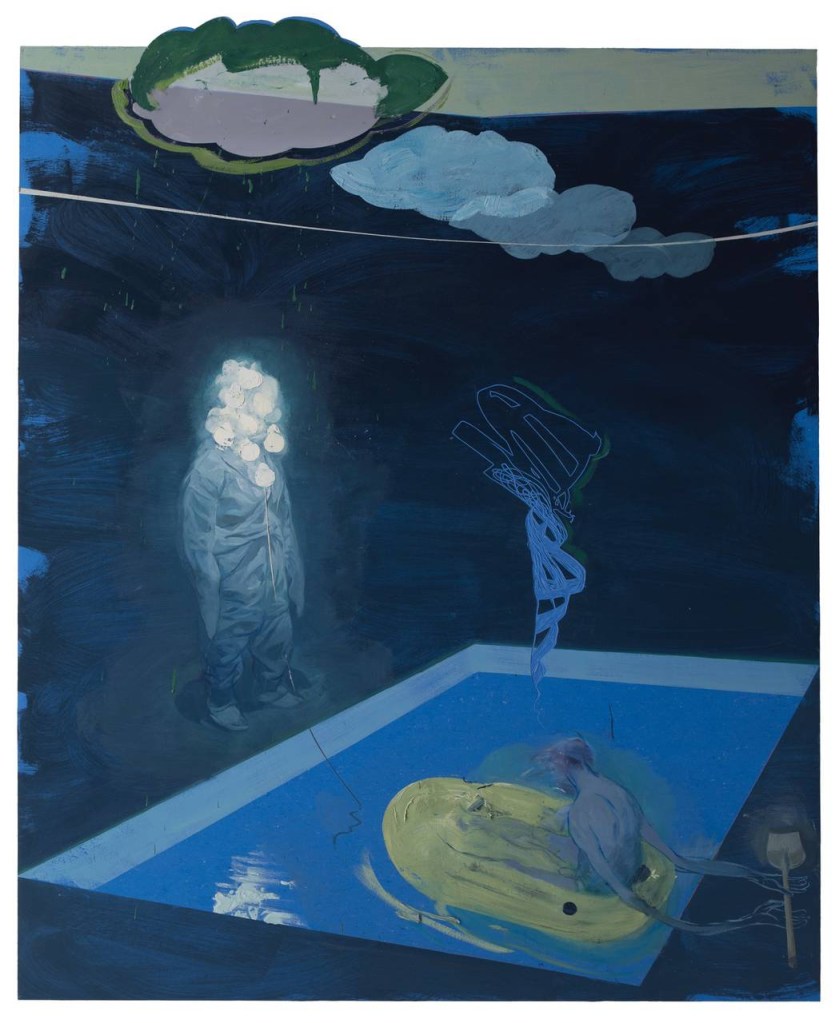
He called her a corpse

Deflated her air

Rolled her body up

From her toes to her hair

And sat on her skin

Until her spirit

Became thin

A sweet smelling puff

Escaped her lips—


“I’m still alive”

Was

All

She said.


She lay on the earth

Drawn-on with dirt

The muscles in his arms

Dug deep beside

The crumpled she

He struggled to hide

He needed a hole

As deep as it was

Wide.


His sinews tore

His ligaments bore

The weight of

Moisture soaked mud

Sweat poured from his face

A frenetic pace

Fighting against the hole

In the ground and inside

His soul.


His arms fell to his sides—

Steel and wood

Now a finger

On his hand

An extension

A plan—

One last

Connection to she

Awake in the grave.


One inhale—

Peace

One exhale—

Release

One inhale—

Regret

One exhale—

Cold sweat

And his future stared.


He could not go back

Ahead was a trap—

Brightly lit

The way

Was clear

But illumination

Is not

The same as

Consolation.


He sat in his safety

Buoyant

Afloat

Stillness

Stagnation

Narration calling,

“I’m still alive”

Her apparition

His aberration.


Wires exposed

The path that he chose

Storm clouds above

Drowning out love

No finish to the start

Interrupted heart

No dreams to know

No nightmares bestowed

She leapt from the tomb

Alive—

© Jill Szoo Wilson, 2025
Poem: The Curve of Time
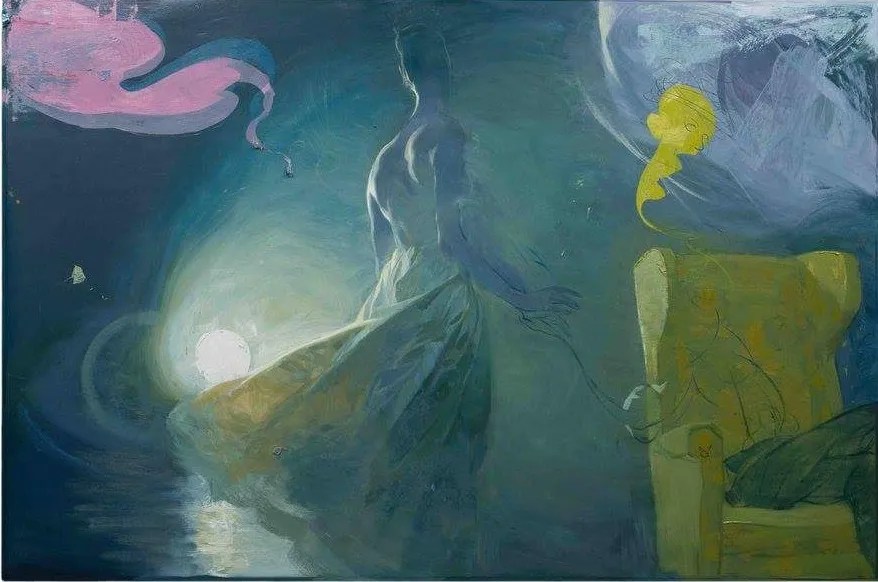
You might as well befriend the moon–
embrace her clouded peekaboos.
And music . . .

Receive the tune–
you have no time to choose–
alone in a crowd or
with no one in view.
And a smell . . .

Wafts past your nose–
what's that?
Or who?

Perfume on skin or a place that you knew?
Pause.
No need to wonder—you know who that was—
and who you are
as nostalgia winds the second hand 'round.

"Time is a straight line," said he
"It moves consecutively,
watches as it goes
behind and below
like walking on a path
that winds into—
well—
no one knows."

"No one knows,
that's right," said she.
"Simply put, I do agree.
But there's no line to speak of.
Time bends–not like a knee–
more like a finger touching its thumb
or a rainbow finding it's spherical end
and celebrating with a gentle, 'Come.'"

Time returns to the places we've been.
One says, "That memory is far."
Another, "The moment is here to stay."
Yesterday can be put down
but the nows of that day
pop up from the ground
without notice
or sound
to delight or confound–
it depends on the soiled seconds
into which it was bound–
moments become recollections and
recollections are seeds
with a life of their own.

Promises and hope
gentleness and rage
a touch, a glance
a well-appointed room
or a half-written page–
all are sown into our skin
and find their rest in
smiles and tears
repose and toil
love and loss
freedom and cost
and the way the sunlight lay across
the earth at the end or
when it all began.

"That was back then," said he.
"That is today," said she.
The Minutes listened closely,
"There is wisdom in both."
Time smiled wryly
crouched smugly and quietly
behind an Autumn tree
waiting for the final leaf to fall.

© Jill Szoo Wilson, 2025
Sonnet: The Final Chamber
In all your quiet ways my spirit wakes,
Like dawn that steals through shutters, soft and slow.
Oft have I wondered how your presence makes
Veil’d parts of me take courage yet to grow.

Each day my hushed and inward-seeking mind
Yields when your voice through shaded mem'ry moves.
O’er every folded fear your light I find,
Undoing shadows with the truth it proves.

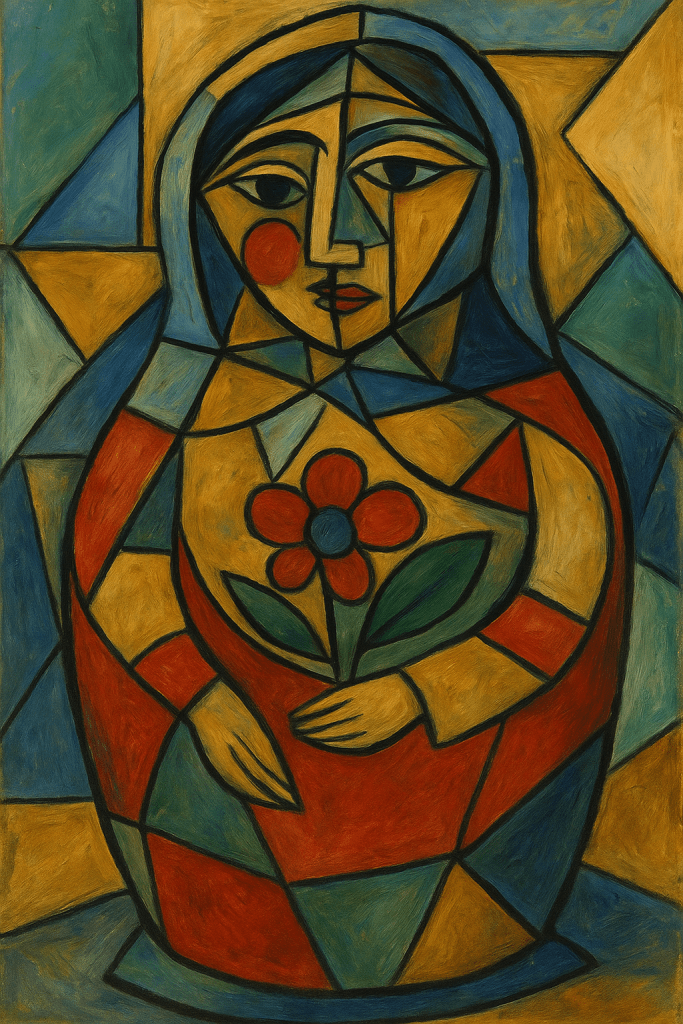
You are the innermost of all my days,
The final form within my layered soul.
No ornament, nor craft of human praise,
Could name the warmth by which you make me whole.

So stand I now, my guarded heart undone,
For in your gaze a thousand worlds are one.

© Jill Szoo Wilson, 2025
 Jill Szoo Wilson