A Fable: The Temple of the Red Crystal

By Jill Szoo Wilson

There was a cavernous room where shadows flickered in the glow and not-glow of a hundred candles. Deep in a forest where the trees had names and whispered among themselves, shedding their leaves sometimes in boredom, sometimes in spite, in the center of an island surrounded by a frigid ocean that looked like clouds and made the whole place seem to float in outer space.

The room belonged to a magician named Heichus, whose hands were arthritic with disappointment, false starts, and spells whose power never left the tips of his fingers.

Year after year, Heichus bent over a heavy wooden table, wiping dust and spider eggs away from the steaming liquids and vials that had become his companions. The dust he swept aside collected at the edges of the wood and fell to the floor on all sides, creating a pile so deep that, if it were snow, it could be shaped into an army of snowmen. Instead, the dust sat dormant yet lively with mites and burrowing mice and spiders hatching from the very eggs he brushed away. His table rose from the drifts like an iceberg from beneath salty seas, its tip the only part he ever really saw.

Among the vials and beakers that bubbled and hissed sat two crystals that glowed with a light almost imperceptible. Against the candlelight, their weak illumination looked like the last pulses of a dying firefly.

Both crystals were clear in their main element, but one shone with a faint blue, the other faint red. These small hues painted themselves across Heichus’ cheeks, thin and uneven, like paint that had already begun to dry. The candles and crystals, and the occasional pop of an ill-conceived mixture, were the only difference between utter forest darkness and sight for Heichus. He kept them on his table as if they were pets that needed his attention to live.

One night, while Heichus was reading from a brittle book of potions, schemes, and chemical riddles, he saw a spark out of the corner of his eye. He turned, and the red crystal began to shine more brightly.

Heichus widened his dark eyes and leaned toward it.

“Could it be?” he asked the stale air.

It had been years since he had seen the warm glow of the red crystal. He carefully moved the powders and liquids out of reach, picked up the crystal, and laid it on a cracked mirror that sat on his table. He set his hands on either side of the glass, lowered his head, narrowed his eyelids, and studied the glowing red stone from every angle. He was like David squinting at Bathsheba, unable to look away.

Heichus had never known the origin of the red crystal, but he had never forgotten its power. As he watched its glow creep into the lines of his face, he remembered himself as a younger man. He peered into the mirror beneath it and saw the beauty of his own youth. The red crystal had the ability to erase the marks of time, pain, and weakness, revealing the vibrancy and strength of any man who stood in its light.

Tears slipped out of Heichus’ narrowed eyes.

“It is,” he whispered to the air.

From aloneness to companionship, he travelled into his own reflection. His mind moved from remembering to feeling to believing the young man in the mirror. He walked around the room holding the red crystal to his face in one hand and the mirror like a fixture in the other. The longer he held the crystal, the brighter it glowed. The brighter it glowed, the clearer and happier and alive the eyes staring back at him.

Heichus danced with his own face. He laughed and coughed with delight. He asked the mirror, “Do you love me?” and the mirror answered with a silent yes as Heichus heard music in his heart. The mice at his feet rolled their black eyes. The spiders sat in rows with their two front legs crossed and watched the human spectacle.

Heichus moved with the speed of a young man. When his bones creaked or his back spasmed, he looked at his face in the mirror, splashed with red, and forgot the pain of his present.

After a night and day and night and day of sleepless frenzy, Heichus began his rituals. He blew out the flames of his candles, covered the powders and liquids, capped the vials and beakers, cleaned his teeth, drank his milk, and sank into the lumps of his old mattress. He placed the red crystal on the nightstand near his bed and propped the mirror behind it. He lay in the dark, seeing and then not seeing the young man staring back at him as sleep pulled at his eyelids. Exhaustion joined hands with inevitability, and Heichus was unconscious to the world.

His snores rose like crows looking for a darkened branch. The stale air was stirred by their wings and by a thin winter draft that found its way across the dust. The red crystal glowed and pulsed. The blue crystal wheezed and sighed its meager attempts.

As the earth turned toward midnight, the trees outside his room began to whisper.

“Years ago, when the red crystal shone with power, Heichus cut many of us down,” said one.

The older trees told the younger ones the story.

“Heichus grew large in his mind and proud in his hands,” they said. “He wanted to build a temple for the red crystal. His hands did the work of a thousand men while his eyes stayed fixed on his face in the mirror. The mirror even cracked under the weight of his gaze. He found his eyes again, one on each side of the crack, and kept chopping. He felled a thousand trees.”

A young tree asked, “Did he finish the temple?”

An old tree with branches bent toward the earth replied, “No. As he began to build the foundation, a great storm gathered over the forest and fell with terrifying fury. Lightning struck the foundation. It struck the bodies of our fallen brothers and sisters. It struck the red and blue crystals and stripped them of their light.”

The young one asked one more question, as young ones often do before sleep.

“Why did he want to build a temple for the red crystal and not the blue?”

“The blue crystal shows Heichus who he truly is,” the old tree said. “The red crystal shows him what he wants to see.”

With that, the old tree drew in a long breath, let it out, and fell quiet.

The forest, the magician, the mice, and the spiders hummed with peace, the way wind hums as it crosses the face of the sea. The world was still. Their memories slept inside their dreams.

Just before the sun lifted its fingers to begin the morning, something rattled on Heichus’ table.

Heichus opened one eyelid, then the other. He looked into the mirror at his bedside and smiled at himself. The red crystal rolled its light across his face like a cat rolling in a sprawl of sunlight. Heichus beamed and groaned and laughed and began speaking poetry to his reflection.

His rhyme was interrupted.

The blue crystal trembled again. This time, its motion took on another kind of life. The light at its center began to glow. At first, it was slow, almost imperceptible. Then its hue gathered strength and lifted into the air, disturbing the stale particles of the room with small touches of blue.

Heichus bellowed a low, wordless shriek. The blue crystal had pulled his gaze away from his face in the mirror, and that filled him with rage.

He leapt from his bed, the red crystal clenched in one hand, the mirror clutched in the other, and ran to the table. He began to mix and stir. His powders and liquids bubbled, hissed, and burst. For years, he had stood at this table for one secret purpose. He wanted to create a potion that would break, smash, or incinerate the blue crystal into a trillion useless pieces he could bury deep beneath the earth.

His hands moved from vial to vial, not carefully but feverishly. His alchemy turned into reckless combinations. His old objective rose inside him again, strong and cold as the temple walls he had once tried to build. He worked and panted. Saliva gathered at the sides of his mouth.

He watched only his hands and the elements on his table. He did not dare lift his eyes to the mirror, did not dare see his face in the light of the blue crystal as it climbed into the air. He knew that if he did, the blue light would strip him of the beauty he clung to in the red.

He felt the arthritis in his hands flare. He felt his lungs fill with the weight of tears and phlegm and regret, all pressing upward into his throat. The stale air began to shine with purple as red and blue stretched outward into wisps and smoke. Heichus closed his eyes and slammed his vials together, causing bursts of fire, both hot and cold, that licked his skin and stole his breath. Pain and relief chased each other through his body. Tears came. Heichus tumbled to the floor.

Through many summers and winters, he had sat and stood and slept in this room, trying to find a way for the red light to swallow him into its reflection. Now he faced his failure and wept into the stale air.

“I am no magician at all,” he said.

The red and blue crystals vibrated. They shook and rolled across the tabletop while Heichus cried on the floor.

“Come what may,” he whispered.

Beams turned into shafts, which turned into streams of colored fire that filled the room, red and blue and then violet. Completely defeated, sobbing, and cut off from his own heart, Heichus reached his hand through the chaos and grabbed for the mirror. His hands shook with fear, confusion, stubbornness, and hatred, yet he fought against his pride and pulled the mirror to his face.

The storm of violet rattled the room, spilled into the forest, and swept across the cloudy ocean. In its center, Heichus forced himself to look.

To see.

His face was marked by both youth and age, both wishes and realities, both dreams and waking. His breath came hard. His joints stung. His veins throbbed with obsession, desire, and a long habit of wanting. His eyes filled, not with blood this time, but with tears that felt heavier than blood. In one still moment, where fantasy and reality met in the air, his voice found a clear, steady line.

“I see,” he said.

With those words, the storm dropped. The wind and sound and fury crashed to the ground, shook the earth, and stopped, the way a tornado finally lifts and leaves behind both destruction and newness. The red and blue crystals gave a last faint puff of light and fell dark.

Heichus stayed where he was, listening to the quiet settle around him.

Outside, the trees felt the stillness return. They did not cheer. They did not mourn. They simply adjusted their branches, as trees do, and continued to grow.

In the years that followed, when the younger trees asked about the strange magician in the stone room, the oldest among them answered like this:

“Heichus loved the light that showed him what he wanted to see more than the light that showed him who he was. That is why he suffered. Hear this and keep it close. A man may chase illusion all his life, but truth will wait longer, and when it comes, no one can face it for him.”
Unknowable: An Allegory

“Do you think we are unknowable?” she asked.

Caimon looked down at the dirt around his feet and noticed his shoe was untied. “Not completely, no.”

“Do you mean that we are partly unknowable? But partly knowable, too?”

He could feel his pulse in his temples as he bent down to tie his shoe, “I think we can know someone as much as they are willing to be known.”

She wondered about his answer as she leaned over to tighten the Velcro on the side of her own shoe, “Do you want me to know you?” She whispered the first part of the sentence, but the second part leapt too loudly from her mouth.

“I guess I want everyone to know me.   But not really.” He could tell, right away, this wasn’t the answer she wanted to hear.

“Well,” she said, with securely fastened feet, “I think I understand.”

Caimon tried to make a joke, but it fell between his feet, “Maybe you do. But not really.”

As his paltry attempt at humor mixed in with the dirt beneath the hem of his pants, Caimon wanted her to walk away. He didn’t like the weight of her stare, and he didn’t want to feel responsible for her anymore. In a moment of desperation, Caimon turned from her—filled with the conviction that he would never look in her direction again—and he said, “Why do you always need to know? What is wrong with not knowing?”

His footsteps were slow and heavy as he could feel her blue eyes fastened to his back with long, thick ropes tied around his organs. Her eyes pulled at him and tried to stop his movement until, between one exhale and the next breath in, he felt her release. The moment of her imprisonment was the moment of his freedom, and in his freedom, he began to run. Not fast and with nowhere to go, but with the swiftness of a man whose shoes were tied and whose longest mistake grew shorter behind him.

Caimon ran with his secrets. The unknowable parts of himself were rattling around between his right ear and his left. They were sloshing back and forth between his rib cages and percolating up into his throat. The words he would never say, the feelings he could never explain, and the courage he conjured in his dreams but left stuck to the sides of his imagination were loosening with each new footstep. He wondered whether it was dangerous to allow the movement. His secrets felt like gumballs in a gumball machine and he had only ever seen one fall at a time: what would happen if the whole lot was disturbed at once?

He laughed under his breath and panted fog into the cold night air, “If only I had a quarter, I could find some courage to chew on.”

He laughed again, but this time he knew it wasn’t funny.

The words of the girl wrote themselves on the trees surrounding him, and he could hear them on the wings of the wind that fell through the leaves. He watched his shoes as they hit the ground—left, right, left, right—and he began to count the steps. Each step was further away and, somehow, closer, too. Further from her: closer to something new.

It wasn’t any one aspect of the girl Caimon needed to flee, but the anchor her whole had become. She needed Caimon, and Caimon didn’t want to be needed. She expected things from him, and he wasn’t sure he had what she was waiting to discover. He didn’t want to disappoint her, to lose her, or find her, and the girl only wanted to be found. Theirs was a connection of two negative magnets, one wanting to change her charge. She wanted to change the nature of herself so she could be pulled into Caimon and he into her, almost as though the choice no longer belonged to them.

“Unknowable,” he read as the words wrote themselves in the reflection of a lake up ahead. Caimon stopped running and never looked back, but sat on the edge of the water.

The air was so cold by then that his breath felt like crystals grabbing the edges of his lips as it was blown from his body. The forest was silent and still: the kind of stillness that lowers itself like a parachute over nature when the moon is moments away from switching places with the sun.

Caimon, tired and cold, reached into the pocket of his coat to find his book of matches. Once he was certain the matches were there, he looked near his feet for pieces of fallen wood. One by one, Caimon reached into the dirt for the wood, methodically like he was looking for pieces of a puzzle that had fallen to the floor. Once he had gathered enough wood to build a fire, he reached into his pocket and pulled out two things: the matches he knew were there and an envelope she had given him earlier, long before he tied his shoe.

Caimon crumpled the envelope—still filled with her letter—in his left hand and placed it on top of the wood. With a match in his right hand, Caimon struck the side of the matchbook and watched the flame immediately appear.

“Quickly,” Caimon thought. “It is quickly that a match is filled with fire.” Just as the flame crept dangerously close toward his fingers, Caimon leaned over and watched as the flame stretched itself from the match to the letter, like a bridge between two lovers. Or two strangers. Once the letter was lit, Caimon stood.

He closed his eyes and felt the heat of the letter begin to grow as it linked arms with the pieces of wood he had gathered from the forest floor. Soon, the fire began to melt the breath that gently rolled from between Caimon’s lips. He lightly bent his fingers into fists, his fingertips touching the inside of his own palm. He felt the skin on his hands and wondered why he hadn’t noticed before how rough that skin had become.

He could see on the inside of his eyelids the orange and red of the fire he had built: the fire made with his rough hands and matches and her letter. He didn’t want to look at it just yet but, instead, he wanted to feel it dance before him like a lover unencumbered by self-consciousness or pride. Caimon drank in the light and let the colors of the illumination paint a masterpiece inside his mind.

Enraptured by the freedom of the flames and the heat of the fire against his shoes and legs and face, Caimon leaned back his head and sighed a message that flew into the sky, “There is nothing wrong with not knowing.”

And without seeing the sun begin to rise, Caimon knew the day was new.

© Jill Szoo Wilson, 2025

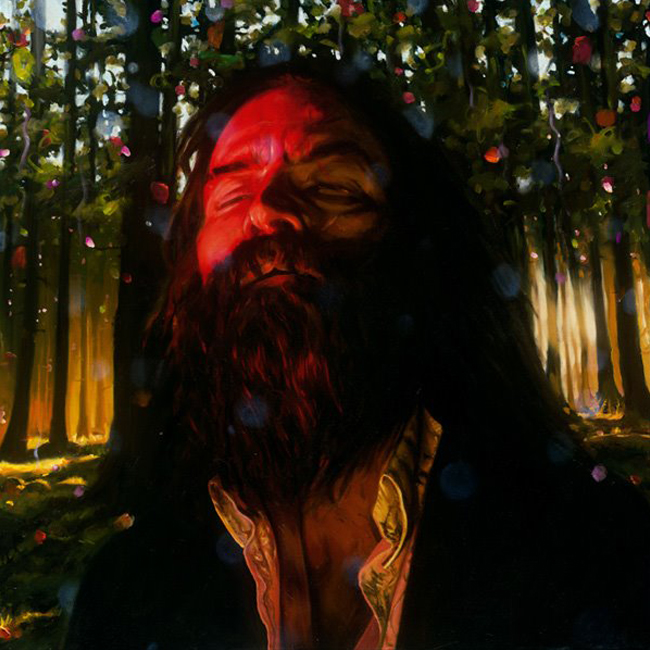
This story was inspired by German painter Heiko Müller’s piece, The Inner Light http://www.heikomueller.de

The Glass Garden

By Jill Szoo Wilson

She wanders through the glass garden,
its delicate beauty responding, finger to mirrored finger’s touch.
Strange, crystalline flowers stretch toward the light,
their petals refracting into soft spectrums
that dance along smooth pathways.

Silence presses in, heavy and expectant,
as if the air itself holds its breath.

At the garden’s center, he waits. He always does.
Shadows cling to him, his form barely tethered to solidity,
a presence stitched together by longing and careful restraint.
A faint smile flickers, never quite full enough to trust,
yet just enough to draw her closer.

“You belong here,” he murmurs,
his voice gliding through the stillness
like wind through hollow reeds in minor tones.

She hesitates.
Once, she believed him.
The garden felt like a sanctuary then,
each shimmering petal a promise,
each whispered word an anchor.
He held her attention gently,
but never her truths.

Now, something has shifted.
A fissure in the glass,
a hairline chime so subtle she almost doubts it.
Light catches differently, harsh, revealing.
What once dazzled now glares too bright, too sharp.

She touches a flower, glass petals cold and rigid.
A faint metallic sigh lifts from the bloom, out of tune with everything lovely.
Smooth. Perfect. Unchanging.
It does not bend or breathe.
It is made to be admired,
not to grow.

A crack splinters outward from her fingertip.

His expression stutters.
His outline wavers,
a reflection fractured,
more silhouette than man.

“Stay,” he says, voice tightening.
“Stay as long as you like.”

But she sees the architecture now,
paths that always loop back to him,
walls that glitter like freedom
while holding her in place.

He offers comfort without courage,
intimacy without vulnerability,
presence without entrance.
He keeps her not with chains,
but with the fear
that beyond these fragile walls
nothing will care for her as he once did.

The glass beneath her feet trembles.

The garden shudders.
Light bursts into chaos,
not radiant but blinding.
Stepping stones split apart.
The sharp sound of rupture
erases memory faster than she can cling to it.

He reaches for her
but his hand halts midair.
He can summon, but not hold.
He exists only within the shimmer,
never in the world where things grow.

“You beckon,” she says,
“yet drift backward from the place you call me to.”

She inhales.
A quiet instinct rises,
not a thought, not a plan,
just the first pulse of something living.

Without another glance,
she moves beyond,
through ruin and release.

Beyond the garden,
the world stretches wild and untamed.
Sifted earth rises to meet her feet,
unsteady but real.
Wind tangles through her hair.
The scent of something alive,
dirt, leaves, wildflowers,
fills her lungs.

Behind her,
a world of tinkling glass
cascades and shatters,
a thousand tiny bells
collapsing at once.

Sharp edges melt into curves.
Memories smolder into ash.

A single birdcall,
bright and unfamiliar,
breaks open the quiet.

She pauses.
Listening.
Unsure.

The wild ahead
waits without promise
and without fear.

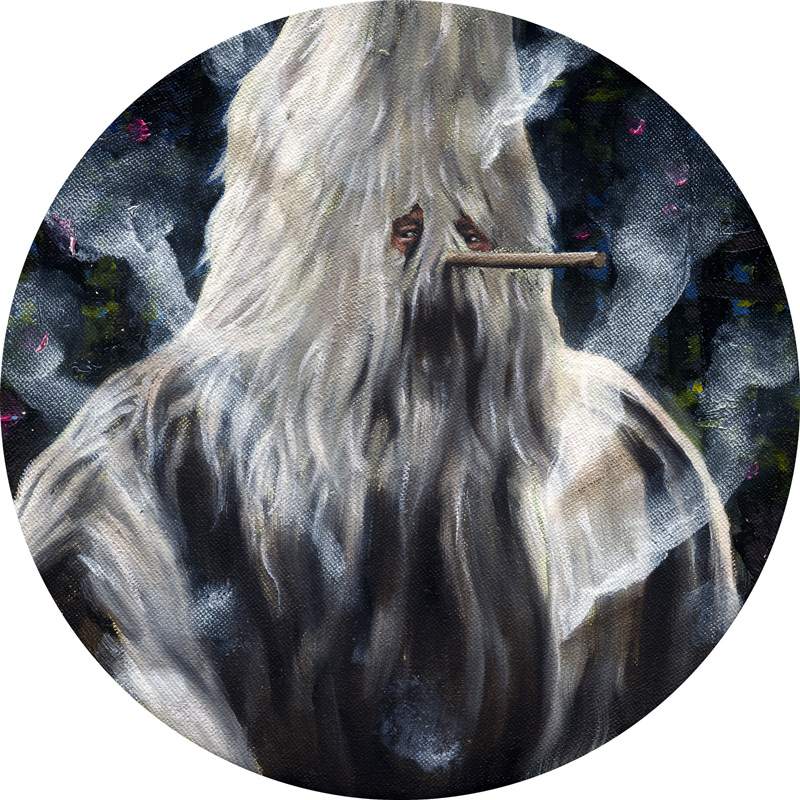
Poem: The Liar

He told one lie inside one sentence—
A capital letter, a comma, a period—
To stop the darts inside their eyes
With tips of poison traced with flesh
And ash
From the man before.

He carried his lie like a shield—
A bouche, an umbo, a coat of arms—
To hide the head he held up high
A posturing of dignity and pride
But hidden
Like a murderer walking free.

His arm was heavy with the weight—
Sinews tearing, sweating, fatigued—
So he told one more to add to the other
Deflecting, like a reflection of fire
And blinding
Impending conclusions.

He picked up his finger like a steely blade—
A quillon, a foible, a forte—
To thrust accusations dripping with blood
Into the flesh of the men within his reach
But falling
Below his cutting edge.

He grasped at a pain inside his chest—
A palpitation, a flutter, a squeeze—
To arrest the cardiac aberration
That pumped with compassion
And wrenched out
His beating liability.

He opened his mouth and told one more—
A series, a novel, a narrative—
To let the drips of his life smear their faces
With draining blood
But lifeless
His heart deflated like a balloon.

The chill of the air blew through his flesh
And hardened his skin into
Planks.
No longer a He but now an It,
It gathered the furs of the men
At his feet
And wrapped their death around
His own.

It told one lie and built a fortress—
An isolation, a prison, a cage—
To insulate itself from the arrows
It feared would leak its life
But drained
Its own instead.

© Jill Szoo Wilson, 2025
Painting by Heiko Müller

Did You Think You Were the Only One?

A probably true tale about order, ambition, and the secret lives keeping the city running while we’re busy thinking we do.

Men with briefcases move up and down the streets like ants: all in lines, moving this way and that. Scouts sent forth from their secret dwellings, with secrets at their sides and secrets in their minds. They rush into the world to gather and to hunt, and when the day is done they hold their provision over their heads, like ants, but also like African women carrying water back to their children.

All is a race, if you think of it thus.

In the shadowed jungles of the sewer holes and pipes that run wild under the city, there is another kind of race. As the suits and ties vibrate with the ticking of the clock above, there are men and women of valor whose orders have been pecked out by feats of daring and strength. Yellow eyes, but sometimes green, flash through the underground tunnels and make plans for the sun-filled above.

The cats run the city below the city, and there is nothing we can do to stop them.

“I call to order the weak and the strong; everyone has their place. Some of us thin and some of us fat, all are fit to run the race.” Garrin’s voice was loud: a little too loud, to be honest. It rose into the echoing chambers of the 27th District of the sewer line and fell flat with self-importance, but also boredom. Garrin was wry and dry and not at all shy, which is why he was elected to the position of Mayor.

Their voices and fur fill the underground roads. If you don’t believe me, just ask them yourself.

Camille, a mostly white cat, lay on the recently swept floor and licked her right paw. “Garrin, I need to be given my daily task now because I have to be home early this evening. One of the humans I live with keeps feeding my kittens milk, which is giving them diarrhea, so I want to be home in time to feed them myself.”

“I know what you mean,” said Fluffy McHairball (a name given to her by a female human with no imagination at all). Fluffy continued, “My kids are growing up without me, Garrin. You’re giving us too much to do.”

Garrin laughed out of the corner of his mouth as his tail wagged back and forth, giving away his annoyance. “Ladies, please. I can announce the daily tasks with speed and efficiency as soon as you stop complaining.”

Camille did not appreciate Garrin’s belittling tone. She lowered her ears, looked away, and wrapped her tail around herself. “Spoken like a man whose kittens are grown,” she whispered. The other women around her chuckled and rolled their eyes.

Ignoring Camille and the attention she drew, Garrin began to announce the daily tasks to the cats under his charge, in alphabetical order, of course.

“Anthony, I need you to target the garbage bins outside the seafood restaurants today. As we are all aware, I had to fire Catpernicus last week because his was the seafood beat and he was woefully lazy, thus, the embarrassing shortage of seafood in our storage bins.” Anthony stood like a soldier, ready and willing to carry out his newly given orders.

“Yes, sir,” said the young Anthony, whose voice creaked with puberty when he spoke.

“Bartholomew,” Garrin continued, “you’ve done well on your rounds as of late, so I am promoting you to the Starbucks run. We need you to carry as many of the cup sleeves back as possible because, let’s be honest, they are fun to play with and they work well as portable scratchers.”

“Garrin, you’ve got to be joking!” interrupted Fluffy. “The humans may not mind depleting the forests for such waste, but we do not need to be a part of the madness by collecting their bad choices.”

Garrin’s tail began again to wag unconsciously with annoyance. “Fluffy, please. If you are ever mayor (which I doubt), you can make the decisions. As you know, we have brought your grievance to the Board of Governors, and they have settled the issue. The cup sleeves are useful to us, and we are not the ones cutting down the trees. Can I please continue so you can all begin and end your day in a timely manner?”

Fluffy yawned in disgust and then licked herself in spite.

Feeling the weight of their insubordination, Garrin listed the rest of the daily tasks in quick succession and then ended their meeting with the familiar chant:
“Go forth into the streets, the weak and the strong, everyone has their place. Some of us thin and some of us fat, all are fit to run the race.”

The young cats exited the tunnels with fervor, and the older cats sauntered into the shadows with their tails pointing high in the air, in Garrin’s general direction.

Did you think we were the only ones who daily race about like ants? I hope you will accept that sometimes you are wrong.

Camille’s eyes squinted as she climbed into the sunshine. The day was warm, and the sky was bright blue, the way it often is when spring blankets the earth. She liked the way the warmth of the sun sank into her coat and how the steamy cement of the street felt under her paws.

“Climb the highest branch of the highest tree and loudly cry,” she repeated her daily task into the air around her. “How embarrassing,” she said to herself. “And I am sure to break a claw.”

Camille’s task was the most loathed of the daily tasks, more of a monthly task really, but someone had to do it. Today it was her turn. The objective of the task was simple: it served as a test of the emergency services at their disposal. “This is only a test,” Garrin’s instructions replayed in her head.

It would be horrible if one of the kittens ever jumped onto a tree and ran to the top only to find that the local Fire Department had silently decided they would no longer be saving furry, four-legged babies from the highest branches. So today, Camille was charged with the job of testing their emergency system. “For the children,” she reminded herself.

As she trotted up and down the streets, through human legs covered with denim, under long cotton dresses that smelled like perfume, and around strollers filled with crying babies, Camille looked for the highest tree.

“Hi, Camille,” said Rupert, an overweight English Bulldog, as she walked along her path.

Camille answered with her ears held high, “Hi there, Rupert. Nice collar. Is it new?”

“Ah, Camille, that is what I love about you. You’re so observant. And nice to observe, if you know what I mean. If only we were the same species. If you know what I mean.”

She knew what he meant.

“You’re a charmer, Rupert! Have a nice day.”

Rupert passed her and then turned to watch her as she sauntered away.

Moments after she passed Rupert, Camille spotted a tree that towered above most others along the sidewalks within her district. It stood across the street near one of the many Starbucks along this road, and she watched for a moment as Bartholomew pranced away from the garbage can outside the door. He was carrying three cup sleeves between his teeth, and crumbs of a scone fell from the sides of his mouth. “Garrin will be so pleased,” she thought to herself.

After looking both ways, which is the number one rule in their employee handbook called Roadkill: A Manual of Safety and Instruction, Camille headed toward the tree.

Camille sat at the base of the tree and looked up. She closed her eyes for a moment and enjoyed the breeze that blew past her nose in the shade of the leaves. She could hear the sounds of the city street, the honking cars, the women clicking about in their high heels, and the men talking to ghosts on their Bluetooth devices, and she swayed to the rhythm of the cacophony. She could smell the bread newly baked in the bakery and the hint of ground coffee wafting onto the sidewalk from inside the Starbucks. Camille took in a deep breath through her nose and released it out through her mouth, a moment of meditation and being present.

It is good to pause and enjoy the moment.

Camille stretched out her two front paws and stretched deeply into her back paws before calmly and aptly climbing the highest tree. She had done this many times before. Once she reached the top, she lifted her voice even higher. “Meow!” she called. And then again. And again. Camille’s body was mostly hidden by the network of branches and leaves surrounding her, which gave her the courage to sing with volume and flair. To be honest, she had a great singing voice.

Suddenly, a shriek filled the air, breaking into the cacophony of sound on the city streets, and the sunlight was joined by hues of red and blue. The cars stopped honking, the women stopped clicking, and the men exchanged their long sentences for pleas to “wait” and “hold on.” The fire truck came screaming down the road, and Camille felt proud of her performance among the leaves that danced around her.

Within a matter of minutes, a particularly handsome fireman was lowering Camille from the tree and placing her paws gently on the warm sidewalk. Sounds of applause filled the air like a symphony conducted for a hero. The fireman blushed, Camille rubbed a “thank you” against his leg, and both trotted off in separate directions, pleased with the jobs they had done.

We all feel proud to have done our jobs well. Oh, did you think it was only you?

Her daily task completed, Camille felt free and content. She thought of strolling home, but realizing dinner time was still hours away, she made her way down a side street that led to the park.

A grassy knoll filled with light saw Camille walking his way, and he called for her to spread out atop his softness.

Nature speaks its desires and enjoys the companionship of those who listen. If you listen to it, you will know what I mean.

Camille lay in the center of the grassy knoll, careful not to dip her tail into the water below, and closed her eyes. She rolled her head back and forth to enjoy the shades of orange and yellow and red frolicking behind her eyelids. She could feel the heat of the ground on her back and the heat of sun on her stomach. She breathed in through her nose and released through her mouth, in and out, in and out, until her consciousness slipped into dreaming.

As she slept, the world around Camille continued to huff and to puff, like a train on a track with a destination to reach. Men with briefcases moved up and down the streets like ants, all in lines, moving this way and that. Scouts sent forth from their secret dwellings, with secrets at their sides and secrets in their minds.

Did you think you were the only one?

© Jill Szoo Wilson, 2025

Painting by Heiko Müller