
It started with one flake I mistook for a drop,
without asking my permission,
as snow often does.
By morning, the patio chair—
the one with the pale blue cushions I meant to bring in—
had accepted its fate
with the patience of an object that knows
humans forget things.

The snow took its time.
A thin first layer,
then another,
each one more certain than the last.
If the chair felt imposed upon,
it gave no sign.

From the maple,
a squirrel watched the slow takeover,
pressed flat against the trunk
in an embrace that invited romance, or,
at the very least,
warmth.
It twitched its tail once—
a gesture somewhere between
expectation and indifference—
then sighed a tiny puff of breath.

Meanwhile, at the back of the yard,
the pine tree leaned lower than yesterday.
The branches, loaded with fresh snow,
descended far enough
to touch the needles that had fallen weeks ago.
A quiet reunion.
If trees feel anything at such moments,
I imagine it’s something austere:
nostalgia, perhaps,
maybe even joy.

A grand ceremony,
and no one asked me to attend.
Still, I stood at the window,
unsummoned,
as winter arranged its small corrections:
the forgotten tucked in,
the living held close,
the fallen greeted by their own.

A world going on
perfectly well
without my remembering.

© Jill Szoo Wilson, 2025
Tag: Be Present
Slow Art: Unhurrying Your Mind
Museums invite looking, yet most visitors treat art the way they treat emails: a quick skim, a polite nod, and on to the next thing. We spot a recognizable subject or a pleasing color, think, “Ah yes, culture,” and keep walking. Studies suggest that viewers spend less than thirty seconds with a work of art before moving on. It is possible to tour an entire gallery without truly arriving anywhere at all.
Slow Art suggests another way to exist among masterpieces.
Rooted in the broader Slow Movement and formally organized with Slow Art Day in 2010, the practice encourages viewers to remain with a single artwork long enough for something meaningful to happen. The idea is simple: stop rushing. Stop conquering exhibitions like they’re errands. Let a painting interrupt the pace of your day.
Of course, the mind resists immediately. The moment we sit down and dare to look, our thoughts fling themselves into crisis: seventeen neglected texts, three unpurchased groceries, and the intrusive belief that productivity is our moral duty, and this bench is a crime scene. Apparently, stillness is very dramatic.
Yet if we continue to sit, the noise eventually settles. We start to notice the obvious things we missed when our thoughts were busy staging a coup: light falling across a shoulder, a line of color we would have sworn was not there a moment ago. Philosopher Maurice Merleau-Ponty argued that seeing is never passive; we do not merely observe the world. We are in conversation with it. Given time, a painting stops acting like an object and begins to behave like a presence. It answers back.
Meanwhile, neuroscience is offering evidence for what artists have always suspected. When we linger with an artwork, the brain does more than register shape and shade. Regions connected to memory, imagination, and empathy start sparking awake, as though the mind suddenly recalls it has a richer job than survival. Interpretation emerges. Emotion slips in without asking permission. You are no longer deciphering the art. You are encountering yourself.
Slow looking becomes a decision to let meaning unfold at its own pace.
It is a tiny rebellion against the cult of efficiency. Instead of demanding results from a painting — explain yourself, be profound, hurry up — we allow the experience to be unmeasurable. Sometimes revelation arrives. Sometimes quiet does. Both are victories over the museum sprint that ends with a gift shop purchase and no recollection of the gallery that preceded it.
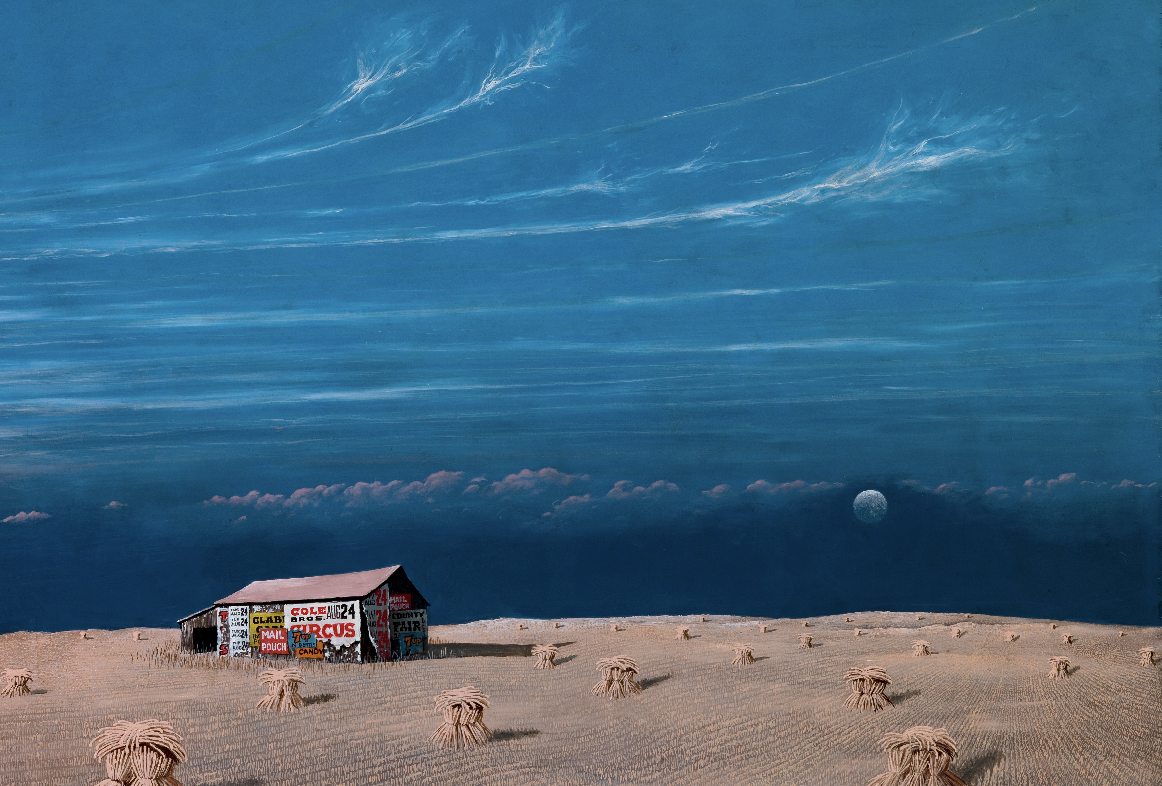
This week, I sat with a painting of moonlit fields and distant wind. Nothing moved, yet somehow everything did. The air itself seemed to stretch across my skin, my breath eased, and the horizon widened inside me. It felt like remembering how to be a person rather than a calendar.
I answered the art’s invitation in the only way I know:
by writing.
Hush
By Jill Szoo Wilson

My dear, now hush. Unburden every care;
The silent fields invite your breath to slow.
The wind lifts strands of worry from your hair
And strokes your cheek with touches soft and low.

O moon, shine steady, hold your silver ground;
A lantern calm above the world’s unrest.
Pour down a peace too deep for any sound
And press a quiet knowing to the chest.

Kind wind — sweet wanderer — move as you will;
Let coolness glide along these open hands.
Brush thought from thought, invite my heart to still,
And ferry calm across the quiet lands.

Here, nothing strives. The wide horizon sighs—
At last, the soul grows spacious as the skies.
 Jill Szoo Wilson