
By Jill Szoo Wilson
Eva Mozes Kor often said, “Anger is a seed for war, forgiveness is a seed for peace.” It was more than a slogan. It was a theology, a philosophy, and a daily discipline forged from one of the darkest chapters in human history. As a child imprisoned in Auschwitz and subjected to the medical experiments of Josef Mengele, Eva discovered that survival demanded a defiant hope. Decades later, she chose forgiveness as a form of liberation that offered survivors a path toward healing. Her decision inspired admiration and deep respect, and it also sparked fierce debate about justice, memory, and the boundaries of human compassion. The peace she pursued required extraordinary courage, because every step forward in forgiveness carried a cost.
I recently revisited one of Eva’s emails, a message filled with the kind of raw honesty that few people ever achieve. It was written in her unmistakable, unpolished style: urgent, passionate, and deeply personal. In it, she reflected on the consequences of her decision to forgive a former Nazi doctor, Dr. Hans Münch, and the relentless challenges she faced in opening CANDLES Holocaust Museum.
Reading it now, years after her passing, I am struck by how unyielding she was in the face of criticism, injustice, and personal danger. She did not simply speak about forgiveness. She lived it, even when it cost her dearly.
The Controversy Over Forgiving a Nazi
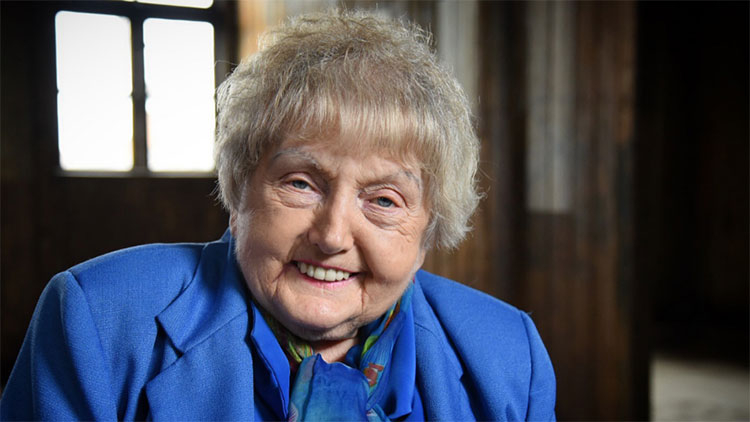
In 1995, on the 50th anniversary of the liberation of Auschwitz, Eva Mozes Kor did something unthinkable to many: she publicly forgave the Nazis. More than that, she stood beside Dr. Hans Münch, a former SS doctor at Auschwitz, and signed a declaration of forgiveness.
The backlash was immediate and fierce.
Israeli media framed the moment as a betrayal. Footage of Eva walking with Münch was broadcast again and again, without the context behind it.
A major Israeli newspaper published a scathing article, questioning whether any publicity was better than being ignored entirely.
In 1998, journalist Bruno Schirra published an interview with Münch in Der Spiegel, where the former SS doctor made remarks about his time in Auschwitz. The interview triggered a criminal investigation in Germany.
Around the same time, a French radio interview with Münch led to an even more explosive controversy. His derogatory remarks about Roma and Sinti people resulted in criminal charges in France for inciting racial hatred.
The consequences were devastating.
Münch and his family faced public scrutiny, threats, and harassment. In Germany, legal action pushed toward trial despite his diagnosis of Alzheimer’s disease.
In a personal email to me, Eva shared that Münch’s home was firebombed three times after his address was published in an article, requiring police protection for his family. I have not been able to verify this in any public record or independent source. It was her own account, offered behind the scenes, reflecting the weight she felt over what was happening to Münch and his loved ones.
Eva was horrified by what was unfolding. She had spent years advocating for justice. Now, she found herself advocating for mercy.
She sent more than 50 letters pleading with authorities to drop the lawsuits against Münch, but the legal proceedings continued.
In 2001, Münch was convicted in France. His sentence was waived due to his age and deteriorating mental state. He passed away later that year.
Eva felt a complicated kind of relief. Münch’s family was finally free from further attacks, and she no longer carried the guilt of contributing to their suffering.
The Fight to Build CANDLES Holocaust Museum
By 1995, Eva Mozes Kor had already reinvented herself many times: Holocaust survivor, public speaker, and founder of CANDLES (Children of Auschwitz Nazi Deadly Lab Experiments Survivors) in 1984. That year, she took on yet another role as a museum founder.
The CANDLES Holocaust Museum and Education Center was an extension of Eva’s mission to teach others about the Holocaust and the experiments performed on her and other Mengele Twins. She wanted to create a permanent place of education, remembrance, and dialogue.
Opening the museum was no small feat.
She found a commercial building in Terre Haute, Indiana, but it was too large and too expensive for the original client she was working with as a realtor. Instead, she made a bold and risky decision to secure financing under her own name, her husband’s name, and a partner’s name to purchase the building herself.
At 61 years old, she signed a $168,000 mortgage, despite her husband’s hesitation.
With limited funds for exhibits, she handmade decorations, including a wall of blue paper strips that read:
“LET US REMOVE ALL HATRED AND PREJUDICE IN THE WORLD, AND LET IT BEGIN WITH ME!”
When the museum opened on April 30, 1995, it quickly became a vital educational resource, drawing teachers, students, and community members eager to learn from Eva’s story.
Then everything changed after 9/11.
Her business partner, who owned a travel agency, struggled to keep her business afloat. The economic downturn was crushing. Eva was forced to buy out her partner’s share of the building at a much higher price, not to expand but simply to save the museum.
By 2002, at age 68, she and her husband took out a $222,000 mortgage to keep CANDLES alive.
The Fire That Could Not Destroy Her Mission
In November 2003, Eva Mozes Kor received a phone call in the middle of the night.
“Mrs. Kor, this is the police department. You need to come to the museum. There is a fire.”
She and her husband rushed to the scene. By the time they arrived, flames were already devouring the building. Firefighters battled the blaze, but it was too late. Everything inside was lost: photographs, historical documents, survivor testimonies, and artifacts.
She stood there watching as the place she had built with her own hands, her own money, and her own pain collapsed into smoldering rubble.
Investigators then found a message spray-painted on an exterior wall in black:
“REMEMBER TIMMY MCVEIGH.”
Timothy McVeigh, the domestic terrorist behind the 1995 Oklahoma City bombing, had been executed in Terre Haute just two years earlier. The implication was chilling. This was an act of hatred and intimidation meant to silence her.
But Eva had spent her entire life surviving the worst of humanity.
The next morning, standing in front of the ashes, she made a decision.
“We will rebuild.”
And she did.
With support from the community, from Holocaust educators, and from donors around the world, CANDLES Holocaust Museum rose from the ruins and reopened in 2005, stronger than before.
You can burn down a building. You cannot destroy a mission.
The Legacy of a Fighter
Most people would have stopped. Most would have looked at the destruction of their museum as a sign to walk away.
But Eva rebuilt.
The email she sent me that recounted this event, full of spelling errors, fragmented sentences, and scattered thoughts, perfectly reflected who she was:
Unpolished, yet utterly real.
Wounded, yet relentless.
Misunderstood, yet unwilling to back down.
Eva Mozes Kor understood something most people do not. Forgiveness does not rewrite the past. It does not fix what was broken. But it allows a person to stop carrying what cannot be undone.
She was never naive. She knew the world was cruel, unjust, indifferent.
She fought anyway.
She did not stop.
What This Means for Us
Eva’s story is not only about forgiveness. It is about resilience in the face of resistance. It is about choosing to build when the world wants to destroy.
Her words still challenge me.
Could I have made the same choices? Would I have kept going? Would I have had the courage to stand alone?
Perhaps that is the lesson she left for us.
Forgiveness is a gift. The fight for something bigger than yourself is what makes history.
© Jill Szoo Wilson, 2025
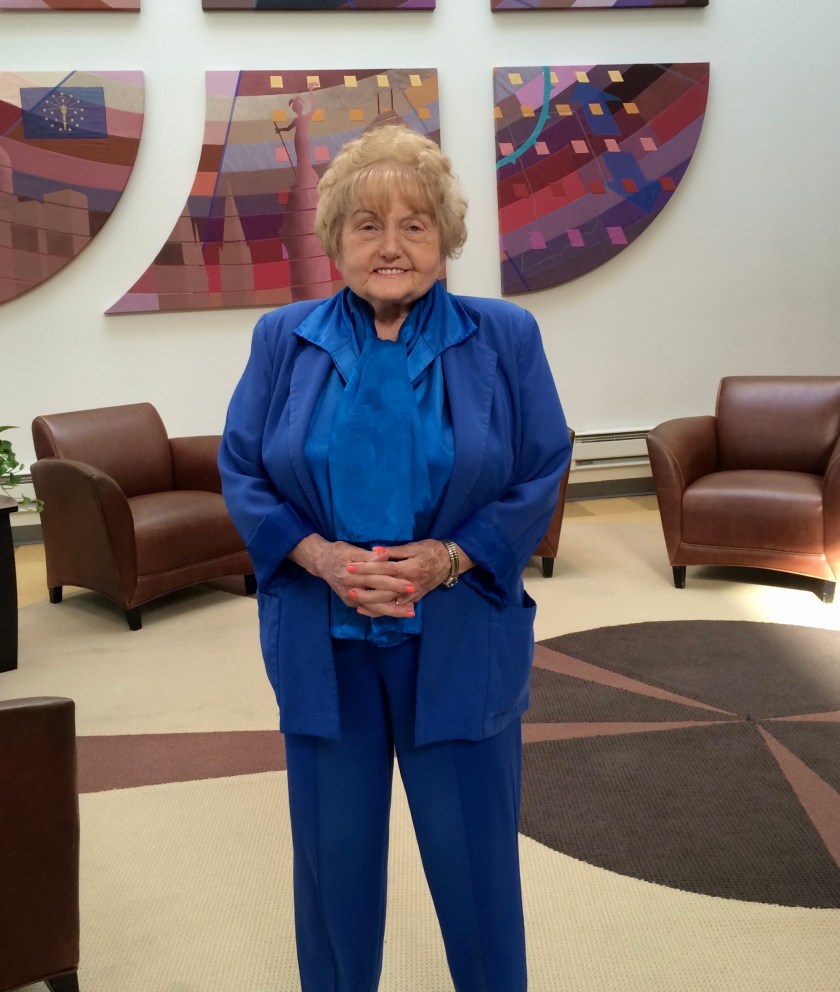
Featured Image photo credit: WFYI Indianapolis, 2021



 Jill Szoo Wilson