Forgiving a Nazi Doctor: Eva Mozes Kor’s Life-Changing Decision

I traveled to Auschwitz, Hungary, and Romania with Holocaust survivor and Mengele Twin Eva Mozes Kor to learn her story so I could write a play about her journey toward forgiveness. I listened as she recounted her experiences, watched how she carried the weight of her past, and witnessed firsthand the strength it took to forgive. Now, I am sharing what I learned in her own words because her voice is not only history. It is a call to action, and it is more important than ever.

Before she ever considered forgiving Dr. Josef Mengele, Eva made the decision to forgive Dr. Hans Münch, a Nazi doctor who had worked at Auschwitz. Unlike other former SS officers, Münch openly acknowledged the existence of the gas chambers and signed a document confirming how they were used. For Eva, his willingness to tell the truth was significant, and she wanted to give him a meaningful gift. That decision led her to write a letter of forgiveness, a choice that changed her life forever.

Searching for the Right Gift

I did not tell anyone about my idea of thanking Dr. Hans Münch, a former Nazi doctor, because I thought people would think I was crazy. How do you thank a Nazi doctor? What kind of gift could possibly be appropriate?

I decided to start at a Hallmark store, hoping that the “Thank You” card section might offer some inspiration. But as I stood there reading card after card, I felt uneasy. I did not want anyone to know what I was looking for. I spent more than two hours searching, and twice the store employees approached me.

“Are you finding what you’re looking for?” one asked.

“Not really,” I replied.

“So what are you looking for? I’d love to help you find it.”

For just a second, I considered telling her. But I knew she would never understand. My search was not normal. Instead, I said, “Thank you for asking, but I cannot tell you,” and I left the store empty-handed.

A Life Lesson in Forgiveness

Even though I could not find a gift that day, I refused to give up. I reminded myself of the life lessons I often shared in my lectures:

  • Never give up on yourself or your dreams. If I could survive Auschwitz without knowing how, then no one should ever give up on their own future.
  • Treat people with respect and fairness, and judge them by their actions, not their past.
  • Forgiveness is a personal power, one that no one can give or take away from you.

For ten months, I thought about what I could give Dr. Münch. Whether I was cooking, cleaning, driving, or doing laundry, the question lingered: how do you thank a Nazi doctor?

Then, in June 1994, the answer came to me. A simple but powerful idea: what if I wrote him a letter of forgiveness?

Immediately, I knew it was the right choice. It was not only a gift for him, it was a revelation for me. I discovered that I had the power to forgive. No one could grant me that power, and no one could take it away. I had spent my life reacting to what others had done to me. Now I was initiating action. I did not need permission. I was not hurting anyone. So why could I not do it?

I was trembling with excitement. For the first time, I felt like I had control, not just over my past but over my present and future. I had spent so many years holding onto pain, sadness, and anger, and now I saw a way to release it.

Writing the Letter

I sat down to write my letter of forgiveness, but it was not easy. At first, I addressed Dr. Münch as an evil monster. But I kept reminding myself of my goal: to reclaim my own power. I wanted to stop feeling like a victim. I wanted to stop yelling at my children out of misplaced anger. I wanted to be free from the weight of my past.

I worked on that letter for four months, revising it whenever I had time between my real estate appointments. I thought about reaching out to other Mengele Twins, but I was afraid they would not understand or might try to talk me out of it. I wanted to disarm my enemies in the most unexpected way, by forgiving them.

A Challenge from My Professor

Once I finished the letter, I could see that my spelling in English was poor. Not wanting to be embarrassed in front of Dr. Münch or anyone else who might read it, I reached out to Dr. Susan Kaufman, my former English professor at Eastern Illinois University. She was excited about my forgiveness ideas and helped me refine the letter, correcting my spelling and working through multiple drafts as I shaped my message.

Then, in her matter-of-fact tone, Dr. Kaufman said, “Eva, it is nice that you are forgiving Dr. Münch, but you really should forgive Dr. Mengele.”

I responded quickly, “This is just a thank-you letter for Dr. Münch!”

She did not listen. “When you get home tonight, pretend that you are talking to Dr. Mengele, telling him that you forgive him, and see how it makes you feel.”

My mind reeled back to Auschwitz. To the man in the crisp SS uniform, standing tall and expressionless as he looked down at me. I was 10 years old, a child, sitting in a makeshift examination room in Block 10. I could not move. Steel rods forced my eyelids open as he poured a burning liquid into my eyes, blinding me with pain. I could not cry, could not blink. All I could do was stare up at him as he conducted his experiment, cold and detached, as if I were nothing more than an insect pinned under glass.

That night, Dr. Kaufman’s challenge would not leave me. I closed my eyes and summoned the image of Dr. Mengele. Then I said aloud:

“You son of a gun, evil monster, Nazi doctor, I forgive you because I have power over you, and you have no power over me.”

And then I felt it. Relief.

For the first time, I was in control. Mengele had dictated so much of my suffering, but in that moment, I took something back. I was not hurting anyone by saying it. I was not rewriting history or erasing the horrors he had committed. But I was stripping him of the power he still had over me.

If I could forgive him, the worst of the worst, then what about the others?

The kids who harassed me for eleven years on Halloween, banging on my door, mocking me, tormenting me.

The Capitol police who grabbed me, tore my rotator cuff, and left me with permanent damage when they arrested me in the Capitol Rotunda on May 6, 1986. All because I stood up and demanded justice, shouting: “Memorial services are not enough. We need an open hearing on Mengele-Gate!”

If I could forgive Mengele, then what power did any of these people have over me?

That was the turning point. I rewrote my forgiveness letter, not just for Dr. Münch, but for every person who had ever hurt me.

A Historic Moment at Auschwitz

On January 27, 1995, I returned to Auschwitz with Dr. Münch. It was the 50th anniversary of the camp’s liberation. I knew other survivors would be there, but I arrived with an unusual group: Dr. Münch, his family, and my own family and friends. I was not worried about his presence; after all, he was there to document the gas chambers and provide historical confirmation of what had happened.

But I underestimated how others would react. My son, Alex, and my friend Mary Wright asked, “What do we do if someone attacks Dr. Münch?” I had not considered that possibility. I expected resistance, maybe even disapproval, but not hostility.

Security at Auschwitz was strict. We were a few minutes late, and they refused to let us in. “Fifty years ago, I was a prisoner here, and they would not let me out,” I told them. “Now, they will not let me in.” Eventually, we were allowed through.

At the ruins of Gas Chamber #2, I read my letter of forgiveness out loud. The words hung in the frozen air. Dr. Münch’s face was unreadable at first, then slowly shifted. He was stunned. Finally, he turned to me and said, simply, “Thank you.”

Throughout the day, he kept trying to walk arm-in-arm with me. I hesitated, wondering how that would look to other survivors. Later in the day, I slipped on the icy road and he caught me before I fell. Suddenly, I was grateful he was close enough to steady me. Not everything is as it appears.

That day, we handed out 400 copies of a press release about the two documents we had created, one related to Dr. Münch’s testimony about the gas chambers at Auschwitz, and one expressing forgiveness. Only six journalists showed up.

The Power of Choice

I have been criticized for my decision to forgive. Some survivors and their families have protested against me, insisting that my forgiveness was an insult to their pain. But when I asked how my choice to forgive hurt them, they could not explain.

The truth is, forgiveness is a personal choice. It is not about excusing evil or forgetting history. It is about reclaiming power over our own lives. It is about refusing to let the past dictate our future.

No one could give me that power. No one could take it away. It was mine, and mine alone, to claim, to use, and to reclaim my own freedom.

© Jill Szoo Wilson, 2025
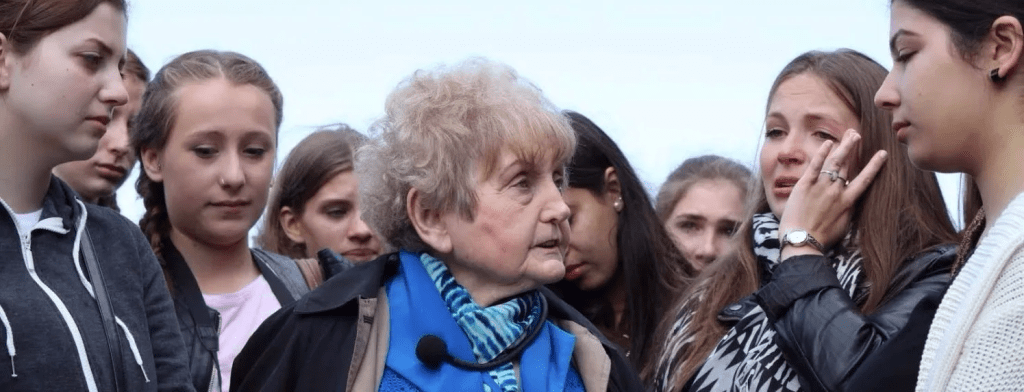
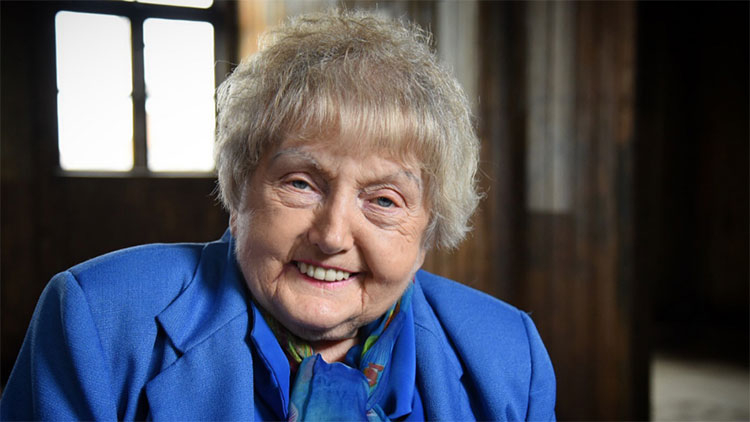
Photo credit: I am not sure who took this particular photo, but I was there when it was taken in 2013. We were standing inside Birkenau on the selection platform, near the cattle car that still stands there today. Eva was speaking to a small group that had gathered around her when this group of young German students stopped to listen from outside the circle. When Eva realized they were German, she invited them into the circle. It was then that the girls began to apologize to Eva on behalf of their ancestors. She told them they did not owe her an apology because they had done absolutely nothing wrong. She encouraged them to simply learn from their mistakes and to be light and love in the world. This was one of my favorite public moments with Eva.

Read more by Jill Szoo Wilson on Substack.
Trapped in the West Bank: Eva Mozes Kor’s Harrowing Encounter

In 2015, Holocaust survivor and Mengele Twin, Eva Mozes Kor sent me an email recounting one of the most harrowing experiences of her later years: an encounter in the West Bank that left her feeling vulnerable in a way she hadn’t since Auschwitz. The email was raw, unfiltered, and deeply personal.

As I revisit her words, I have chosen to write this piece in her own voice, staying true to the way she described the events to me. It offers a glimpse into the complexities she faced, not only as a Holocaust survivor and educator but as someone who, even decades after her liberation, found herself in situations that tested her sense of safety, trust, and resilience.

This is her account.


In July 2005, I traveled to Israel as part of the filming process for Forgiving Dr. Mengele, a documentary about my journey as a Holocaust survivor and my philosophy of forgiveness. The trip was filled with emotional moments: revisiting the agricultural school in Magdiel where I lived after Auschwitz, reconnecting with my sister Miriam’s family, and filming an interview with fellow Mengele Twin survivor, Jona Laks, at the Jewish Heritage Museum. But nothing prepared me for one of the most harrowing experiences I had since liberation.

Bob and Cheri, the filmmakers, had arranged for me to meet with a group of Palestinian educators to discuss a book written collaboratively by Israeli and Palestinian teachers. The book aimed to help students from both sides better understand each other’s histories. It seemed like an interesting and worthwhile project, and I was open to hearing their perspectives. But as the meeting approached, I found myself increasingly uneasy.

I had been under the impression that we would be meeting these teachers in Jerusalem. Instead, we suddenly arrived at a border checkpoint, where we were told we had to cross into the West Bank on foot. I had no idea this was part of the plan, and panic set in. Refusing to cross would cause problems, but I couldn’t shake the feeling that I was walking into something dangerous.

On the other side, a Palestinian professor named Sami met us, surrounded by a group of young Arab men speaking in Arabic. It was clear that they were discussing me, but I couldn’t understand what they were saying. That alone made me feel incredibly vulnerable. I had dressed modestly out of respect for their customs, wearing a long skirt instead of my usual pants, but that did little to ease my growing discomfort.

Sami took me to a bombed-out building and told me, “See, this is what the Israelis did to us.” I had seen the destruction before; it had been there for three years. “Why haven’t you cleaned it up?” I asked. Sami said they didn’t have the money. “You don’t need money to clean up a site,” I replied. “You need strong young men, and you have plenty of them.” I saw what he was doing. He assumed I was a naïve, bleeding-heart liberal who would unquestioningly accept his victim narrative. But I had been an Israeli soldier. I knew the conflict was far more complicated than he wanted me to believe.

The real ordeal began when I was taken to an Arab school in Bethlehem, where I was introduced to eight Palestinian teachers and one Israeli professor. The Israeli professor, the one who had convinced Bob to set up this meeting, never showed up. I felt abandoned, surrounded by people who saw me not as a Holocaust survivor, not as an individual, but simply as an Israeli and a Jew.

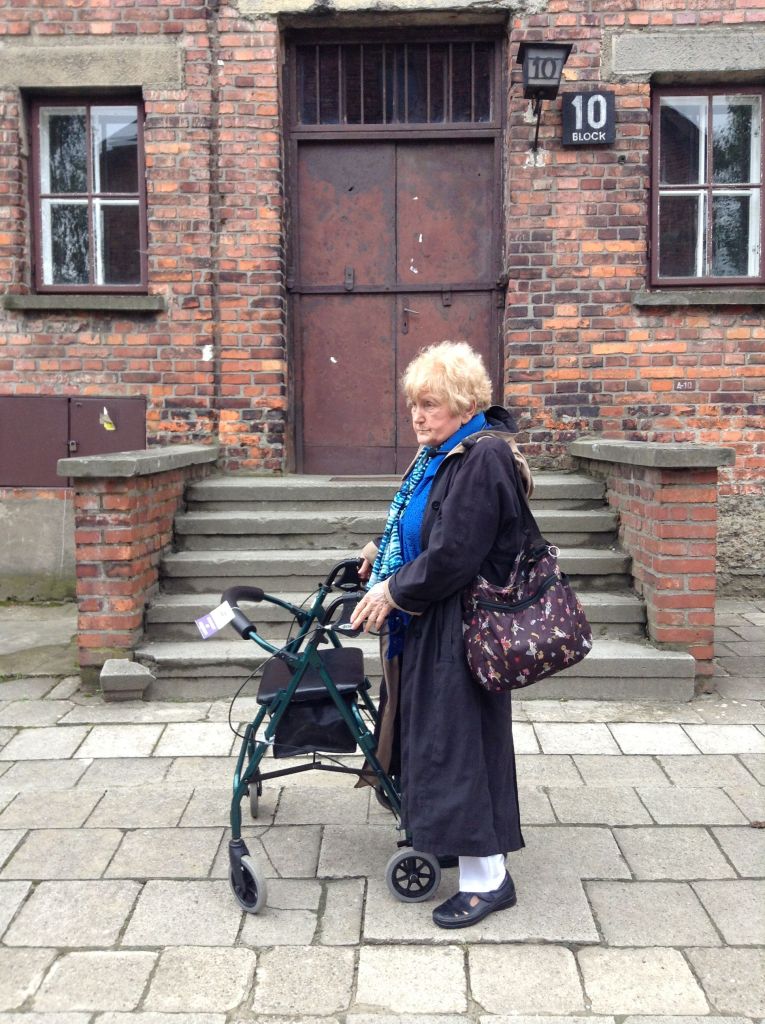
I took this photo of Eva Mozes Kor outside Block 10 in Auschwitz I.

As we began filming, the conversation had nothing to do with the book I had come to discuss. Instead, the teachers launched into a four-hour tirade about how Israel had made their lives miserable. I wanted to ask why the restrictions they complained about had been put in place, but I was afraid to say anything. I was in their hands. Bob and Cheri had no power to protect me. The fear was paralyzing. I felt like a hostage, unable to speak, unable to defend myself, unable to leave.

Eventually, I ran out of the room, sobbing uncontrollably. I hadn’t felt so trapped and powerless since Auschwitz. Bob and Cheri were apologetic, but it was too late. My goodwill had been exploited for a political agenda, and my trust had been shattered. The final humiliation was sitting down to eat with the teachers. I pretended to take a few bites so as not to offend them, but all I could think about was escaping.

It was nearly 10:30 p.m. before I was finally back on Israeli soil. Only then could I breathe again. Only then did I feel safe.

This experience reinforced something I have always believed: Many Holocaust survivors who live in Israel are still on the battlefield every single day. Their war did not end in 1945. The trauma of persecution never truly fades when you must still fight for your right to exist.

As for me, I survived yet again. But I will never trust so easily again.

© Jill Szoo Wilson, 2025

Read more by Jill Szoo Wilson on Substack.
The Question of Justice: Forgiveness vs. Accountability

In conversations about forgiveness, Eva Mozes Kor, Holocaust Survivor and Mengele Twin, was often asked tough questions about justice, especially regarding criminals, terrorists, and those who have killed. One such question came from a UK film director, who asked, “Should we just forgive them and let them go?” This question challenged Eva’s own ideas of forgiveness and set her on a path to delve deeper into the complexities of justice and forgiveness.

Her response to this challenge was powerful: “We must decide what we want the end result to be,” she explained. If the goal is punishment, then “we just hang him/her,” because after all, she had spent her life hearing the statement, “Justice must be done.” But Eva quickly challenged that notion, pointing out that while justice sounds simple, the reality is far more complicated.

Eva Mozes Kor, Holocaust Survivor and Mengele Twin

The Search for Justice: Mengele’s Escape

Eva shared her concerns about how justice was sought for the Nazis after World War II, focusing specifically on Dr. Josef Mengele, the infamous Nazi doctor who performed experiments on Eva and her twin sister, Miriam. Mengele’s arrest under his name by the American forces, only to be released a day later due to a mistake, underscored the failure of justice. Despite his heinous crimes, Mengele’s name was never included in the Nuremberg Trials, and it wasn’t until 1985 that serious efforts were made to find him.

Eva had long been suspicious of the official accounts of Mengele’s death. In 1985, after taking a group of Mengele twins to Auschwitz to mark the 40th anniversary of the camp’s liberation, the search for Mengele’s whereabouts became an international story. Governments like those of Germany and the U.S. announced that Mengele’s bones had been found in Embu, Brazil, but Eva remained skeptical. The rushed, secretive nature of the investigation raised red flags for her.

The Inquest: Investigating Mengele’s Death

Eva’s suspicions led her to take action. Determined that survivors had the right to examine the truth, she organized an inquest into Mengele’s death, inviting forensic experts, historians, and survivors of Auschwitz, including Mengele twins. Eva could not raise funds for the inquest, so she took out a second mortgage on her house to pay for the investigation. This decision highlighted Eva’s unwavering commitment to finding the truth.

Just days before the inquest was set to begin on November 15, 1985, Eva received what she said was a threatening phone call from Neal Sher, the director of the U.S. Justice Department’s Office of Special Investigations. He demanded that Eva provide the names of those who had seen Mengele alive after 1979, or face the possibility of U.S. Marshals visiting her. Eva stood firm, refusing to yield to threats and continuing with the inquest.

The Inquest Findings: The Mystery Deepens

During the three-day inquest, experts including pathologist Dr. Michael Baden, psychologist Dr. Nancy Segal, and German-educated physician Dr. Werner Loewenstein examined the evidence. Dr. Loewenstein, who had translated Mengele’s SS files, was pivotal in uncovering discrepancies in the investigation. He revealed that the bones found in Brazil could not be Mengele’s because they lacked evidence of osteomyelitis, a condition documented in Mengele’s medical history. This revelation cast doubt on the official story and bolstered Eva’s belief that the investigation had been a rushed cover-up.

The panel of experts, including Eva herself, reviewed the U.S. Justice Department’s forensic report and called for further investigation. They raised serious concerns about the findings, including discrepancies in the identification of the bones and the absence of investigations into post-1979 sightings of Mengele. Despite this, the official stance remained that Mengele had died in 1979.

The Call for Justice: Victims’ Rights and Compensation

Beyond the questions surrounding Mengele’s death, Eva also highlighted the ongoing suffering of survivors of his experiments. Many of Mengele’s victims, particularly the twins, suffered from chronic medical conditions such as kidney issues, heart problems, and spinal degeneration, all due to the unscientific and inhumane experiments Mengele conducted at Auschwitz. Despite the immense suffering, the German government had yet to offer compensation to these survivors.

Eva used her platform to call for justice for the victims of Mengele’s experiments, urging the German government to compensate them for their pain and medical costs. She made it clear that the failure to offer compensation was an embarrassment to the German government and a further injustice to those who had already endured so much.

The Power of Forgiveness: A Call to Action

Throughout her efforts, Eva remained steadfast in her belief in the power of forgiveness, a principle that had defined her personal healing since she forgave the Nazis in 1995. In the face of betrayal, deception, and injustice, Eva continued to advocate for forgiveness as a means of healing, not just for herself but for the world.

Eva’s call to action extended beyond the personal. She proposed an addendum to the Universal Declaration of Human Rights that would include the right to emotional healing, emphasizing forgiveness as a necessary act for personal and societal well-being. Through forgiveness, Eva believed that victims could transcend their suffering and reclaim their emotional freedom.

Conclusion: A Legacy of Justice and Healing

Eva’s journey to uncover the truth about Mengele’s death and the suffering of his victims was not just about seeking justice for the past. It was about ensuring a future where forgiveness, healing, and emotional freedom were recognized as fundamental human rights. Her efforts to shine a light on the long-term pain caused by atrocities and the need for healing through forgiveness resonate as deeply today as they did in 1985.

Eva Mozes Kor’s legacy continues to inspire those who seek justice, understanding, and healing, teaching us that while forgiveness is a personal journey, it also has the power to shape a more just and compassionate world.

© Jill Szoo Wilson, 2025

Read more by Jill Szoo Wilson on Substack.
Poem: Un/Forgiven

I have not forgiven my friend

And so the poison swells

Like maggots crawling through my veins

Stealing life

And trading it for

Death.


First one offense

And then the next

Like flames wrapping around tree trunks

Stripping a forest

And pulling it down to

Ash.


Condoning silence with justice

And building my case

Like piles of bones in a graveyard

Pricking the air with a stench

And freezing my senses in

Yesterday.


I am prolific in the art of litany–

Telling the song in repetitive stanzas

Like a clown using his flower

To squirt and squirt small children in the eyes

And leaving them

Blind.


Tall grows the wound

And consumes all my mind

Like a bomb detonating inside my heart

Melting what is soft

And drying as hard as

Stone.


“Forgive,” he said

And I laughed at his joke

Like an amused audience stuffing its face

With an excess of food and wine

And vomiting that which was meant to

Nourish.


“Release,” he whispered

And I wondered at his audacity

Like a rich man counting his money

In the secrecy of a vault

And finding the suggested cost

Exorbitant.


“Lay it down,” he sang

And I grew weary of his prodding

Like a woman being courted

With courage and desire

And in stubborn acceptance I

Trusted.


“Here it is,” I offered

And He lifted it from my arms

Like a father removing splinters

From the hands of his beloved boy

And the war that had frostbitten

So many years

Thawed

Into peace.


© Jill Szoo Wilson, 2023

Read more by Jill Szoo Wilson on Substack.
Poem: Moonlight We

The sun grows hours

Then burns them dry

Like

Tumbleweeds

Blow by the days

And we

The cattle drivers

Saddle the minutes

And ride them,

Guide them from atop

Their prickly backs.


The Sunlight We

Strap on our shoes

Tattered at the soles

To tread

A line

Publicly defined by

The rules of

Marketplace

And who the other

We’s expect us all

To be.


Astride atop

Rolling ticks and tocks

And traveling

Through noon time

Crowds of We

Is She—

An explorer whose eyes

Are lifted

Toward the sky

Inside a sea of eyes

Seeing same.


The busy pavement

Vibrates with progress

As defined

By hand held devices

That shine

In daytime rays

And ricochet

Blinding

The gaze

Of the masked We

Stumbling at a gallop’s pace.


But she—

She sees.


She sees what is real

In the moment defined

Not confined by

What she should

Why she ought or

Questioning

Why she would

She rides the time

And feels the warmth

Of the sun instead of

Using it for light.


Reflection of the sun can be seen everywhere.

Embracing now

A give and take

Of new and ideas

And what does it mean

She offers herself

To the questions

That rise

Dwells in the

Wonder

Of wandering

Free.


And he—

He sees.


Along the trail

Sprawling on every side

Is one—

A He—

Who rides his own

Tumbleweed time

Carrying boredom

Wrapped in

Discontent

Searching for what

Is relevant.


His eyes wide open

Heart behind a shield

He journeys

With a purpose

Gone cold

Like a campfire

Dwindling—

He rubs his hands together

Above reasons

That fail

To keep him warm.


Until the moment

Just one moment

He

Amidst a thousand eyes

Sees

She

The only she

In a sea of

We

Whose awareness

Pierces the shield of his own.

No words exchanged—

Not yet—

But the moment is frozen still

The sun holds its place

And reveals

Details of her face

As though

The opulent

Fiery star above

Is painting

Something new.


“Hello,”

Says she and

“Hello,”

Says he and the sea of

We begins to roar

Once again.

He asks,

“Can you travel

This way?

If only

Today?”


He smiles—

Not only his lips

But eyes brightly

Joining as

His hands begin to warm.

She accepts

His invitation,

“I will come

Your way

Let’s not delay

The sun will set into night.”


Two journeys become

One moonlight We

As the day stumbles

Behind the moon—

The moon that stops

The growth of time

Replacing stars

For minutes

And silence for sound

When all around

Disappears

Into a single

You.

© Jill Szoo Wilson, 2023

Read more by Jill Szoo Wilson on Substack.
Living With Questions: The Socratic Method in Classroom and Culture

By Jill Szoo Wilson

Socrates left a legacy without pages or diagrams. No book, no formal lectures, no chalkboard sketches survive him. What endures is the way he lived with others: asking questions, listening intently, and then pressing further. His gift is a method of dialogue that unsettles, clarifies, and invites. To teach in the Socratic tradition is to resist performance and cultivate a climate where inquiry carries more authority than certainty.

That tradition speaks as directly to the classroom as it does to a fractured culture. In both settings, the Socratic method interrupts the rush to easy answers. It honors the long pause. It elevates the well-placed question above the polished explanation. What begins as a teaching practice matures into a posture for living, one that dignifies thought and relationship by daring to stay with questions.

The Marketplace Origins: Asking Instead of Telling

Athens in Socrates’ lifetime was a city at once confident and restless. Fresh from its victories over Persia, it stood as the cultural beacon of Greece. Marble temples gleamed on the Acropolis, dramatists filled the theatres with tragedies and comedies, and statesmen praised the promise of democracy. Yet beneath this brilliance ran deep fissures—political rivalries, the scars of war, and a constant struggle over who truly held power.

The agora, Athens’ central marketplace, embodied this tension. It was a place of commerce and spectacle: stalls piled with figs and olives, artisans hammering bronze, and heralds shouting the news of decrees and battles. Philosophers debated beside fishmongers; politicians addressed citizens over the clamor of bargaining; incense smoke mingled with the smell of fresh bread and animals waiting for sacrifice. It was here, amid noise and distraction, that Socrates carved out his peculiar space.

He would stop citizens in their errands and ask them to define justice, courage, or piety, slowly unraveling their answers until their certainties frayed. In Euthyphro, he presses a man outside the courthouse to explain piety, only to show that each attempt contradicts the last. In Laches, he asks two generals to define courage, and their confident replies dissolve into confusion. In the opening of Republic, he challenges Cephalus and Polemarchus on the meaning of justice, demonstrating how easily their definitions falter under questioning. What seemed like simple conversation became a mirror, exposing how fragile even the most assured convictions were. Plato’s dialogues preserve these encounters not as tidy resolutions but as open-ended confrontations with truth.

What set Socrates apart was not the possession of wisdom but the way he pursued it. He treated each encounter as a mutual investigation, overturning the idea that knowledge could be handed down like a finished object. Truth, for him, was something coaxed into view through dialogue, through the disciplined art of asking.

Socrates’ conversations in the marketplace did more than unsettle individuals; they modeled a form of learning that has echoed across centuries. What began among merchants and magistrates in Athens set the pattern for dialogue wherever teaching takes place. The classroom, no less than the agora, can become a site where questions break open assumptions and where truth takes shape in conversation.

The Classroom as Dialogue

In a modern classroom, the Socratic method unfolds in deceptively simple ways. A student offers an answer. Rather than affirm or correct, the teacher presses: Why? What evidence supports that? Could it be otherwise? The questions circle, sometimes frustratingly, until the student is forced to examine not only the conclusion but the reasoning beneath it.

Educational research helps explain why this works. In a classic study published in Cognitive Science, Michelene Chi and her colleagues found that students who were prompted to generate their own explanations remembered concepts more deeply and transferred their knowledge more effectively than those who were simply told the answer (Chi, de Leeuw, Chiu, & LaVancher, 1994). The act of reasoning aloud forces the mind to weave fragments of knowledge into coherence. In other words, the question matters more than the answer.

The Socratic method also relies on what psychologists call productive struggle. Manu Kapur, writing in Cognition and Instruction in 2008, demonstrated that students who wrestled with challenging problems, even to the point of initial failure, ultimately achieved more robust learning than those given immediate instruction. The discomfort of not knowing is not a flaw in the process. It is the process. A teacher’s role is not to step in too quickly, but to sustain that tension just long enough for students to find their own foothold.

Silence, too, is part of the method. Mary Budd Rowe’s pioneering research on “wait time” in the 1970s revealed that when teachers extended their pause after asking a question from one second to three or more, students’ answers became longer, more thoughtful, and more complex. What can feel like an empty pause to the teacher becomes essential space for the student, a place where thought can ripen. The Socratic method depends on this kind of patience.

This approach does not abandon structure. It requires precision. The teacher must listen closely, know when to push further, and know when to let silence do the work. In this sense, Socratic teaching is less about performance and more about orchestration. It is the art of drawing forth what already exists in the room.

One can think of it as choreography. Students move between certainty and doubt, between answer and reconsideration. The teacher’s role is not to correct their steps but to keep them dancing.

Everyday Questions: Beyond the Classroom

The Socratic method is not confined to philosophy seminars or literature courses. Its spirit belongs equally to the conversations of daily life. In relationships, questions can transform conflict into dialogue. A child says to a parent, “You never listen to me.” The reflexive answer is defensive. The Socratic one is curious: What do you mean when you say I don’t listen? Can you give me an example?

This instinct to probe rather than defend rests on something deeper than style; it rests on the nature of curiosity itself. Psychologists remind us that curiosity is more than idle wondering. George Loewenstein, in a landmark 1994 article in Psychological Bulletin, described curiosity as an “information gap,” the restless tension that arises when we sense something missing in our understanding. More recent work in Frontiers in Psychology shows that when students encounter uncertainty, curiosity becomes the force that drives them to explore and make new connections (Vogl, Pekrun, Murayama, and Loderer, 2020).

In friendships, in workplaces, even in disagreements over politics or faith, asking rather than asserting changes the emotional temperature. A statement closes the door. A question cracks it open. Curiosity reveals something essential about imagination: how a person envisions not only what is, but what could be; the possibilities they long to explore, the connections they hope to forge with themselves, with others, and with the world.

Neuroscience reinforces this. Celeste Kidd and Benjamin Hayden, writing in Neuron in 2015, define curiosity as “the motivation to seek information for its own sake.” In a related study, Matthias Gruber and colleagues demonstrated that curiosity activates the brain’s reward circuits and strengthens memory formation (Neuron, 2014). A good question, then, does more than elicit an answer. It calls imagination into play, deepens memory, and builds connection.

This does not mean questions are neutral. They can unsettle. They can demand honesty. Yet precisely because they do not declare, they invite the other person into the act of discovery. Socratic questioning is not about winning an argument. It is about honoring another’s mind enough to linger with them in uncertainty and to treat their imagination and hopes as worthy of exploration.

The Risks of Unsettling: A Real Life Example

To live by questions is to embrace vulnerability. Students often resist when pressed beyond their first answers. They want the comfort of being told they are correct. Adults, too, may bristle when asked to explain themselves. The Socratic method exposes the fragility of our assumptions, and this exposure can feel threatening.

On the first day of one of my Theatre classes this semester, I asked my students, “What is art?” I called on each of them to give me a definition and wrote down the key words from their responses: skill, technique, motivation to create, free speech, passion, purpose, beauty, subjectivity, therapy, communication, no rules, and evolving.

We then took each word and examined it together. “Beauty,” I asked, “is beauty art? Is art beauty?” One student pushed back: “Well, art can be beautiful, but it can also be scary. Or ugly. Or even neutral, depending on who’s looking at it. So, no. Beauty is not art.” I pressed further: “Can we agree that beauty is a descriptor of some art? Maybe we could even say all beauty points to an artist?” Another student jumped in: “Not really. A tree is beautiful. Clouds are beautiful. They appear from natural processes. So they aren’t art.” I redirected, “Can we agree that beauty is a function of art?” And on the conversation went until the students decided to cross beauty off the list.

One by one, we worked through each of the words on the list in the same way, weighing assumptions, testing counterexamples, and listening carefully to each other’s reasoning. By the end, the only words left on the board were creation, purpose, and expression. Together, we concluded that art is “creative expression on purpose.” The definition wasn’t handed down. It was discovered.

Moments like these illustrate both the risk and the reward of the Socratic method. Students feel unsettled at first, stripped of the security of a quick, “right” answer. However, the unease compels them to move past preconceived notions and into genuine thought. Jack Mezirow, in his work on transformative learning, called these moments “disorienting dilemmas,” disruptions that compel us to reconsider our frames of reference (Mezirow, 1991). Similarly, research on “desirable difficulties” in learning shows that challenges that slow down the process often produce stronger retention and deeper understanding (Bjork & Bjork, 2011).

Teachers who practice this method must learn patience. Silence stretches. Frustration mounts. The temptation to resolve the tension with a quick answer is strong. But to yield too soon is to miss the point. Socratic dialogue insists that truth is not a prize handed down but a path walked together.

These moments of questioning can be charged, uncomfortable, and revealing. They carry the risk of resistance, but they also create the conditions for genuine transformation. To teach Socratically is to accept that unease is not failure. It is the very ground where change takes root.

The Gift of Dialogue

The gift of the Socratic method lies in its redefinition of authority. The teacher’s power is not in providing answers but in dignifying students with the capacity to seek their own. To be asked a serious question is to be taken seriously. It signals that one’s perspective matters, that one’s reasoning deserves attention.

This gift matters far beyond the classroom. The United States is in a season of turmoil. Every time an angry word is shouted, a bullet flies through the air, or a cultural symbol is weaponized, dialogue fractures into generalizations, name-calling, and heels dug into the soil where the blood of ancestors who fought in the Civil War still lingers. When dialogue collapses, we don’t only lose civility. We lose the possibility of understanding.

One afternoon, I set aside my lecture notes and simply asked my class, “How are you all? If there was one thing you would want my generation to understand about your generation, what would it be?” The room quieted. Students looked at each other, then at me, and began to speak. Their answers were not rehearsed. They spilled out of anxiety, depression, numbness, confusion, and a sense of chaos. And yet, as they named these things, the fire burning in the world outside our classroom seemed to recede. No one was trading positions or slogans. We were speaking above them. Each person had the opportunity to share complex thoughts, emotions, and ideas, while others listened.

All I did was ask a question and then pay attention.

Conclusion: Living With Questions

The Socratic method is more than a teaching strategy. It is a way of being present to the world with curiosity. It slows the rush toward certainty and leaves room for ambiguity while honoring the dignity of another person’s thought.

To live by questions is not easy. It asks for patience, humility, and a willingness to stay with silence. Yet in that space, understanding becomes possible. Dialogue deepens. Connections form. Perhaps this is why the method endures. Not because it guarantees answers, but because it keeps us searching, together.

Poem: The Reaching

If ever a UFO landed on your head—

She thinks that's a weird question.

No UFO has!


I wasn’t talking to you.

But to you . . .


Pretend one has.


What do you think it would feel like?

Imagine it.

Go on.

I will wait.


[A sparrow flies by]


I am not asking how heavy it is or

Cold or

Bumpy or

Smooth:

You could not really know such things

At all.

I am asking what you would feel like inside—

She would feel like an idiot!


But if it was really there . . . on your head—

On her head? What is this ridiculous riddle?


Okay not on your head, but over . . .


If you ran out of your home

With no where to go

Your hair was torn and

Bruises and

The smell of whiskey

And cigars

On your face—


If your shoes were untied

And you saw your mother cry

And you didn’t want to stay

One more second

In that place.


If the air was so cold

You could see your breath

Shooting into the night

Like a jet engine beginning a race

So you slowed your pace

And panted and heaved

And your knees buckle under you

With disgrace.


Let us pretend the aloneness

You feel—

It’s just a feeling, she's not alone!


But still . . .


Your aloneness is real

With no one to call

And if you turned back now

You would be thrown against a wall.

So despite your

Aloneness

You crawl

To safety and the blackest woods

You embrace.


If in that space

You held on tight to a

Branch you could reach

Or the neck of a deer

Or the paw of a bear

Until

At last

You saw glowing near

A rounded

Machine with light bulbs you could see

And a sound you could hear

Like a robot giving chase.


What would you think—

She would think she was nuts!


Okay, maybe. But . . .


Would you believe your eyes

Or think your sanity was disguised

In the brain of a woman

Otherwise apt?

If you could touch and

Feel

Would you believe it was real?

And what about smell?

If you could smell the exhaust

Coming from the pipe

And taste the metal on the

Wind of the night

And hear a voice shrieking,

“We come from someplace” . . .


If it landed and

A hand

Came out from within

Would you look at your fingers

And kiss them goodbye

In case after touching they never returned

But still reach them out

And touch the warmth

Of an unknown hand

Unrecognizable

And trust

Even before you could see his face?


You can answer now—

She doesn't want to answer,

She thinks you’ve gone mad!


But there is no madness in the question. It is only a question . . .


“Yes,” she said.

And continued on,

“If I knew I was alone

Even in a crowd

And the sky delivered a mystery

I would.

Reach out.

And be brought in.”


Thank you for your honesty—

Thanks for nothing, you mean!


But thank you for telling the truth.


With a pair of eyes

Belonging only to her

She looked at the man

With the question,

“I would.”


© Jill Szoo Wilson, 2025

Poem: Order From Chaos

Long ago two young men drew a map of the sky

Laying on their backs, perhaps,

Like children in tents with holes in the tops

They counted and connected the stars.


Order from chaos was formed in their eyes

Squinting into darkness

Blinded not by light but by enormity

And mysteries invisibly connected.


They traced routes with their fingers, point A to B,

Like homemade kites pursuing the way

With windy anticipation and

Lines to find what was or was not connected.


As the men grew beards, their love of the sky

Fell to the earth and to pieces.

Shatters of themselves were given away

To money, ambition, and work: disconnected.


One of the two held hands with success

Palms sweaty together and traveling

With compass pointed away from the heavens

And down to notifications and contacts: connected?


The other man poured his life slowly

Like a cup spilling over his family—a wife and two kids—

He drained all he had, a deluge of hope

And then gurgled and gasped as the woman fled: disconnected.


Alone—surprised by aloneness—

The un-wifed man lifted the tips of his naked fingers to the sky.

Suspended in air his hand wished to feel

To touch, to reach, to caress, to connect.


No alien hand reached with fingers to intertwine

So the man looked down, instead.

A tear dripped from his eye and onto his future:

Two children—looking up from the ground—

Counting and connecting the stars.


© Jill Szoo Wilson, 2015

Expressionism in Storytelling: The Graduate as Psychological Landscape


By Jill Szoo Wilson

The early twentieth century cracked most of us wide open. World War I had just annihilated an entire generation of young men. Empires collapsed. The old order—monarchies, religious authority, philosophical certainty—gave way to disillusionment, cynicism, and grief. In the ashes of this upheaval, Europe faced a spiritual crisis. The machine age promised progress but brought with it dehumanization. Capitalism swelled. Cities exploded. Laborers were alienated from their work, and communities from one another. Even language seemed to falter under the weight of so much loss.

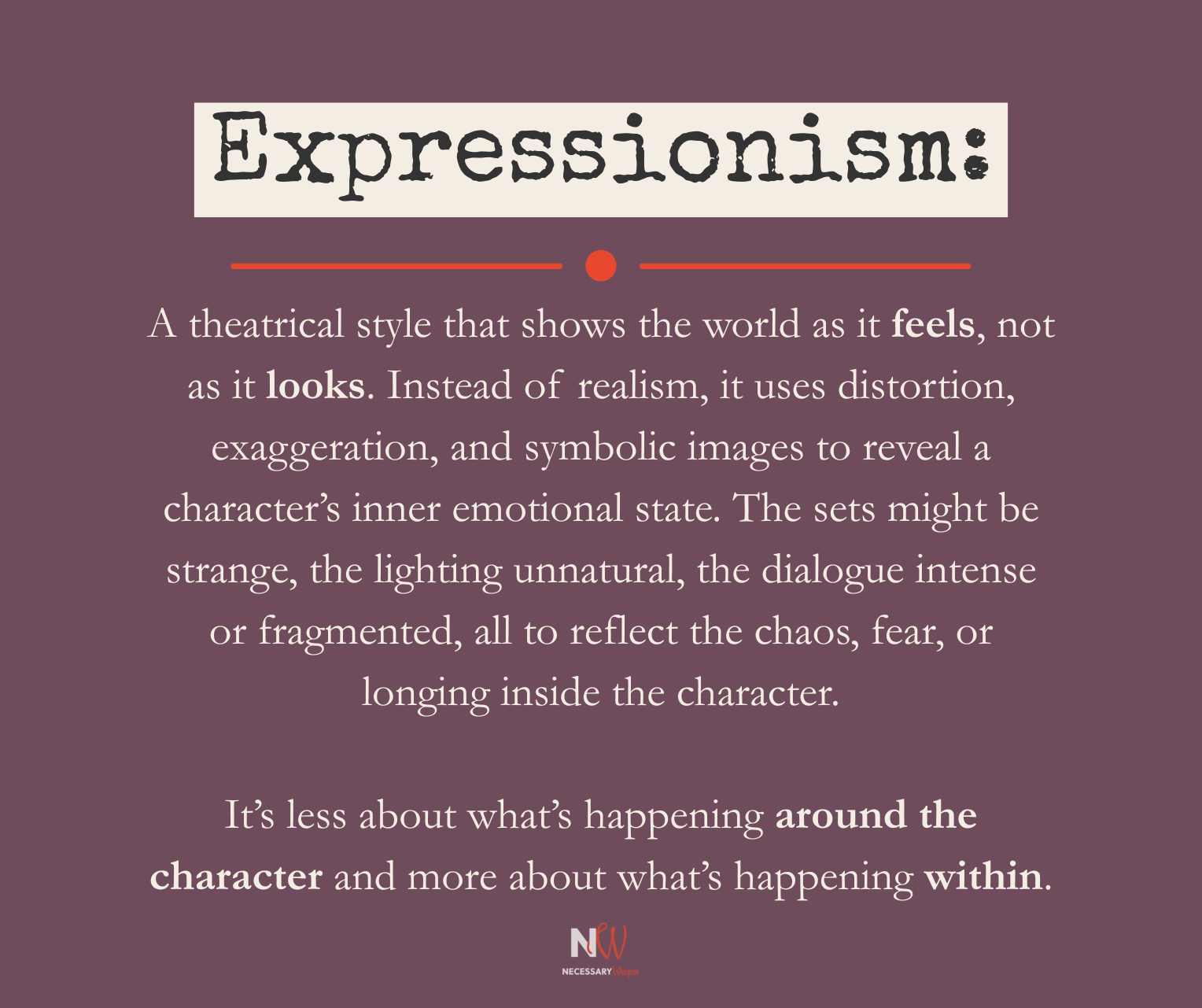
Expressionism emerged not just as an aesthetic reaction but as a psychological necessity. It rose in Germany just before and after the First World War, when artists, writers, and thinkers could no longer trust polite forms or representational art to convey the depth of their unrest. The goal was no longer to describe the world, but to reveal what it felt like to live inside its unraveling.

Expressionism didn’t aim to reflect reality. It aimed to confront it. To scream. To force the invisible into view. It distorted shape and color. It abandoned polite storytelling. It turned theatre into a site of emotional exposure. Art no longer asked to be admired. It demanded to be felt.

Playwrights like Georg Kaiser and Ernst Toller wrote not from detachment, but from fever. Their characters howled, wandered, broke open. In From Morn to Midnight, Kaiser’s bank clerk steals a fortune in search of meaning, only to spiral into surreal chaos. Toller’s Man and the Masses, written from a prison cell, thrusts its characters into revolution and despair. These weren’t dramas about individuals so much as spiritual X-rays. The characters bled longing and confusion. Their journeys didn’t resolve. They collapsed under the weight of their own yearning.

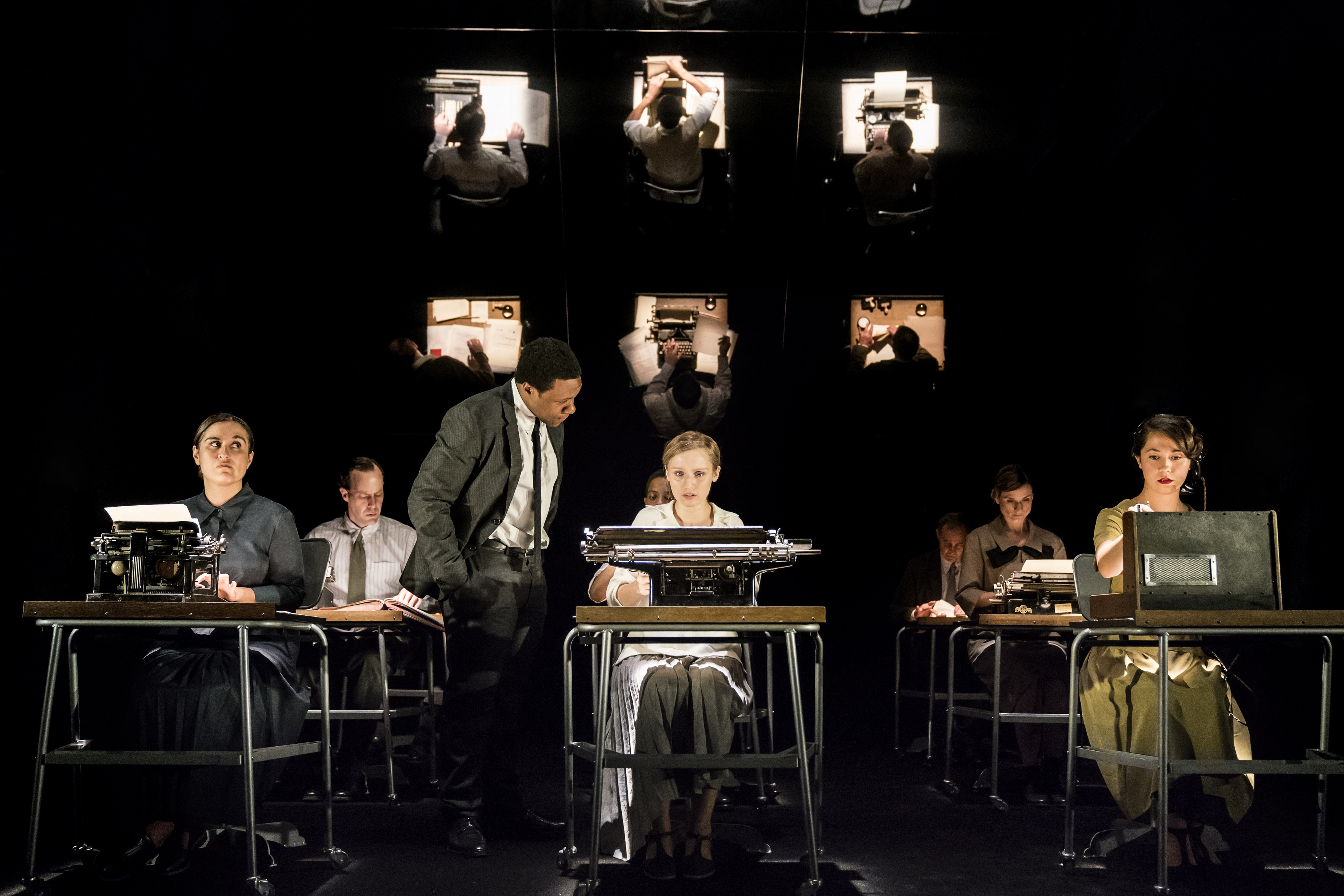
Expressionist theatre rejected realism’s comfort. Sets twisted into unnatural angles. Shadows devoured space. Costumes hinted at archetype, not personality. Actors moved like puppets or machines, tracing patterns that suggested they weren’t free but shaped, warped by invisible forces. The stage no longer depicted a living room. It became a mind under pressure, a soul under siege.

And that pressure had a point. Expressionism didn’t aim to confuse. It aimed to rupture numbness. When language failed, characters shouted. When logic failed, time fractured. These stories didn’t ask the audience to observe. They asked them to wake up.

In America, Expressionism evolved but kept its urgency. Elmer Rice’s The Adding Machine followed Mr. Zero, an accountant replaced by a machine. Rice filled the play with grotesque figures and abstract settings. Mr. Zero’s afterlife felt as soulless as the office he left behind. Rice didn’t mourn Zero’s death. He exposed the deeper loss, his humanity erased long before he died.

Eugene O’Neill pushed further. In The Hairy Ape, a laborer named Yank fights to belong. Society mocks him. His voice frays. His movements grow brutal. By the final scene, he collapses in the arms of a caged gorilla, an image that cuts through metaphor. O’Neill doesn’t leave us with an explanation. He leaves us with an ache.

Expressionism isn’t hopeless. It hungers for clarity. It distorts not to destroy but to reveal. Its jagged lines point toward the truth realism can’t hold. When a character screams, the play doesn’t collapse. It breaks open. When light slants the wrong way or dialogue shatters, the illusion doesn’t fail. The truth steps in.

We still feel Expressionism’s pulse. Sarah Kane’s ferocity. Caryl Churchill’s fragmentation. Tony Kushner’s haunted tenderness. Expressionism slips into modern theatre whenever the world grows too quiet in the face of pain, whenever the surface hides too much.

It isn’t just a style. It is a reckoning. A fever. A mirror held not to the face but to the soul. It asks: What happens when we can no longer live in the shape the world gives us?

Expressionism dares to answer.

Rather than linger in Expressionism’s most extreme forms, I turn to a work that adapts its methods into a form I deeply admire, Mike Nichols’s 1967 film The Graduate. The film’s visual style, psychological tone, and narrative dissonance make it a compelling case study in the expressionist tradition.

Expressionism in The Graduate

At first glance, The Graduate appears to follow the conventions of a coming-of-age film. A young man, freshly graduated, faces an uncertain future and becomes entangled in an ill-advised affair. Beneath this seemingly straightforward narrative, however, lies a visual and emotional language rooted in Expressionism. The film does not simply tell Benjamin Braddock’s story. It externalizes his interior confusion, dread, and alienation. The world around him is not stable, neutral, or whole. It reflects his fragmentation, and in doing so, the film belongs squarely in the lineage of Expressionistic art.

Acting: Detachment as Performance

Dustin Hoffman’s performance as Benjamin is notable for its restraint, bordering at times on paralysis. His movements are minimal. His facial expressions often remain blank or subtly off-beat. Rather than embodying a dynamic protagonist, he seems to shrink from action, as though something larger and oppressive is pressing in on him. This is not naturalism. It is stylized inertia. His presence becomes a kind of void, an anti-performance that reflects his disorientation and disengagement from the roles others assign him.

Consider the scene in which Benjamin lies motionless on a pool float, wearing dark sunglasses, while adult voices fade into indistinct murmurs. His body drifts passively, and his detachment becomes the performance itself. Rather than reacting with visible distress, he absorbs the world silently, embodying the alienation that defines expressionistic characterizations. The acting here is not a mirror to life. It is a mirror to inner collapse.

Cinematography: Psychological Dissonance in the Frame

Expressionism often distorts physical reality to convey inner emotion. The Graduate achieves this not through gothic architecture or grotesque sets, but through the camera’s choices. Director Mike Nichols and cinematographer Robert Surtees use framing, lens distortion, and mise-en-scène to make the real feel unreal. We are not merely observing Benjamin’s life. We are trapped in the geometry of his unease.

Wide-angle shots often dwarf Benjamin within sterile, oversized rooms, rendering him absurdly small in the frame. Hallways stretch unnaturally long. Mrs. Robinson is sometimes shot from above, with Benjamin framed below her knee, heightening the power imbalance and psychological tension. In one iconic transition, Benjamin jumps onto a pool raft, and without warning, the cut places him landing on top of Mrs. Robinson in bed. This dreamlike crossfade collapses time and logic. It does not follow realism. It follows Benjamin’s unmoored state of mind.

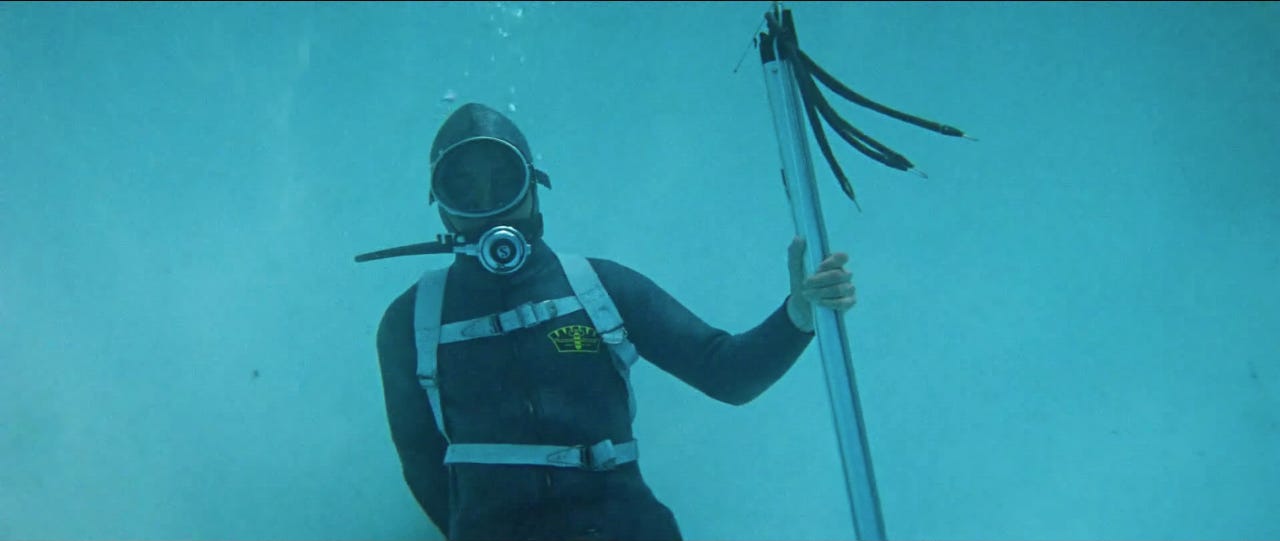
Mirrors, glass, and reflections appear frequently, creating fractured images and optical illusions that heighten the sense of internal dissonance. In one moment, Benjamin is framed through an aquarium tank, the water warping the view, the fish circling indifferently. He is submerged even when dry. He is drowning in plain air.

This moment distills Expressionism’s essence in cinematic form.

This is a brilliant moment of Expressionism in The Graduate

Story Structure: Alienation Disguised as Plot

While the plot moves forward, Benjamin does not. This, too, is expressionistic. In traditional dramatic structure, a character undergoes change. In Expressionist storytelling, the outer events expose the inner stasis. Benjamin tries to follow the story expected of him, graduate, choose a career, marry a girl, but each step is undertaken without conviction. His decisions feel reactive, almost dreamlike, more compelled than chosen. This passivity echoes the Expressionist stage tradition, in which characters function less as agents and more as vessels for existential commentary.

The film’s climax offers no catharsis. Benjamin interrupts Elaine’s wedding, they flee together, and they board a bus. But the camera lingers. Their triumphant smiles fade. The silence stretches. They look ahead, unsure of what they have actually done. This ending, unresolved, haunting, and deflated, refuses the narrative closure of romance or rebellion. It reasserts the alienation that has haunted the entire film.

As the bus carries them into an uncertain future, the film closes not with hope, but with a question. Who are we when all our roles are abandoned? What remains when we are no longer performing?

Conclusion: Expressionism’s Living Legacy

The Graduate draws from Expressionism not only in style but in spirit. It resists realism’s promise of resolution and instead immerses the viewer in a fractured world shaped by emotional truth. It belongs to the same lineage that birthed The Hairy Ape and The Adding Machine, a lineage that does not ask us to observe but to awaken. Though the techniques have evolved, the impulse remains the same. Expressionism endures wherever truth refuses to stay flat, wherever form bends to reflect feeling, and wherever art dares to reveal the soul behind the surface.

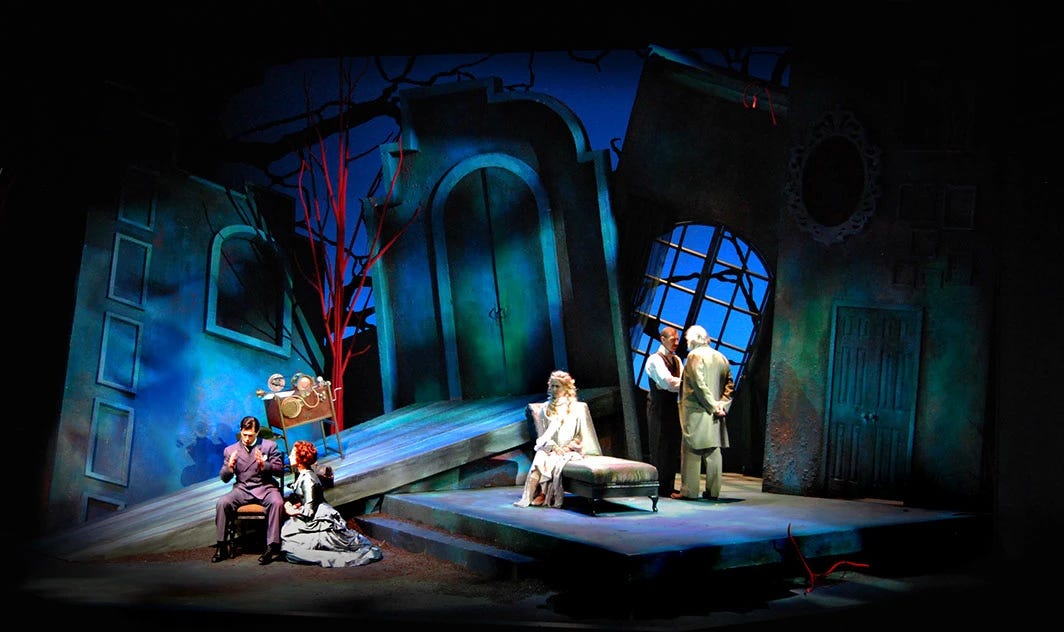
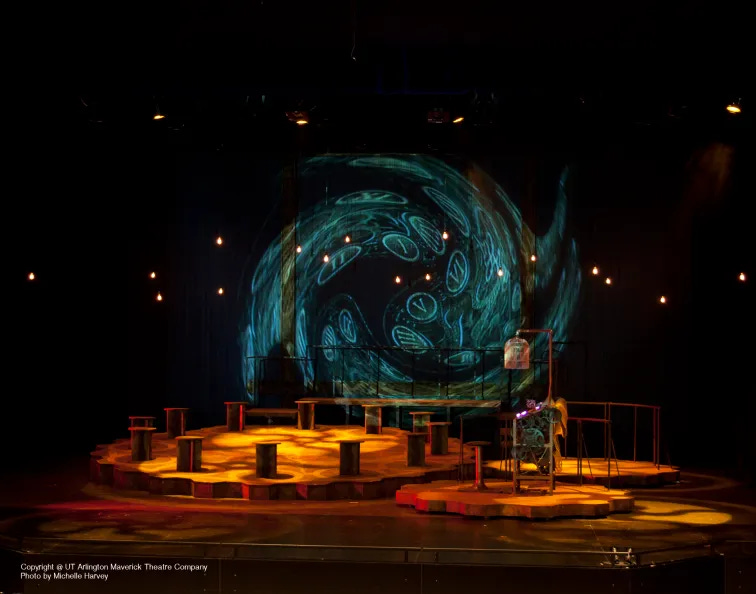
Examples of Expressionistic Set Designs

Machinal, Set Designer Miriam Buether
Dracula, Set Designer Kim A. Tolman
The Adding Machine

✨ If you’d like to keep reading more essays like this, you can also find Jill Szoo Wilson on Substack: https://substack.com/@jillszoowilson

Poem: God of the Street

What if God was as close as

The domed ceiling of an antiquated church—

Walls lines with stained glass

Depictions of before and after

Christ invaded the story

The history of man

A broader narration

An epic

A comedy

A tragedy

A lineage of life and death

And birth and

Resurrection.


The grandiose nature of

The Alpha and Omega—

The beginning and the end—

Could not be contained

The stained glass rattles

The musty, dusty wood

That used to be trees stretching

Tall in majestic places

Now bowing to parishioners

Waiting for

Waiting for

The release of weight

When men and women

Stand to their feet

Applaud and proclaim

Praise to the One that lives

Beyond the dome—


Outside the temple erected

His focus directed on each one

Who walks the streets

Umbrellas and tissue

And glasses and backpacks

Catering to their earthly needs

All the while moving inside

An invisible song

Pervasive notes swirling

In the air

The breath of God in the wind

His playfulness in

The wings of fluttering birds

His rejuvenation in colorful promises

Of spring

His love in the eyes of those

Who hold hands

His peace in the frogs croaking

Their midnight serenades.


He whose visage

Hangs in the churches

Broke through the walls to

Walk side by side

No dome

No tomb

No misunderstanding

No doubt

No running


No running


Can hold the God of

Everywhere

Prostrate

To our wood and plaster and

Ornately

Drawn windows:

It is we whose frames are weak

It is we whose knees

Must bend

Whose heads must bow—

It is our shatters

Our shards that the

Incense picks up and carries

Into the atmosphere

Palpable with life

And into the nostrils of He

Who broke through the dome.


© Jill Szoo Wilson, 2016