
There was a time

When the feeling was high

Like a tide

Rolling up and in

Surfers flying

Sun shining and

Invisible heartbeats

Crooning tunes of

Love

Or something like it.


The edge of desire

Between water and fire

Where burning is natural

Safe and contained

Where extinguishing

Is disregarded like a far-off joke

Laughter and ease

No appeasing

Only releasing

No hand on the trigger.


A season of passion

Final bastion before the mix

Of hearts and hands

Rhythms and bands

Playing songs for two

And candles glowing

Illustrating the knowing

Breaking shadows

Into pieces like crumbs

Along the way.


Shadows slip into

The hourglass—

Goodbye—

Crumbs and sands combine

Lost

And time falling

Sand filling darkness

That cannot be fished

All the way down

Into deepest fathoms of regret.


It is quiet there

Where thoughts dare not

To squirm—

They writhe instead

Slither over, “what the hell”

Wriggle past hatred

Lick the ears of obliterated

Words and

Images all stamped with,

“Doubt.”


There is a way out

But only further down

Past the malice

And through the chalice

Of poison

Red with the blood of

Something once living

Now stiffening

Twitching slowly before

Final death.


A memory of breath

Clouding

First love

Then hatred

Now something

More foreboding—

Indifference

The truest enemy of

That which was

And no longer is.


Indifference is

The air surrounding and

That one time we—

Oh, wait, now I forgot—

It is a stroll in the park

With nothing hiding,

Sitting at a traffic light

Waiting for green

But red is fine, too—

Nothing to forget, nothing to pursue.


There was a time

When hearing your voice

Scattered my focus

Like bees swarming

Drenched in honey

Bringing balance

To the flowers that we gave

And the ones we dropped

Along the way—

A garden full and thriving.


“Hello?”

My God, the timing—

I did not expect

How could I have known

That the ringing of my phone

Would start the race

Like a pistol pointed above,

Toward the space

Where helium-filled expectations

Rest in peace.


I touched my lips

As I do when my heart

Beats

Suddenly

Quickly

Stinging the parts that

Stabilize

When I realize

My hands are the only protection

I have.


“Hello,”

I heard—

Oh,

Hell no—

Hello is not enough

No greeting

Even in the repeating

Could fill the chasm

Between speaking

And hearing.


I wanted to spill

Like a leak in a pipe

Drip into the boards

Between my feet on the floor

Become a puddle

With no response

No chance to offer

More kindling to

Soak

Or to muddle.


I heard his voice

Once more

A bolt of electricity—

I was struck

With a memory

The simplicity of

The time that was high

The surfers, the tide—

A different world

A haunted time.


Then it was quiet

“It” being I

And I being the me

I remembered

I became

After the exit

Of he

And I breathed

Into the phone

Then I hung up—dial tone.


I poured a glass of Merlot

Sat in an unfamiliar glow

Once having waited—

Deeply anticipating his hello—

Now

Denied

Then

Intoxicated with his lies

But no more

And the red warmed my soul.


Once I read

Written on the sky

The opposite of love

Is hate

But you see, my dear,

I fear the stars

Were misinformed—

The opposite of love is

Indifference

I am sure I am right

As muted versions of

You and I

Are blown to dry

And stick

To freshly painted fingernails—

Not painted for you.

© Jill Szoo Wilson, 2025
Tag: Poetry
Poem: Where Our Eyes Have Met
A single painting in an art museum gathers the gaze of countless viewers, linking people who will never stand there together.
This is a poem about that.
A hundred eyes
have paused at this painting—
or maybe a million—
a crowd distributed across decades,
all standing just where I stand now,
though wearing different shoes.

Some looked quickly,
some leaned in,
some tilted their heads
as if the angle held a secret.
None of them knew
they were becoming part of each other’s story.

The gold frame won’t say
how many people have stood here,
or how long,
or what they were hoping for.
Paintings don’t keep lists.

Still, I wonder
if your eyes
have ever touched this canvas
in the exact place mine do now.
If so, the colors would remember.
They are better archivists than we are.

A single brushstroke
might recognize you—
the way the spotlight sharpened on its surface
when you stepped closer,
the way it softens now
because I have.

We might have shared this moment
without sharing the hour.
Two visitors,
unlikely to meet,
connected by a patch of green
that neither of us layered
yet both of us trust.

It’s possible
the painting knows us both—
you by a trace of perfume,
me by the giggle I released too loudly,
you by the tear you wiped away quickly,
and them by a single loose thread
from their bright red scarf.

All the while,
it stays exactly where it is,
patient as a held page,
letting strangers
complete the same sentence
with different eyes.

What an odd, prismatic intimacy—
to be joined
by something that never speaks,
yet answers
each of us
in turn.

© Jill Szoo Wilson, 2025
Poem: Snowfall On a Patio Chair
It started with one flake I mistook for a drop,
without asking my permission,
as snow often does.
By morning, the patio chair—
the one with the pale blue cushions I meant to bring in—
had accepted its fate
with the patience of an object that knows
humans forget things.

The snow took its time.
A thin first layer,
then another,
each one more certain than the last.
If the chair felt imposed upon,
it gave no sign.

From the maple,
a squirrel watched the slow takeover,
pressed flat against the trunk
in an embrace that invited romance, or,
at the very least,
warmth.
It twitched its tail once—
a gesture somewhere between
expectation and indifference—
then sighed a tiny puff of breath.

Meanwhile, at the back of the yard,
the pine tree leaned lower than yesterday.
The branches, loaded with fresh snow,
descended far enough
to touch the needles that had fallen weeks ago.
A quiet reunion.
If trees feel anything at such moments,
I imagine it’s something austere:
nostalgia, perhaps,
maybe even joy.

A grand ceremony,
and no one asked me to attend.
Still, I stood at the window,
unsummoned,
as winter arranged its small corrections:
the forgotten tucked in,
the living held close,
the fallen greeted by their own.

A world going on
perfectly well
without my remembering.

© Jill Szoo Wilson, 2025
Poem: In This Light
All summer the rubber tree misunderstood itself
as a subtropical creature with permanent rights to the patio.
Fall corrected that illusion.
I carried it inside
before the cold could finish the argument.

Now it stands beside the southeast window,
where the morning light arrives like a polite guest—
knocking first,
then slipping across the floorboards
in a thin, honeyed ribbon.

This light was not made for grandeur.
It does not flare, or boast,
or promise anything it cannot keep.
It simply lifts the room an inch or two,
enough that even the rubber tree notices—
its leaves catching the brightness
with the same shy greed
of someone receiving a compliment
they secretly hoped to hear.

I water it slowly,
as if pouring out a small confession.
The soil darkens, swells,
takes what it needs
without apology.

I do not tell the tree
that I admire its stubbornness,
or that something in its resilience
feels tender to me this morning.
Plants are suspicious of sentiment.
They prefer steady hands
and predictable light.

Still, the room shifts—
a quiet choreography
of leaf-shadow and sun-warmth.
And for a moment,
we are both content
to be exactly where the season
has delivered us.

Jill Szoo Wilson, 2025
Unknowable: An Allegory
“Do you think we are unknowable?” she asked.
Caimon looked down at the dirt around his feet and noticed his shoe was untied. “Not completely, no.”
“Do you mean that we are partly unknowable? But partly knowable, too?”
He could feel his pulse in his temples as he bent down to tie his shoe, “I think we can know someone as much as they are willing to be known.”
She wondered about his answer as she leaned over to tighten the Velcro on the side of her own shoe, “Do you want me to know you?” She whispered the first part of the sentence, but the second part leapt too loudly from her mouth.
“I guess I want everyone to know me. But not really.” He could tell, right away, this wasn’t the answer she wanted to hear.
“Well,” she said, with securely fastened feet, “I think I understand.”
Caimon tried to make a joke, but it fell between his feet, “Maybe you do. But not really.”
As his paltry attempt at humor mixed in with the dirt beneath the hem of his pants, Caimon wanted her to walk away. He didn’t like the weight of her stare, and he didn’t want to feel responsible for her anymore. In a moment of desperation, Caimon turned from her—filled with the conviction that he would never look in her direction again—and he said, “Why do you always need to know? What is wrong with not knowing?”
His footsteps were slow and heavy as he could feel her blue eyes fastened to his back with long, thick ropes tied around his organs. Her eyes pulled at him and tried to stop his movement until, between one exhale and the next breath in, he felt her release. The moment of her imprisonment was the moment of his freedom, and in his freedom, he began to run. Not fast and with nowhere to go, but with the swiftness of a man whose shoes were tied and whose longest mistake grew shorter behind him.
Caimon ran with his secrets. The unknowable parts of himself were rattling around between his right ear and his left. They were sloshing back and forth between his rib cages and percolating up into his throat. The words he would never say, the feelings he could never explain, and the courage he conjured in his dreams but left stuck to the sides of his imagination were loosening with each new footstep. He wondered whether it was dangerous to allow the movement. His secrets felt like gumballs in a gumball machine and he had only ever seen one fall at a time: what would happen if the whole lot was disturbed at once?
He laughed under his breath and panted fog into the cold night air, “If only I had a quarter, I could find some courage to chew on.”
He laughed again, but this time he knew it wasn’t funny.
The words of the girl wrote themselves on the trees surrounding him, and he could hear them on the wings of the wind that fell through the leaves. He watched his shoes as they hit the ground—left, right, left, right—and he began to count the steps. Each step was further away and, somehow, closer, too. Further from her: closer to something new.
It wasn’t any one aspect of the girl Caimon needed to flee, but the anchor her whole had become. She needed Caimon, and Caimon didn’t want to be needed. She expected things from him, and he wasn’t sure he had what she was waiting to discover. He didn’t want to disappoint her, to lose her, or find her, and the girl only wanted to be found. Theirs was a connection of two negative magnets, one wanting to change her charge. She wanted to change the nature of herself so she could be pulled into Caimon and he into her, almost as though the choice no longer belonged to them.
“Unknowable,” he read as the words wrote themselves in the reflection of a lake up ahead. Caimon stopped running and never looked back, but sat on the edge of the water.
The air was so cold by then that his breath felt like crystals grabbing the edges of his lips as it was blown from his body. The forest was silent and still: the kind of stillness that lowers itself like a parachute over nature when the moon is moments away from switching places with the sun.
Caimon, tired and cold, reached into the pocket of his coat to find his book of matches. Once he was certain the matches were there, he looked near his feet for pieces of fallen wood. One by one, Caimon reached into the dirt for the wood, methodically like he was looking for pieces of a puzzle that had fallen to the floor. Once he had gathered enough wood to build a fire, he reached into his pocket and pulled out two things: the matches he knew were there and an envelope she had given him earlier, long before he tied his shoe.
Caimon crumpled the envelope—still filled with her letter—in his left hand and placed it on top of the wood. With a match in his right hand, Caimon struck the side of the matchbook and watched the flame immediately appear.
“Quickly,” Caimon thought. “It is quickly that a match is filled with fire.” Just as the flame crept dangerously close toward his fingers, Caimon leaned over and watched as the flame stretched itself from the match to the letter, like a bridge between two lovers. Or two strangers. Once the letter was lit, Caimon stood.
He closed his eyes and felt the heat of the letter begin to grow as it linked arms with the pieces of wood he had gathered from the forest floor. Soon, the fire began to melt the breath that gently rolled from between Caimon’s lips. He lightly bent his fingers into fists, his fingertips touching the inside of his own palm. He felt the skin on his hands and wondered why he hadn’t noticed before how rough that skin had become.
He could see on the inside of his eyelids the orange and red of the fire he had built: the fire made with his rough hands and matches and her letter. He didn’t want to look at it just yet but, instead, he wanted to feel it dance before him like a lover unencumbered by self-consciousness or pride. Caimon drank in the light and let the colors of the illumination paint a masterpiece inside his mind.
Enraptured by the freedom of the flames and the heat of the fire against his shoes and legs and face, Caimon leaned back his head and sighed a message that flew into the sky, “There is nothing wrong with not knowing.”
And without seeing the sun begin to rise, Caimon knew the day was new.
© Jill Szoo Wilson, 2025
Poem: The Path Widens
A meditation on how people grow: slowly, sideways, and almost never on schedule.
In teaching acting, you learn that most progress happens quietly.
Not in the moment a student secures a role, but in the moment she finally makes a choice no one suggested. Nothing dramatic. A shift of breath. A decision about when to look away. A line spoken with intention instead of hope.

Parents ask me when they should know whether theatre is a good path for their child. They mean well. They want a timeline, a benchmark, a sign that reassures them the world can still be predicted. Adults love prediction. It keeps the fear at a reasonable volume.

But acting doesn’t depend on prediction. It depends on attention.
A student gives more than she takes. She listens longer. She works without being asked. These are not qualities that make announcements. They don’t trend. They barely register unless you’ve been watching the way a gardener watches new growth: alert, but never frantic.

Younger students arrive full of borrowed enthusiasm.
A favorite movie. A character they memorized line for line.
At that age, the self has not yet solidified enough to have a motive.
They imitate because imitation is how they understand the world.
It’s not my job to explain their “why.”
It’s my job to give them something sturdy to push against.

I learned this long before I ever taught anyone.

When I was five, my uncle removed the floaty from my back and told me to jump into the pool. He said he would be right there. Adults often say this. Sometimes it’s true. Sometimes it’s more aspirational than factual.

The first time, he stood still.
The second time, he stepped back.
By the end of the afternoon, my floaty lay drying on the concrete like a gasping fish.

That is how learning works at its best.
You move toward someone who trusts you can manage the distance.
Then the distance widens.

A simple object left drying on the concrete carries its own questions.
What does a beached object imagine?
That this is the edge of its usefulness,
or that the next body of water will be waiting somewhere farther on?

Even a stranded object suggests the truth: every stage asks something different of us.

Parents want to know when their child is ready for the “path.”
But the path is not an announcement.
It is a series of small decisions, barely noticeable except in accumulation:
a student opens her script earlier in the week,
rehearses with a friend instead of scrolling a phone,
asks a question that requires thinking instead of guessing.

These things don’t earn applause.
But they build a life.

The work goes on.
The child grows.
The deep end waits, patient and unbothered.

And the path widens without saying why.

© Jill Szoo Wilson, 2025
Poem: The Thousand Deaths of Canton
Canton died on Monday

And then again on Friday

And in between

A thousand other deaths

All in a row—

His breathing shallow,

His passion stretched wide

Like a well dug for water supply

Now a brimming

Hole.


Canton’s misery has a name—

A she as you may have guessed

With brownish hair and

Bluish eyes

Anchored to her soul,

Her voice sounds

Like frogs chanting

In the night,

A melody Canton

Extols.


Her name is Sienna

Like the color artist’s mix

When simple red

Promises nothing of

Complexity

In its parts—

But complexity

Is the only way

To convey the

Whole.


She walked into his life—

No, she swam instead

Like a pirate

Fallen out of a ship

Whose pockets were filled,

Whose lungs nearing empty

Needed Canton’s

Breath to make it

To the shore with no

Patrol.


Canton wrapped his arms

Around her belted waist

He pulled her body

Wet with salted

Memories

To a warm and sunny

Place where

Resuscitating Sienna

Became his starring

Role.


He breathed his life

Into her lungs,

Sienna’s breast inflated

Like a blowfish

Reacting to her fear

Desperately wanting

His protection—

No, that’s not right—

His affection wrapped up in his

Soul.


Canton died when Sienna

Slept—

The world collapsed

With her unconsciousness

As though slumber

Was a distance too far to

Bare,

Not even the moon

Could console his emptied

Control.


He died when she blinked,

He could not withstand the dark

Her eyelids commanded—

Like a conductor

Setting the rhythm of

His pain and

One and two and three and

Four—

The music behind her open eyes, Canton’s

Parole.


Canton and Sienna

Clasped their fingers together

Like two pirates searching for love

Crossing a windy expanse—

They cried and laughed

And died and lived

Along the way

Two shipwrecked halves navigating

Toward one mysterious

Shoal.

© Jill Szoo Wilson, 2025

Poem: Consolation
He called her a corpse

Deflated her air

Rolled her body up

From her toes to her hair

And sat on her skin

Until her spirit

Became thin

A sweet smelling puff

Escaped her lips—


“I’m still alive”

Was

All

She said.


She lay on the earth

Drawn-on with dirt

The muscles in his arms

Dug deep beside

The crumpled she

He struggled to hide

He needed a hole

As deep as it was

Wide.


His sinews tore

His ligaments bore

The weight of

Moisture soaked mud

Sweat poured from his face

A frenetic pace

Fighting against the hole

In the ground and inside

His soul.


His arms fell to his sides—

Steel and wood

Now a finger

On his hand

An extension

A plan—

One last

Connection to she

Awake in the grave.


One inhale—

Peace

One exhale—

Release

One inhale—

Regret

One exhale—

Cold sweat

And his future stared.


He could not go back

Ahead was a trap—

Brightly lit

The way

Was clear

But illumination

Is not

The same as

Consolation.


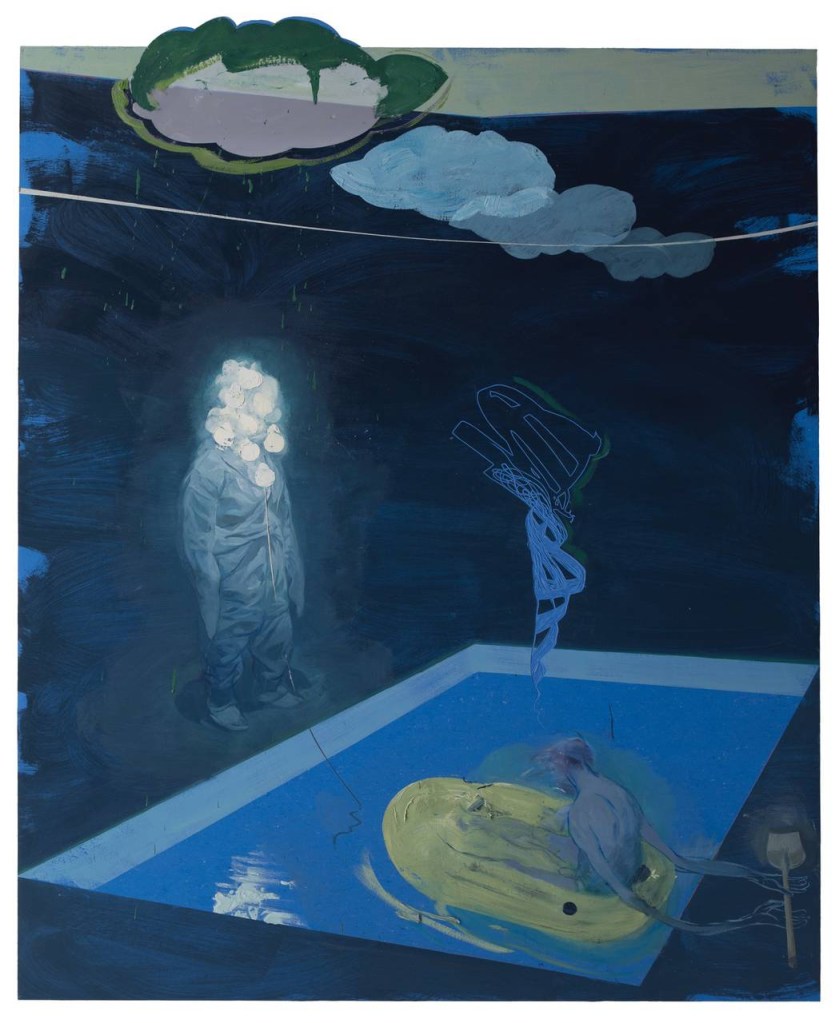
He sat in his safety

Buoyant

Afloat

Stillness

Stagnation

Narration calling,

“I’m still alive”

Her apparition

His aberration.


Wires exposed

The path that he chose

Storm clouds above

Drowning out love

No finish to the start

Interrupted heart

No dreams to know

No nightmares bestowed

She leapt from the tomb

Alive—

© Jill Szoo Wilson, 2025
Poem: The Curve of Time
You might as well befriend the moon–
embrace her clouded peekaboos.
And music . . .

Receive the tune–
you have no time to choose–
alone in a crowd or
with no one in view.
And a smell . . .

Wafts past your nose–
what's that?
Or who?

Perfume on skin or a place that you knew?
Pause.
No need to wonder—you know who that was—
and who you are
as nostalgia winds the second hand 'round.

"Time is a straight line," said he
"It moves consecutively,
watches as it goes
behind and below
like walking on a path
that winds into—
well—
no one knows."

"No one knows,
that's right," said she.
"Simply put, I do agree.
But there's no line to speak of.
Time bends–not like a knee–
more like a finger touching its thumb
or a rainbow finding it's spherical end
and celebrating with a gentle, 'Come.'"

Time returns to the places we've been.
One says, "That memory is far."
Another, "The moment is here to stay."
Yesterday can be put down
but the nows of that day
pop up from the ground
without notice
or sound
to delight or confound–
it depends on the soiled seconds
into which it was bound–
moments become recollections and
recollections are seeds
with a life of their own.

Promises and hope
gentleness and rage
a touch, a glance
a well-appointed room
or a half-written page–
all are sown into our skin
and find their rest in
smiles and tears
repose and toil
love and loss
freedom and cost
and the way the sunlight lay across
the earth at the end or
when it all began.

"That was back then," said he.
"That is today," said she.
The Minutes listened closely,
"There is wisdom in both."
Time smiled wryly
crouched smugly and quietly
behind an Autumn tree
waiting for the final leaf to fall.

© Jill Szoo Wilson, 2025
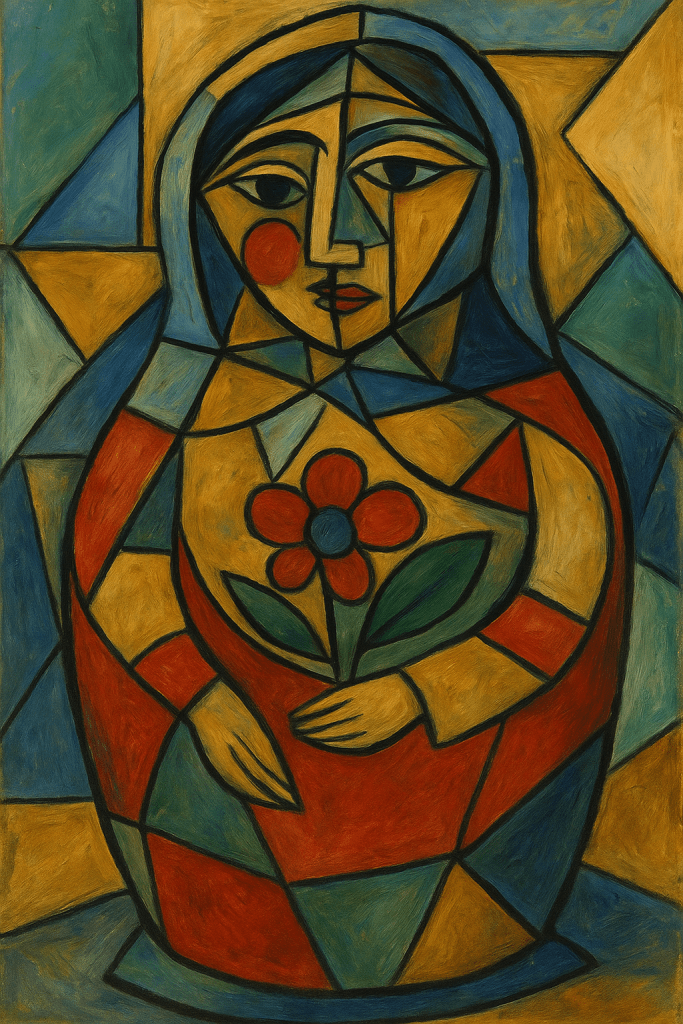
Sonnet: The Final Chamber
In all your quiet ways my spirit wakes,
Like dawn that steals through shutters, soft and slow.
Oft have I wondered how your presence makes
Veil’d parts of me take courage yet to grow.

Each day my hushed and inward-seeking mind
Yields when your voice through shaded mem'ry moves.
O’er every folded fear your light I find,
Undoing shadows with the truth it proves.

You are the innermost of all my days,
The final form within my layered soul.
No ornament, nor craft of human praise,
Could name the warmth by which you make me whole.

So stand I now, my guarded heart undone,
For in your gaze a thousand worlds are one.

© Jill Szoo Wilson, 2025
 Jill Szoo Wilson