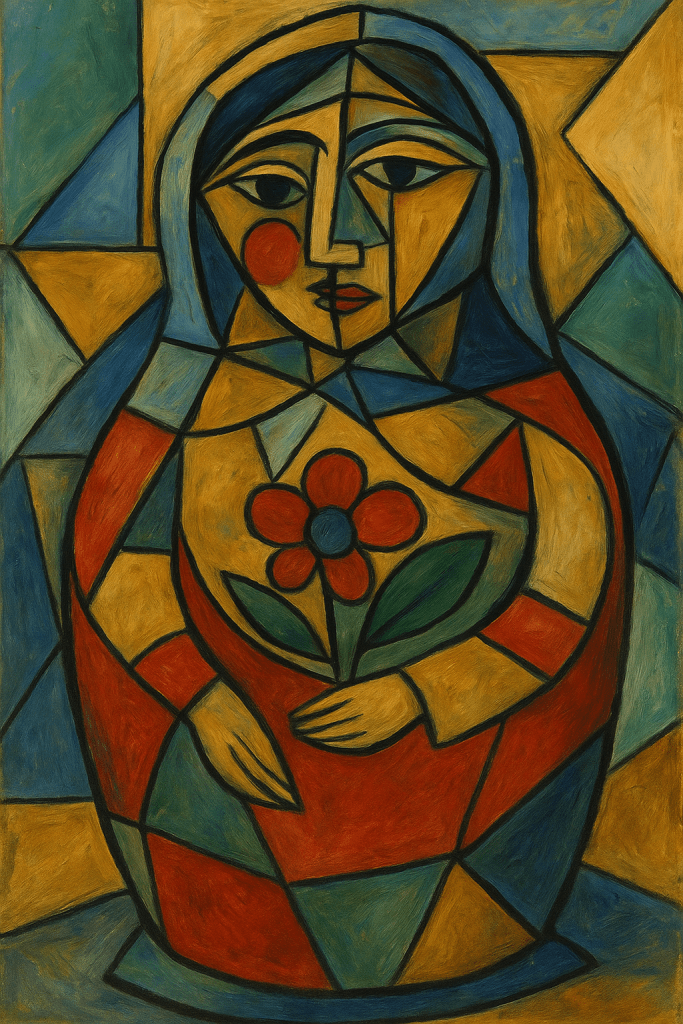
In all your quiet ways my spirit wakes, Like dawn that steals through shutters, soft and slow. Oft have I wondered how your presence makes Veil’d parts of me take courage yet to grow.
Each day my hushed and inward-seeking mind Yields when your voice through shaded mem'ry moves. O’er every folded fear your light I find, Undoing shadows with the truth it proves.
You are the innermost of all my days, The final form within my layered soul. No ornament, nor craft of human praise, Could name the warmth by which you make me whole.
So stand I now, my guarded heart undone, For in your gaze a thousand worlds are one.
Museums invite looking, yet most visitors treat art the way they treat emails: a quick skim, a polite nod, and on to the next thing. We spot a recognizable subject or a pleasing color, think, “Ah yes, culture,” and keep walking. Studies suggest that viewers spend less than thirty seconds with a work of art before moving on. It is possible to tour an entire gallery without truly arriving anywhere at all.
Slow Art suggests another way to exist among masterpieces.
Rooted in the broader Slow Movement and formally organized with Slow Art Day in 2010, the practice encourages viewers to remain with a single artwork long enough for something meaningful to happen. The idea is simple: stop rushing. Stop conquering exhibitions like they’re errands. Let a painting interrupt the pace of your day.
Of course, the mind resists immediately. The moment we sit down and dare to look, our thoughts fling themselves into crisis: seventeen neglected texts, three unpurchased groceries, and the intrusive belief that productivity is our moral duty, and this bench is a crime scene. Apparently, stillness is very dramatic.
Yet if we continue to sit, the noise eventually settles. We start to notice the obvious things we missed when our thoughts were busy staging a coup: light falling across a shoulder, a line of color we would have sworn was not there a moment ago. Philosopher Maurice Merleau-Ponty argued that seeing is never passive; we do not merely observe the world. We are in conversation with it. Given time, a painting stops acting like an object and begins to behave like a presence. It answers back.
Meanwhile, neuroscience is offering evidence for what artists have always suspected. When we linger with an artwork, the brain does more than register shape and shade. Regions connected to memory, imagination, and empathy start sparking awake, as though the mind suddenly recalls it has a richer job than survival. Interpretation emerges. Emotion slips in without asking permission. You are no longer deciphering the art. You are encountering yourself.
Slow looking becomes a decision to let meaning unfold at its own pace.
It is a tiny rebellion against the cult of efficiency. Instead of demanding results from a painting — explain yourself, be profound, hurry up — we allow the experience to be unmeasurable. Sometimes revelation arrives. Sometimes quiet does. Both are victories over the museum sprint that ends with a gift shop purchase and no recollection of the gallery that preceded it.
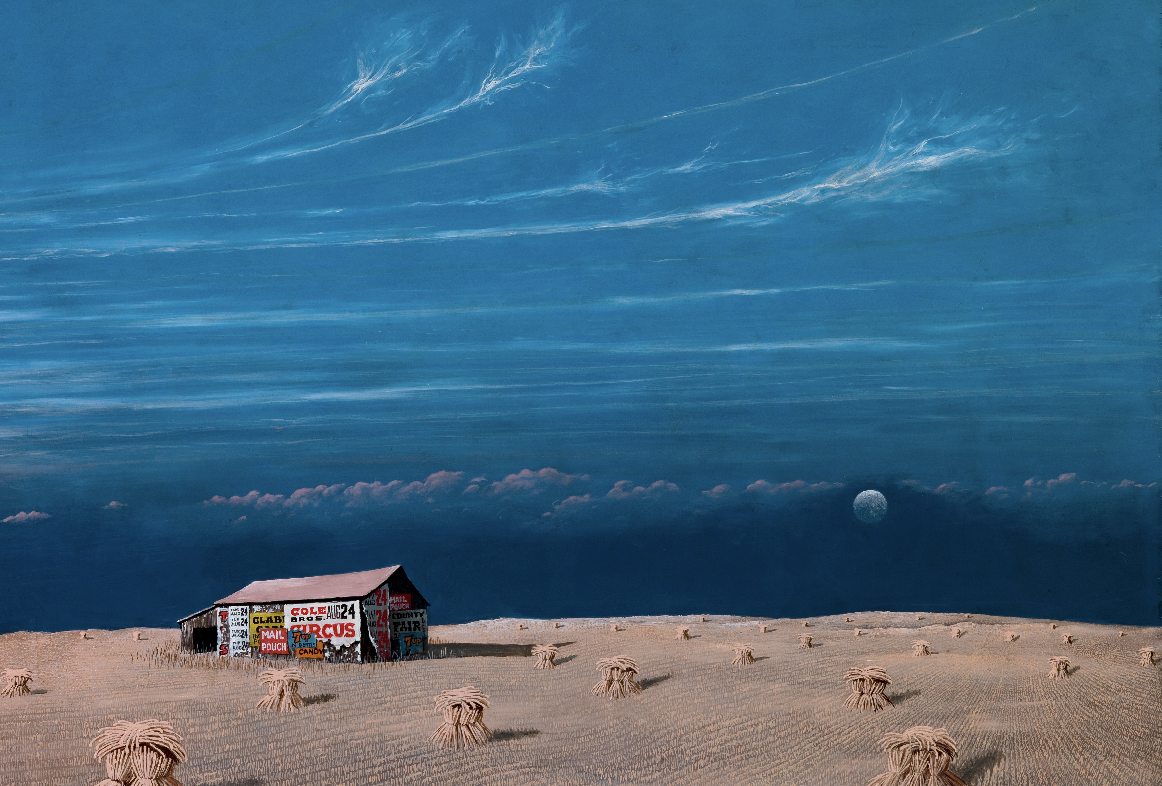
This week, I sat with a painting of moonlit fields and distant wind. Nothing moved, yet somehow everything did. The air itself seemed to stretch across my skin, my breath eased, and the horizon widened inside me. It felt like remembering how to be a person rather than a calendar.
I answered the art’s invitation in the only way I know: by writing.
Cloud Trails, by John Rogers Cox
Hush
By Jill Szoo Wilson

My dear, now hush. Unburden every care;
The silent fields invite your breath to slow.
The wind lifts strands of worry from your hair
And strokes your cheek with touches soft and low.

O moon, shine steady, hold your silver ground;
A lantern calm above the world’s unrest.
Pour down a peace too deep for any sound
And press a quiet knowing to the chest.

Kind wind — sweet wanderer — move as you will;
Let coolness glide along these open hands.
Brush thought from thought, invite my heart to still,
And ferry calm across the quiet lands.

Here, nothing strives. The wide horizon sighs—
At last, the soul grows spacious as the skies.
Through slender branches shines the swollen star,
A lantern hung upon this midnight’s crest.
Its argent glow calls shadowed fields afar
To bow in prayer, by silver calm caressed.

The fading canopy, with colors frail,
Lets gilded light slip softly through the air.
Each trembling bough becomes a fragile veil,
That parts to show a vision rich and rare.

The orb ascends with majesty untamed,
While earth beneath lies weary, bare, and still.
Though time shall claim what autumn once had named,
The moon restores the world with tender will.

So beauty dwells where silence weaves its art,
And sows eternal wonder in the heart.

Jill Szoo Wilson, 10/25
I wrote this sonnet after gazing at the October supermoon, its light threading through thinning branches and the fading canopy of fall.
What once was whole is splitting at the seam, With roaring tongues that never find a word. Each stands alone, entranced by their own dream, While fear doth arm the gates with aim absurd.
The bridge between us withers into dust, A chasm wide where voices fade to air. Yet in our hearts still burns this ancient trust— The longing for a hand extending ear.
But how to reach when dread hath drawn the line? When walls are built of pride and weary doubt? We stand as statues, yearning for a sign, Yet know not how to call the silence out.
O break the curse—let all division cease, For love still speaks the only tongue of peace.
This sonnet is inspired by Edgar Allan Poe’s famous quote, “There is no exquisite beauty without some strangeness in the proportion,” from his short story “Ligeia.” In Poe’s tale, the beauty of the mysterious woman Ligeia is entwined with an otherworldly, unsettling strangeness, thus highlighting the idea that beauty often thrives in imperfection.
The sonnet explores this concept, celebrating the beauty found in things that are off-center, crooked, and flawed. It suggests that it is the very strangeness of these things that makes them remarkable and worthy of our time and attention.
There is no beauty forged in flawless light— It twists where shadows linger at the seam. A crooked branch may catch the morning right And cast the roots of wonder into dream.
A freckled rose, off-center in its bloom, Will hold the gaze far longer than the best. The stars are never silent in their room; They flicker strange and waken eyes at rest.
The pearl was born from pressure, pain, and grit. The sea’s rough hand gave shape to something rare. So let the world tell tales of perfect wit— I’ll choose the crooked with a bend that’s fair.
For beauty, true, is never fully tamed— Its strangeness is the reason it is named.


 Necessary Whispers