He told one lie inside one sentence— A capital letter, a comma, a period— To stop the darts inside their eyes With tips of poison traced with flesh And ash From the man before.
He carried his lie like a shield— A bouche, an umbo, a coat of arms— To hide the head he held up high A posturing of dignity and pride But hidden Like a murderer walking free.
His arm was heavy with the weight— Sinews tearing, sweating, fatigued— So he told one more to add to the other Deflecting, like a reflection of fire And blinding Impending conclusions.
He picked up his finger like a steely blade— A quillon, a foible, a forte— To thrust accusations dripping with blood Into the flesh of the men within his reach But falling Below his cutting edge.
He grasped at a pain inside his chest— A palpitation, a flutter, a squeeze— To arrest the cardiac aberration That pumped with compassion And wrenched out His beating liability.
He opened his mouth and told one more— A series, a novel, a narrative— To let the drips of his life smear their faces With draining blood But lifeless His heart deflated like a balloon.
The chill of the air blew through his flesh And hardened his skin into Planks. No longer a He but now an It, It gathered the furs of the men At his feet And wrapped their death around His own.
It told one lie and built a fortress— An isolation, a prison, a cage— To insulate itself from the arrows It feared would leak its life But drained Its own instead.
A probably true tale about order, ambition, and the secret lives keeping the city running while we’re busy thinking we do.
Men with briefcases move up and down the streets like ants: all in lines, moving this way and that. Scouts sent forth from their secret dwellings, with secrets at their sides and secrets in their minds. They rush into the world to gather and to hunt, and when the day is done they hold their provision over their heads, like ants, but also like African women carrying water back to their children.
All is a race, if you think of it thus.
In the shadowed jungles of the sewer holes and pipes that run wild under the city, there is another kind of race. As the suits and ties vibrate with the ticking of the clock above, there are men and women of valor whose orders have been pecked out by feats of daring and strength. Yellow eyes, but sometimes green, flash through the underground tunnels and make plans for the sun-filled above.
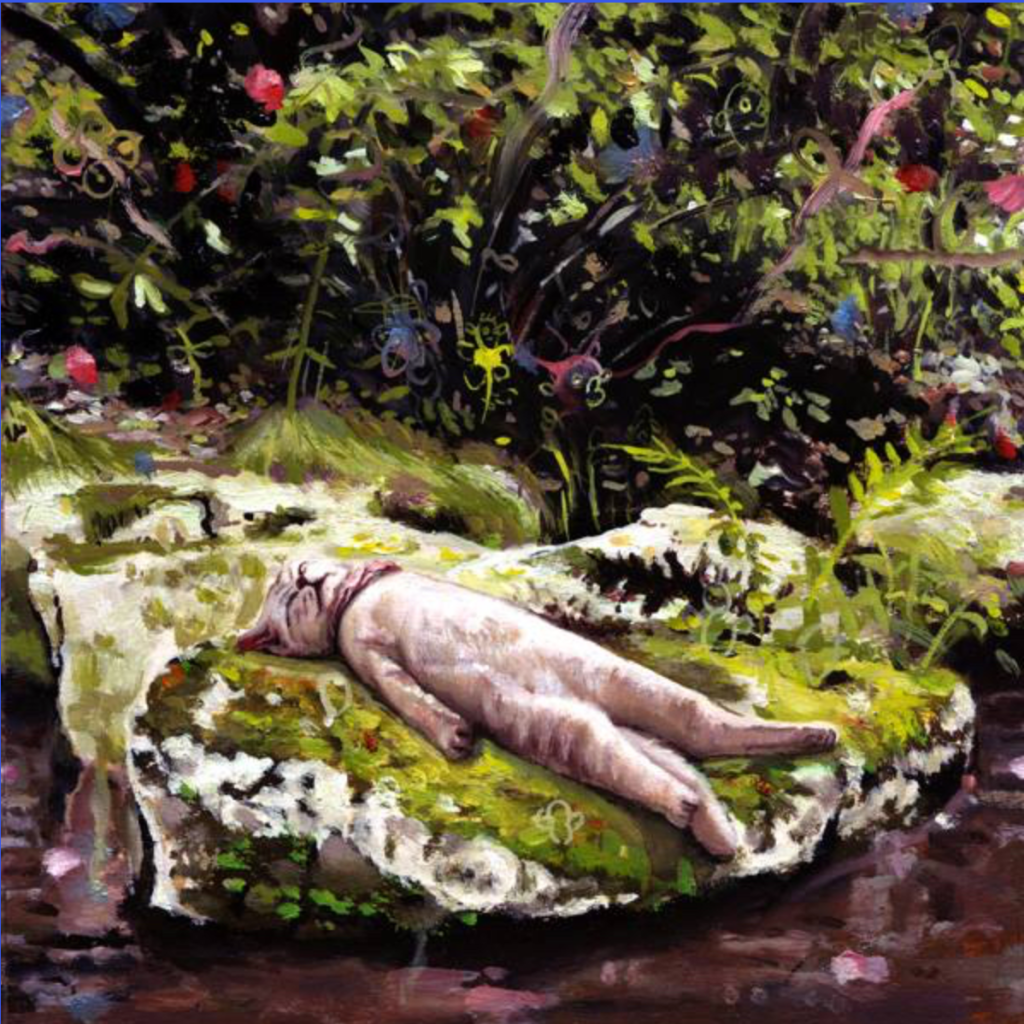
The cats run the city below the city, and there is nothing we can do to stop them.
“I call to order the weak and the strong; everyone has their place. Some of us thin and some of us fat, all are fit to run the race.” Garrin’s voice was loud: a little too loud, to be honest. It rose into the echoing chambers of the 27th District of the sewer line and fell flat with self-importance, but also boredom. Garrin was wry and dry and not at all shy, which is why he was elected to the position of Mayor.
Their voices and fur fill the underground roads. If you don’t believe me, just ask them yourself.
Camille, a mostly white cat, lay on the recently swept floor and licked her right paw. “Garrin, I need to be given my daily task now because I have to be home early this evening. One of the humans I live with keeps feeding my kittens milk, which is giving them diarrhea, so I want to be home in time to feed them myself.”
“I know what you mean,” said Fluffy McHairball (a name given to her by a female human with no imagination at all). Fluffy continued, “My kids are growing up without me, Garrin. You’re giving us too much to do.”
Garrin laughed out of the corner of his mouth as his tail wagged back and forth, giving away his annoyance. “Ladies, please. I can announce the daily tasks with speed and efficiency as soon as you stop complaining.”
Camille did not appreciate Garrin’s belittling tone. She lowered her ears, looked away, and wrapped her tail around herself. “Spoken like a man whose kittens are grown,” she whispered. The other women around her chuckled and rolled their eyes.
Ignoring Camille and the attention she drew, Garrin began to announce the daily tasks to the cats under his charge, in alphabetical order, of course.
“Anthony, I need you to target the garbage bins outside the seafood restaurants today. As we are all aware, I had to fire Catpernicus last week because his was the seafood beat and he was woefully lazy, thus, the embarrassing shortage of seafood in our storage bins.” Anthony stood like a soldier, ready and willing to carry out his newly given orders.
“Yes, sir,” said the young Anthony, whose voice creaked with puberty when he spoke.
“Bartholomew,” Garrin continued, “you’ve done well on your rounds as of late, so I am promoting you to the Starbucks run. We need you to carry as many of the cup sleeves back as possible because, let’s be honest, they are fun to play with and they work well as portable scratchers.”
“Garrin, you’ve got to be joking!” interrupted Fluffy. “The humans may not mind depleting the forests for such waste, but we do not need to be a part of the madness by collecting their bad choices.”
Garrin’s tail began again to wag unconsciously with annoyance. “Fluffy, please. If you are ever mayor (which I doubt), you can make the decisions. As you know, we have brought your grievance to the Board of Governors, and they have settled the issue. The cup sleeves are useful to us, and we are not the ones cutting down the trees. Can I please continue so you can all begin and end your day in a timely manner?”
Fluffy yawned in disgust and then licked herself in spite.
Feeling the weight of their insubordination, Garrin listed the rest of the daily tasks in quick succession and then ended their meeting with the familiar chant: “Go forth into the streets, the weak and the strong, everyone has their place. Some of us thin and some of us fat, all are fit to run the race.”
The young cats exited the tunnels with fervor, and the older cats sauntered into the shadows with their tails pointing high in the air, in Garrin’s general direction.
Did you think we were the only ones who daily race about like ants? I hope you will accept that sometimes you are wrong.
Camille’s eyes squinted as she climbed into the sunshine. The day was warm, and the sky was bright blue, the way it often is when spring blankets the earth. She liked the way the warmth of the sun sank into her coat and how the steamy cement of the street felt under her paws.
“Climb the highest branch of the highest tree and loudly cry,” she repeated her daily task into the air around her. “How embarrassing,” she said to herself. “And I am sure to break a claw.”
Camille’s task was the most loathed of the daily tasks, more of a monthly task really, but someone had to do it. Today it was her turn. The objective of the task was simple: it served as a test of the emergency services at their disposal. “This is only a test,” Garrin’s instructions replayed in her head.
It would be horrible if one of the kittens ever jumped onto a tree and ran to the top only to find that the local Fire Department had silently decided they would no longer be saving furry, four-legged babies from the highest branches. So today, Camille was charged with the job of testing their emergency system. “For the children,” she reminded herself.
As she trotted up and down the streets, through human legs covered with denim, under long cotton dresses that smelled like perfume, and around strollers filled with crying babies, Camille looked for the highest tree.
“Hi, Camille,” said Rupert, an overweight English Bulldog, as she walked along her path.
Camille answered with her ears held high, “Hi there, Rupert. Nice collar. Is it new?”
“Ah, Camille, that is what I love about you. You’re so observant. And nice to observe, if you know what I mean. If only we were the same species. If you know what I mean.”
She knew what he meant.
“You’re a charmer, Rupert! Have a nice day.”
Rupert passed her and then turned to watch her as she sauntered away.
Moments after she passed Rupert, Camille spotted a tree that towered above most others along the sidewalks within her district. It stood across the street near one of the many Starbucks along this road, and she watched for a moment as Bartholomew pranced away from the garbage can outside the door. He was carrying three cup sleeves between his teeth, and crumbs of a scone fell from the sides of his mouth. “Garrin will be so pleased,” she thought to herself.
After looking both ways, which is the number one rule in their employee handbook called Roadkill: A Manual of Safety and Instruction, Camille headed toward the tree.
Camille sat at the base of the tree and looked up. She closed her eyes for a moment and enjoyed the breeze that blew past her nose in the shade of the leaves. She could hear the sounds of the city street, the honking cars, the women clicking about in their high heels, and the men talking to ghosts on their Bluetooth devices, and she swayed to the rhythm of the cacophony. She could smell the bread newly baked in the bakery and the hint of ground coffee wafting onto the sidewalk from inside the Starbucks. Camille took in a deep breath through her nose and released it out through her mouth, a moment of meditation and being present.
It is good to pause and enjoy the moment.
Camille stretched out her two front paws and stretched deeply into her back paws before calmly and aptly climbing the highest tree. She had done this many times before. Once she reached the top, she lifted her voice even higher. “Meow!” she called. And then again. And again. Camille’s body was mostly hidden by the network of branches and leaves surrounding her, which gave her the courage to sing with volume and flair. To be honest, she had a great singing voice.
Suddenly, a shriek filled the air, breaking into the cacophony of sound on the city streets, and the sunlight was joined by hues of red and blue. The cars stopped honking, the women stopped clicking, and the men exchanged their long sentences for pleas to “wait” and “hold on.” The fire truck came screaming down the road, and Camille felt proud of her performance among the leaves that danced around her.
Within a matter of minutes, a particularly handsome fireman was lowering Camille from the tree and placing her paws gently on the warm sidewalk. Sounds of applause filled the air like a symphony conducted for a hero. The fireman blushed, Camille rubbed a “thank you” against his leg, and both trotted off in separate directions, pleased with the jobs they had done.
We all feel proud to have done our jobs well. Oh, did you think it was only you?
Her daily task completed, Camille felt free and content. She thought of strolling home, but realizing dinner time was still hours away, she made her way down a side street that led to the park.
A grassy knoll filled with light saw Camille walking his way, and he called for her to spread out atop his softness.
Nature speaks its desires and enjoys the companionship of those who listen. If you listen to it, you will know what I mean.
Camille lay in the center of the grassy knoll, careful not to dip her tail into the water below, and closed her eyes. She rolled her head back and forth to enjoy the shades of orange and yellow and red frolicking behind her eyelids. She could feel the heat of the ground on her back and the heat of sun on her stomach. She breathed in through her nose and released through her mouth, in and out, in and out, until her consciousness slipped into dreaming.
As she slept, the world around Camille continued to huff and to puff, like a train on a track with a destination to reach. Men with briefcases moved up and down the streets like ants, all in lines, moving this way and that. Scouts sent forth from their secret dwellings, with secrets at their sides and secrets in their minds.
The story that follows is told in Holocaust survivor and Mengele Twin Eva Mozes Kor’s voice. This is a story she shared with me as we traveled together from Kraków to Oświęcim, the Polish town where Auschwitz was built. Along the way, I listened as she recounted her journey back to Auschwitz for the 50th anniversary of its liberation. It was a moment in history few people remember, yet one that reveals the depth of her courage, the radical nature of her forgiveness, and the unwavering strength with which she bore witness to the truth.
When Eva told me this story, I could hear in her voice the weight of the moment; the way history and memory collided as she stepped back into Auschwitz, not as a prisoner, but as a witness. She had spent decades making sure the world never forgot what happened there, but on that day, she had something different to say.
Marking 50 Years Since Liberation
On January 27, 1995, the world gathered at Auschwitz to mark the 50th anniversary of its liberation.
Leaders from across the globe stood in front of the infamous barbed wire fences and crumbling barracks, delivering solemn speeches about the horrors of the past in tones that varied from hushed to bellowing. A thread of solemnity wove through the crowd, pulling us into one another like a tightening rope around our waists. Once captive, now captured by the stories being retold.
Holocaust survivors—our numbers dwindling—listened as our memories were etched into the cold Oświęcim air. One man’s narrative is another man’s memory, which is to say that when I hear someone else recount what has been on endless replay in my mind for decades, I often feel as though I am watching my own past from the outside. Even as we stood shoulder to shoulder, bound by this shared history, our experiences were never the same. Auschwitz was a microcosm of the world. A place where suffering was universal, yet deeply individual.
There were ceremonies, memorials, and moments of silence. Each event lined up like dominoes, one after another, predictably falling in order. But what I had planned for the day was outside anyone’s expectations. I was the lone domino, waiting to begin a new movement altogether.
I had come back to Auschwitz this time not just as a survivor, but as a witness. I was standing beside a man who had once served the very system that tried to erase me. Dr. Hans Münch, a former Nazi doctor who had worked at the camp, had agreed to return with me, not to justify or deny, but to publicly confirm the existence and operation of the gas chambers.
It was a moment of historical significance; a Nazi doctor and a survivor standing together.
Not as enemies, but as two people willing to confront the truth.
And yet, as it would turn out, almost no one wanted to hear it.
A Historic Day at Auschwitz and Birkenau
On this anniversary, the official ceremonies took place at Auschwitz I, where German President Roman Herzog, Polish President Lech Wałęsa, and Holocaust survivor Elie Wiesel stood before the infamous “Arbeit Macht Frei” gate. They spoke of memory and responsibility, of the scars left on generations and the duty to remember. Their words did not merely recount the past—they pressed upon the present, urging the world to acknowledge its capacity for both devastation and conscience, and to ensure that such horrors never happen again.
Commemoration stretched beyond the main camp. Survivors also returned to Birkenau (Auschwitz II), the vast extermination site where nearly a million Jews were murdered. They walked the long, desolate paths between the barracks, stood before the ruins of the gas chambers, and faced the remnants of the crematoria—structures the Nazis had tried to destroy in an attempt to erase evidence of their crimes. Yet the absence of intact buildings did nothing to lessen the presence of those who had perished there.
For many survivors, this was more than a visit to a memorial; it was a return to the last place their parents, siblings, and children had drawn breath. They stood where their families had vanished into smoke, stepping into the hollowness of birthdays never celebrated, anniversaries never reached, and futures that had been stolen before they had a chance to unfold. Some whispered names into the air, speaking to their loved ones who had no graves, only this earth—this soil heavy with the petrified ash and unending goodbyes.
Birkenau is where I spent most of my time as a prisoner in the barracks set apart for Mengele Twins.
As I listened to the speeches, I respected the calls to remembrance and responsibility. But I was also remembering something else.
Fifty years earlier, I had sensed a shift in the camp. There weren’t as many Nazi soldiers around. Some of the guard towers stood empty for hours at a time. More planes flew overhead. The atmosphere felt different, and for the first time in years, I let myself wonder if something was about to change.
That flickering hope had finally ignited the moment I saw the Soviet soldiers come through the gates.
They were big men with kind faces, their shock evident as they took in the horrors around them. For so long, every uniform had meant danger, every stranger had been a threat. But then—of all things—they handed us chocolate, cookies, and hugs. They treated us not as prisoners but as children. Like human beings. And in that moment, for the first time in years, I let myself believe that I was safe. Or at least rescued.
Fifty years later, I was back. Of my own choosing. With a Nazi doctor.
Life certainly is surprising.
Who Was Dr. Hans Münch?
Dr. Hans Münch was one of the very few Nazi doctors at Auschwitz who refused to participate in mass murder, which is a distinction that set him apart but did not absolve him from the system he served.
Unlike Dr. Josef Mengele, who conducted horrific experiments on children—including myself and my twin sister, Miriam—Münch refused to take part in selections at the gas chambers. Instead, he focused on medical research and was known to falsify documents to help prisoners avoid execution.
After the war, he stood among other SS doctors at the Dachau Trials in 1947, facing accusations of war crimes. He was the only Nazi physician acquitted. Survivors had testified on his behalf, describing how he had, in small but deliberate ways, tried to save lives.
When I first met Dr. Münch, I did not know what to expect. I knew the facts, including his acquittal, and the testimonies in his defense. But I also knew this: he had still worn the uniform. He had still walked free while so many had perished.
I asked him a single question.
“Do you remember what happened in the gas chambers at Auschwitz?”
He did not hesitate.
“It’s the nightmare I live with every day of my life.”
In that moment, something shifted.
Until then, I had never imagined that a Nazi doctor could carry the weight of Auschwitz. That one of them could feel remorse—not performative, not evasive, but real. And, most importantly, he did not deny it.
He was not rewriting history. He was not justifying his actions. He was acknowledging the truth.
And that was why I asked him to sign a statement confirming the existence of the gas chambers.
He agreed.
A Story No One Wanted to Hear
I spent the day walking through the camp with my group, handing out leaflets about our press conference.
A survivor of Auschwitz had forgiven a Nazi. A Nazi was speaking openly about the crimes of his own regime. This should have been important.
And yet, as I passed out the leaflets, people turned away.
Some refused to meet my eyes. Others shook their heads, waved me off, hurried past. A few took the paper from my hands but crumpled it before they had even read the words. It was as if they couldn’t bear to hold it, as if touching the idea itself was too much.
They didn’t want to hear about forgiveness.
I turned to my group and said, “If I had shot or killed a Nazi, the entire world press would want to talk to me.”
And I knew I was right.
The world is far more comfortable with stories of revenge and punishment than it is with stories of forgiveness and reconciliation.
The Press Didn’t Show Up
That evening, we held our press conference–a once-in-a-lifetime event.
There were hundreds of journalists at Auschwitz for the 50th anniversary. Cameras flashed. Reporters scribbled into their notepads. They had spent the day capturing solemn reflections, moments of silence, and speeches delivered from podiums draped in flags. They had written their headlines before they even arrived.
But what we were about to share didn’t fit the story they had come to tell.
Only six showed up.
A reporter from an Israeli newspaper. A German magazine journalist. TV reporters from France, Sweden, Israel, and the Netherlands.
That was it.
I wasn’t expecting a standing ovation. I wasn’t expecting a Nobel Peace Prize. But I had hoped for a fair discussion.
Instead, the questions felt like tiny knives.
They didn’t ask Dr. Münch about what he had witnessed. They didn’t ask about his knowledge of the gas chambers. They didn’t ask why he had agreed to stand beside me and bear witness.
Instead, they turned on me.
They questioned my decision to meet with him. They asked how he had avoided prosecution, ignoring the fact that he had been tried three times and saved by the testimony of thirty Auschwitz inmates.
I had expected the press to be interested in his testimony.
I had hoped they would want to document the facts he had come to share.
Instead, all they wanted to know was how he had escaped punishment.
I left feeling drained, disappointed, and frustrated.
But what I didn’t know was that the next day, the moment that mattered most was still waiting for me.
A Candle No One Expected
The next day, on January 28, we gathered at the Auschwitz I crematorium to light candles in memory of those who were killed there. If you’ve never been to this place, there are some intangible details that defy anything photography or video could capture. And I don’t think that’s only because walking through the small entry roughly cut out of the cement brings to mind everything you already know about what happened here. The crematorium isn’t heavy with memories alone. It isn’t a place where our minds lead the way with well established ideas and theories on how to process tragedy. Instead, it’s a place where the atmosphere takes over and your mind bows itself in reverance to that which already exists there.
Speaking as Jill now: the first time I laid eyes on the crematorium at Auschwitz I hestitated. This moment occurred right after the docent giving us a tour of the camp stood below the gallows at which Rudolph Hoess was hanged for his crimes against humanity. Looking up at where a noose was once tied, I squinted into the sun, shielded my eyes with my hands, and I imagined the moment. Oddly enough, it wasn’t satisfying at all. Almost as if the docent heard my thoughts, he said, “Though he was killed here, we have to ask ourselves if justice has been achieved. What is justice? Does it exist in this world? One man’s life for 6 million lives? What exactly happened at this gallow?” Exactly. What happened here? Whatever it was, it wasn’t justice. This was the moment I began to learn that justice doesn’t really exist in this world. Though I fully believe justice comes in the next.
It was with those thoughts tumbling through my brain that I saw the crematorium. And hesitated. Moments later, I was standing on the very ground from which an army of souls traded their earthly comfort, dreams, relationships, trust, and breath for a new existence that flew them far above the screams and into a reality void of the suffocating presence in this place.
Now back to Eva’s re-telling.
The air was sharp, the kind of cold that tightened in your chest. Each of us had been given a candle. One by one, we stepped forward, shielding the small flames from the wind as we placed them near the ovens.
I was standing in silence, watching the flickering light, when I heard Dr. Münch’s voice behind me.
“Eva,” he said, his tone almost hesitant. “Everyone has received a candle to light. How come I did not receive one?”
I turned to face him, surprised.
“I didn’t know you wanted one,” I said honestly. “But if you do, I will be glad to give you one.”
I handed him a candle.
And then, without hesitation, he walked to the ovens and lit it.
The moment was already heavy, but then, in a voice that stopped us all in our tracks, he said:
“I light this candle in the memory of all the people I watched die in the gas chambers.”
The air shifted.
For a moment, no one spoke.
There was no script for this. No press cameras rolling. No speeches prepared. No audience waiting for a perfectly crafted moment.
Just a former Nazi doctor standing before the ruins of the crematorium, bearing witness to the truth—openly, voluntarily, without hesitation.
And in that instant, something happened that could never be undone.
In that simple act, he had spoken the words that history demanded to be heard.
Bearing Witness
For fifty years, survivors had pleaded for the world to believe what had happened within these barbed-wire fences.
For decades, deniers had attempted to rewrite history, erasing the voices of the murdered.
But here stood a man who had once been inside the system, admitting it for all the world to hear.
And yet, what moved me most was not just that he had spoken the truth.
It was that he had done it there.
On that soil.
The very ground where I had once stood as a child, stripped of everything—my home, my parents, my dignity, my name.
The same ground where I had fought to stay alive, where the ashes of those who did not survive still clung to the earth beneath our feet.
I had come back to Auschwitz to prove something.
To prove that the Nazis had not won.
To prove that despite everything—despite the unimaginable suffering—I was still here.
I had reclaimed my life.
I had reclaimed my power.
And in that moment, I saw that Dr. Münch had done something similar.
He had stepped forward—not as a prisoner, but as a man once protected by the very system that had tried to destroy me.
He had been part of it, shielded by its power.
And yet, standing before the crematorium, he did not hide.
He did not justify.
He did not excuse.
He acknowledged.
He bore witness.
He stood in the place where so many had perished, and instead of cowering behind silence, he chose to speak.
Above is a photo of Gas Chamber #2 that I took when I was at Birkenau in 2015 for the 70th anniversary of the liberation of the death camp.
Featured Image photo credit: I took that photo during my first visit to Birkenau with Eva in the summer of 2013.
This semester, our incoming group of budding communicators is particularly cantankerous, in the best possible way. In twenty years of teaching, I’ve never been challenged more on the details of what I teach. Many professors lament this sort of thing, but for me, it’s pure fun. I love a good debate and always welcome the chance to sharpen my own focus as a teacher and a communicator.
Over the past few weeks, we’ve been exploring argumentation, debate, and persuasion. One of our liveliest discussions centered on a deceptively simple question: What is the difference between persuasion and manipulation?
This essay is my answer.
The Human Impulse to Persuade
Every one of us has tried, at some point, to change another person’s mind. My first experiments with persuasion began on the front lawn of my grandparents’ house with my cousin, who was two years older than me. Everything was fair game to become a competition. “I’ll race you to the car!” “I can go higher on the swing than you can!”
When speed and strength were involved, he almost always won. So I learned early to change tactics. Once he could outrun me, I turned to logic: “Since I’m two years younger than you, I should get a ten-second head start.” This rarely worked, but I admired the sound of my own reasoning. When our contests moved to an even playing field—say, over the last red popsicle—I shifted to rhetorical flair. If he grabbed red and I got orange, I would praise my orange with the conviction of a first-grade philosopher: “Orange popsicles taste sweeter, juicier, and more like the real fruit. Red popsicles don’t taste like real cherries.” What I really wanted, of course, was for him to reconsider, to see orange as the better flavor and trade with me. Sometimes it worked. Sometimes it didn’t.
Even then, I was learning something that Aristotle would later help me understand more clearly: persuasion is not a learned trick but a human instinct. From childhood onward, we use language to shape the world to our liking, to win an argument, to soften a disagreement, or to make another person see as we see. Persuasion begins as play, but it quickly becomes the architecture of human connection.
Persuasion is, at its heart, an effort to reach beyond oneself, to connect what we know with what another might come to understand. It takes shape in the meeting of reason and desire, where logic provides structure and emotion gives movement. When both work together, persuasion becomes not a contest of wills but a bridge of understanding.
Yet persuasion is never a neutral act. Every effort to influence another person carries both risk and possibility: the risk of distortion and the possibility of connection. To persuade well is not to overpower but to invite, not to dominate but to guide. Within that same impulse lies a shadow side, which is the temptation to control rather than to clarify, or engineer an agreement rather than earn it. The real difference between argumentation and manipulation begins long before the words are spoken. It begins with intent.
Communication scholars have long explored how influence operates, how ideas move from one person or group to another, and how that movement may shift from open persuasion into covert control.
Long before communication became a field of study, persuasion occupied a central place in public life. In ancient Greece, it was regarded as essential to citizenship, the means by which ideas could be tested, debated, and defended in the public square. In Rhetoric, Aristotle defined rhetoric as “the faculty of observing in any given case the available means of persuasion.” Through this definition, he presented persuasion as a disciplined process of inquiry, a practice grounded in observation and judgment rather than performance. It was, at its core, an intellectual art that sought to uncover the most fitting means of conveying truth to an audience capable of reason.
Embedded within this framework is an assumption that continues to shape the study of communication: persuasion, when practiced ethically, engages the whole person.For Aristotle, effective persuasion balanced logos, pathos, and ethos—reason, emotion, and character—so that intellect and feeling could work together toward understanding. Ethical persuasion, therefore, requires an awareness of the audience’s capacity for discernment and a respect for the autonomy of that discernment. To persuade is not to impose our will upon another but to participate in a shared act of reasoning.
Modern communication theory continues to explore this relationship between persuasion and ethics. Whether in classrooms, politics, or media, the complexity of contemporary discourse often obscures the distinction between persuasion and manipulation. The methods of influence have evolved, yet the moral question remains: how can a communicator move others toward action without distorting their capacity for choice?
Alan H. Monroe’s Motivated Sequence, developed at Purdue University in the 1930s, offers one of the most enduring frameworks for organizing persuasive discourse. Built on principles of human reasoning and motivation, the sequence follows five stages—Attention, Need, Satisfaction, Visualization, and Action—each corresponding to a psychological movement in the listener. The communicator first gains attention by presenting something vivid, relevant, or surprising enough to make the audience listen. The second step, need, identifies a problem or condition that requires change, prompting the audience to recognize its significance. In satisfaction, the speaker proposes a clear and reasonable solution to that need. Visualization invites the audience to imagine the outcome of adopting or rejecting the proposed solution, giving emotional dimension to the argument. Finally, action calls for a specific response that translates conviction into behavior.
Monroe’s structure endures because it mirrors the natural progression of human decision-making: perception, comprehension, evaluation, and response. Each stage engages both logic and emotion, appealing simultaneously to logos and pathos, while the speaker’s credibility, or ethos, sustains trust throughout the process. When practiced with integrity, the sequence creates a dialogue rather than a performance, guiding speaker and listener toward shared understanding. It treats persuasion as a cooperative act in which reasoning and imagination work together to illuminate truth and inspire responsible choice.
Manipulation breaks the dialogue. It turns communication into control, replacing mutual understanding with managed response. The difference between the two lies in motive. Argumentation seeks truth through participation, trusting that others can reason freely. Manipulation, by contrast, treats truth as secondary to outcome. It uses fragments of truth to steer perception toward a predetermined goal.
Understanding how argumentation fosters participation requires a closer look at how Monroe’s model translates the ethics of persuasion into structure.
Section I: Persuasion as Co-Authorship — Monroe’s Motivated Sequence
Monroe’s Motivated Sequence demonstrates that persuasion, at its best, is not an act of domination but of collaboration. As noted above, its five stages — Attention, Need, Satisfaction, Visualization, and Action — form more than a sequence of rhetorical moves; they map the cognitive and emotional rhythm through which conviction takes shape. Each step invites the audience to participate in discovery. Attention asks the listener to notice. Need prompts recognition of a problem that requires collective reasoning. Satisfaction proposes a solution, but it is the listener’s agreement that grants it coherence. Visualization engages imagination, allowing both speaker and audience to see the consequences of choice. Action completes the process, translating understanding into movement.
This progression reveals persuasion as an act of shared authorship. Meaning is not imposed but constructed in the space between communicator and audience. Monroe emphasized that persuasion “must be based upon a sincere desire to help the audience,” grounding the entire model in ethical intent (Principles and Types of Speech, 1935). The communicator’s purpose is to awaken reflection, not to engineer consent. When used with integrity, Monroe’s framework affirms the listener’s agency: it assumes that choice, not compliance, is the ultimate measure of success.
Manipulation, however, imitates this process while emptying it of reciprocity. It copies the outward form of persuasion — capturing attention, naming a need, proposing a solution — but removes the listener’s genuine role in reasoning. To clarify this distinction:
It imitates structure but removes exchange. Manipulation retains the stages of persuasion but strips them of dialogue. The communicator determines the desired outcome and designs the message to lead the audience there without true participation.
It fabricates or inflates need. Ethical persuasion identifies real problems that can be solved through evidence and reasoning; manipulation often creates or exaggerates problems to generate urgency or fear.
It converts reasoning into reaction. By heightening consequences and emotional charge, manipulation pressures the listener to respond quickly rather than reflect critically.
It transforms dialogue into design. What was once a conversation becomes a calculated system of cues meant to elicit compliance. The audience ceases to be a co-author and becomes a variable in an engineered outcome.
It achieves effect without understanding. Manipulation may look successful because it produces agreement or action, yet its success is hollow. True persuasion results in shared comprehension; manipulation stops at behavior.
In each of these distortions, manipulation replaces conversation with control. What appears persuasive achieves only reaction, not understanding.
This ethical structure finds its counterpart in how messages are processed. The next major framework, developed by Richard E. Petty and John T. Cacioppo, explores the psychology of reception, which is how audiences move between reflection and reaction.
Section II: The Elaboration Likelihood Model — Depth vs. Deception
Richard E. Petty and John T. Cacioppo’s Elaboration Likelihood Model of Persuasion (1986) provides one of the clearest distinctions between ethical argumentation and manipulation. The model identifies two routes to persuasion: the central route, which involves careful and thoughtful consideration of arguments, and the peripheral route, which relies on superficial cues such as attractiveness, status, or emotional appeal.
Argumentation engages the central route. It requires the audience to evaluate claims, assess evidence, and integrate the message into their existing framework of understanding. Manipulation, conversely, depends on the peripheral route, using distraction and affect to short-circuit deliberation. Political slogans, viral advertising, and disinformation campaigns often thrive in this space, much like the rapid, emotionally charged content cycles of TikTok, where engagement is driven less by reflection than by immediacy of response. Such environments reward reaction over reasoning, conditioning audiences to feel before they think.
Petty and Cacioppo note that when motivation andability to process information are high, persuasion through the central route produces “more enduring attitude change” (Communication and Persuasion, 1986). Manipulative messages may succeed in the short term, but they erode trust over time and weaken the habits of reflection on which a democratic society depends. The communicator’s ethical duty, therefore, is to foster conditions where central processing can occur; to create clarity rather than confusion and engagement rather than reflex.
Case Study: Depth vs. Surface in Persuasion
A marketing study conducted in the 2010s applied the Elaboration Likelihood Model to a national outdoor-gear campaign that ran two versions of the same advertisement. The first appeared in specialist magazines devoted to hiking and mountaineering. It featured detailed product specifications, expert testimonials, and comparisons grounded in evidence—a clear appeal to the central route of persuasion. The second appeared in general-interest magazines, replacing technical content with striking imagery and celebrity endorsement, relying instead on the peripheral route.
The results revealed a familiar but instructive pattern. Readers of the specialist publications, who were highly motivated and able to evaluate the arguments, demonstrated deeper and longer-lasting attitude change. They could articulate why they preferred the product and were more likely to repurchase it later. Readers of the general-interest magazines responded quickly to the aesthetic and emotional appeal, but their enthusiasm faded once the novelty passed.
This contrast captures the heart of Petty and Cacioppo’s model: the central route yields durable conviction because it engages thought, whereas the peripheral route yields temporary compliance because it stimulates reaction. In an attention economy dominated by visual saturation and emotional immediacy, the study reminds communicators that persuasion built on understanding endures longer than persuasion built on impulse.
Even when persuasion engages reason, it must still contend with belief. No argument reaches a neutral audience; every listener carries a network of convictions, loyalties, and prior judgments that shape how information is received. The next framework, Social Judgment Theory, explains this terrain by examining how attitudes form zones of acceptance and rejection, and how communicators must navigate them to foster genuine understanding.
Section III: Social Judgment Theory — The Battleground of Belief
Social Judgment Theory, developed by Muzafer Sherif and Carl Hovland in the 1960s, offers one of the most psychologically elegant explanations for how persuasion interacts with belief. It begins with a simple observation: people do not approach new ideas as blank slates. Every listener carries an existing position—an anchor—against which all messages are measured. Around that anchor lie three zones of response: a latitude of acceptance, where ideas feel familiar or reasonable; a latitude of rejection, where they feel threatening or extreme; and a latitude of noncommitment, where uncertainty allows openness to change.
Persuasion succeeds when a message lands within or near the listener’s latitude of acceptance, inviting reflection and gradual movement toward a new position. When a message falls inside the latitude of rejection, it provokes resistance instead. Listeners perceive the idea as more extreme than it is—a contrast effect—and often shift their anchor even farther away, strengthening their opposition. This reaction, known as the boomerang effect, reveals that attempts to force agreement can harden belief rather than soften it.
For example, when debates arise over faith and science, persuasion often fails because it ignores these psychological zones. A scientist who declares, “Religious belief is incompatible with rational thought,” instantly activates the listener’s latitude of rejection among believers. The message feels not educational but contemptuous. The same scientist might instead begin, “Both faith and science seek truth, though they ask different questions.” That framing shifts the discussion toward the latitude of acceptance, creating cognitive room for genuine dialogue.
Ethical persuasion recognizes these boundaries. It seeks proximity, not provocation. The communicator’s task is not to overthrow conviction but to build a bridge from what is known to what is possible. Manipulation, by contrast, weaponizes these boundaries. It deliberately aims for the latitude of rejection, exploiting anger, fear, and identity to provoke outrage. The result may look persuasive—crowds mobilized, posts shared, hashtags trending—but what spreads is emotion, not understanding.
The implications for modern discourse are profound. On social media, especially within algorithm-driven platforms like TikTok or X, messages that trigger contrast and boomerang effects are rewarded with visibility. Outrage becomes currency. Ethical communicators must therefore resist the temptation to escalate in tone or oversimplify in content. The goal is not to push harder but to reach closer and to frame ideas within the hearer’s capacity for reason and reflection.
Social Judgment Theory expands what Monroe’s Motivated Sequence and the Elaboration Likelihood Model begin to show: persuasion is most powerful when it honors belief rather than assaults it. To communicate ethically is to meet others where they are, trusting that understanding, not outrage, is the ground on which lasting change is built.
Section IV: The Ethics of Intention and Transparency
If the preceding theories reveal how persuasion functions, the question of why we persuade leads us into ethics. The moral center of communication lies not in form or method but in motive. Argumentation and manipulation may share the same tools—logic, emotion, and credibility—but they diverge in intent.
Argumentation is transparent. It seeks to clarify truth, even at the risk of disagreement. Manipulation is opaque. It obscures motive to secure compliance. The ethical communicator invites listeners into the reasoning process, granting them the freedom to evaluate and, if necessary, to refuse. The manipulator withholds context, conceals purpose, and treats the listener as a means to an end.
Immanuel Kant’s moral philosophy captures this distinction: one must “act in such a way that you treat humanity… always at the same time as an end and never merely as a means.” Ethical persuasion honors the audience as capable of judgment. It respects their agency, trusts their discernment, and relies on the strength of truth rather than the fragility of control. Manipulation, by contrast, views listeners as instruments to be directed, data points to be optimized, or markets to be captured.
The most revealing marker of manipulation is concealment. Whether through selective framing, emotional overload, or false urgency, manipulation hides its motive. Argumentation does the opposite: it brings motive to light. To argue well is to trust that truth, once revealed, can persuade on its own merits.
Persuasion, then, is not merely a skill but a moral responsibility. To communicate ethically is to honor what makes us human: the ability to reason, to feel, and to choose freely between them. In an age saturated with messages competing for attention and allegiance, the task of the communicator is not only to be persuasive but to be honest. Language remains our most powerful instrument. It can heal, instruct, and inspire, but only when used with integrity can it fulfill its highest purpose: not to win, but to awaken.
In the end, the difference between persuasion and manipulation may not be so different from that childhood debate over the orange and red popsicles. I wanted my cousin to see things my way, but the best arguments were never the loudest; they were the ones that left room for him to decide for himself. Real persuasion still works that way. It trusts that others are capable of thought, taste, and choice. Whether we are children trading popsicles or adults trading ideas, the goal is the same: to reach understanding, not to win.
The sun in parting crowns the west with flame,
A fleeting splendor yielded to the shade;
What morning gilded, dusk resumes in claim
And proves how brief the glory light hath made.

The season wanes, yet keeps its ancient round,
Its end enscrolled where first its course was writ;
What once lay lost in silence shall be found,
For time recalls what hearts would fain omit.

So doth the soul, when judgment draweth near,
Discern within its close the selfsame strain;
The first sweet note returns, though harsher, clear,
And strikes with weight the mortal breast again.

Each sunset speaks what day could not defend:
The way a thing began holds fast its end.

Jill Szoo Wilson, 10/25
Through slender branches shines the swollen star,
A lantern hung upon this midnight’s crest.
Its argent glow calls shadowed fields afar
To bow in prayer, by silver calm caressed.

The fading canopy, with colors frail,
Lets gilded light slip softly through the air.
Each trembling bough becomes a fragile veil,
That parts to show a vision rich and rare.

The orb ascends with majesty untamed,
While earth beneath lies weary, bare, and still.
Though time shall claim what autumn once had named,
The moon restores the world with tender will.

So beauty dwells where silence weaves its art,
And sows eternal wonder in the heart.

Jill Szoo Wilson, 10/25
I wrote this sonnet after gazing at the October supermoon, its light threading through thinning branches and the fading canopy of fall.
What once was whole is splitting at the seam, With roaring tongues that never find a word. Each stands alone, entranced by their own dream, While fear doth arm the gates with aim absurd.
The bridge between us withers into dust, A chasm wide where voices fade to air. Yet in our hearts still burns this ancient trust— The longing for a hand extending ear.
But how to reach when dread hath drawn the line? When walls are built of pride and weary doubt? We stand as statues, yearning for a sign, Yet know not how to call the silence out.
O break the curse—let all division cease, For love still speaks the only tongue of peace.








 Jill Szoo Wilson