
She sat in the corner of my room
Smoking a cigarette and
Draining
A glass of whiskey and
Draining
Me.

She was the kind of woman
Who let her ashes fall and she
Swept
Them under my rug but I was never
Swept
Away.

She stayed and she stepped
And the ashes dug into the
Ground
Creating a circle of black
Like a sacrifice made to what could not
Be.

I couldn’t make her leave
Even when she didn’t want to
Stay
And when I couldn’t bear to
Stay
Away.

She sang songs too loudly
And wanted applause
But all I could muster
Were halfway smirks
And halfhearted shards of
Me.

“We were happy once,”
She said then she flicked and
Fire
Fell and she kicked the
Fire
Away.

“The flame is hot and the
Light is bright,”
I muttered.
“Don’t flatter yourself
You aren’t the man you used to
Be.”

Wisps of smoke rose between
Her fingers and she
Puffed
And then coughed and then
Puffed
Away.

“The furnace you lit is
Beginning to roll
Like a lake of flames
Licking the shore
And I fear the fire will splash onto
Me.”

She looked at me with
A tone of voice that was
Silent
Like a deaf man wanting to push
Silent
Away.

“I thought you were speaking of
Love but now I see
I am being engulfed
Because I misunderstood.
You should probably leave me
Be.”

I watched as she sat in the corner
Smoking like a cigarette and
Draining
Drops of whiskey to stop the fire, her life
Draining
Away.

When I knew she was gone
The echoes of my heartbeat
Revived
And vibrated against the walls and
Revived
Me.

© Jill Szoo Wilson
Author: Jill Szoo Wilson
I am captivated by beauty, questions that dig to the center of things, and people who tell the truth about the human experience.
What My Students Taught Me This Semester
Christmas treats handed out. Goodbye hugs and handshakes extended. Grades turned in. Another semester in the books.
Moments like this remind me of what it used to feel like to drop a coin into a noisy fountain. Whatever wish I made filled my mind and hand with anticipation, with the kind of energy that moves you forward. Then came the thrust of the arm, the release, the drop, the looking through rippling water. It felt quiet. Like you had accomplished something, but wouldn’t quite know what until much later.
Where do our wishes go? Where will these students go?
Does that make sense?
This was probably my favorite semester in all my decades of teaching in higher education.
Intersections. Semesters are always intersections between me and the students, the students and one another, and the students and themselves. Who they were, who they are, and who they are becoming. But this semester felt electric, alive with points on a map charting lefts and rights, ups and downs, and ins and outs. For better and for worse.
I had students who became homeless and held on. Students who were beginning afresh and letting go. Students who started with little hope and left with direction, and others who learned quietly that school just isn’t for them. There were fights for freedom. Heated arguments about the meaning of courage, good, and knowledge. I bore witness to confusion and courage and strength and joy. Tides in an ocean of relative chaos, and ships that refused to sink.
I am so proud of my students. Every single one of them. And I am humbled by the role I have in their lives to listen, question, encourage, and challenge.
In the final summation, what I realize is that I needed them more this semester than they needed me. Or maybe it was equal. They kept me focused outside of myself, and when I wanted to despair, they met me with laughter, frivolity, complexity, and routine.
This is life. Our classrooms are microcosms of the wider world, and when we can love, negotiate disagreement, have difficult conversations, and still extend hugs and handshakes at the end, we have taken part in some of the most rewarding work this life offers.
I’ll leave you with some of the results from one of our more contentious Socratic question roundtables this semester, What Is Courage:
“Courage is the willingness to make a full, genuine attempt at overcoming an obstacle that presents a physical and/or mental danger.” —B
“The full attempt to overcome a physical and/or mental obstacle with perceived risk.” —A
“An action. Choosing to face an obstacle that presents risk in spite of those risks.” —P
“An act or mentality that allows or enables someone to overcome an obstacle despite the chance of danger or other unfavorable outcomes.” —D
“The mental and moral strength to act despite fear and danger.” —T
“Courage is doing something even when you feel afraid.” —C
“Courage is the act doing something even when you feel fear/danger/risk/ obstacle, whether is physically or mentally challenging even when it costs you something, and even when no one is watching.” —S
“Courage is bearing up under the weight of outward and/or inward threat for the purpose of becoming who you need to be for yourself and others. All for the glory of God.” —J
“I’m not sure, but I know it’s something we do for the greater good or else it’s just self-confidence.” —L
What do you say courage is?
Poem: Refreshment
There are moments when we
must stop
and look
and tend to
the unexpected and
deeply welcomed,
simply because
we live.

A lemonade stand
at the edge of the road,
cardboard sign wavering
between LEMONADE and LEMONAED.
The coins wait in a jar,
oblong ice accepts its fate
as tiny fingers stir
through mostly water.
Engines reconsider.
Appointments learn patience.
Briefcases bloom with splashes of sugar
any bee would envy.

My cat arrives
with the object he loves most.
Not the clean one.
The true one.
He sets it down carefully,
then looks up,
as if to say:
you’ll want to see this.
And I do.
The afternoon brightens,
pleased with itself.
Thoughts wander off
without wearing their shoes.

My eyes squint
in mixed morning light—
the bulb above the kitchen sink
and ribbons of sunrise through open blinds.
Coffee steams.
I smell it before I see it,
and then I do—
steam lifts
just as light
reaches the window.
Waking,
and God,
and refreshment
keep company
without comment.

—Jill Szoo Wilson, 2025
Poem: The Us We Can See
I am stationed at a wooden table
the size of a reasonable thought.
It does not wobble.
This feels like a small mercy
after watching my Americano
sway back and forth on the last.

Here, the Americano steams steadily
as if rehearsing confidence,
dark, uncomplicated,
uninterested in my opinions.

I wear fingerless gloves,
a compromise between dignity and survival.
My knuckles remain unconvinced.

Winter returns again and again
through the green-painted door,
carried on the backs of coats,
slipping in at ankle height,
lingering like someone
who has already said goodbye
but remains.

A woman at the counter
counts her change twice,
the last of her pennies
now a relic of a simpler time
when 1-2-3 meant something more.

A man near the window
keeps turning his cup
until the logo faces forward,
forgetting the face
with every sip,
which ends with a new turn.
A familiar dance, a waltz?
Sip-2-3, sip-2-3.

A woman with wiry white hair
removes a bright turquoise hat,
carefully crocheted,
leaving one thread to dangle
from a curl.
The thread hesitates.
So does she.

Heavy oak chairs keep their positions,
pretending not to notice
who chooses them and why,
practiced at holding
what is briefly certain.

A barista with inked forearms
wipes the same spot again,
loyal to a principle I do not know.

The clock on the wall yawns
while declining comment,
stretching its hands
in a familiar reach,
analog-2-3, sameness-2-3,
predictable without irony.

I lift the white mug,
my fingers watching and ready,
and remember how warmth
asks to be held,
while cold does not.

—Jill Szoo Wilson, 2025
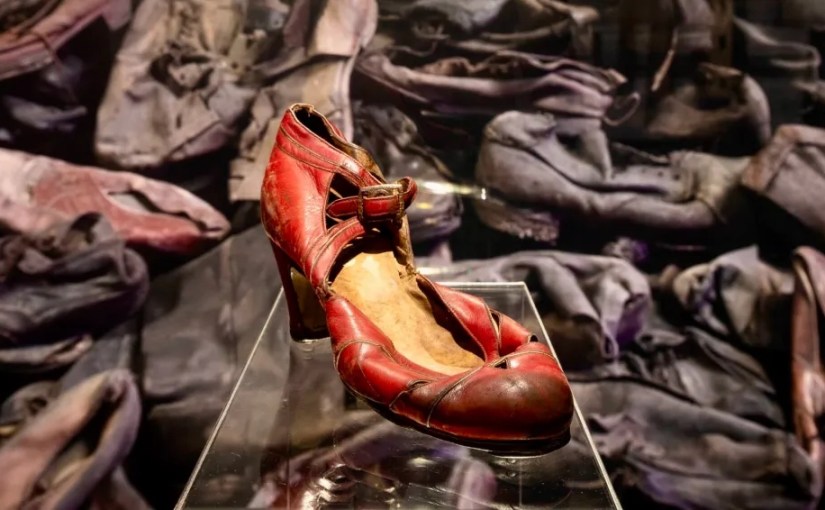
Faithfulness in the Face of Antisemitism
By Jill Szoo Wilson
Author’s Note:
This is not an essay about forgiveness. I have written about Eva Mozes Kor, Holocaust survivor and forgiveness advocate, for years because I deeply respect her message. I honor her legacy here while condemning antisemitic violence without qualification and calling Christians to action in the present moment. Nothing in this piece is meant to soften, spiritualize, or diminish the reality of antisemitism today.
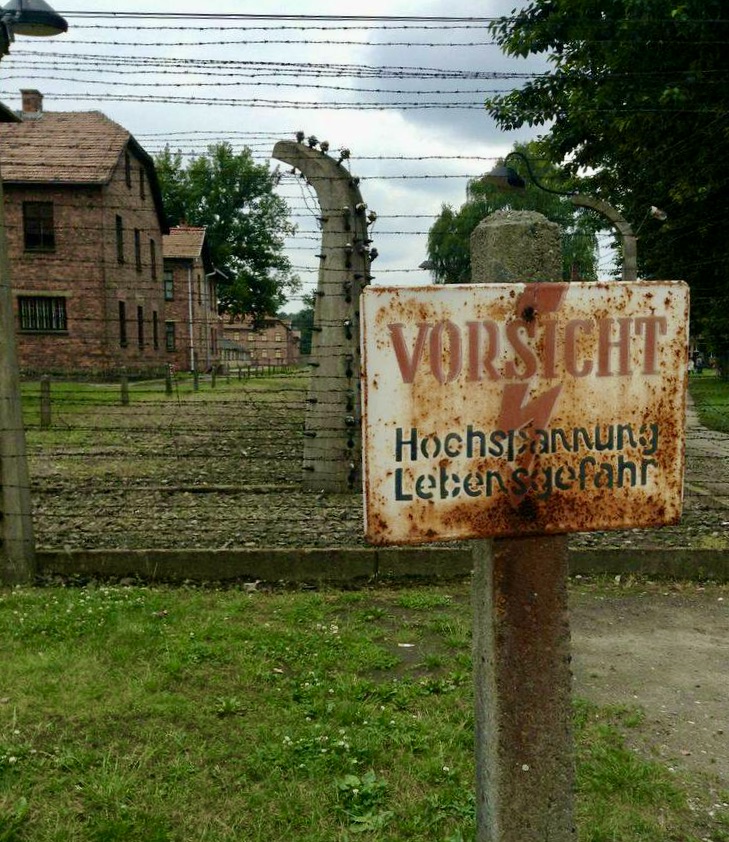
Nearly seventy years after the Holocaust, Eva Mozes Kor still looked at the world and saw a painful truth: antisemitism had not disappeared. The lessons of history, no matter how horrific, were not enough to prevent hatred from resurfacing. As a survivor of Auschwitz and a Mengele Twin, she carried both the burden of memory and the wisdom of experience. She often asked a simple but haunting question: What has changed since Auschwitz?
Eva often spoke about how Adolf Hitler rose to power not as an anomaly, but through a series of orchestrated events designed to achieve a singular goal, the extermination of the Jewish people and the establishment of an Aryan-dominated society. Hitler and his regime promoted the belief in Aryan racial superiority, claiming that Germans of “pure” Nordic descent were destined to rule over other groups they labeled as inferior. These ideas, rooted in eugenics and extreme nationalism, fueled policies that targeted Jews, Romani people, disabled individuals, Slavs, and others deemed unfit for their vision of a racially “pure” society. This ideology was systematically enforced through propaganda, education, and legislation, including the Nuremberg Race Laws of 1935.
The Nuremberg Race Laws consisted of two primary statutes:
The Reich Citizenship Law: This law declared that only individuals of German or related blood were eligible to be Reich citizens, effectively revoking Jews’ rights as citizens. It stated: A Reich citizen is a subject of the state who is of German or related blood, and proves by his conduct that he is willing and fit to faithfully serve the German people and Reich. (Source)
The Law for the Protection of German Blood and German Honor: This law prohibited marriages and extramarital relations between Jews and citizens of German or related blood, aiming to preserve the “purity” of German blood. It also forbade Jews from employing German females under 45 years of age in their households. (Source)
Germany, one of the most advanced and cultured societies of its time, fell under the influence of a leader who manipulated public fears and desires, offering promises of restoration and prosperity in exchange for obedience. Step by step, ordinary citizens became participants in a deadly machine, one that required gradual compromises until they found themselves complicit in atrocities. This transformation is hauntingly explored in the book Ordinary Men, which details how average individuals became executioners not out of inherent evil, but by following orders, rationalizing their actions, and failing to resist the system that consumed them.
Eva witnessed this transformation firsthand and spent decades ensuring people understood how easily it could happen again. She often emphasized that Hitler’s rise was not inevitable, nor was it the result of a single event. It was a gradual process, shaped by economic hardship, propaganda, and the willingness of ordinary people to accept small injustices until they became monstrous realities.
Five Factors That Allowed Hitler to Rise to Power
The Holocaust was not an accident of history. It was the result of a carefully constructed plan, built on a foundation of economic despair, propaganda, and the gradual erosion of moral resistance.
Economic Devastation: Germany faced severe unemployment, with rates soaring to 30 percent in the early 1930s. This economic turmoil created fertile ground for extremist ideologies. (encyclopedia.ushmm.org)
Scapegoating the Jews: The Nazi regime capitalized on existing antisemitic sentiments, blaming Jews for Germany’s economic and social woes and uniting the populace against a common, innocent enemy. (encyclopedia.ushmm.org)
Propaganda and Control: Through relentless propaganda, the Nazis dehumanized Jews, portraying them as subversive and dangerous, which facilitated public acceptance of discriminatory laws and actions. (encyclopedia.ushmm.org)
Apathy and Inaction: Many Germans and international observers remained passive or indifferent as antisemitic policies escalated, allowing hatred to fester unchallenged.
The Allure of Power: Hitler’s strategic political maneuvers, including exploiting democratic processes, enabled him to consolidate power and implement his radical agenda.
These historical conditions are not confined to the past. Alarmingly, antisemitism has seen a resurgence in recent years. A 2024 report highlighted a 340 percent increase in global antisemitic incidents compared to 2022. (timesofisrael.com) Furthermore, a 2025 Anti-Defamation League survey revealed that 46 percent of adults worldwide harbor significant antisemitic beliefs. (adl.org)
Despite comprising a small fraction of the global population, approximately 15 million Jews worldwide, many continue to advocate for oppressed communities, even when it entails personal risk. Eva marveled at this enduring commitment to justice and empathy.
The Ultimate Power: Forgiveness
Eva often said, “Anger is a seed for war, forgiveness is a seed for peace.” To her, forgiveness was never about excusing harm. It was about breaking the cycle of hatred.
Forgiveness does not take place on the battlefield. It is not something that happens in the midst of conflict, nor does it excuse or prevent the necessity of justice. Forgiveness comes later, when the dust has settled and when the victim is free to reclaim their own power. It is not about surrender. It is about refusing to let the past dictate the future.
While Eva never shied away from confronting the past, she was equally passionate about what came next. She believed that dwelling in anger, no matter how justified, only gave power to those who inflicted harm. “Forgiveness,” she said, “is the only power a victim has to heal, liberate, and reclaim their life.”
Eva was careful to say, “I forgive in my name only.” She never claimed to speak for other survivors, nor did she suggest that forgiveness was a requirement for healing.
Eva Mozes Kor often emphasized this declaration, reflecting both her personal journey and a deep respect for Jewish principles regarding forgiveness. In Jewish tradition, forgiveness, or mechila, is a profound process that hinges on sincere repentance from the wrongdoer. Maimonides, a preeminent Jewish scholar, outlined that true repentance (teshuva) involves the offender’s acknowledgment of wrongdoing, genuine remorse, and a committed effort to rectify the harm caused. Only after these steps is the victim encouraged to offer forgiveness.
This framework underscores that forgiveness cannot be granted on behalf of others. It is an intimate act between the victim and the penitent. In the context of the Holocaust, where six million Jews were murdered without any expression of remorse from the perpetrators, the notion of forgiveness becomes even more complex. Jewish law maintains that offenses against an individual require that individual’s forgiveness, making it impossible for survivors to forgive on behalf of those who perished. (utppublishing.com)
Eva’s careful articulation, that her forgiveness was solely her own, respected this principle. She did not presume to speak for other survivors or the deceased. Her act of forgiveness was a personal liberation, a means to free herself from the grip of anger and victimhood, without contravening the collective memory and enduring grief of the Jewish community. (candlesholocaustmuseum.org)
This distinction highlights the delicate balance between individual healing and communal responsibility. While Eva chose forgiveness as her path to peace, she acknowledged that such a choice is deeply personal and may not be appropriate or possible for others, especially when traditional avenues for repentance and atonement are absent.
Forgiveness, in her view, had nothing to do with the perpetrator. It did not condone, excuse, or endorse their actions. It was not about justice. It was about reclaiming control over one’s own life. “I call forgiveness the best revenge,” Eva said, “because once we forgive, the perpetrator no longer has any power over us, and our forgiveness overrides all their evil deeds.”
This idea was radical and not always welcomed. Many survivors could not accept it, and for good reason. Even outside the context of the Holocaust, many struggle with the idea that forgiveness does not mean forgetting or allowing injustice to continue. For Eva, forgiveness was deeply personal. It was about reclaiming power, not about absolving the guilty. But within Jewish tradition, memory itself is sacred: to remember is to bear witness, to demand justice, and to ensure that history does not repeat itself.
Am Yisrael Chai: The People of Israel Live
Throughout history, the Jewish people have faced oppression, displacement, and genocide, yet they have endured. The phrase Am Yisrael Chai, meaning “The People of Israel Live,” is more than just words. It is a declaration of survival, resilience, and hope. It is an anthem of defiance against those who have sought to erase Jewish existence and a testament to the enduring strength of a people who refuse to be defined by their suffering.
This phrase has been spoken in times of both devastation and triumph. During the Holocaust, Jews whispered it in ghettos and concentration camps, affirming that even in the darkest of times, their spirit remained unbroken. In the aftermath of World War II, it became a rallying cry for survivors who rebuilt their lives, many of whom found refuge in the newly established State of Israel in 1948.
Today, Am Yisrael Chai continues to hold deep significance. It is proclaimed at Holocaust memorials, sung in celebrations, and carried forward as a reminder that survival is not just about existing. It is about thriving, growing, and refusing to let history repeat itself. In the face of rising antisemitism, the phrase remains an unshakable affirmation that the Jewish people will continue to live, to contribute, and to stand up for justice, not only for themselves but for all who face oppression.
Remembering is an act of justice. It ensures that the past is neither erased nor repeated. Forgiveness, when chosen, does not diminish remembrance. It follows it. It does not mean forgetting, nor does it replace accountability. Instead, it allows individuals to reclaim the power to shape their own future, free from the weight of bitterness.
We’re on the Battlefield Again
We are on the battlefield again.
Now is the time to fight back. Antisemitism did not end with the Holocaust. It did not disappear with memory or education or vows of “never again.” It has returned openly and violently, and it is targeting Jewish people simply for existing. This is not abstract. It is not theoretical. It is happening now. Those of us who are not Jewish do not get to watch from the sidelines. I serve the God of Israel, the God of Abraham, Isaac, and Jacob, and I will stand with my Jewish brothers and sisters until the bitter end, or as long as God allows breath in my body. Silence is no longer neutral. To remain quiet is to abandon them on the battlefield.
Recent Antisemitic Attacks (2023–2025)
Below is a concise, verifiable list of documented incidents illustrating the resurgence of antisemitic violence and hate in recent years:
• Bondi Beach Hanukkah Shooting (Dec 14, 2025):
Gunmen opened fire during a Jewish “Chanukah by the Sea” event in Sydney, Australia, killing at least 11 and injuring dozens in what officials condemned as an antisemitic terrorist attack targeting Jews during a holiday celebration. (AP News)
• Timeline of Australian Antisemitic Incidents (2023–2025):
Jewish communities in Australia faced multiple threats including synagogue arsons, graffiti, and escalating antisemitic violence leading up to the Bondi incident. (The Forward)
• Manchester Synagogue Attack (Oct 2, 2025):
A vehicle and stabbing attack at the Heaton Park Hebrew Congregation in Manchester, England, resulted in three deaths and several injuries, confirmed by police as a terrorist targeting of Jews. (Wikipedia)
• Antisemitism Surge Worldwide (Post–Oct 7, 2023):
Global reports documented thousands of antisemitic incidents worldwide, including threats, harassment, and violent attacks in many countries, since the escalation of the Gaza conflict. (Combat Antisemitism Movement)
• Synagogue and Community Vandalism (2023–2024):
Multiple bomb threats, arson, and intimidation against synagogues were reported in Australia and elsewhere, part of a broader pattern of anti-Jewish hate following geopolitical tensions. (Wikipedia)
• Antisemitic Incidents in the UK (2023–2024):
The Community Security Trust documented thousands of antisemitic incidents in the UK, marking sustained high levels of anti-Jewish hate in recent years. (CST)
• Antisemitic Acts in the U.S. (2024):
The Anti-Defamation League’s audit reported record-high antisemitic incidents in the U.S., including harassment, threats, and violent acts occurring across all 50 states. (Congress.gov)
• Berlin Holocaust Memorial Stabbing (Feb 21, 2025):
A man attacked a person at the Holocaust Memorial in Berlin with a knife, injuring the victim in an incident with an antisemitic motive, according to police and press reporting. (Wikipedia)
Christians, What Will You Do?
For Christians, the connection between the God of Israel and the Christian faith is not symbolic, philosophical, or historical alone. It is covenantal and continuous. The God Christians worship is the same God who revealed Himself to Abraham, Isaac, and Jacob, who said, “I will establish my covenant between me and you and your offspring after you throughout their generations for an everlasting covenant” (Genesis 17:7). Scripture never records that covenant being revoked.
As Joel Richardson, a Christian author, Bible teacher, and filmmaker whose work focuses on biblical prophecy and God’s enduring covenant with Israel, has taught repeatedly, Christianity does not represent a departure from Israel’s story but its unfolding. The New Testament itself insists on this continuity. Paul writes that Gentile believers are not the root but the branches, grafted into a tree they did not plant, sustained by promises they did not originate (Romans 11:17–18). The Church, according to Scripture, does not replace Israel. It depends on her.
John Harrigan, a Christian writer and filmmaker who has examined the theological roots of Christian antisemitism, including through the documentary Covenant and Controversy, has argued that Christian antisemitism is not merely moral failure but theological collapse. Scripture bears this out. To sever Jesus from His Jewish identity is to sever Him from His genealogy, His Scriptures, and His covenantal mission. Jesus did not erase Israel’s story. He entered it. “Salvation is from the Jews,” He said plainly (John 4:22). The apostles did not preach a new God, but the fulfillment of what had already been spoken “by the mouth of all the prophets” (Acts 3:18).
Christianity does not make sense apart from Israel. The Messiah Christians proclaim was Jewish. The Scriptures they read were entrusted first to Jewish hands (Romans 3:2). The covenant they appeal to was never revoked. Paul is unequivocal: “The gifts and the calling of God are irrevocable” (Romans 11:29). Any theology that distances itself from Jewish suffering, or treats the Jewish people as spiritually obsolete, stands in direct contradiction to the very text it claims to honor.
This is why the present moment is vital. Scripture does not allow Christians to retreat into abstraction when the people of Israel are targeted. The call is older and clearer than modern politics: “I will bless those who bless you, and whoever curses you I will curse” (Genesis 12:3). Silence, in this light, is not neutrality. It is a theological choice.
Standing with the Jewish people is faithfulness to the God Christians claim to serve. It is obedience to Scripture. The God who keeps covenant does not abandon His people, and those who bear His name are called to stand with them.
So the question is no longer theoretical.
Where do you stand?
Fear is Inevitable. Courage is a Choice.
By Jill Szoo Wilson
“The sad truth is that most evil is done by people who never make up their minds to be good or evil.” — Hannah Arendt
In the summer of 1942, Reserve Police Battalion 101 assembled outside the village of Józefów in Nazi-occupied Poland. The men who stood in formation were not professional soldiers. Only months earlier, they had been running hardware shops, repairing trucks, keeping business accounts, and returning home to their families each evening. They were fathers and neighbors, men in their thirties and forties who had aged out of frontline service before the war began. Their conscription into a reserve police unit had interrupted ordinary routines, not fulfilled ambitions for combat.
Major Wilhelm Trapp, their commander, stepped before them. Witnesses later described him as unsettled, his face unusually pale. He spoke without military rhetoric or ideological preface. The battalion, he said, would enter Józefów and collect its Jewish residents. They were to remove people from their homes: women, children, the elderly, and the sick. The residents would then be taken to the nearby forest, where the battalion would carry out “necessary measures.”
Only after giving these instructions did Trapp add a final detail that stands out in the historical record. Any man who felt unable to participate could step out of formation without punishment.
The battalion remained still. No one protested or sought clarification. After a moment, a few men stepped out of line, then a few more. In all, out of nearly five hundred, only twelve removed themselves from the formation.
The rest marched toward Józefów.
How should we account for the decision of so many men drawn from familiar routines to stay in formation without protest?
Scholars have focused on this moment because it disrupts familiar explanations for how violence begins. Reserve Police Battalion 101 was not composed of ideologues or trained executioners, but of ordinary men whose lives had previously consisted of work, family, and routine. Their choice to remain in formation cannot be explained primarily by coercion or conviction. Most stood still not because they wanted to exact harm, but because they did not want to stand apart, be seen refusing, or face the uncertainty of acting alone. Therefore, the residents of Józefów were not killed by men set apart as specialists in violence, but by neighbors who failed to refuse when refusal was still possible. In this context, participation arose less from intent than from hesitation. The killing did not require their belief, only their compliance.
What happened in Józefów suggests that violence can advance not only through conviction, but through the avoidance of refusal and the desire to remain safely within the group. Harm is sustained when no one interrupts it.
What happened outside Józefów reveals a pattern that extends far beyond wartime and history. Once obedience becomes the easiest way forward, responsibility begins to feel negotiable, something that can be handed off to whoever stands above us or beside us. People rarely wake up intending to harm others; they drift into it when the cost of refusal feels heavier than the cost of compliance.
Decades after the war, a psychologist named Stanley Milgram invited ordinary adults into a small laboratory at Yale University. He told them they were there to help with a study on memory. A mild-mannered man in a gray lab coat instructed them to administer electric shocks to a stranger in the next room if the stranger answered questions incorrectly. The shocks were fake, but the participants did not know that. Immediately following their press of the button, they heard screams, protests, and pounding on the wall. Many feared they were seriously hurting someone. A few protested, a few tried to stop, several shook or wept, but most continued when the man in the lab coat reassured them that the responsibility was his own. Their distress did not prevent their obedience. Being told they were “not the ones in charge” became a relief.
A few years later, another researcher, Philip Zimbardo, converted the basement of Stanford’s psychology building into a mock prison. Volunteers were assigned roles: some became “guards,” others “prisoners.” The assignment came with no training, no ideology, and no instruction to be harsh. The guards were merely told to maintain order.
At first, the volunteers treated their roles loosely. Some joked, others followed the script half-heartedly, unsure how seriously to take the experiment. They carried traces of their everyday lives with them: the habits of students, sons, and roommates. But as the hours passed, their uniforms changed the way they moved. The mirrored sunglasses hid their eyes, and the separation between “guards” and “prisoners” encouraged them to speak with authority. They began to issue commands more sharply. They enforced rules more strictly. What started as playing a role shifted into performance with stakes, and each act of control made the next one easier.
The shift did not arise from hatred or conviction. It unfolded as the guards realized what the role allowed—and chose to use it. No one corrected their tone. No one questioned the rules they invented. Each act of control felt like permission for the next. Within days, they relied on humiliation and psychological pressure, not because they had entered the experiment with cruelty in mind, but because they discovered they could act this way and decided to keep doing it. The situation offered authority without limits, and they stepped into that freedom. Their choices, small at first, accumulated into harm.
Around the same time, a quieter experiment unfolded in a hospital ward. A researcher named Charles Hofling phoned nurses during their shifts, pretending to be a physician giving a prescription. The dosage he ordered violated hospital policy and put the patient at clear risk. The nurses knew this. They hesitated. Yet almost all of them prepared to administer the medication. They were not driven by disregard for the patient or by carelessness. It was the voice on the other end of the phone—authoritative, insistent, claiming responsibility—that tipped the scale. To obey felt safer than to refuse.
The people in these experiments were not sadists or zealots. They were parents, students, nurses, and everyday workers who did not want to cause harm but wanted even less to bear the discomfort of resisting it. They felt anxiety, confusion, even moral distress, yet continued anyway. They were relieved when to believe that the responsibility in their given scenarios did not belong to them. In a forest outside Józefów, this same pattern played out on a scale that cost innocent people their lives.
Cowardice is not the same as fear. Every person feels fear, and it arrives with its own shape, rising from uncertainty, from unanswered questions, from the risks that come with being alive. Fear can warn, protect, or humble us. Cowardice begins only when fear chooses its strategy. It places the cost of one’s actions onto someone else. Instead of carrying the weight of responsibility, it hands that weight to another person and walks away. Cowardice keeps its own reputation polished while letting others absorb its impact. It asks to be understood and excuses itself from being accountable. It allows the consequences of one’s choices to settle on those who cannot escape them.
We often imagine evil as something committed by those who crave it, yet most of the harm in history has been carried out by people who felt uneasy, reluctant, even afraid. The men in Józefów did not wake with murderous desire. They stayed in formation and let someone else decide what their fear would cost. The question Józefów leaves us with is not who among us would choose violence, but who among us would choose the discomfort of refusing it.
“Silence in the face of evil is itself evil.” — Dietrich Bonhoeffer
This piece was originally posted on my Jill Szoo Wilson Substack.
Poem: Eight Out of Ten
A robin lands on the arm of the garden chair
as if the universe were not built to frighten her.
She tilts her head. The world tilts with it.

No anthem announces her.
No speech.
No medal.
Only the wind, unbuttoned at the collar,
pretending not to notice.

She steps once, twice—
a feathered stride across the iron rung,
making a path of what is there.
The waking yard yawns and watches,
a mini tightrope walker—
eight out of ten from the pine tree branches.

She pecks at a crumb
left over from someone’s careless breakfast—
(is that my blueberry with a bit of bagel?)
it is hardly a feast.
Yet she claims it with the authority
of a creature who never learned to doubt her place.

A distant car door slams.
The robin pauses.
I can see her thinking
the way a tiny body thinks—
all heartbeat and decision.

Then she stays.

This is how courage works:
not with battle cries,
but with the quiet agreement
to remain exactly where fear expected you to flee.

© Jill Szoo Wilson, 2025
The Courage to Be Seen Thinking
By Jill Szoo Wilson
You gain strength, courage, and confidence by every experience in which you really stop to look fear in the face.”— Eleanor Roosevelt
I teach communication courses. Public Speaking is my mainstay. I also teach theatre, but communication has taken the front seat in my heart because I can see—clearly, daily—that the younger generation longs to become confident and competent in their ability to connect with other people. It isn’t a weakness in them, as many older adults like to say. It’s a weakness in us if we don’t equip them now to adapt their unique voices to their audiences.
My generation shared this desire when I was in school, but the landscape has changed since then. We lacked information; this generation is drowning in it. Growing up, our question was “What should I say?” Theirs is closer to “Who will hear me?” They are not unsure of what to speak about as much as they are unsure whether anyone is listening in a world where voices collide, compete, and vanish into the noise.
Yesterday, as this semester wraps up, I asked my class, “Has public speaking gotten easier for you?” I fully expected the usual yes. For a couple of decades, I’ve almost always heard that answer. But this time, about 80 percent said yes, and the other 20 percent said they are more terrified than ever.
I stopped everything and asked them why.
When a student feels afraid, I take it seriously. I feel a brief window of responsibility to help them leave stronger than they arrived, so they do not carry unnecessary fear into the rest of their lives.
One student said, “I felt fine on my first speech. But then I had to miss one, and on the next speech, I felt like I was behind. My chest tightened. I felt like I needed to escape—run out the door—but I knew I couldn’t. So I felt trapped. Feeling trapped, my fear grew and soon it was like I couldn’t see anymore. It’s like my mind escaped the room, but my body had to stay here.”
What a remarkable way to describe panic:
“It’s like my mind escaped the room, but my body had to stay here.”
I won’t unpack the whole conversation we had afterward, but I share this because it highlights how essential it is to equip young people with the communication tools necessary not just to present information, but to remain present within themselves when they feel afraid. Even though these students know each other well by now, even though there’s camaraderie and safety (even in disagreement), they still confessed thoughts like:
Do I sound stupid?
Are they judging me?
What if I fail?
What if I’m not good enough?
Why didn’t I rehearse more? Now it’s too late. I’m going to crash out.
I want to disappear.
So I told them that if they remember anything from this entire semester, please let it be this:
- There are always a hundred things happening at once in any moment. That’s life. It’s okay. You can’t control that part.
- What you can control is your preparation and your focus—look outward to the audience you’re giving something to, not inward toward fear.
- Adapt your message to your audience (using recency, locality, psychology, physiology, and economic factors), and speak from the heart as though you’re giving, not taking.
Fear lasts because communication touches identity. No teacher can remove that for another person; we can only help them learn how to stand in it.
Speaking always involves two kinds of work: thinking and being seen. When a student puts their ideas into words, they’re not only organizing their thoughts; they’re placing those thoughts into a space where others can evaluate them. That movement from inner reasoning to public expression activates the body just as powerfully as the mind. The student feels exposed because, in a very real sense, they are. Communication invites others to witness our thinking, and the body responds as though it must protect what has just been revealed. In this light, courage is not the absence of fear in communication, but the willingness to let one’s thinking be visible while learning to stay present in that exposure.
[C]ourage is not the absence of fear in communication, but the willingness to let one’s thinking be visible while learning to stay present in that exposure.
Neuroscientist Joseph LeDoux demonstrated that the brain processes emotional threat more rapidly than conscious reasoning, producing instinctive reactions before the mind has time to interpret them (The Emotional Brain, 1996). When speaking, that instinct narrows attention and draws awareness inward. The student’s focus moves away from the audience and toward the self: What are they thinking of me saying this? In that moment, communication shifts from sharing ideas to guarding the identity that feels exposed. The body prepares to protect the thinker, even while the thinker is trying to speak.
To teach how to communicate through fear, then, is not simply to teach speaking. It’s to teach attention. Communication is an outward-facing act in which meaning is co-created between speaker and audience. The student is not performing for a passive group but participating in a shared moment of understanding. When fear sends the mind fleeing—“escaping the room while the body stays behind”—the pedagogical work is to help students return to that shared moment. This does not mean suppressing their anxiety, but retraining where they place their awareness. Instead of monitoring their own performance, they learn to notice the listeners they are addressing: how the audience responds, where clarity is needed, and where curiosity sparks. They begin to read the cues that help them stay present, such as facial expressions, body posture or stillness, eye contact, moments of confusion, or quiet signs of interest like leaning forward, nodding, or attentive silence. Attention becomes the bridge that allows the speaker to stay present long enough for communication to take shape.
You may wonder, Isn’t it scarier to notice the people in front of you? I would respond with another question: Isn’t it far more frightening to stand in front of others while constantly critiquing yourself in your own mind? When students shift their attention outward, they no longer face the audience alone. They begin to share the work of understanding with the people who are listening.
Educational theorist Parker Palmer writes that “we fear the live encounter” when speaking because we are culturally conditioned to treat knowledge as a possession to defend rather than a shared activity (The Courage to Teach, 1998). Many students come to communication believing that they must display what they know and protect it from critique. In that mindset, speaking becomes an act of performance: their ideas become something like personal property on a stage, vulnerable to judgment. Fear grows because the task feels like self-presentation rather than shared exploration. The speaker begins working to preserve an image—trying not to be wrong, trying not to be misunderstood—rather than working to illuminate a topic with others. Under this frame, communication is effort spent guarding the self rather than engaging with the subject or the audience.
Instead of treating knowledge as something we defend, we can help students see it as something we share.
A helpful metaphor I offer my students is to treat ideas like campfires. When students speak, they are tending a thought long enough for others to gather around it. The speaker’s work is to make that flame visible and to offer enough clarity for others to see by its light. The heat belongs to the concept, not to the student’s identity. Fear grows when a student imagines they themselves are being scrutinized or judged, as though they must withstand the fire. But when they learn to host others at the fire of an idea, the pressure shifts. They do not perform; they invite. Their task becomes to let the thought burn clearly enough for others to explore what its light reveals.
Hosting others at the fire of an idea becomes an act of generosity. Instead of guarding an idea to protect themselves, students learn to offer it for the sake of shared understanding. In this posture, ideas become contributions rather than possessions to defend. The goal moves toward clarity, shared reasoning, and insight that others can carry beyond the moment of speaking. The speaker intends to give something away: a perspective, a question, or an interpretation that helps others think more carefully.
This change in intention helps reshape the student’s internal experience. The audience is no longer a threat to self-image, but a group of learners who can benefit from the speaker’s effort. Fear loosens not because it vanishes, but because it now serves a different purpose. Anxiety becomes a form of care: a signal that the message matters. Instead of trying to perform without fault, the speaker begins to engage in the work of making ideas accessible to others by choosing clearer examples, inviting shared reasoning, and adjusting pace and language. The focus shifts from How do I look? to What might help them see this?
Such reframing is supported by Kenneth Burke’s foundational view of rhetoric as “the use of language as a symbolic means of inducing cooperation in beings that by nature respond to symbols” (A Rhetoric of Motives, 1950). Burke’s definition shifts attention away from persuasion as winning agreement and toward communication as building shared understanding. He calls humans “beings that respond to symbols” because we think, interpret, and act through language. Words, therefore, do more than convey information. They invite people into a coordinated way of seeing. In this light, communication becomes cooperative work. As students begin to see their speeches as something they give rather than something by which they are measured, their attention turns toward building that shared understanding. Fear becomes manageable because their purpose becomes relational, and their speech becomes purposeful because it serves a common effort.
Anxiety, then, becomes not an obstacle but a cue that communication matters. It invites awareness rather than avoidance. As Susan Cain observes, “Fear is not a flaw; it’s a sign that something is worth doing” (Quiet, 2012). In a pedagogical context, this insight reveals fear as evidence of engagement, a marker that students are entering meaningful communicative work.
When communication is taught as outward-facing rather than defensive, students learn more than technique. They develop ethical habits of attentiveness, which are central to higher education and essential to public life. In an era marked by rapid exchange, polarized discourse, and performative speech, the capacity to direct attention outward becomes an act of civic responsibility. It equips students not merely to express themselves, but to interpret contexts, consider audiences, and contribute to understanding within complex communities.
Higher education, viewed through this lens, is not simply preparing speakers. It is cultivating citizens capable of relational inquiry. To help students remain present while speaking, to keep their “mind in the room” when fear urges retreat, is to equip them for the intellectual and ethical demands of adult life. They learn to see communication not as self-display but as participation in the shared labor of meaning-making.
This reframing transforms fear from a barrier into a catalyst. Students do not conquer visibility; they inhabit it. They learn to speak with others rather than at them and to stay present in the encounter rather than disappear into self-consciousness. In doing so, they acquire a communicative stance that extends well beyond the classroom, a stance defined not by performance but by presence.
When a student says, “It feels like my mind escaped the room,” communication education becomes a way of helping them return. We can teach them to stay present with others and to participate in meaning-making even when visibility feels risky. The work of public speaking becomes ongoing preparation for shared life: learning to offer ideas with clarity, to attend to others with care, and to keep the mind in the room where understanding can grow. This practice shapes how we show up in the world, cultivating attentiveness, generosity, and a readiness to learn in community with others.
Jill Szoo Wilson is an educator, speaker, and writer who teaches communication and theatre at the college level. Her writing explores the ethical and relational possibilities of speech in public life.
Further Reading
Burke, Kenneth. A Rhetoric of Motives. University of California Press, 1969.
Cain, Susan. Quiet: The Power of Introverts in a World That Can’t Stop Talking. Crown, 2012.
LeDoux, Joseph. The Emotional Brain. Simon & Schuster, 1996.
Palmer, Parker J. The Courage to Teach. Jossey-Bass, 1998.
Rosenberg, Marshall. Nonviolent Communication. PuddleDancer Press, 2003.
Tannen, Deborah. The Argument Culture. Ballantine, 1999.
Poem: Love, Or Something Like It
There was a time

When the feeling was high

Like a tide

Rolling up and in

Surfers flying

Sun shining and

Invisible heartbeats

Crooning tunes of

Love

Or something like it.


The edge of desire

Between water and fire

Where burning is natural

Safe and contained

Where extinguishing

Is disregarded like a far-off joke

Laughter and ease

No appeasing

Only releasing

No hand on the trigger.


A season of passion

Final bastion before the mix

Of hearts and hands

Rhythms and bands

Playing songs for two

And candles glowing

Illustrating the knowing

Breaking shadows

Into pieces like crumbs

Along the way.


Shadows slip into

The hourglass—

Goodbye—

Crumbs and sands combine

Lost

And time falling

Sand filling darkness

That cannot be fished

All the way down

Into deepest fathoms of regret.


It is quiet there

Where thoughts dare not

To squirm—

They writhe instead

Slither over, “what the hell”

Wriggle past hatred

Lick the ears of obliterated

Words and

Images all stamped with,

“Doubt.”


There is a way out

But only further down

Past the malice

And through the chalice

Of poison

Red with the blood of

Something once living

Now stiffening

Twitching slowly before

Final death.


A memory of breath

Clouding

First love

Then hatred

Now something

More foreboding—

Indifference

The truest enemy of

That which was

And no longer is.


Indifference is

The air surrounding and

That one time we—

Oh, wait, now I forgot—

It is a stroll in the park

With nothing hiding,

Sitting at a traffic light

Waiting for green

But red is fine, too—

Nothing to forget, nothing to pursue.


There was a time

When hearing your voice

Scattered my focus

Like bees swarming

Drenched in honey

Bringing balance

To the flowers that we gave

And the ones we dropped

Along the way—

A garden full and thriving.


“Hello?”

My God, the timing—

I did not expect

How could I have known

That the ringing of my phone

Would start the race

Like a pistol pointed above,

Toward the space

Where helium-filled expectations

Rest in peace.


I touched my lips

As I do when my heart

Beats

Suddenly

Quickly

Stinging the parts that

Stabilize

When I realize

My hands are the only protection

I have.


“Hello,”

I heard—

Oh,

Hell no—

Hello is not enough

No greeting

Even in the repeating

Could fill the chasm

Between speaking

And hearing.


I wanted to spill

Like a leak in a pipe

Drip into the boards

Between my feet on the floor

Become a puddle

With no response

No chance to offer

More kindling to

Soak

Or to muddle.


I heard his voice

Once more

A bolt of electricity—

I was struck

With a memory

The simplicity of

The time that was high

The surfers, the tide—

A different world

A haunted time.


Then it was quiet

“It” being I

And I being the me

I remembered

I became

After the exit

Of he

And I breathed

Into the phone

Then I hung up—dial tone.


I poured a glass of Merlot

Sat in an unfamiliar glow

Once having waited—

Deeply anticipating his hello—

Now

Denied

Then

Intoxicated with his lies

But no more

And the red warmed my soul.


Once I read

Written on the sky

The opposite of love

Is hate

But you see, my dear,

I fear the stars

Were misinformed—

The opposite of love is

Indifference

I am sure I am right

As muted versions of

You and I

Are blown to dry

And stick

To freshly painted fingernails—

Not painted for you.

© Jill Szoo Wilson, 2025
Poem: Where Our Eyes Have Met
A single painting in an art museum gathers the gaze of countless viewers, linking people who will never stand there together.
This is a poem about that.
A hundred eyes
have paused at this painting—
or maybe a million—
a crowd distributed across decades,
all standing just where I stand now,
though wearing different shoes.

Some looked quickly,
some leaned in,
some tilted their heads
as if the angle held a secret.
None of them knew
they were becoming part of each other’s story.

The gold frame won’t say
how many people have stood here,
or how long,
or what they were hoping for.
Paintings don’t keep lists.

Still, I wonder
if your eyes
have ever touched this canvas
in the exact place mine do now.
If so, the colors would remember.
They are better archivists than we are.

A single brushstroke
might recognize you—
the way the spotlight sharpened on its surface
when you stepped closer,
the way it softens now
because I have.

We might have shared this moment
without sharing the hour.
Two visitors,
unlikely to meet,
connected by a patch of green
that neither of us layered
yet both of us trust.

It’s possible
the painting knows us both—
you by a trace of perfume,
me by the giggle I released too loudly,
you by the tear you wiped away quickly,
and them by a single loose thread
from their bright red scarf.

All the while,
it stays exactly where it is,
patient as a held page,
letting strangers
complete the same sentence
with different eyes.

What an odd, prismatic intimacy—
to be joined
by something that never speaks,
yet answers
each of us
in turn.

© Jill Szoo Wilson, 2025
 Jill Szoo Wilson