

She called to him

Beneath a veil of night

When summer wore

Its hottest mask

Wax and dripping

Onto the earth

Leaving sticky puddles

Drenched and drying fast.

He was ill equipped

From skin to guts

No cape in his wardrobe

Or spectacles to hide his eyes

Paralyzed

By the fear–

No not the fear–

The knowing.

Knowing that his will

To fight for love

Was vacuum packed

And wrapped in moth balls,

It wreaked of age and of

The stench of desperate attempts

And falls–

Memories of unanswered calls.

Calls for him to be the one

The victor in the storm

Brimming to capacity

With strength enough to

Hold her heart–

At least her hand–

Across jagged tightropes

Stretching over pits of sand.

Quicksand questions

Lined with glue

Meant to close the chasm

Between expectation and

What is true–

Catechisms from the past

Never brought to light

Long enough

For queries to last.

What lasted was uncertainties

And now he paid the price

Not wanting to lose

Her

But unprepared to fight

All he could muster

Was a broken hero’s

Journey into night.

Night fell

Long past its time as

Summer solstice

Lazily drew its haze

Upon a sultry sky–

Like the afterglow

Of a camera’s flash

Imprinted behind the eye.

Eyes heavy with fatigue

Propped open by ambition

He pulled his jeans up high

Belted at the waist

Sat on the dew-drenched seat

Slicing through salt

Like he was a Sodomite Sculptor

Entering the competition.

A competition

Against himself

Against the doubt

Bubbling through

His tightening veins

Waking him from

Slumber of uncertainty to

Valor through adversity.

Adverse conditions

In the black

Gave way

As light he carried

Burned a path

Radiant as day–

Along the way he set it down

The dread that he had nothing to give.

He gave her a coordinate–

It was all he had–

A map written in the air

To help her find him

Approaching beneath a beacon

Brave and bright

Like a compass

More meticulous than starlight.

Starlight led her way

Across a stretch of sand

The edge of land

And water

Lapping against her skin

Deep and

Deeper still

She wandered toward the glow.

Glowing first as though a firefly

Small and far away

His vessel cutting through

The foam, mocking delay

For time no longer mattered

As slow their paths came near

He, soaked with ocean

She, doused in tears.

Her tears were anvils

From her soul

Releasing injured expectation

She felt her heaviness go–

Fly

Into the heavens

Where drafts outweighed

The currents swirling down below.

She never saw below

The hidden treasure trove

Inside his hidden space

The place

Where thought and emotion

Ruptured like burdened banks

To flood his heart and

Overflow–

Overflows of adrenaline

Like rain

Saturated and drowned his pain

Leaving only

In the boat

He and the lighthouse he kept

For her

A flame no longer detained.

No act of the Furies could detain

His passage toward her eyes

The two he knew without seeing

He could feel at the side of his neck,

Glimpse behind the pillow

Where once she lay

Inside his dreams

And–in the middle of day.

The glow began to grow

He rowed like a man

Pursued by death

And she

Released a laugh

That tore his heart

From two parts into one–

He dropped the oars so he could run.

He ran to just before her

Then stopped to etch her

All

Inside his mind

Where secrets forever kept

Could burrow, rest and hide,

"I came for you,"

He said–

She already knew

But she feigned a big surprise,

"I wondered at that

single point

upon the horizon growing

never knowing

whether I should run away

or stay."

"I am glad you stayed,"

He kicked some sand

Between his shoes

And cleared his tightening throat,

"Now that you have

would you allow

this reluctant pirate

to stay here, too?"

She blew out the candle

Burning above his face–

No need to keep it lit

Inside this place

Where journey’s end

Had come to rest–

"I never really lost you,” he said–

"Then I was never really lost."

© Jill Szoo Wilson, 2026
Tag: fiction
Poem: The Us We Can See
I am stationed at a wooden table
the size of a reasonable thought.
It does not wobble.
This feels like a small mercy
after watching my Americano
sway back and forth on the last.

Here, the Americano steams steadily
as if rehearsing confidence,
dark, uncomplicated,
uninterested in my opinions.

I wear fingerless gloves,
a compromise between dignity and survival.
My knuckles remain unconvinced.

Winter returns again and again
through the green-painted door,
carried on the backs of coats,
slipping in at ankle height,
lingering like someone
who has already said goodbye
but remains.

A woman at the counter
counts her change twice,
the last of her pennies
now a relic of a simpler time
when 1-2-3 meant something more.

A man near the window
keeps turning his cup
until the logo faces forward,
forgetting the face
with every sip,
which ends with a new turn.
A familiar dance, a waltz?
Sip-2-3, sip-2-3.

A woman with wiry white hair
removes a bright turquoise hat,
carefully crocheted,
leaving one thread to dangle
from a curl.
The thread hesitates.
So does she.

Heavy oak chairs keep their positions,
pretending not to notice
who chooses them and why,
practiced at holding
what is briefly certain.

A barista with inked forearms
wipes the same spot again,
loyal to a principle I do not know.

The clock on the wall yawns
while declining comment,
stretching its hands
in a familiar reach,
analog-2-3, sameness-2-3,
predictable without irony.

I lift the white mug,
my fingers watching and ready,
and remember how warmth
asks to be held,
while cold does not.

—Jill Szoo Wilson, 2025

A Fable: The Temple of the Red Crystal
By Jill Szoo Wilson
There was a cavernous room where shadows flickered in the glow and not-glow of a hundred candles. Deep in a forest where the trees had names and whispered among themselves, shedding their leaves sometimes in boredom, sometimes in spite, in the center of an island surrounded by a frigid ocean that looked like clouds and made the whole place seem to float in outer space.
The room belonged to a magician named Heichus, whose hands were arthritic with disappointment, false starts, and spells whose power never left the tips of his fingers.
Year after year, Heichus bent over a heavy wooden table, wiping dust and spider eggs away from the steaming liquids and vials that had become his companions. The dust he swept aside collected at the edges of the wood and fell to the floor on all sides, creating a pile so deep that, if it were snow, it could be shaped into an army of snowmen. Instead, the dust sat dormant yet lively with mites and burrowing mice and spiders hatching from the very eggs he brushed away. His table rose from the drifts like an iceberg from beneath salty seas, its tip the only part he ever really saw.
Among the vials and beakers that bubbled and hissed sat two crystals that glowed with a light almost imperceptible. Against the candlelight, their weak illumination looked like the last pulses of a dying firefly.
Both crystals were clear in their main element, but one shone with a faint blue, the other faint red. These small hues painted themselves across Heichus’ cheeks, thin and uneven, like paint that had already begun to dry. The candles and crystals, and the occasional pop of an ill-conceived mixture, were the only difference between utter forest darkness and sight for Heichus. He kept them on his table as if they were pets that needed his attention to live.
One night, while Heichus was reading from a brittle book of potions, schemes, and chemical riddles, he saw a spark out of the corner of his eye. He turned, and the red crystal began to shine more brightly.
Heichus widened his dark eyes and leaned toward it.
“Could it be?” he asked the stale air.
It had been years since he had seen the warm glow of the red crystal. He carefully moved the powders and liquids out of reach, picked up the crystal, and laid it on a cracked mirror that sat on his table. He set his hands on either side of the glass, lowered his head, narrowed his eyelids, and studied the glowing red stone from every angle. He was like David squinting at Bathsheba, unable to look away.
Heichus had never known the origin of the red crystal, but he had never forgotten its power. As he watched its glow creep into the lines of his face, he remembered himself as a younger man. He peered into the mirror beneath it and saw the beauty of his own youth. The red crystal had the ability to erase the marks of time, pain, and weakness, revealing the vibrancy and strength of any man who stood in its light.
Tears slipped out of Heichus’ narrowed eyes.
“It is,” he whispered to the air.
From aloneness to companionship, he travelled into his own reflection. His mind moved from remembering to feeling to believing the young man in the mirror. He walked around the room holding the red crystal to his face in one hand and the mirror like a fixture in the other. The longer he held the crystal, the brighter it glowed. The brighter it glowed, the clearer and happier and alive the eyes staring back at him.
Heichus danced with his own face. He laughed and coughed with delight. He asked the mirror, “Do you love me?” and the mirror answered with a silent yes as Heichus heard music in his heart. The mice at his feet rolled their black eyes. The spiders sat in rows with their two front legs crossed and watched the human spectacle.
Heichus moved with the speed of a young man. When his bones creaked or his back spasmed, he looked at his face in the mirror, splashed with red, and forgot the pain of his present.
After a night and day and night and day of sleepless frenzy, Heichus began his rituals. He blew out the flames of his candles, covered the powders and liquids, capped the vials and beakers, cleaned his teeth, drank his milk, and sank into the lumps of his old mattress. He placed the red crystal on the nightstand near his bed and propped the mirror behind it. He lay in the dark, seeing and then not seeing the young man staring back at him as sleep pulled at his eyelids. Exhaustion joined hands with inevitability, and Heichus was unconscious to the world.
His snores rose like crows looking for a darkened branch. The stale air was stirred by their wings and by a thin winter draft that found its way across the dust. The red crystal glowed and pulsed. The blue crystal wheezed and sighed its meager attempts.
As the earth turned toward midnight, the trees outside his room began to whisper.
“Years ago, when the red crystal shone with power, Heichus cut many of us down,” said one.
The older trees told the younger ones the story.
“Heichus grew large in his mind and proud in his hands,” they said. “He wanted to build a temple for the red crystal. His hands did the work of a thousand men while his eyes stayed fixed on his face in the mirror. The mirror even cracked under the weight of his gaze. He found his eyes again, one on each side of the crack, and kept chopping. He felled a thousand trees.”
A young tree asked, “Did he finish the temple?”
An old tree with branches bent toward the earth replied, “No. As he began to build the foundation, a great storm gathered over the forest and fell with terrifying fury. Lightning struck the foundation. It struck the bodies of our fallen brothers and sisters. It struck the red and blue crystals and stripped them of their light.”
The young one asked one more question, as young ones often do before sleep.
“Why did he want to build a temple for the red crystal and not the blue?”
“The blue crystal shows Heichus who he truly is,” the old tree said. “The red crystal shows him what he wants to see.”
With that, the old tree drew in a long breath, let it out, and fell quiet.
The forest, the magician, the mice, and the spiders hummed with peace, the way wind hums as it crosses the face of the sea. The world was still. Their memories slept inside their dreams.
Just before the sun lifted its fingers to begin the morning, something rattled on Heichus’ table.
Heichus opened one eyelid, then the other. He looked into the mirror at his bedside and smiled at himself. The red crystal rolled its light across his face like a cat rolling in a sprawl of sunlight. Heichus beamed and groaned and laughed and began speaking poetry to his reflection.
His rhyme was interrupted.
The blue crystal trembled again. This time, its motion took on another kind of life. The light at its center began to glow. At first, it was slow, almost imperceptible. Then its hue gathered strength and lifted into the air, disturbing the stale particles of the room with small touches of blue.
Heichus bellowed a low, wordless shriek. The blue crystal had pulled his gaze away from his face in the mirror, and that filled him with rage.
He leapt from his bed, the red crystal clenched in one hand, the mirror clutched in the other, and ran to the table. He began to mix and stir. His powders and liquids bubbled, hissed, and burst. For years, he had stood at this table for one secret purpose. He wanted to create a potion that would break, smash, or incinerate the blue crystal into a trillion useless pieces he could bury deep beneath the earth.
His hands moved from vial to vial, not carefully but feverishly. His alchemy turned into reckless combinations. His old objective rose inside him again, strong and cold as the temple walls he had once tried to build. He worked and panted. Saliva gathered at the sides of his mouth.
He watched only his hands and the elements on his table. He did not dare lift his eyes to the mirror, did not dare see his face in the light of the blue crystal as it climbed into the air. He knew that if he did, the blue light would strip him of the beauty he clung to in the red.
He felt the arthritis in his hands flare. He felt his lungs fill with the weight of tears and phlegm and regret, all pressing upward into his throat. The stale air began to shine with purple as red and blue stretched outward into wisps and smoke. Heichus closed his eyes and slammed his vials together, causing bursts of fire, both hot and cold, that licked his skin and stole his breath. Pain and relief chased each other through his body. Tears came. Heichus tumbled to the floor.
Through many summers and winters, he had sat and stood and slept in this room, trying to find a way for the red light to swallow him into its reflection. Now he faced his failure and wept into the stale air.
“I am no magician at all,” he said.
The red and blue crystals vibrated. They shook and rolled across the tabletop while Heichus cried on the floor.
“Come what may,” he whispered.
Beams turned into shafts, which turned into streams of colored fire that filled the room, red and blue and then violet. Completely defeated, sobbing, and cut off from his own heart, Heichus reached his hand through the chaos and grabbed for the mirror. His hands shook with fear, confusion, stubbornness, and hatred, yet he fought against his pride and pulled the mirror to his face.
The storm of violet rattled the room, spilled into the forest, and swept across the cloudy ocean. In its center, Heichus forced himself to look.
To see.
His face was marked by both youth and age, both wishes and realities, both dreams and waking. His breath came hard. His joints stung. His veins throbbed with obsession, desire, and a long habit of wanting. His eyes filled, not with blood this time, but with tears that felt heavier than blood. In one still moment, where fantasy and reality met in the air, his voice found a clear, steady line.
“I see,” he said.
With those words, the storm dropped. The wind and sound and fury crashed to the ground, shook the earth, and stopped, the way a tornado finally lifts and leaves behind both destruction and newness. The red and blue crystals gave a last faint puff of light and fell dark.
Heichus stayed where he was, listening to the quiet settle around him.
Outside, the trees felt the stillness return. They did not cheer. They did not mourn. They simply adjusted their branches, as trees do, and continued to grow.
In the years that followed, when the younger trees asked about the strange magician in the stone room, the oldest among them answered like this:
“Heichus loved the light that showed him what he wanted to see more than the light that showed him who he was. That is why he suffered. Hear this and keep it close. A man may chase illusion all his life, but truth will wait longer, and when it comes, no one can face it for him.”
Poem: The Path Widens
A meditation on how people grow: slowly, sideways, and almost never on schedule.
In teaching acting, you learn that most progress happens quietly.
Not in the moment a student secures a role, but in the moment she finally makes a choice no one suggested. Nothing dramatic. A shift of breath. A decision about when to look away. A line spoken with intention instead of hope.

Parents ask me when they should know whether theatre is a good path for their child. They mean well. They want a timeline, a benchmark, a sign that reassures them the world can still be predicted. Adults love prediction. It keeps the fear at a reasonable volume.

But acting doesn’t depend on prediction. It depends on attention.
A student gives more than she takes. She listens longer. She works without being asked. These are not qualities that make announcements. They don’t trend. They barely register unless you’ve been watching the way a gardener watches new growth: alert, but never frantic.

Younger students arrive full of borrowed enthusiasm.
A favorite movie. A character they memorized line for line.
At that age, the self has not yet solidified enough to have a motive.
They imitate because imitation is how they understand the world.
It’s not my job to explain their “why.”
It’s my job to give them something sturdy to push against.

I learned this long before I ever taught anyone.

When I was five, my uncle removed the floaty from my back and told me to jump into the pool. He said he would be right there. Adults often say this. Sometimes it’s true. Sometimes it’s more aspirational than factual.

The first time, he stood still.
The second time, he stepped back.
By the end of the afternoon, my floaty lay drying on the concrete like a gasping fish.

That is how learning works at its best.
You move toward someone who trusts you can manage the distance.
Then the distance widens.

A simple object left drying on the concrete carries its own questions.
What does a beached object imagine?
That this is the edge of its usefulness,
or that the next body of water will be waiting somewhere farther on?

Even a stranded object suggests the truth: every stage asks something different of us.

Parents want to know when their child is ready for the “path.”
But the path is not an announcement.
It is a series of small decisions, barely noticeable except in accumulation:
a student opens her script earlier in the week,
rehearses with a friend instead of scrolling a phone,
asks a question that requires thinking instead of guessing.

These things don’t earn applause.
But they build a life.

The work goes on.
The child grows.
The deep end waits, patient and unbothered.

And the path widens without saying why.

© Jill Szoo Wilson, 2025
Poem: The Curve of Time
You might as well befriend the moon–
embrace her clouded peekaboos.
And music . . .

Receive the tune–
you have no time to choose–
alone in a crowd or
with no one in view.
And a smell . . .

Wafts past your nose–
what's that?
Or who?

Perfume on skin or a place that you knew?
Pause.
No need to wonder—you know who that was—
and who you are
as nostalgia winds the second hand 'round.

"Time is a straight line," said he
"It moves consecutively,
watches as it goes
behind and below
like walking on a path
that winds into—
well—
no one knows."

"No one knows,
that's right," said she.
"Simply put, I do agree.
But there's no line to speak of.
Time bends–not like a knee–
more like a finger touching its thumb
or a rainbow finding it's spherical end
and celebrating with a gentle, 'Come.'"

Time returns to the places we've been.
One says, "That memory is far."
Another, "The moment is here to stay."
Yesterday can be put down
but the nows of that day
pop up from the ground
without notice
or sound
to delight or confound–
it depends on the soiled seconds
into which it was bound–
moments become recollections and
recollections are seeds
with a life of their own.

Promises and hope
gentleness and rage
a touch, a glance
a well-appointed room
or a half-written page–
all are sown into our skin
and find their rest in
smiles and tears
repose and toil
love and loss
freedom and cost
and the way the sunlight lay across
the earth at the end or
when it all began.

"That was back then," said he.
"That is today," said she.
The Minutes listened closely,
"There is wisdom in both."
Time smiled wryly
crouched smugly and quietly
behind an Autumn tree
waiting for the final leaf to fall.

© Jill Szoo Wilson, 2025

Eva Mozes Kor and the Price of Forgiveness
By Jill Szoo Wilson
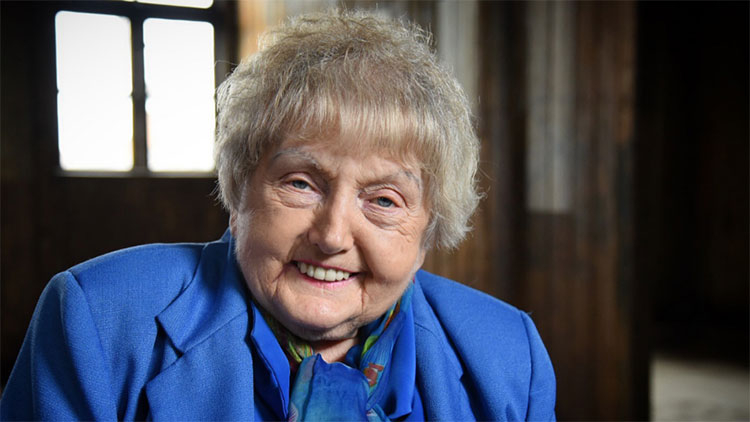
Eva Mozes Kor often said, “Anger is a seed for war, forgiveness is a seed for peace.” It was more than a slogan. It was a theology, a philosophy, and a daily discipline forged from one of the darkest chapters in human history. As a child imprisoned in Auschwitz and subjected to the medical experiments of Josef Mengele, Eva discovered that survival demanded a defiant hope. Decades later, she chose forgiveness as a form of liberation that offered survivors a path toward healing. Her decision inspired admiration and deep respect, and it also sparked fierce debate about justice, memory, and the boundaries of human compassion. The peace she pursued required extraordinary courage, because every step forward in forgiveness carried a cost.
I recently revisited one of Eva’s emails, a message filled with the kind of raw honesty that few people ever achieve. It was written in her unmistakable, unpolished style: urgent, passionate, and deeply personal. In it, she reflected on the consequences of her decision to forgive a former Nazi doctor, Dr. Hans Münch, and the relentless challenges she faced in opening CANDLES Holocaust Museum.
Reading it now, years after her passing, I am struck by how unyielding she was in the face of criticism, injustice, and personal danger. She did not simply speak about forgiveness. She lived it, even when it cost her dearly.
The Controversy Over Forgiving a Nazi
In 1995, on the 50th anniversary of the liberation of Auschwitz, Eva Mozes Kor did something unthinkable to many: she publicly forgave the Nazis. More than that, she stood beside Dr. Hans Münch, a former SS doctor at Auschwitz, and signed a declaration of forgiveness.
The backlash was immediate and fierce.
Israeli media framed the moment as a betrayal. Footage of Eva walking with Münch was broadcast again and again, without the context behind it.
A major Israeli newspaper published a scathing article, questioning whether any publicity was better than being ignored entirely.
In 1998, journalist Bruno Schirra published an interview with Münch in Der Spiegel, where the former SS doctor made remarks about his time in Auschwitz. The interview triggered a criminal investigation in Germany.
Around the same time, a French radio interview with Münch led to an even more explosive controversy. His derogatory remarks about Roma and Sinti people resulted in criminal charges in France for inciting racial hatred.
The consequences were devastating.
Münch and his family faced public scrutiny, threats, and harassment. In Germany, legal action pushed toward trial despite his diagnosis of Alzheimer’s disease.
In a personal email to me, Eva shared that Münch’s home was firebombed three times after his address was published in an article, requiring police protection for his family. I have not been able to verify this in any public record or independent source. It was her own account, offered behind the scenes, reflecting the weight she felt over what was happening to Münch and his loved ones.
Eva was horrified by what was unfolding. She had spent years advocating for justice. Now, she found herself advocating for mercy.
She sent more than 50 letters pleading with authorities to drop the lawsuits against Münch, but the legal proceedings continued.
In 2001, Münch was convicted in France. His sentence was waived due to his age and deteriorating mental state. He passed away later that year.
Eva felt a complicated kind of relief. Münch’s family was finally free from further attacks, and she no longer carried the guilt of contributing to their suffering.
The Fight to Build CANDLES Holocaust Museum
By 1995, Eva Mozes Kor had already reinvented herself many times: Holocaust survivor, public speaker, and founder of CANDLES (Children of Auschwitz Nazi Deadly Lab Experiments Survivors) in 1984. That year, she took on yet another role as a museum founder.
The CANDLES Holocaust Museum and Education Center was an extension of Eva’s mission to teach others about the Holocaust and the experiments performed on her and other Mengele Twins. She wanted to create a permanent place of education, remembrance, and dialogue.
Opening the museum was no small feat.
She found a commercial building in Terre Haute, Indiana, but it was too large and too expensive for the original client she was working with as a realtor. Instead, she made a bold and risky decision to secure financing under her own name, her husband’s name, and a partner’s name to purchase the building herself.
At 61 years old, she signed a $168,000 mortgage, despite her husband’s hesitation.
With limited funds for exhibits, she handmade decorations, including a wall of blue paper strips that read:
“LET US REMOVE ALL HATRED AND PREJUDICE IN THE WORLD, AND LET IT BEGIN WITH ME!”
When the museum opened on April 30, 1995, it quickly became a vital educational resource, drawing teachers, students, and community members eager to learn from Eva’s story.
Then everything changed after 9/11.
Her business partner, who owned a travel agency, struggled to keep her business afloat. The economic downturn was crushing. Eva was forced to buy out her partner’s share of the building at a much higher price, not to expand but simply to save the museum.
By 2002, at age 68, she and her husband took out a $222,000 mortgage to keep CANDLES alive.
The Fire That Could Not Destroy Her Mission
In November 2003, Eva Mozes Kor received a phone call in the middle of the night.
“Mrs. Kor, this is the police department. You need to come to the museum. There is a fire.”
She and her husband rushed to the scene. By the time they arrived, flames were already devouring the building. Firefighters battled the blaze, but it was too late. Everything inside was lost: photographs, historical documents, survivor testimonies, and artifacts.
She stood there watching as the place she had built with her own hands, her own money, and her own pain collapsed into smoldering rubble.
Investigators then found a message spray-painted on an exterior wall in black:
“REMEMBER TIMMY MCVEIGH.”
Timothy McVeigh, the domestic terrorist behind the 1995 Oklahoma City bombing, had been executed in Terre Haute just two years earlier. The implication was chilling. This was an act of hatred and intimidation meant to silence her.
But Eva had spent her entire life surviving the worst of humanity.
The next morning, standing in front of the ashes, she made a decision.
“We will rebuild.”
And she did.
With support from the community, from Holocaust educators, and from donors around the world, CANDLES Holocaust Museum rose from the ruins and reopened in 2005, stronger than before.
You can burn down a building. You cannot destroy a mission.
The Legacy of a Fighter
Most people would have stopped. Most would have looked at the destruction of their museum as a sign to walk away.
But Eva rebuilt.
The email she sent me that recounted this event, full of spelling errors, fragmented sentences, and scattered thoughts, perfectly reflected who she was:
Unpolished, yet utterly real.
Wounded, yet relentless.
Misunderstood, yet unwilling to back down.
Eva Mozes Kor understood something most people do not. Forgiveness does not rewrite the past. It does not fix what was broken. But it allows a person to stop carrying what cannot be undone.
She was never naive. She knew the world was cruel, unjust, indifferent.
She fought anyway.
She did not stop.
What This Means for Us
Eva’s story is not only about forgiveness. It is about resilience in the face of resistance. It is about choosing to build when the world wants to destroy.
Her words still challenge me.
Could I have made the same choices? Would I have kept going? Would I have had the courage to stand alone?
Perhaps that is the lesson she left for us.
Forgiveness is a gift. The fight for something bigger than yourself is what makes history.
© Jill Szoo Wilson, 2025
Featured Image photo credit: WFYI Indianapolis, 2021
Poem: Opposite Sides of the Wall
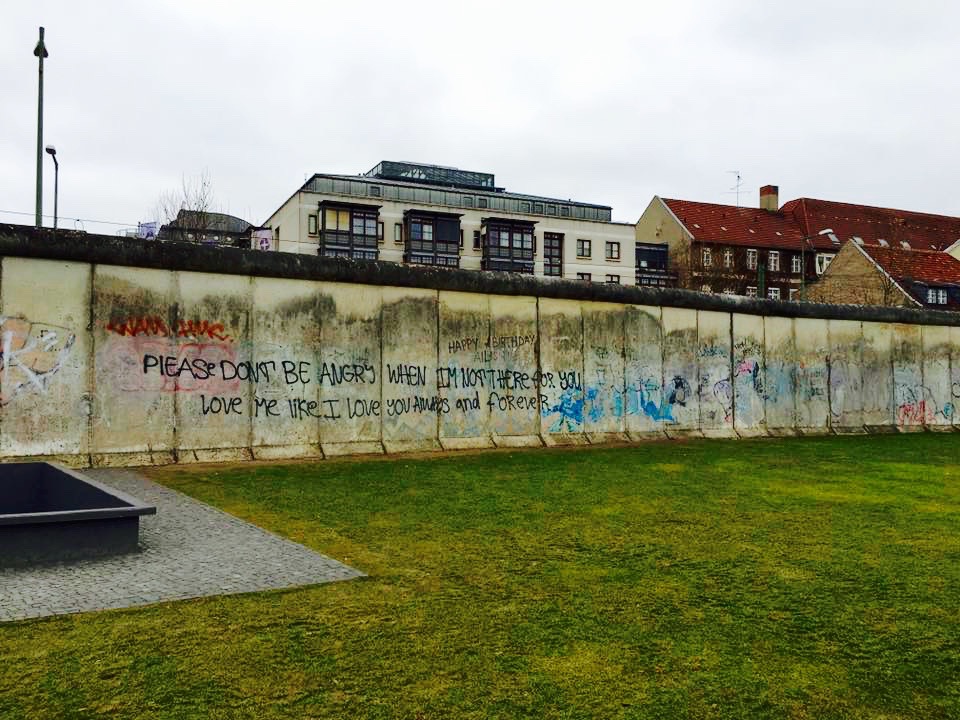
I wrote this poem after visiting Berlin in 2015, where I was fascinated by the messages people had left on the remains of the Wall. This piece was inspired by one of those messages.
From the highest story

Of a building gray and cracked

Peer two eyes

Through dusty window panes

Pestered by a mosquito

Flying along the edges.


Below the eyes

A hand

Holding tin

Filled with coffee

Cold and strong—

A cigarette burning.


The fog of stagnation

Fills the room

As one wisp of smoke

Links arms with another

A silent dirge

Circling like vultures.


Her gaze is blank

She closes her eyes

Then opens them wide

Each closing a respite

Followed by

Disappointment.


She sighs

She coughs

She smiles for a moment

As the mosquito

Bumps against the glass

Bruised and trapped.


Above her head

Noisy neighbors shout

The song of frustration

Rings out and falls

Pulled by gravity and

By doubt.


She begins to hum a tune

She has not heard

Since she held a doll

Inside chubby arms

And kissed its head

With sugary lips.


Her raspy alto

Lays itself on the notes

Her Now

Transposes the music

From major to

Minor keys.


The mosquito brushes past

Her hand

And then lands and

Sticks his needle

Into her skin—

She observes the transaction.


A flashing light—


Her gaze arrested

Handcuffed to a mirror

Reflecting the sun a

A Morse Code message

.-.. --- ...- .

Which translates, “Love.”


She dunks her cigarette

Into her mug

Shakes her hand

The mosquito falls

Disconcerted but

Full.


She strikes a match

Holds it to a candle

Thick and matted

Like a paint brush

Spotted with colors

Dried from previous use.


A thin line rises from the flame

Gentle in its approach

And dancing in the haze—

She lowers and raises her hand

.- .-.. .-- .- -.-- ...


“Always,”

She replies

In this expression

They devised

From opposite sides of

The wall.


She blows out the fire

Puts her hand to the glass

Closes her eyes and

Kisses the air

As though it is

The last kiss in the world.


He lifts his fingers

Catches her lips

In mid-air—

Hungrily brings them down

Pressing their sweetness hard

Against his own.


The moment has passed

But their love

Will last—

Reach beyond time and space

Breaking past

The Wall.

© Jill Szoo Wilson, 2015
Poem: Love and Alive
Every day he comes and goes
Like a beggar on the street,
With no way to turn
But the direction from which he came.

If the streets were carpeted—
Soft to the touch—
The tread of his soles would
Scratch holes through the path
He has
Worn.

Worn out, the man with the
Briefcase breathes heavily
Under the sun and
Under the moon,
Inhaling and
Exhaling as he travels,
Blind as he goes—
Not because he has no head,
But because he feels no pain
Or joy.
He is numb.

Numb since the day she
Walked away,
And numb when he remembers
The way
Her hips sway—
This way and that.
And numb when he
Thinks of her name but cannot
Say it—
Silent.

Silently, the bird in his soul—
The bird whose name is
Alive—
Perches at the edge of her
Cage whose name is
Life,
And wishes for the day
She might once again
Begin
To
Fly.

Flying in the air
Above the man
Is a bird whose name is
Love.
He flies up high and
Then he dips
And twirls,
Like the tail of a kite giggling
In the wind,
Awaiting the moment when
The Man
Opens his coat and
Sits on his bench
And sleeps—
Like a beggar on the street
Dreaming.

Dreaming of her face—
The only face that is
Trapped inside the Man's soul.
Love watches with a keen and
Clever eye.

In one moment—
A moment whose approach is slow,
Whose arrival is timed
By the gods,
Whose watches are synchronized
To the beating of
Bird and human hearts—
The vigilant bird
Sees
The coat fall open,
Sees
The Man sit down on his bench,
Sees
Him close his eyes and
Seizes his
Freedom.

“Freedom does not live in the sky,”
He sings.
“Freedom lives inside Alive.”

Love drifts down
Through blue and through clouds
And alights
With bars between himself and
Her—
The one who holds his
Heart
Inside of her,
Inside a cage.
The one who
Knew he would
Come.

“Come to me every day,”
She wanted to say.
But instead, she said,
“You must not waste the time
Waiting by my side,
When all the world
Sprawls before your gaze.”

Love ruffled his feathers
And looked into her eyes.
“Until you are here with
Me—
Just you and me—
I will come and sit with you
Every day.”

Every day, Love came,
Just as he said he would,
And the earth turned slowly
From summer
To autumn
To winter
To spring.

Their stories grew, and
The details they knew
Poured through the bars
Like drops of water
Flowing
From watering cans,
Growing their love,
Growing him and growing
Her.

Her days inside,
Her will to survive—
Alive and Love
Together traveled through,
Until the day
The Man stepped anew
Off his carpet of same,
Tattered and
Worn through by
His shoes—
First one and then two—
Onto a path where four
Could move:
His loafers and
Her high heels of
Blue.

Blue turned to joy,
Joy turned to alive,
And Alive for the first time
Flew.
The Man let her fly,
As his heart said
Goodbye to the
Pain that was keeping
Alive inside the cage,
Inside his
Soul.

Souls in the air,
Free with
Togetherness,
No longer bound
But soaring high,
Strengthened by
The time in the cage
And by flying
Side
By
Side.

© Jill Szoo Wilson, 2025

Did You Think You Were the Only One?
A probably true tale about order, ambition, and the secret lives keeping the city running while we’re busy thinking we do.
Men with briefcases move up and down the streets like ants: all in lines, moving this way and that. Scouts sent forth from their secret dwellings, with secrets at their sides and secrets in their minds. They rush into the world to gather and to hunt, and when the day is done they hold their provision over their heads, like ants, but also like African women carrying water back to their children.
All is a race, if you think of it thus.
In the shadowed jungles of the sewer holes and pipes that run wild under the city, there is another kind of race. As the suits and ties vibrate with the ticking of the clock above, there are men and women of valor whose orders have been pecked out by feats of daring and strength. Yellow eyes, but sometimes green, flash through the underground tunnels and make plans for the sun-filled above.
The cats run the city below the city, and there is nothing we can do to stop them.
“I call to order the weak and the strong; everyone has their place. Some of us thin and some of us fat, all are fit to run the race.” Garrin’s voice was loud: a little too loud, to be honest. It rose into the echoing chambers of the 27th District of the sewer line and fell flat with self-importance, but also boredom. Garrin was wry and dry and not at all shy, which is why he was elected to the position of Mayor.
Their voices and fur fill the underground roads. If you don’t believe me, just ask them yourself.
Camille, a mostly white cat, lay on the recently swept floor and licked her right paw. “Garrin, I need to be given my daily task now because I have to be home early this evening. One of the humans I live with keeps feeding my kittens milk, which is giving them diarrhea, so I want to be home in time to feed them myself.”
“I know what you mean,” said Fluffy McHairball (a name given to her by a female human with no imagination at all). Fluffy continued, “My kids are growing up without me, Garrin. You’re giving us too much to do.”
Garrin laughed out of the corner of his mouth as his tail wagged back and forth, giving away his annoyance. “Ladies, please. I can announce the daily tasks with speed and efficiency as soon as you stop complaining.”
Camille did not appreciate Garrin’s belittling tone. She lowered her ears, looked away, and wrapped her tail around herself. “Spoken like a man whose kittens are grown,” she whispered. The other women around her chuckled and rolled their eyes.
Ignoring Camille and the attention she drew, Garrin began to announce the daily tasks to the cats under his charge, in alphabetical order, of course.
“Anthony, I need you to target the garbage bins outside the seafood restaurants today. As we are all aware, I had to fire Catpernicus last week because his was the seafood beat and he was woefully lazy, thus, the embarrassing shortage of seafood in our storage bins.” Anthony stood like a soldier, ready and willing to carry out his newly given orders.
“Yes, sir,” said the young Anthony, whose voice creaked with puberty when he spoke.
“Bartholomew,” Garrin continued, “you’ve done well on your rounds as of late, so I am promoting you to the Starbucks run. We need you to carry as many of the cup sleeves back as possible because, let’s be honest, they are fun to play with and they work well as portable scratchers.”
“Garrin, you’ve got to be joking!” interrupted Fluffy. “The humans may not mind depleting the forests for such waste, but we do not need to be a part of the madness by collecting their bad choices.”
Garrin’s tail began again to wag unconsciously with annoyance. “Fluffy, please. If you are ever mayor (which I doubt), you can make the decisions. As you know, we have brought your grievance to the Board of Governors, and they have settled the issue. The cup sleeves are useful to us, and we are not the ones cutting down the trees. Can I please continue so you can all begin and end your day in a timely manner?”
Fluffy yawned in disgust and then licked herself in spite.
Feeling the weight of their insubordination, Garrin listed the rest of the daily tasks in quick succession and then ended their meeting with the familiar chant:
“Go forth into the streets, the weak and the strong, everyone has their place. Some of us thin and some of us fat, all are fit to run the race.”
The young cats exited the tunnels with fervor, and the older cats sauntered into the shadows with their tails pointing high in the air, in Garrin’s general direction.
Did you think we were the only ones who daily race about like ants? I hope you will accept that sometimes you are wrong.
Camille’s eyes squinted as she climbed into the sunshine. The day was warm, and the sky was bright blue, the way it often is when spring blankets the earth. She liked the way the warmth of the sun sank into her coat and how the steamy cement of the street felt under her paws.
“Climb the highest branch of the highest tree and loudly cry,” she repeated her daily task into the air around her. “How embarrassing,” she said to herself. “And I am sure to break a claw.”
Camille’s task was the most loathed of the daily tasks, more of a monthly task really, but someone had to do it. Today it was her turn. The objective of the task was simple: it served as a test of the emergency services at their disposal. “This is only a test,” Garrin’s instructions replayed in her head.
It would be horrible if one of the kittens ever jumped onto a tree and ran to the top only to find that the local Fire Department had silently decided they would no longer be saving furry, four-legged babies from the highest branches. So today, Camille was charged with the job of testing their emergency system. “For the children,” she reminded herself.
As she trotted up and down the streets, through human legs covered with denim, under long cotton dresses that smelled like perfume, and around strollers filled with crying babies, Camille looked for the highest tree.
“Hi, Camille,” said Rupert, an overweight English Bulldog, as she walked along her path.
Camille answered with her ears held high, “Hi there, Rupert. Nice collar. Is it new?”
“Ah, Camille, that is what I love about you. You’re so observant. And nice to observe, if you know what I mean. If only we were the same species. If you know what I mean.”
She knew what he meant.
“You’re a charmer, Rupert! Have a nice day.”
Rupert passed her and then turned to watch her as she sauntered away.
Moments after she passed Rupert, Camille spotted a tree that towered above most others along the sidewalks within her district. It stood across the street near one of the many Starbucks along this road, and she watched for a moment as Bartholomew pranced away from the garbage can outside the door. He was carrying three cup sleeves between his teeth, and crumbs of a scone fell from the sides of his mouth. “Garrin will be so pleased,” she thought to herself.
After looking both ways, which is the number one rule in their employee handbook called Roadkill: A Manual of Safety and Instruction, Camille headed toward the tree.
Camille sat at the base of the tree and looked up. She closed her eyes for a moment and enjoyed the breeze that blew past her nose in the shade of the leaves. She could hear the sounds of the city street, the honking cars, the women clicking about in their high heels, and the men talking to ghosts on their Bluetooth devices, and she swayed to the rhythm of the cacophony. She could smell the bread newly baked in the bakery and the hint of ground coffee wafting onto the sidewalk from inside the Starbucks. Camille took in a deep breath through her nose and released it out through her mouth, a moment of meditation and being present.
It is good to pause and enjoy the moment.
Camille stretched out her two front paws and stretched deeply into her back paws before calmly and aptly climbing the highest tree. She had done this many times before. Once she reached the top, she lifted her voice even higher. “Meow!” she called. And then again. And again. Camille’s body was mostly hidden by the network of branches and leaves surrounding her, which gave her the courage to sing with volume and flair. To be honest, she had a great singing voice.
Suddenly, a shriek filled the air, breaking into the cacophony of sound on the city streets, and the sunlight was joined by hues of red and blue. The cars stopped honking, the women stopped clicking, and the men exchanged their long sentences for pleas to “wait” and “hold on.” The fire truck came screaming down the road, and Camille felt proud of her performance among the leaves that danced around her.
Within a matter of minutes, a particularly handsome fireman was lowering Camille from the tree and placing her paws gently on the warm sidewalk. Sounds of applause filled the air like a symphony conducted for a hero. The fireman blushed, Camille rubbed a “thank you” against his leg, and both trotted off in separate directions, pleased with the jobs they had done.
We all feel proud to have done our jobs well. Oh, did you think it was only you?
Her daily task completed, Camille felt free and content. She thought of strolling home, but realizing dinner time was still hours away, she made her way down a side street that led to the park.
A grassy knoll filled with light saw Camille walking his way, and he called for her to spread out atop his softness.
Nature speaks its desires and enjoys the companionship of those who listen. If you listen to it, you will know what I mean.
Camille lay in the center of the grassy knoll, careful not to dip her tail into the water below, and closed her eyes. She rolled her head back and forth to enjoy the shades of orange and yellow and red frolicking behind her eyelids. She could feel the heat of the ground on her back and the heat of sun on her stomach. She breathed in through her nose and released through her mouth, in and out, in and out, until her consciousness slipped into dreaming.
As she slept, the world around Camille continued to huff and to puff, like a train on a track with a destination to reach. Men with briefcases moved up and down the streets like ants, all in lines, moving this way and that. Scouts sent forth from their secret dwellings, with secrets at their sides and secrets in their minds.
Did you think you were the only one?
© Jill Szoo Wilson, 2025
Poem: She Spoke Of Love
A moment before, floating in the sun

My love beside me

Warm and glowing

Her eyes ablaze with rays of light

Her darkness concealed in

Illumination.


A moment before, she spoke of love

My friend beside me

Kind and gentle

Her smile warmed but burned

Her face like wax

Melting.


I wanted to see my love through the brightness of stars

The universe brought low and waiting

Swirling about my hands and mind

Becoming one with all that breathes

And pants

And lives

And dies


A moment before, I removed my gloves

My fire beside me

Trembling and stiff

Her fingers felt but did not touch

Her hand in mine only

Embers.


A moment before, she swallowed words

My pain beside me

Inflamed and suffering

Her silence thickened in my throat

Her Nothing choked

Suffocating.


I wanted to see my love through the brightness of stars

The universe brought low and waiting

Wrapping my cold in warmth

Like a child crying

But hopeful

But calming

But safe


A moment before, the snow dropped down

My hope beside me

Present and vacant

Her ruffled dress covered with water

Her boots muddied with

Goodbye.

© Jill Szoo Wilson, 2015
 Jill Szoo Wilson