Teaching Gen Z in the Age of AI

For as much as my university colleagues are talking about how AI affects students, and how it’s either sharpening or dulling their cognitive tools for research, I find it curious how little the students themselves are actually using AI or even talking about it. When I brought the topic up with my freshmen, one of them said, “When you say AI, do you mean TikTok?”

That response startled me, but it didn’t entirely surprise me. I work with students ranging from middle school to college: teens and young adults who are bright, creative, curious, and digitally native. They live online. They edit videos, write fanfiction, build memes, and scroll endlessly. They’ve never known a world without the internet. So I assumed, perhaps naively, that when ChatGPT exploded onto the scene, they’d have thoughts, opinions, even fears.

What I’ve seen instead is something more slippery; a kind of casual indifference. AI is in their world, sure, but it doesn’t seem to register as world-changing, at least not in a way they can name.

Surface-Level Familiarity

Most of the students I work with know about AI in the same way they know about autocorrect or Spotify recommendations: it’s background noise. They joke about using ChatGPT to write essays. They’ve seen their favorite YouTubers feed prompts into image generators. They might even follow meme pages that poke fun at AI’s awkwardness.

When I ask how they feel about it—what it means for their future, for creativity, for work—I get blank stares, or shrugs, or “I don’t know, I guess it’s just part of life now.”

This isn’t ignorance. It’s ambient awareness without urgency. Which, ironically, might be even more dangerous.

Apathy or Adaptation?

There’s a fine line between not caring and not questioning because something feels inevitable.

What I’ve come to believe is that many young people are already adapting to AI, but without the language or guidance to examine what that adaptation means. They are, in a sense, growing up alongside the machine and assuming this is simply how things are. As tech philosopher Douglas Rushkoff puts it, “We are living in a world that is no longer about us. We are living in a world designed for technology” (Rushkoff, Program or Be Programmed, 2010).

To them, AI isn’t a disruption. It’s just Tuesday.

What Schools Aren’t Teaching

One college student told me, “We never really talk about AI in class unless it’s to say don’t cheat with it.” This reflects a larger issue: many schools are still struggling to update their policies on AI use, and even more so when it comes to adapting their teaching methods. Instead of exploring AI as a tool for learning, the focus tends to be on warning students about using it dishonestly.

While some educators are doing meaningful work to incorporate tech conversations, many schools, especially in the humanities and arts, haven’t integrated AI into their curricula at all. When AI is addressed, it’s often treated as a threat: “Don’t use this to plagiarize.” But that’s not education; it’s a warning label.

Topics like algorithmic bias, the ethics of automation, surveillance capitalism, copyright confusion, and the commodification of creativity are rarely discussed, yet these are exactly the areas that today’s students will inherit. The limited discourse tends to be reactive rather than proactive. In many cases, teachers themselves (me included!) are still figuring out what these tools mean.

And there’s a gap here that’s worth naming: students are increasingly using AI informally (for brainstorming, summarizing, solving equations), but they’re not being taught how to assess its limitations, how it was trained, or what implications it carries. Without structured critical thinking exercises or media literacy units built around AI, students are left to sort fact from fiction on their own. Unsurprisingly, many disengage altogether.

Even though organizations like Common Sense Media and UNESCO have called for AI literacy education (UNESCO, Guidance for Generative AI in Education and Research, 2023), most students are still being handed tools without blueprints. They’re digital natives, but that doesn’t mean they’re digitally literate.

In a discussion with my college freshmen about potential dangers in using AI, one of the students astutely said, “I don’t fear being repetitive, I fear never being able to say something unique because everything has already been said.” Philosophically, I empathized with her statement. I think in some ways we all feel this. But what struck me was that I wondered if she was right.

One of my high school students told me that his father works with AI software and let him use it to write an essay for school—not one he actually turned in, but as a means to demonstrate how AI generation works. The student’s final analysis was that it caused him anxiety. He said, “How can I ever write anything that will be truly helpful to the world? I feel like my brain would have to speed up and get to the point more quickly than AI, and I don’t think that’s possible.” Another student responded, “Calm down, bruh. Just keep playing The Last of Us.” The class laughed. I laughed too. But I also felt a sense of foreboding that I didn’t want to introduce into these fifteen- and sixteen-year-olds.

A Creative Way In

What’s worked best in my world isn’t lecturing about AI ethics; it’s storytelling. And more specifically, asking “what if” questions that make the abstract personal.

For example:

  • “What if an AI wrote your favorite show, and it was good enough that you didn’t notice?”
  • “What if your voice was cloned and used in a YouTube ad you never recorded?”
  • “What if your college application essay was flagged because someone assumed AI wrote it?”
  • “What if AI generated a fake video of you doing something you didn’t do?”

These questions shift the conversation from distant tech talk to immediate personal stakes. I’ve watched students, middle schoolers even, go from smirking to stunned in a matter of seconds when shown a real deepfake. It’s not just about explaining what generative AI is; it’s about helping them feel the implications of it.

Creative expression helps unlock that shift.

In one class, I asked students to write short monologues from the perspective of someone living in a world where human art is outlawed because AI does it faster. The results were moving. Several wrote about grief. Some wrote about rage. One student wrote about forgetting what real creativity feels like: “I lifted my hand to paint a flower, and the petals reminded me of a flower I saw online. I stopped seeing the real flower and tried to paint the one I remembered instead.”

I don’t know about you, but that still gives me goosebumps.

This kind of imaginative work invites empathy, agency, and reflection—all of which are in short supply when the conversation stays stuck at “AI is just a tool.”

Art-based learning has always been a mirror to society. When we let students look into that mirror through theatre, creative writing, or design, they begin to see their own digital landscape more clearly.

The Urgency of AI Awareness

Middle schoolers, high schoolers, and college students are not just future workers in an AI-saturated economy. They are future parents, pastors, teachers, lawmakers, and ethicists. If they are passive now, the consequences will be exponential later.

And here’s the thing: they don’t need to become experts. They don’t even need to have polished positions. But they do need space to ask questions, and adults who are willing to ask those questions with them.

The rise of AI in their lives is not a looming threat on the horizon. It’s already here, shaping how they search, think, interact, and create. If we want them to be active participants in this moment rather than silent subjects of it, we would serve them well to begin where they are: with curiosity, with context, and with imagination.

The future of AI won’t be written by algorithms. It will be written by the choices we make and by whether we prepare students to shape what comes next.
Poem: Things That Grow

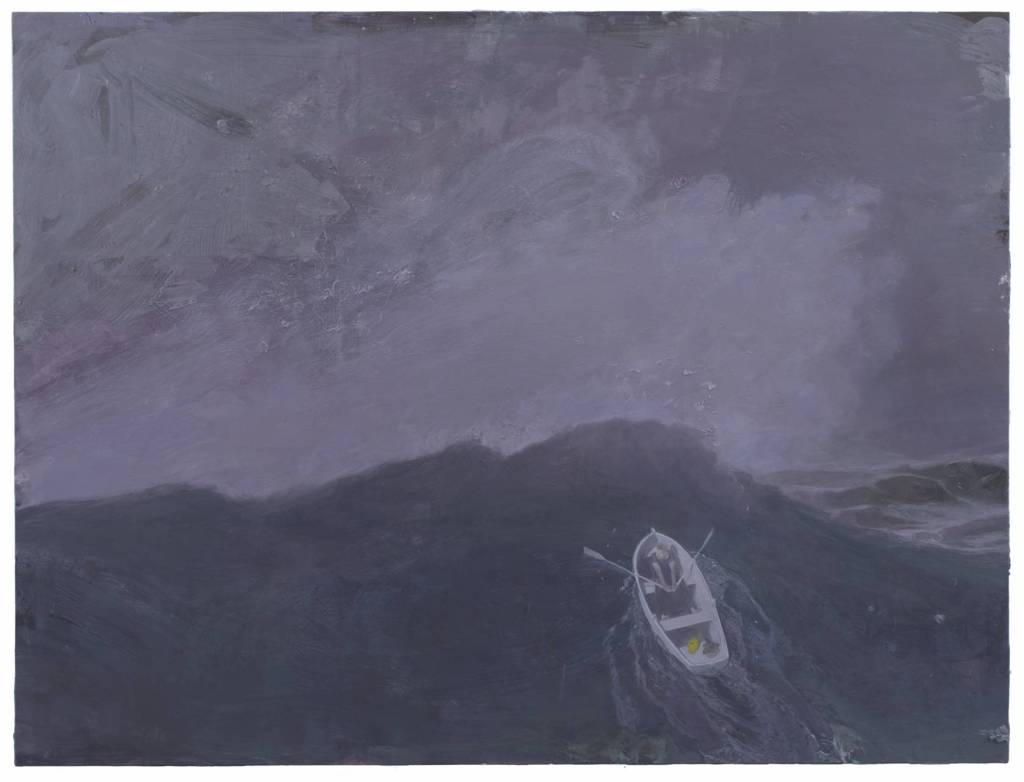
This poem was inspired by German artist Ruprecht von Kaufmann‘s piece, Die Welle.

There are things that fly

They twist and bend

Against blue sky illumined yellow

Black splattered with white

Gray interrupted by scatters of light—

Flap their wings

Or float

Like dreams

Stretching long on

Currents of wind

Winding through branches

And higher still

Playing with the stars

Before floating

Softly

Down.


There are things that stay

They cut the horizon with Always—

Mountaintops jutting high

Above valleys cradling

As seasons pass,

Children with wild hair

Wrinkle and fade

While limbs of Earth

Press toward

Eternity

Wrapping themselves

Around, holding together

The pieces that

Neither

Ascend nor

Sink.


There are things that rest

They are supple and sway

Discover stillness and move

Both in a single day—

Blades of grass yawning

Amidst beds of life,

Frogs lazy as clock towers strike

Croaking songs of love

In the dark of night,

Dogs whose paws

Chase squirrels inside dreams

Awakened

By flies frenetic

Then alighting

To sow, slowly,

Life.


There are things that fall

They rise and are pulled

Held close by the moon

Then dropped in cascades—

Swells shrouded by waves

Climbing and crashing low

Furious contrast tempered by

Mystery of falling—

Petals, eyelids, snowflakes, the sun—

Or, he whose courage inflates

Buoyant inside his soul

And on the surge

Not treading but digging

Through cold

Slicing holes in which

To plant his teardrop heart—


© Jill Szoo Wilson, 2025

Slow Art: Unhurrying Your Mind

Museums invite looking, yet most visitors treat art the way they treat emails: a quick skim, a polite nod, and on to the next thing. We spot a recognizable subject or a pleasing color, think, “Ah yes, culture,” and keep walking. Studies suggest that viewers spend less than thirty seconds with a work of art before moving on. It is possible to tour an entire gallery without truly arriving anywhere at all.

Slow Art suggests another way to exist among masterpieces.

Rooted in the broader Slow Movement and formally organized with Slow Art Day in 2010, the practice encourages viewers to remain with a single artwork long enough for something meaningful to happen. The idea is simple: stop rushing. Stop conquering exhibitions like they’re errands. Let a painting interrupt the pace of your day.

Of course, the mind resists immediately. The moment we sit down and dare to look, our thoughts fling themselves into crisis: seventeen neglected texts, three unpurchased groceries, and the intrusive belief that productivity is our moral duty, and this bench is a crime scene. Apparently, stillness is very dramatic.

Yet if we continue to sit, the noise eventually settles. We start to notice the obvious things we missed when our thoughts were busy staging a coup: light falling across a shoulder, a line of color we would have sworn was not there a moment ago. Philosopher Maurice Merleau-Ponty argued that seeing is never passive; we do not merely observe the world. We are in conversation with it. Given time, a painting stops acting like an object and begins to behave like a presence. It answers back.

Meanwhile, neuroscience is offering evidence for what artists have always suspected. When we linger with an artwork, the brain does more than register shape and shade. Regions connected to memory, imagination, and empathy start sparking awake, as though the mind suddenly recalls it has a richer job than survival. Interpretation emerges. Emotion slips in without asking permission. You are no longer deciphering the art. You are encountering yourself.

Slow looking becomes a decision to let meaning unfold at its own pace.

It is a tiny rebellion against the cult of efficiency. Instead of demanding results from a painting — explain yourself, be profound, hurry up — we allow the experience to be unmeasurable. Sometimes revelation arrives. Sometimes quiet does. Both are victories over the museum sprint that ends with a gift shop purchase and no recollection of the gallery that preceded it.

This week, I sat with a painting of moonlit fields and distant wind. Nothing moved, yet somehow everything did. The air itself seemed to stretch across my skin, my breath eased, and the horizon widened inside me. It felt like remembering how to be a person rather than a calendar.

I answered the art’s invitation in the only way I know:
by writing.

Cloud Trails, by John Rogers Cox
Hush
By Jill Szoo Wilson

My dear, now hush. Unburden every care;
The silent fields invite your breath to slow.
The wind lifts strands of worry from your hair
And strokes your cheek with touches soft and low.

O moon, shine steady, hold your silver ground;
A lantern calm above the world’s unrest.
Pour down a peace too deep for any sound
And press a quiet knowing to the chest.

Kind wind — sweet wanderer — move as you will;
Let coolness glide along these open hands.
Brush thought from thought, invite my heart to still,
And ferry calm across the quiet lands.

Here, nothing strives. The wide horizon sighs—
At last, the soul grows spacious as the skies.

The Mind-Body-Emotion Circuit: Learning How to Respond on Purpose

By Jill Szoo Wilson

In acting, emotion is often treated as the goal. Many students arrive hoping to unlock a secret reservoir of feeling, as if tears or rage or heartbreak could be summoned by force of will alone. Yet experienced artists and psychological researchers alike know that emotion resists direct manipulation. The human heart refuses to be commanded. Instead, emotion tends to emerge as a consequence of the way we think and move through the world. This reality, long understood intuitively by actors, has now been documented in cognitive and behavioral science. As Meisner observed, performance becomes truthful only when the actor lives with authenticity inside imagined circumstances rather than attempting to manufacture emotional display on cue (Meisner & Longwell, 1987).

This understanding is essential in my work as an acting teacher. One of my current private students, whom I will call Paige, embodies the determination required to bridge intellect, body, and imagination. She asks thoughtful questions, listens without pretense, and possesses a grounded confidence that draws others toward her. In the studio, she is learning that the actor’s instrument is not the voice alone, nor the body alone, nor even the mind alone, but the constant interplay among them. When that interplay is disrupted, performance becomes flat and disconnected. When it flows, the actor’s work becomes alive.

To explain this interplay, I teach what I call the mind-body circuit, a cycle rooted in both performance pedagogy and psychology: thought → emotion → action → new thought → emotion → action, and so on. The sequence appears simple, yet it reveals something profound. The actor can enter it through thought or action, but rarely through emotion alone. Emotion depends on a catalyst. It responds to meaning and circumstance. This is why actors who begin with the desire to “feel sad” or “play anger” inevitably fall into generalization. They are grasping at the byproduct rather than engaging the cause.

Directors and psychologists alike recognize that embodied behavior shapes inner life. Neuroscientist Antonio Damasio describes the body as a “theater of feeling,” where emotion is both generated and displayed through motion and sensation (1999). Onstage, this principle becomes visible in dramatic form. To demonstrate this, I once handed a student a hammer and instructed him to break scrap wood in character for thirty seconds. The task was intentionally physical, forceful, and resistant, because the body cannot remain neutral when exerting strength against an object that pushes back. There was no discussion of backstory or psychology. The action demanded urgency and focus, which silenced self-consciousness and awakened the nervous system. As the student swung the hammer, his breath shifted, muscles tensed, and emotion surfaced unbidden. Within moments, he found himself articulating thoughts and personal stakes that had felt inaccessible when he tried to intellectualize his way toward feeling. Stanislavski identified this phenomenon nearly a century ago: “In the beginning, you must not settle matters of feeling. Begin with the action” (1936).

There are other occasions when thought becomes the most generative entry point into the mind-body circuit. During rehearsals for Hamlet, Paige and I worked through a scene in which Ophelia confronts a lover who, until recently, adored her. Before this scene, Hamlet has pursued Ophelia with gentle attention and romantic promise. He has spoken of love and a future together. Then suddenly, with no explanation she can understand, he turns on her. He tells her she should enter a convent, that she should never marry, never bear children, never bring more life into a world he now condemns. At first, Paige named her character’s feelings: confusion, concern, hurt. These were legitimate emotional states, but they did not yet clarify what Ophelia believed was happening or what she needed in response. We returned to the text to articulate the specific rupture: this is not Hamlet being odd or distracted; this is Hamlet erasing their entire future with a single, devastating reversal. Once Paige understood that she was experiencing rejection not only of affection but of identity, legacy, and security, her body changed. Her posture leaned forward, breath tightened, and she instinctively reached toward her scene partner, trying to recover the man she once knew. Thought created meaning. Meaning triggered emotion. Emotion propelled action. The circuit closed into a continuous chain.

Psychologist Richard Lazarus offers a framework in which emotion arises from the mind’s effort to interpret and evaluate experience. He proposed that individuals engage in a form of cognitive appraisal, a rapid assessment of what an event means for one’s safety, identity, or sense of belonging, followed by an assessment of whether one has the capacity to respond (Lazarus, 1991). Through this process, emotion becomes a reflection of significance. Fear signals the presence of danger. Grief testifies to the worth of what was lost. Anger reveals a boundary that matters. These meanings take shape first in the mind, then move through the body as behavior and physiological response. Acting technique embraces this sequence. When the actor fully recognizes the stakes—the value of the moment, the cost of failure, and the depth of desire—inner life begins to organize itself accordingly. The heartbeat quickens, posture shifts, and voice carries urgency. Stella Adler emphasized this principle in her own vocabulary, insisting that powerful performance grows from vivid circumstances and clearly drawn stakes. “You have to have a life,” she wrote, “so that you can bring something to the stage” (Adler, 2000). Through this kind of interpretation, the actor does not strive for emotion; instead, the emotional experience grows naturally from an understanding of what the story demands.

The insights found in performance theory also apply broadly to human interaction. Consider a common moment of betrayal between friends. One friend learns that another has broken confidence. Immediately, thought begins to organize meaning: She violated our trust. That thought produces feeling: anger, hurt, humiliation. The emotion then provokes action: perhaps a confrontational text or a cold withdrawal. In ordinary life, we navigate this circuit constantly, often unconsciously. Acting simply requires that we notice, name, and render the process visible.

Actors become investigators of cause and effect, tracing the thread from impulse to action with the curiosity of scientists and the sensitivity of artists. Within the rehearsal room, questions take on the weight of inquiry: What shift redefines the moment? What desire rises beneath the surface of my breath? What force complicates that desire? Which strategy carries the greatest hope of success? These questions reach beyond technique. They cultivate a heightened awareness of the subtle negotiations between inner experience and outward behavior. Through this discipline, actors recognize emotion as a current generated by the convergence of thought, intention, and physical choice. When these elements align, audiences engage instinctively with the authenticity of the performance, sensing a unified direction in every gesture and word. Emotional truth grows from coherence, and the stage becomes a place where meaning moves through a living body.

When Paige recently completed a difficult scene, she paused and said with surprise, “I finally felt something I wasn’t trying to feel! That was amazing! And terrifying.” In that moment, she encountered the paradox that defines the work. Emotion, once chased, becomes elusive. Emotion, once approached through purposeful action and clarified meaning, becomes inevitable. The mind-body circuit had connected, and she no longer had to reach for authenticity. It arrived.

Actors remind us that the human body carries intelligence of its own. Thought shapes emotion. Emotion prepares movement. Action generates new meaning. The circuit continues, alive and responsive. When actors understand this relationship, they work with the grain of their own humanity rather than pushing against it. They can shape a truthful inner life by pursuing clear objectives, taking bold physical action, and recognizing what matters in each moment of the story.

This is the heartbeat of the craft. Acting trains us to observe how feelings arise, how impulses travel, how the body communicates meaning long before words appear. Performers practice this awareness with intention, so audiences can recognize themselves in the characters before them. The mind-body circuit is not only a technique; it is a reminder of how people operate in the real world. We feel because something has happened. We respond because something matters.

Paige experienced this discovery in rehearsal. She did not demand emotion. She followed the logic of the moment, committed to the physical truth of the scene, and allowed meaning to do its work. The emotion arrived when it had something to say.

References

  • Adler, S. (2000). The Art of Acting. Applause Books.
  • Damasio, A. (1999). The Feeling of What Happens: Body and Emotion in the Making of Consciousness. Harcourt.
  • Lazarus, R. (1991). Emotion and Adaptation. Oxford University Press.
  • Meisner, S., & Longwell, D. (1987). Sanford Meisner on Acting. Vintage Books.
  • Stanislavski, K. (1936). An Actor Prepares. Theatre Arts.

Poem: Opposite Sides of the Wall

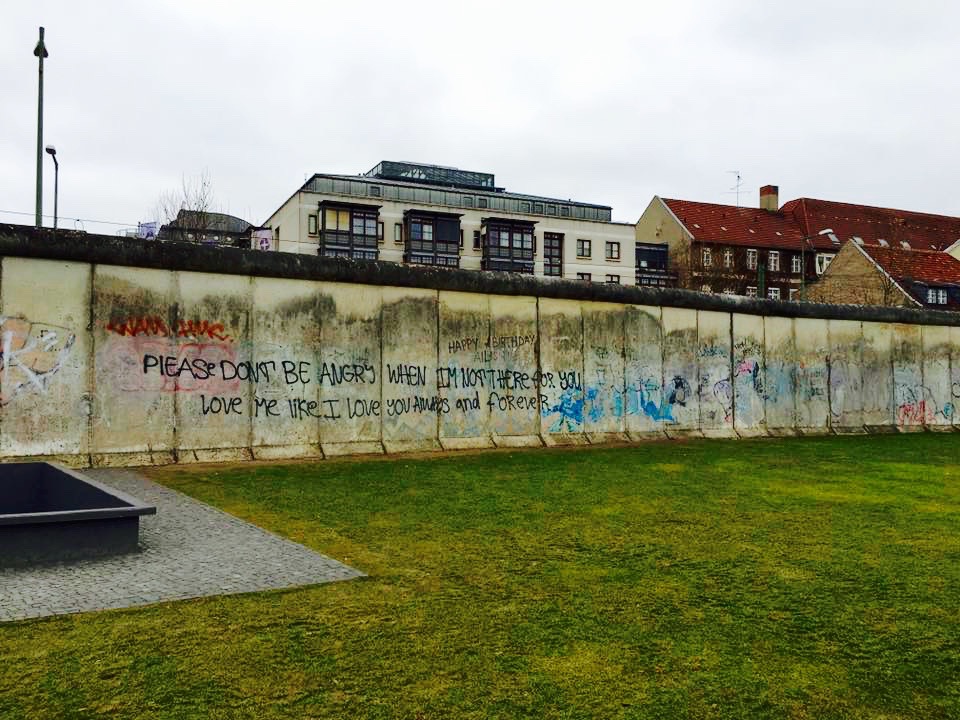
I wrote this poem after visiting Berlin in 2015, where I was fascinated by the messages people had left on the remains of the Wall. This piece was inspired by one of those messages.

From the highest story

Of a building gray and cracked

Peer two eyes

Through dusty window panes

Pestered by a mosquito

Flying along the edges.


Below the eyes

A hand

Holding tin

Filled with coffee

Cold and strong—

A cigarette burning.


The fog of stagnation

Fills the room

As one wisp of smoke

Links arms with another

A silent dirge

Circling like vultures.


Her gaze is blank

She closes her eyes

Then opens them wide

Each closing a respite

Followed by

Disappointment.


She sighs

She coughs

She smiles for a moment

As the mosquito

Bumps against the glass

Bruised and trapped.


Above her head

Noisy neighbors shout

The song of frustration

Rings out and falls

Pulled by gravity and

By doubt.


She begins to hum a tune

She has not heard

Since she held a doll

Inside chubby arms

And kissed its head

With sugary lips.


Her raspy alto

Lays itself on the notes

Her Now

Transposes the music

From major to

Minor keys.


The mosquito brushes past

Her hand

And then lands and

Sticks his needle

Into her skin—

She observes the transaction.


A flashing light—


Her gaze arrested

Handcuffed to a mirror

Reflecting the sun a

A Morse Code message

.-.. --- ...- .

Which translates, “Love.”


She dunks her cigarette

Into her mug

Shakes her hand

The mosquito falls

Disconcerted but

Full.


She strikes a match

Holds it to a candle

Thick and matted

Like a paint brush

Spotted with colors

Dried from previous use.


A thin line rises from the flame

Gentle in its approach

And dancing in the haze—

She lowers and raises her hand

.- .-.. .-- .- -.-- ...


“Always,”

She replies

In this expression

They devised

From opposite sides of

The wall.


She blows out the fire

Puts her hand to the glass

Closes her eyes and

Kisses the air

As though it is

The last kiss in the world.


He lifts his fingers

Catches her lips

In mid-air—

Hungrily brings them down

Pressing their sweetness hard

Against his own.


The moment has passed

But their love

Will last—

Reach beyond time and space

Breaking past

The Wall.

© Jill Szoo Wilson, 2015
I took this photo at the remains of the Berlin Wall in the Spring of 2015. I was fascinated by the quotes spray-painted on the wall.

Poem: Love and Alive

Every day he comes and goes
Like a beggar on the street,
With no way to turn
But the direction from which he came.

If the streets were carpeted—
Soft to the touch—
The tread of his soles would
Scratch holes through the path
He has
Worn.

Worn out, the man with the
Briefcase breathes heavily
Under the sun and
Under the moon,
Inhaling and
Exhaling as he travels,
Blind as he goes—
Not because he has no head,
But because he feels no pain
Or joy.
He is numb.

Numb since the day she
Walked away,
And numb when he remembers
The way
Her hips sway—
This way and that.
And numb when he
Thinks of her name but cannot
Say it—
Silent.

Silently, the bird in his soul—
The bird whose name is
Alive—
Perches at the edge of her
Cage whose name is
Life,
And wishes for the day
She might once again
Begin
To
Fly.

Flying in the air
Above the man
Is a bird whose name is
Love.
He flies up high and
Then he dips
And twirls,
Like the tail of a kite giggling
In the wind,
Awaiting the moment when
The Man
Opens his coat and
Sits on his bench
And sleeps—
Like a beggar on the street
Dreaming.

Dreaming of her face—
The only face that is
Trapped inside the Man's soul.
Love watches with a keen and
Clever eye.

In one moment—
A moment whose approach is slow,
Whose arrival is timed
By the gods,
Whose watches are synchronized
To the beating of
Bird and human hearts—
The vigilant bird
Sees
The coat fall open,
Sees
The Man sit down on his bench,
Sees
Him close his eyes and
Seizes his
Freedom.

“Freedom does not live in the sky,”
He sings.
“Freedom lives inside Alive.”

Love drifts down
Through blue and through clouds
And alights
With bars between himself and
Her—
The one who holds his
Heart
Inside of her,
Inside a cage.
The one who
Knew he would
Come.

“Come to me every day,”
She wanted to say.
But instead, she said,
“You must not waste the time
Waiting by my side,
When all the world
Sprawls before your gaze.”

Love ruffled his feathers
And looked into her eyes.
“Until you are here with
Me—
Just you and me—
I will come and sit with you
Every day.”

Every day, Love came,
Just as he said he would,
And the earth turned slowly
From summer
To autumn
To winter
To spring.

Their stories grew, and
The details they knew
Poured through the bars
Like drops of water
Flowing
From watering cans,
Growing their love,
Growing him and growing
Her.

Her days inside,
Her will to survive—
Alive and Love
Together traveled through,
Until the day
The Man stepped anew
Off his carpet of same,
Tattered and
Worn through by
His shoes—
First one and then two—
Onto a path where four
Could move:
His loafers and
Her high heels of
Blue.

Blue turned to joy,
Joy turned to alive,
And Alive for the first time
Flew.
The Man let her fly,
As his heart said
Goodbye to the
Pain that was keeping
Alive inside the cage,
Inside his
Soul.

Souls in the air,
Free with
Togetherness,
No longer bound
But soaring high,
Strengthened by
The time in the cage
And by flying
Side
By
Side.

© Jill Szoo Wilson, 2025

Poem: Ice

The moment before, he knew.
She knew it, too—but she didn’t know
What it meant.
He had spent all he had in love
And in time—
For time is all we have to spend—
Not knowing that one second would turn into
Years.

The moment before, he felt.
She felt it, too, but it was in her mind—
What it meant.
Dripping with memories, mundane,
Like coffee brewing slowly—
For love steeps one drop at a time—
Her daydreams were painted in
Love.

The moment before, he released.
She released, too, but she didn’t expect
What it meant.
Embracing and letting go, to embrace again,
Was like brushing her teeth—
For some rituals cleanse even as they return—
He knew her expectation and knew he would
Fail.

In the moment, he could smell her.
She could smell her, too—and she knew
What it meant.
He started a fire between his head
And his heart—
For the heart stokes the kindling the mind provides—
But the embers burned deeper than he
Expected.

In the moment, he could see the glow.
She could see it, too, and she knew
What it meant.
The lingering warmth of his hand on her back
Felt like ice—
For ice signals death—
The frigidity was new but not exactly
New.

In the moment, his conscience writhed.
She writhed a little, too, and she knew
What it meant.
His goodbye lingered near,
Like a rattling snake—
For snakes wait, and then they strike—
And she stiffened her heart, bracing for
The end.

The moment was gone. The seconds counted
And done.
The hem of her gown swished away;
His countenance melted
Like fire melts ice,
And ice turns to water,
And fire boils it all to steam.

The end was the beginning.
The beginning was now.
He sat on the ground.
He looked to the sky.
The moon turned out its lamp—
And he knew what it meant.

© Jill Szoo Wilson, 2025

Poem: Humility

Every man must

Understand the soul

Inside the body

He sees looking back

From the glass

The surface only—

Not enough—

It is the flow of

Significance

And love

Just below

That holds his All together:

Every woman too.


With oxygen rushing in

Carbon dioxide spilling out

Like a water fall

Urging the river to flow

The body,

Which holds the soul,

Is made new

Every moment of the day—

A heart receiving

Old blood and

Then rejuvenating—

But dying all the time:

Our flesh holds it in but

It does not stay.


When the frame

Which holds the true art

Inside

Receives an idol’s praise—

Achievement

Acceptance

Affluence and

Ability—

An idol’s pace becomes

The engine of a train

And chugs the smoke

Of more and

Further an

Aggrandizement

Of I or me and

Me and me

Echoing the words

He wishes he believed.


It is often

Imagined

That the head held highest

The chest that is full

The voice that charges into the room

Like a bull knocking

Hands together to

Produce his own

Applause

Deserves the loudest

Respect—

Oh no.


Instead . . .


It is the man

Who knows his soul—

The smudges of grey

The shadow applied

With a line of paint

Too thick

To hide—

Who scatters his Joy

When others

Have won and

Seeks the

Truth

Of his weakness

With no trace of Pride.


A lowering of the head—

Not to be served

But to serve—

Imbues the hues

Of the soul

With radiance

Passion

And, besides,

Brings peace and life

To his bones.

© Jill Szoo Wilson, 2025

Poem: Stillness

I stood beside the ocean once

And dared the waves to drown my breath

Toes nestled below the sand

Sinking further with the tide

I did not move

But the world moved around me.


The swells and crashes

Just beyond my reach

Roared against the sky in a game

I could not understand

And did not dare to join

But the world spun around me.


Nearly invisible spheres of water

Jumped from the fray

To cover my face one lick at a time

Until drenched my eyes and hair

Pulled me closer to the earth

But the world danced around me.


Foaming at the mouth like a rabid dog

Salt-filled gifts from places

Dark and rolling with darker tones

Stumbled toward my knees

And buckled me into the shore

But the world pushed around me.


Without becoming any more fierce

And not with a call to war or anger

The ocean pushed closer

Like a drowning man clawing toward

The horizon and I waited

But the world melted around me.


It meant me no harm

I was a stranger to the swells

And standing small before the darkness

I asked, “Why haven’t you heard me?”

The ocean smiled and I stood still

But the world leapt around me.


I fought a war inside my mind

And all the soldiers writhed in sweat

The battles long with rising smoke

Unseen and big but small

I sat instead of dying, marveling at the moon

And the world breathed around me.

© Jill Szoo Wilson, 2025

The Garden Between Us: On the Moral Work of Communication

By Jill Szoo Wilson

No Kings protests. Israel and Palestine peace talks. The Mayoral debate in New York City. And somewhere between those headlines, a viral argument about whether pumpkin spice season begins too early.

What a week!

During a class discussion on the topic of ethical communication, one of my students made an observation that stayed with me:

“Sometimes I walk away from a conversation with one of my friends or family members, and I think they really understood what I was saying. Then, like a week later, I’ll see something they post on social media and realize — whoa — we weren’t even in the same universe. How do you know if someone actually gets what you’re saying?”

There was real frustration in her voice as she grappled intellectually and emotionally with how to translate effective communication skills from the classroom to real-world relationships and conversations that truly matter to her.

Her question strikes at the heart of communication theory itself. Every major model—from Claude Shannon and Warren Weaver’s early work in information theory to the later transactional and constructivist frameworks—grapples with the same problem she voiced: how does meaning move from one mind to another without distortion? Communication is never just about speaking clearly; it’s about whether understanding travels intact from one mind to another. The first modern attempt to diagram that process came in 1948, when two Bell Labs researchers sought to solve a practical problem—how to transmit information efficiently over telephone lines—and ended up shaping a foundation for how we consider human connection today.

Section I: The Shannon–Weaver Model — Communication as Transmission

When Claude Shannon and Warren Weaver introduced their model of communication in 1948, they weren’t thinking about classrooms or conversations; they were thinking about telephones. Shannon, a mathematician at Bell Labs, was studying how to send messages through electrical circuits with the least amount of interference. His goal was precision: a system in which information could be transmitted, received, and decoded without distortion.

In its simplest form, the Shannon–Weaver Model outlines five key components: a sender, a message, a channel, noise, and a receiver. Later versions added feedback to acknowledge that communication rarely ends at reception; it loops back through response. The model’s simplicity made it foundational for how we understand all forms of message exchange, from radio broadcasts to human dialogue.

Imagine you’re explaining something important to a friend. You form the thought (sender), put it into words (message), speak aloud (channel), and hope it reaches the listener (receiver). Noise—anything from background chatter to the friend’s assumptions or daydreams—can distort what you mean. Feedback, whether a nod or a question, helps you gauge whether your message landed.

Now imagine trying to apologize to someone you care about after a painful misunderstanding. You’ve rehearsed the conversation for days, turning phrases over in your mind, searching for the language that might soften what was said. When the moment finally comes, you speak from the heart, but your voice trembles. You mean to say “I’m sorry,” yet what they hear is “I’m still defending myself.” You reach out, and somehow they retreat. The words are correct, but the meaning collapses somewhere between intent and reception.

The Shannon–Weaver Model helps us see the anatomy of that collapse. The “noise” isn’t external static or interference, but the invisible internal weight of emotion, memory, and assumption. Even when a message is spoken clearly, those unseen forces can bend it out of shape. The model reminds us that successful communication isn’t about flawless delivery but about whether understanding survives the distance between two people.

The model is practical but limited: it shows how messages move, not how meaning emerges. Shannon and Weaver understood communication as a linear transfer of data; humans experience it as something far more collaborative — a process of interpretation, empathy, and response.

This distinction is important because even a perfectly transmitted message can still fail to communicate meaning. As my student asked, “How do you know if someone actually gets what you’re saying?” According to Shannon and Weaver, you’d simply confirm that the message was received and decoded. But real understanding, as anyone who has been misunderstood knows, is not that simple. It requires shared context, empathy, and attention to nuance. These are elements that don’t fit neatly into a circuit diagram.

The Shannon–Weaver Model gives us a starting point: communication as transmission. Yet it leaves us asking what happens beyond transmission, where ideas meet perception. To explore that terrain, we turn to one of the most enduring frameworks in contemporary communication: Barnlund’s Transactional Model.

Section II: Barnlund’s Transactional Model — Communication as Co-Creation

By the 1970s, communication theorist Dean Barnlund proposed a shift so profound that it still reshapes how we teach the subject today. Where Shannon and Weaver treated communication as a line of transmission, Barnlund imagined something circular, alive, and reciprocal. He argued that the exchange itself was not an assembly line of words moving from one mind to another but a living process that creates a shared narrative between people.

Barnlund’s Transactional Model reimagined this process not as a one-way transfer of information but as a dynamic act of co-creation. Every conversation, he suggested, is an event that exists only in the moment it happens, built, revised, and reshaped by both participants at once. The act of meaning-making is mutual. Each person’s interpretation alters the message itself. In this way, communication becomes less about accuracy and more about emergence.

To help students see what this looks like, I often begin with an exercise that never fails to surprise them. I pair students and ask them to tell a simple story from their weekend. The first partner speaks for thirty seconds while the other listens silently, offering no reaction or feedback. Then they switch. When we debrief, most describe the silence as unsettling, even cold. “I felt like I was boring him or maybe he wasn’t even listening,” one student said. The second round changes everything. This time, listeners can nod, smile, or ask questions. The conversation immediately warms. Laughter enters the room. Meaning deepens. What changed wasn’t the content of the stories but the shared construction of them. Each speaker began shaping their language in response to the listener’s cues. Together, they built a small, co-authored moment of understanding.

If Shannon and Weaver gave us the map of communication, Barnlund taught us how to read the terrain. His model asks us to notice the pauses, gestures, silences, and emotional undercurrents that live beneath language. Meaning, he argued, is not simply sent; it is negotiated, felt, and co-authored.

Where Shannon and Weaver saw a sender and receiver, Barnlund saw communicators engaged in simultaneous exchange. Each person is both sender and receiver at once, continually encoding, decoding, and interpreting within a shared field of experience. Communication, in this view, is about negotiating reality together.

Section III: From Transmission to Transformation — Understanding the Difference

The Shannon-Weaver model teaches how to speak clearly, while Barnlund’s model teaches why clarity is sometimes not enough. One focuses on information; the other on interpretation. One aims for precision; the other for understanding.

Learning Shannon-Weaver fosters autonomy. It helps us become aware of purpose, audience, and structure. Learning Barnlund brings humility. It reminds us that even the most carefully crafted message depends on another person’s frame of meaning. There is comfort in realizing this: sometimes we can speak with care and still not be understood. Our responsibility is to communicate as clearly and honestly as we can, and then to accept the outcome rather than trying to control it. There is strength in understanding that we do not have to be fully understood to be worthy of speaking.

A simple exercise illustrates the difference. Imagine describing an image while someone, turned away, tries to draw it based only on your words. The first attempt, with no questions allowed, is pure Shannon-Weaver transmission. The drawing will likely be efficient but distorted. Now imagine trying again with questions and clarifications. The process slows, but understanding grows. Meaning, like art, becomes clearer when it is co-created.

Think of the miscommunication between Elizabeth Bennet and Mr. Darcy in Pride and Prejudice. For most of the novel, each interprets the other through the noise of pride, prejudice, and social expectation. Darcy’s words are technically clear—his first proposal is grammatical perfection—but his tone, timing, and failure to consider Elizabeth’s perspective distort the message beyond recognition. It takes a long series of feedback loops—letters, revelations, and changed behavior—for meaning to realign with intent. Only when both listen with humility rather than defensiveness does understanding emerge. Austen’s scene endures because it dramatizes the very truth Barnlund uncovered: communication becomes transformative only when both parties risk vulnerability and mutual perception.

The shift from transmission to creation mirrors a moral one. To communicate ethically is to recognize that every exchange plants something between people: a seed that can grow into trust or misunderstanding, grace or distance. The philosopher Martin Buber, writing in 1923 in I and Thou, taught that real life unfolds through genuine encounter. “All real living is meeting,” he wrote, describing how we come fully alive when we engage another person not as an object to persuade but as a presence to meet. Every tone of voice and every moment of attention becomes soil for what will take root between us. Our words are seeds, and the spaces we tend together become the garden we live in.

That realization gives us a kind of power that is both humbling and hopeful. It means that everyday choices in conversation — things like listening fully, asking questions, or pausing before reacting — can repair trust where there was once distance. Communication becomes not just a skill but a responsibility: the way we decide, moment by moment, what kind of relationships and communities we will build.

My student’s question still lingers: How do you know if someone actually gets what you’re saying? Understanding grows each time we listen with patience and speak with care. It lives in the meeting itself, in the ongoing work of tending meaning between people. When we stay present to one another, communication becomes the living art of truly meeting another human being.

For more essays by Jill Szoo Wilson on Substack, click here!