
Replacement theology claims that God rejected the Jewish people and made the Church the “new Israel.” This essay rejects that claim and examines Paul’s warning against Gentile arrogance in Romans 11.
By Jill Szoo Wilson
Writer | Theatre Artist | Educator
A note before reading: I reject supersessionism, commonly called replacement theology. I do not believe that God has rejected the Jewish people, that the Church has displaced Israel within God’s covenant purposes, or that Gentile believers may claim Israel’s identity as though its first recipients have been dispossessed. The Bible study following this post explains why I believe Scripture teaches otherwise.
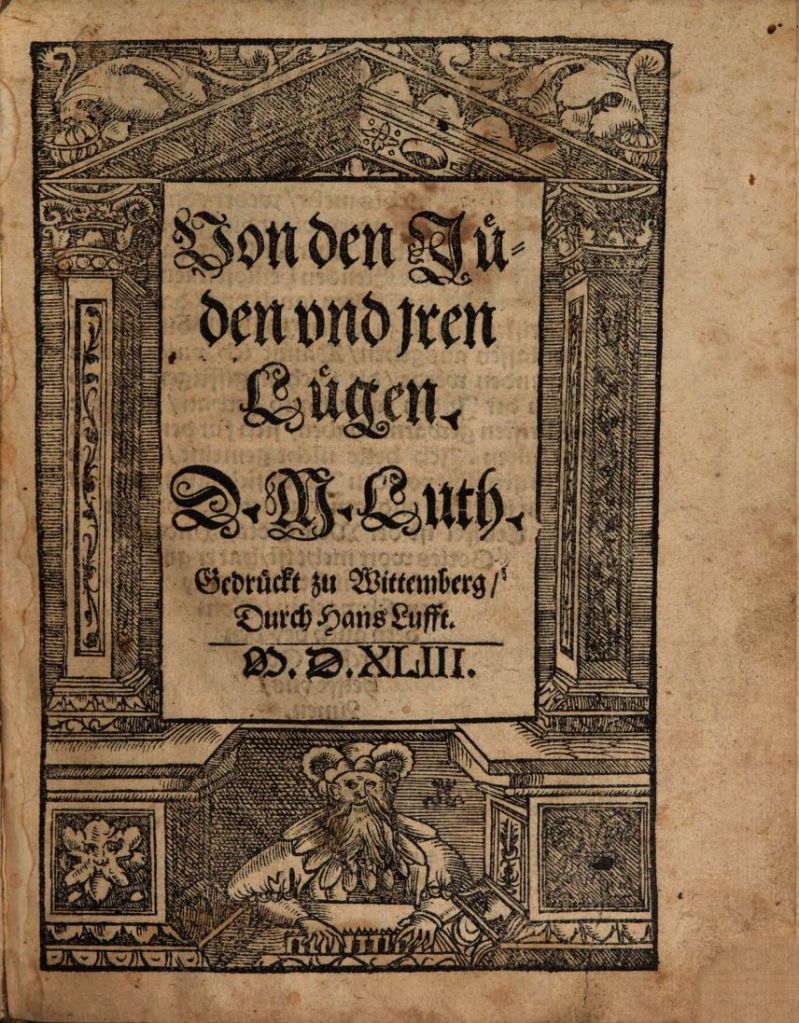
In 1543, Martin Luther, the German reformer for whom the Lutheran tradition is named, published On the Jews and Their Lies, a work whose prescriptions remain horrifying to read. “First,” he wrote, Christian authorities should “set fire to their synagogues or schools and […] bury and cover with dirt whatever will not burn.” He continued by recommending the destruction of Jewish homes, the confiscation of Jewish prayer books and Talmudic writings, prohibitions against rabbinic teaching, restrictions on travel, the seizure of property, forced labor, and expulsion. Luther presented these measures as acts undertaken in defense of Christianity and, inconceivably, in honor of Christ.[1]
How does a Christian theologian reach the point of recommending the destruction of Jewish worship, homes, books, and livelihoods? Luther’s fury was exceptional in its severity, but it did not emerge in a theological vacuum. For centuries, influential Christian teachers had argued that the Jewish people lost the covenant, forfeited the favor of God, and survived in dispersion as evidence of divine rejection.
In the second century, the Christian apologist Justin Martyr identified Christians as “the true spiritual Israel” and the genuine descendants of Abraham, Isaac, and Jacob.[2] A century later, Cyprian, bishop of Carthage, explained that the Jewish people “had departed from God, and had lost God’s favour,” while Christians had “succeeded to their place.”[3] Origen of Alexandria, one of the early Church’s most influential biblical scholars and theologians, wrote that after the coming of Jesus, “the Jews were altogether abandoned,” with no indication that the presence of God remained among them.[4] The celebrated preacher John Chrysostom, who later became archbishop of Constantinople, carried the argument into open contempt, describing the synagogue as “a den of robbers and a lodging for wild beasts” and then declaring that when God forsakes a people, their place of worship becomes “the dwelling of demons.”[5]
These writers did not merely believe that Gentiles had been welcomed into the promises given through Israel. They believed that the Church had acquired Israel’s identity after the Jewish people lost it. Jewish displacement became the evidence of Christian election, while Jewish suffering could be interpreted as the continuing judgment of God. Within that theological world, contempt acquired a religious explanation.
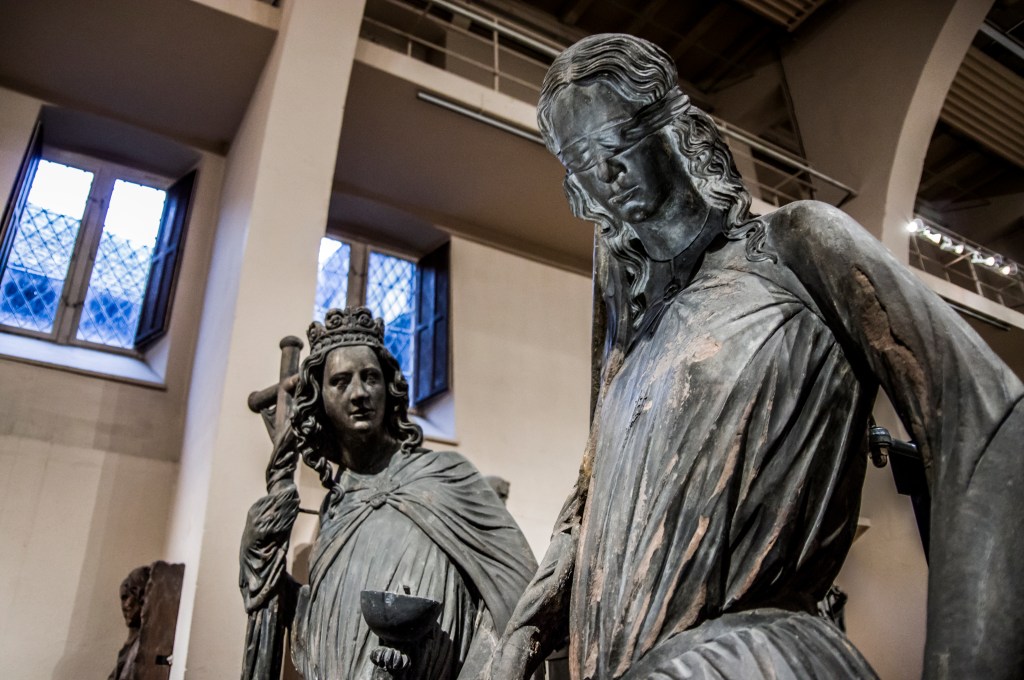
The language has become gentler in most contemporary Christian theology, although the underlying question remains unsettled. G. K. Beale, a contemporary Reformed theologian and New Testament scholar, describes the predominantly Gentile Church as “the continuation of true Israel” and concludes that “the church is not merely like Israel but actually Israel.”[6] Dutch Reformed theologian and New Testament scholar Herman Ridderbos similarly argues that the “Israel of God” in Galatians 6:16 refers neither to national Israel nor specifically to believing Jews, but “to all the believers as the new Israel.”[7] These scholars do not speak about Jewish people with Luther’s hatred, and intellectual honesty requires us to preserve that distinction. Their formulations nevertheless continue a theological claim with ancient roots: the Church is now identified as the “true” or “new” Israel. Their wider conclusions about ethnic Israel may differ, but the transfer of Israel’s identity to the Church remains.
The question is therefore larger than terminology. Christians may reject the phrase replacement theology while still teaching that the Church has become the new or true Israel, that Israel’s particular promises have been absorbed into the Church, and that the Jewish people possess no continuing covenant identity. The doctrine can survive after its ugliest language has been repudiated.
Paul’s argument in Romans 11 gives Gentile Christians a different way to understand their place within the covenant story. He begins with a direct question: “Has God rejected his people?” His answer is equally direct: “By no means” (Romans 11:1, ESV). Israel’s hardening is partial. A remnant remains. The Jewish people are still beloved because of the patriarchs, and the gifts and calling of God are irrevocable.
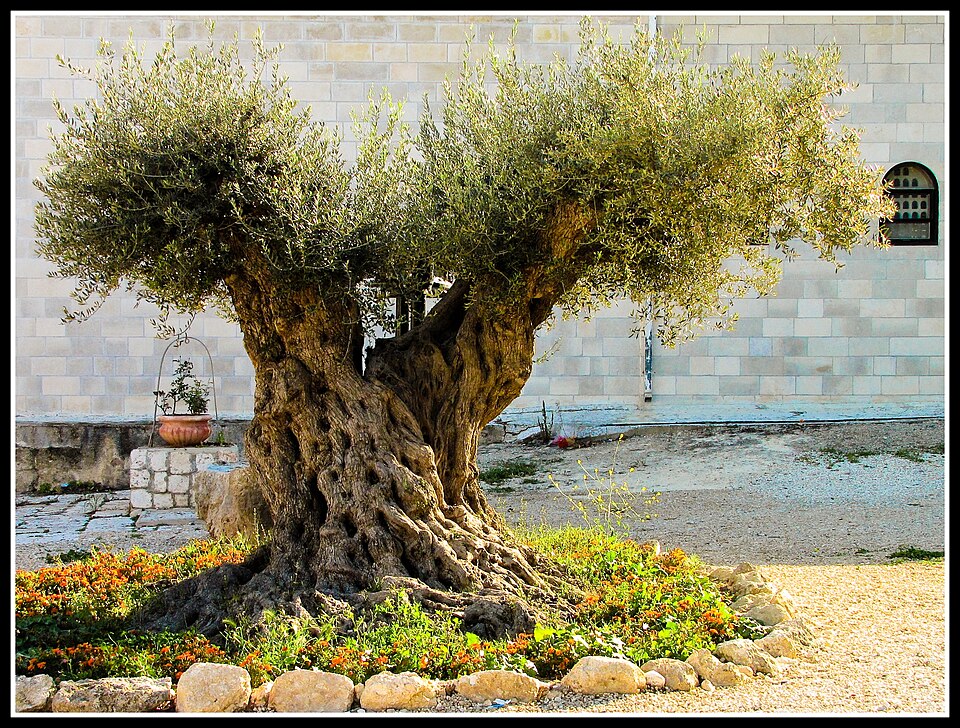
Paul then describes a cultivated olive tree whose root is already holy and alive. Some natural branches have been broken off through unbelief, while others remain. Gentile believers enter this history as wild branches grafted among them, nourished by a root they did not establish. Jewish people who turn to Christ are not grafted into a foreign tree belonging to Gentiles; they are restored to “their own olive tree” (Romans 11:24, ESV).
Paul knows what conclusion Gentile believers may be tempted to draw from their inclusion, so he interrupts it before it can become a theology of possession: “Do not be arrogant toward the branches. If you are, remember it is not you who support the root, but the root that supports you” (Romans 11:18, ESV).
Paul’s warning tells Gentile Christians how to understand our place in God’s plan. Through Israel’s Messiah, we have been welcomed into the covenant blessings promised to Abraham and now belong to God’s household as fellow citizens and heirs. Sharing these promises does not mean that the Jewish people have lost them. In Paul’s image, the Gentile branches belong fully to the tree, while the root continues to support them.
What might change if Gentile Christians understood themselves as recipients of mercy rather than successors to a rejected people? We might read the New Testament more faithfully within its Jewish world, recognize more quickly when Christian teaching encourages contempt toward Jewish people, and recover the humility Paul requires of everyone nourished by a history we did not begin. We might also gain greater confidence in the character of the God whose promises are not undone by human failure and whose faithfulness to Israel stands behind His mercy toward the nations.
The Bible study following this post, God Has Not Rejected His People, is part of One Story. One Covenant. One Messiah., a larger project I am developing to help Christians recover the covenantal unity of Scripture and understand the place of Israel, the nations, and Jesus the Messiah within its unfolding story. This adult study traces the covenant promises through Abraham, Israel’s exile, Jeremiah’s promise of restoration, and Paul’s olive tree in Romans 11.
Its central claim is simple: Gentile believers share Israel’s covenant blessings through Israel’s Messiah; our inclusion gives us no warrant for Israel’s displacement. I am sharing the complete leader’s guide below.
NOTES:
- Martin Luther, On the Jews and Their Lies, trans. Martin H. Bertram, in Luther’s Works, vol. 47 (Philadelphia: Fortress Press, 1971), 268–293.
- Justin Martyr, Dialogue with Trypho 11.
- Cyprian of Carthage, Three Books of Testimonies Against the Jews, preface to Book I.
- Origen, Against Celsus 2.8.
- John Chrysostom, First Homily Against the Jews, 3.
- G. K. Beale, A New Testament Biblical Theology: The Unfolding of the Old Testament in the New (Grand Rapids: Baker Academic, 2011), 652–655.
- Herman N. Ridderbos, The Epistle of Paul to the Churches of Galatia (Grand Rapids: Eerdmans, 1953), 227.
God Has Not Rejected His People
An Adult Bible Study Leader’s Guide
This study invites Christians to investigate where Gentile believers stand within Israel’s covenant story and to consider why supersessionism distorts both Christian doctrine and Christian attitudes toward Jewish people. Supersessionism, commonly called replacement theology, teaches that with Christ’s coming, the Church became the “new” or “true” Israel and inherited the covenant promises originally given to the Jewish people. Under this view, Israel no longer retains a distinct, continuing place within God’s redemptive purposes.
Rather than beginning with a lecture about that doctrine, participants will examine the biblical evidence, make connections across several texts, test their initial assumptions, and develop conclusions through guided discussion. The leader’s task is to keep the inquiry anchored in Scripture, ask questions that expose the reasoning behind an interpretation, and provide historical or theological information only when participants need it to continue the investigation.
Primary text: Romans 11:1–32
Central inquiry: How does Scripture describe the relationship of Gentile believers to Israel’s covenant story?
Central claim: Gentile believers share Israel’s covenant blessings through Israel’s Messiah; their inclusion gives no warrant for Israel’s displacement.
Learning Outcomes
By the end of the study, participants should be able to:
- Define Gentile, covenant, Second Temple period, and supersessionism in plain language.
- Trace the relationship among God’s promise to Abraham, Israel’s experience of judgment and restoration, and the inclusion of the nations through Christ.
- Interpret the principal elements of Paul’s olive-tree image in Romans 11.
- Distinguish between Gentile participation in Israel’s covenant blessings and the displacement of Israel.
- Support their conclusions with specific language from the biblical texts.
- Consider how Paul’s warning against arrogance should shape Christian teaching and conduct toward Jewish people.
Leader Preparation
Read Genesis 12:1–3; 15:1–18; 17:1–14; Leviticus 26:40–45; Jeremiah 31:31–37; 34:18–20; Daniel 7:9–14; 12:1–3; Mark 1:14–15; Luke 22:14–20; Romans 9:1–5; 11:1–32; and Ephesians 2:11–19. Mark the words and phrases that identify the recipients of promises, describe what Gentiles lacked, and establish the relationships among the root, natural branches, and wild branches.
Prepare copies of the passages or ask participants to bring Bibles. If possible, provide paper or index cards for the opening reflection and closing response. A board or large sheet of paper will be useful for recording observations without evaluating them prematurely.
Before teaching, consider how you would respond if participants use Israel, the Church, Jewish people, and the modern State of Israel as though the terms were interchangeable. The study concerns biblical covenant theology, and Christian conduct toward Jewish people. Political questions may arise, but they are not required to establish Paul’s argument.
The Leader’s Role
This study uses constructivist and Socratic methods, but it does not treat every interpretation as equally supported. Scripture remains the authority, and claims should be tested against the language and logic of the texts.
During discussion:
- Ask participants what in the text led them to a conclusion.
- Invite competing interpretations to identify their evidence.
- Allow several responses before explaining or correcting.
- Distinguish an unfamiliar idea from an unsupported idea.
- Use follow-up questions to uncover assumptions rather than correcting every imprecise statement immediately.
- Supply essential context when participants cannot reasonably derive it from the passage itself.
- Summarize only after the group has had an opportunity to observe, compare, and reason.
Useful Socratic prompts include:
- What words in the passage led you to that conclusion?
- What distinction is the writer making?
- What would have to be true for that interpretation to work?
- Does another verse support or complicate that reading?
- Who is included in this statement, and who is being addressed?
- What question does this passage answer? What question does it leave open?
- Has anyone reached a different conclusion from the same evidence?
Study Guide
1. Initial Assumptions: What Do We Think Scripture Claims?
Give participants a card or sheet of paper. Ask them to respond privately to these two prompts:
- Complete this sentence: “The relationship between Israel and the Church is _____.”
- When Christians call the Church the “new Israel,” what do you think they mean?
Explain that no one will be required to defend an initial response. Participants will return to their answers after examining the biblical texts. Invite two or three people to share if they wish, and record key words on the board without marking them right or wrong.
Ask:
- Which terms in our answers would need to be defined before we could evaluate the claims?
- What biblical evidence would we need in order to decide whether fulfillment, inclusion, and replacement mean the same thing?
Introduce the central inquiry:
How does Scripture describe the relationship of Gentile believers to Israel’s covenant story?
Tell participants that the group will follow this question through several passages before attempting an answer.
2. Where Do Gentiles Enter the Story?
Define only the term needed to begin: a Gentile is a person from the nations outside Israel. A Gentile Christian is therefore a non-Jewish follower of Jesus.
Read Ephesians 2:11–19 aloud. Ask participants to listen for words describing Gentiles before Christ, through Christ, and after being brought near. Draw three columns on the board with those headings and invite participants to supply phrases directly from the text.
Use these questions to guide the discussion:
- What did Gentiles lack according to verses 11–12?
- To what, or to whom, have they been brought near?
- Which words describe their new status in verses 13 and 19?
- What words and images does Paul use to describe the change in the Gentiles’ status? Which conclusions do those terms support, and which conclusions would require additional evidence?
- What can we say confidently from this passage? What can we not yet conclude?
If participants move immediately to a complete doctrine of Israel and the Church, ask them to separate observation from inference: “Which part of that answer comes directly from Ephesians 2, and which part will require evidence from another passage?”
Conclude this section by asking the group to formulate one provisional sentence beginning, “According to Ephesians 2, Gentile believers….” Record the sentence and tell participants they may revise it later.
3. What Does God Promise Abraham?
Read Genesis 12:1–3. In pairs, ask participants to identify:
- What God asks Abraham to do.
- What God promises to Abraham and his descendants.
- What God promises concerning the nations.
Bring the group together and ask:
- Is the blessing of the nations separate from Abraham’s story, or does it come through that story?
- What relationship does the passage establish between particular promises to Abraham and God’s wider purpose for the nations?
- If the nations receive blessing through Abraham, what does that suggest about the direction of the movement?
Read Genesis 15:9–18. Ask participants first to describe only what they see in the scene. Then provide the context they cannot be expected to infer: Jeremiah 34:18–20 indicates that passing between divided animals enacted a solemn oath and invoked the fate of the animals upon an oath-breaker.
Ask:
- What is Abraham doing while the signs of God’s presence pass between the pieces?
- Who passes through the pieces?
- What does that detail suggest about the guarantee behind the promise?
- How might this scene affect the way later readers understand the endurance of God’s covenant commitment?
Clarify after the discussion that Abraham and his descendants do receive commands, including circumcision as the covenant sign. Their obligations are real. In Genesis 15, God alone passes between the pieces, locating the covenant oath in His own action and faithfulness.
Invite participants to add a second sentence to the board: “The promise to Abraham depends ultimately upon….”
4. What Remains After Covenant Judgment?
Divide participants into two groups. Give one group Leviticus 26:40–45 and the other Jeremiah 31:27–37. Ask each group to determine how its passage holds together human unfaithfulness, divine judgment, covenant memory, and future hope.
Give both groups the same questions:
- What failure or judgment does the passage acknowledge?
- What does God remember or promise?
- Who is named as the recipient of that promise?
- What reason does the passage give for trusting it?
- Does judgment end the covenant relationship in this text? Explain your answer from the passage.
Have each group report its observations. Allow the other group to ask one question before you add context.
After the reports, explain briefly that the Torah is God’s instruction for Israel’s worship and communal life. Israel’s rebellion brought the covenant judgments Moses had described: Jerusalem fell, the temple was destroyed, and many people were carried into exile. Leviticus nevertheless anticipates covenant remembrance in exile. Jeremiah announces the new covenant while Babylon threatens Jerusalem, naming the house of Israel and the house of Judah as its recipients and connecting Israel’s continuing existence with the created order.
Ask the whole group:
- What continuity do you see between judgment and restoration?
- Why does Jeremiah appeal to the sun, moon, stars, and the measuring of creation?
- What problem would arise if “new covenant” meant that God had abandoned the people named in Jeremiah’s promise?
- How should these texts shape our understanding of divine faithfulness before we reach Romans 11?
5. The World of Jesus and Paul
Tell participants that some historical information is necessary because readers cannot recover an entire historical period from the selected verses alone.
Explain that the Second Temple period lasted from the rebuilding of the Jerusalem temple around 516 BC until Rome destroyed it in AD 70. Jewish people had returned from Babylon, but foreign powers continued to rule the land, many Jews remained scattered, and no Davidic king occupied the throne. Hopes for restoration therefore remained alive. Jewish hopes during this period were diverse, although some influential apocalyptic texts anticipated God’s decisive action within history: the defeat of evil, the vindication of His people, resurrection, judgment, and the establishment of His kingdom. Daniel’s visions significantly shaped this world of expectation.
Read Mark 1:14–15 and Luke 22:14–20. Ask participants to identify the language Jesus uses for the kingdom and covenant before relating those words to the historical context.
Then ask:
- How might this context affect the way a first-century Jewish audience heard Jesus announce the kingdom of God?
- When Jesus speaks of His blood as the blood of the new covenant, which earlier promise would His words recall?
- What happens to our reading of the New Testament if we detach words such as Messiah, kingdom, covenant, and restoration from Israel’s Scriptures?
Draw the contextual bridge together: Jesus announces and inaugurates Israel’s promised restoration as Israel’s Messiah, and the blessing of the nations occurs through Him.
6. Paul and the Cultivated Olive Tree
Read Romans 11:1–2, 11–24, and 28–29 in sections, using several readers. Ask participants to mark every reference to Israel or the Jewish people, the Gentiles, the root, the natural branches, and the wild branches.
Allow participants time to reread the passage quietly. Then begin the Socratic discussion with Paul’s own question:
“Has God rejected his people?” (Romans 11:1, ESV)
Follow the group’s answers with questions that require textual evidence:
- How does Paul answer in verses 1–2?
- What qualifications does Paul place upon Israel’s present condition?
- What words suggest that Israel’s hardening is neither total nor final?
- According to verses 28–29, what remains true because of the patriarchs?
Move to the olive-tree image. Draw a simple tree on the board, but allow participants to label it.
- What is present before the wild branches enter the image?
- Which branches are called natural, and which are called wild?
- Are all the natural branches removed?
- Where are the wild branches placed?
- Who or what nourishes them?
- What future remains possible for the broken natural branches?
- Why does Paul call the tree “their own olive tree” in verse 24?
- Which feature of the image most directly challenges the idea that Gentile believers now own the tree?
Read verse 18 again: “Do not be arrogant toward the branches. If you are, remember it is not you who support the root, but the root that supports you” (Romans 11:18, ESV).
Ask:
- What mistaken belief would make Gentile arrogance seem reasonable?
- What does Paul ask Gentile believers to remember in order to correct that belief?
- How can Gentile believers belong fully to the tree while remaining dependent upon a root they did not establish?
- Does Paul describe Gentile inclusion as participation, replacement, or something else? Defend the word you choose.
- How does this passage confirm, revise, or complicate the provisional statement we wrote from Ephesians 2?
As facilitator, resist the impulse to resolve the image too quickly. If participants disagree about the identity of the root or tree, ask which conclusions remain clear regardless of that disagreement: the tree precedes the wild branches; some natural branches remain; wild branches are grafted among them; removed natural branches may be restored to their own tree; and Gentiles are explicitly forbidden to boast.
7. Inclusion or Displacement?
Write these two claims on the board:
- Through Israel’s Messiah, Gentile believers become fellow citizens and heirs who share Israel’s covenant blessings.
- Because Gentile believers have been included, Israel no longer retains a continuing place within God’s covenant purposes.
Ask participants to test each claim against the passages studied:
- Which texts support the first claim?
- What additional evidence would be required to establish the second?
- Does any passage examined in this study make Gentile inclusion depend upon Israel’s displacement?
- Which details in Romans 11 resist that conclusion?
- Why is the distinction between sharing an inheritance and dispossessing its first recipients important?
Now introduce the formal term: supersessionism, commonly called replacement theology, is the belief that the Church’s inclusion in God’s promises entails Israel’s displacement as a people within God’s covenant purposes.
Ask participants to evaluate the definition:
- Which word in this definition carries the central theological problem?
- How does Paul’s olive-tree image challenge displacement?
- What spiritual posture does supersessionism permit that Paul explicitly forbids?
Explain after the discussion that a person may inherit supersessionist ideas without consciously hating Jewish people. Across Christian history, however, the belief that God rejected the Jewish people gave contempt a theological explanation. Jewish survival could be described as stubbornness, while Jewish suffering could be interpreted as deserved judgment. The Jewish historian Jules Isaac called this inheritance the “teaching of contempt.” Paul confronts its spiritual source when he commands Gentile believers not to be arrogant toward the branches.
Ask one final Socratic question:
If the Church’s confidence rests upon the faithfulness of God, what is at stake when Christians claim that God has revoked His calling of Israel?
8. Reconsideration and Response
Ask participants to return to the sentences they wrote at the beginning. Give them time to revise or expand their response in light of the texts.
Then ask them to complete this exit statement:
Gentile believers enter Israel’s covenant story by __________. Their inclusion means __________, but it does not mean __________.
Invite two or three participants to share. Listen for an understanding that Gentile believers are brought near through Israel’s Messiah, share fully in covenant blessing, and have no warrant to declare Israel displaced.
Close with this synthesis:
The New Testament presents Jesus as Israel’s Messiah and the fulfillment of Israel’s covenantal hope. Through Him, the nations receive Abraham’s blessing and become fellow citizens in God’s household. Romans 11 places Gentile Christians inside Israel’s continuing story as branches sustained by a root they did not plant. God’s faithfulness to Israel and His mercy toward the nations belong to the same redemptive purpose.
Close in prayer. Thank God for the mercy that brings the nations near. Ask for humility toward Jewish people, wisdom to read Scripture within its Jewish context, and confidence in the God who keeps His word.
Optional Questions for Continued Discussion
- What changes when Christians remember that Jesus is Israel’s Messiah and that the New Testament was written within a Jewish world?
- What does Genesis 15 teach about the basis of God’s promise to Abraham?
- How do exile and restoration function together in Israel’s covenant history?
- Why does Paul describe Gentile believers as grafted branches rather than as a newly planted tree?
- What is the difference between sharing Israel’s covenant blessings and displacing Israel?
- Why does the reliability of God’s promises to Israel affect Christian confidence in God’s faithfulness?
- How can Christians oppose antisemitism while speaking clearly about the universal need for salvation through Jesus?
Key Terms
Gentile: A person from the nations outside Israel; a Gentile Christian is a non-Jewish follower of Jesus.
Covenant: A binding relationship established through solemn commitment, often involving promises, obligations, signs, or oaths.
Torah: The Hebrew word for instruction, commonly used for the first five books of Scripture and the covenant teaching given to Israel.
Second Temple period: The period from the rebuilding of the Jerusalem temple around 516 BC to its destruction by Rome in AD 70.
Jewish apocalyptic thought: Jewish expectation that God would disclose and enact His rule by judging evil, vindicating His people, and bringing history toward its promised fulfillment.
Supersessionism: The belief that the Church’s inclusion in God’s promises entails Israel’s displacement as a people within God’s covenant purposes.
Primary Scripture for Further Study
Genesis 12:1–3; 15:1–18; 17:1–21; Leviticus 26:40–45; Deuteronomy 4:25–31; 2 Samuel 7:12–16; Psalm 89:30–37; Jeremiah 31:27–37; Ezekiel 36:22–28; Romans 9:1–5; 11:1–32; 15:8–9; Galatians 3:6–29; Ephesians 2:11–3:6; Hebrews 6:13–18; 8:6–13.
Leader Guidance for Difficult Questions
Does this study teach that Jewish people are saved apart from Jesus?
No. Paul teaches one means of salvation for Jews and Gentiles through faith in Jesus Christ. Israel’s continuing place in God’s purposes concerns the faithfulness of God’s calling and Paul’s expectation of mercy, not a separate path of salvation.
To keep the exchange Socratic, ask first: “Which question is Romans 11 answering, and which question are we now asking?” Then distinguish Israel’s continuing place in God’s purposes from the means by which any person receives salvation.
Does the Church share Israel’s promises?
Yes. The New Testament calls Gentile believers fellow heirs and participants in the promise through Christ. The study distinguishes full participation from the claim that the Church’s inclusion requires Israel’s displacement.
Ask: “What language does Paul use for Gentile participation in Ephesians 2 and Romans 11? Does that language require the removal of Israel from the covenant story?”
Does this settle every question about the modern State of Israel?
No. The study addresses biblical covenant theology and Christian conduct toward Jewish people. Specific political policies require their own historical, ethical, and prudential evaluation.
Ask participants to identify where the discussion has shifted from a biblical-theological claim to a modern political claim. This helps preserve important distinctions without dismissing the question.
Do Christians interpret Romans 11 in exactly the same way?
No. Interpreters differ over the precise meaning and timing of “all Israel will be saved.” Paul’s warning to Gentile believers, his continuing distinction between Israel and the Gentiles, and his declaration that God’s gifts and calling are irrevocable remain central to the chapter’s argument.
Ask: “Which conclusions depend upon one interpretation of ‘all Israel,’ and which conclusions are established elsewhere in the chapter?”
What if someone says that the Church is Israel because all believers are one in Christ?
Invite the participant to identify the passage behind the claim, then place that text beside Romans 11. Ask: “Does spiritual unity require every covenantal distinction to disappear? How does Paul speak of unity while continuing to distinguish Gentiles from Israel and natural branches from wild branches?” The purpose is not to evade unity in Christ, but to ask whether unity necessarily entails the transfer or erasure of Israel’s identity.
What if the discussion becomes combative?
Return the group to the shared method: identify the claim, locate the relevant text, distinguish observation from inference, and ask what the passage establishes. Remind participants that the class is examining a doctrine, not assigning motives or moral character to everyone who has inherited it.



 Jill Szoo Wilson
Leave a comment