
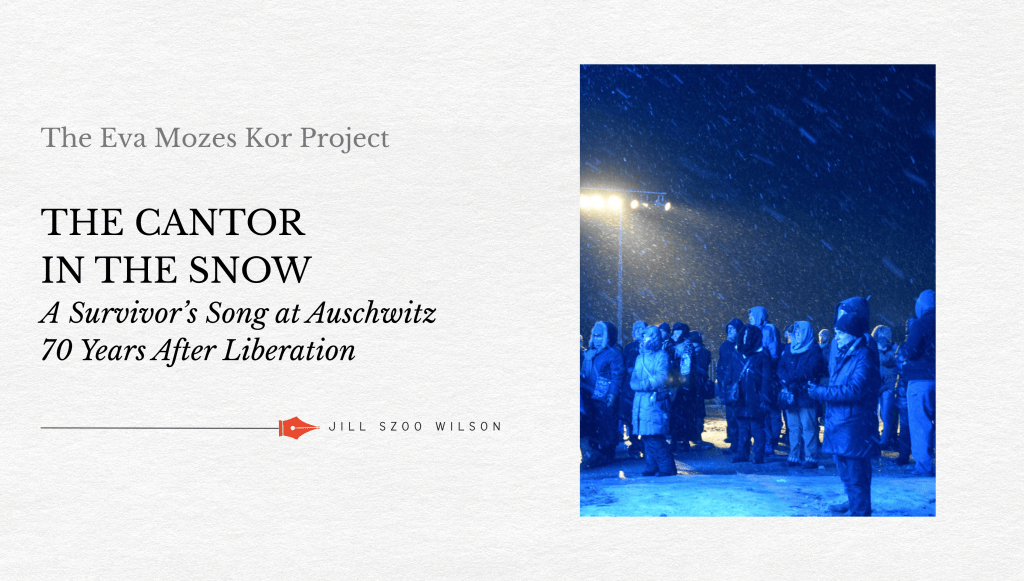
A survivor’s song, a sister’s blessing, and the breakfast table I shared at the 70th anniversary of the liberation of Auschwitz
By Jill Szoo Wilson
Writer | Theatre Artist | Educator
Most of the world knows the town of Oświęcim by its German name. I didn’t realize, until my first trip to Poland, that Auschwitz was also the German name of a living Polish town, where people buy groceries and walk their children to school, a short distance from one of the most studied crime scenes in human history. In January 2015, I returned to that town for the 70th anniversary of the liberation of Auschwitz, and I spent the week eating breakfast, lunch, and dinner at a table I remember with fondness and gratitude.
I had traveled to Poland before, always in June or July. This was the only time I came in winter. When the plane descended toward Kraków, about an hour’s drive from Oświęcim, it was snowing, and it had evidently been snowing for days. Everything below was covered in soft white. It was beautiful in the way beauty sometimes reaches so deeply into you that it almost feels like nostalgia, a mixture of comfort and longing for something that is missing.
I was technically traveling alone, though the flight from Germany had turned into something like a reunion. Seated around me were people I had met on earlier trips, all bound for the anniversary: Danny Spungen, a Rotarian who holds one of the largest private collections of Holocaust artifacts in the world; Michael Wörle, whose grandfather was the Nazi scientist Otmar von Verschuer; and Rainer Höss, whose grandfather, Rudolf Höss, was the commandant of Auschwitz. I remember looking around the cabin as we neared the runway and wondering how, exactly, my life had arrived at this particular row of seats.
At the airport, a man of about seventy held a sign that read Szoo, my maiden name. Poles and Hungarians are the only people who have ever pronounced it correctly on the first try, and it remains one of the small pleasures of traveling there. He drove me through snowy countryside, past livestock and towering trees and villages whose names I would never learn, until the familiar landmarks began to appear. As often happens when I approach Auschwitz, the past began to seep into the present. It is one thing to study history from a distance. It is quite another to feel your boots sink into the mud of a place where history happened.
The Table
I stayed at the Center for Dialogue and Prayer, a short walk from Auschwitz I and about two miles from Birkenau. Father Manfred Deselaers, a German priest who has devoted decades to the work of memory and reconciliation, serves there, and the Center exists to offer shelter, education, and some measure of healing to people who come to the camps. I did not know, until I arrived, that the Center would also be hosting survivors and their families who had come for the anniversary. That week, I could not leave my room without walking into living history.
Meals were served family style in a modest dining room, and at every one of them, at least four languages moved around the table: Polish, German, Romanian, and a great deal of broken English. Those of us who spoke bits and pieces of more than one language translated for the others, and somehow, between us, some of the most extraordinary stories I have ever heard made their way from one end of the table to the other. The group I sat with the first night became a kind of small community. We found one another at every meal after that, so a story begun over breakfast could be picked up again at lunch.
One morning, I looked around that table and took inventory. Two survivors of Auschwitz. Their grandchildren. And Michael, whose grandfather had been Josef Mengele’s mentor, directing racial research in Berlin connected to the experiments Mengele performed on twins like Eva and her sister, Miriam. We were passing bread to one another.
I have never fully known what to do with that image, except to keep it.
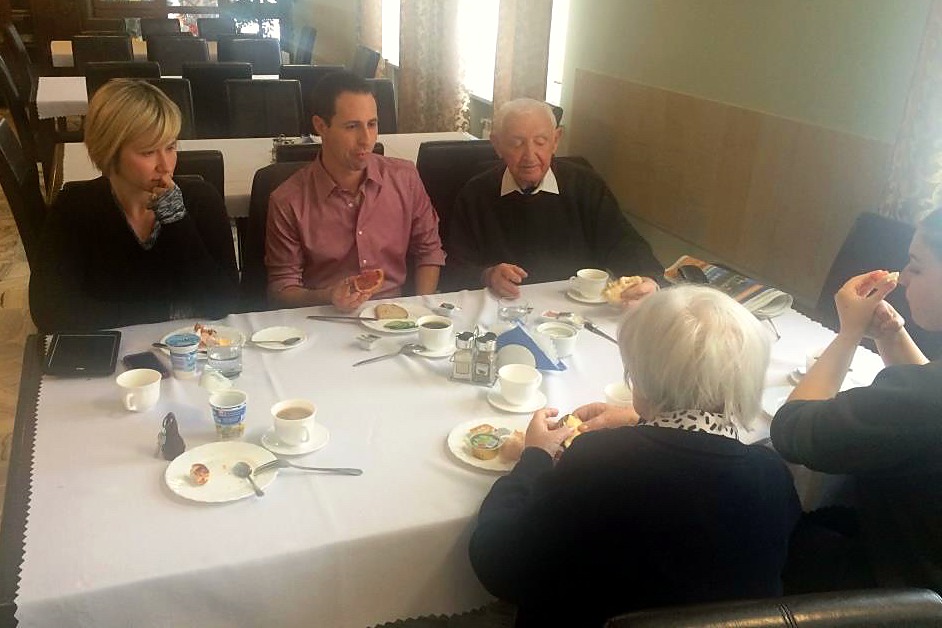
Sister Mary O’Sullivan was an Irish Sister of Mercy who served at the Center. She came and went each morning, greeting everyone warmly, and would sit with a cup of coffee or a small portion of eggs and fruit and mostly listen. There was a stillness about her, and a deep peace, but it was never passive. You could see her actively giving herself to whoever happened to be sitting across from her.
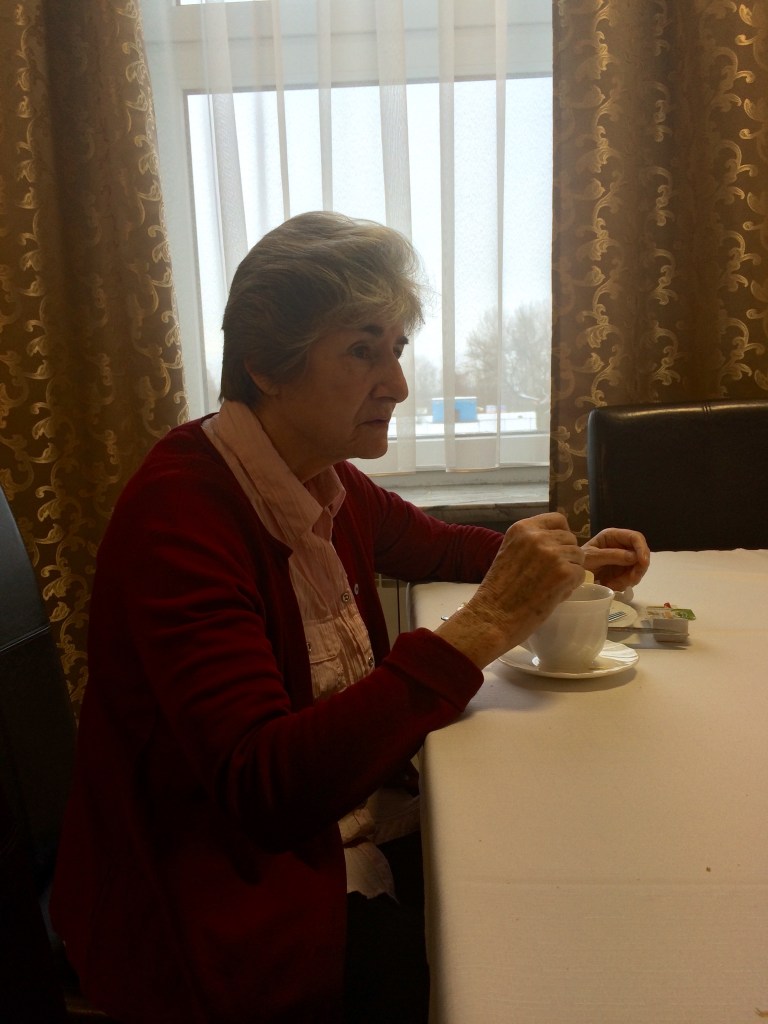
One morning I was at the table early, before the others. Sister Mary came and sat across from me and asked about my work with Eva. She listened the way she listened to everyone: completely. Then she said, “You take care of others well. You think of them. You have the heart of a servant. But be sure to also take care of your own heart.”
I wasn’t sure what she was seeing. But the sentence gripped me, and it has never quite let go. Even now, I can’t think of her without tears.
The Cantor
One of my tablemates was David Wisnia, and I liked him immediately. He was charming, with an optimism that lived in his eyes. They smiled even when his stories turned sad, as if he had spent a lifetime noticing not only what the camp tried to destroy but every attempt the human spirit made to survive it, even in the darkest moments. His grandson, Avi, sat beside him all week. You could see how close they were, how happy they were simply to be in each other’s company. David told his stories as a man looking back on a life well lived, with a name that would go on through his family and through the stories themselves. He almost always began with joy.
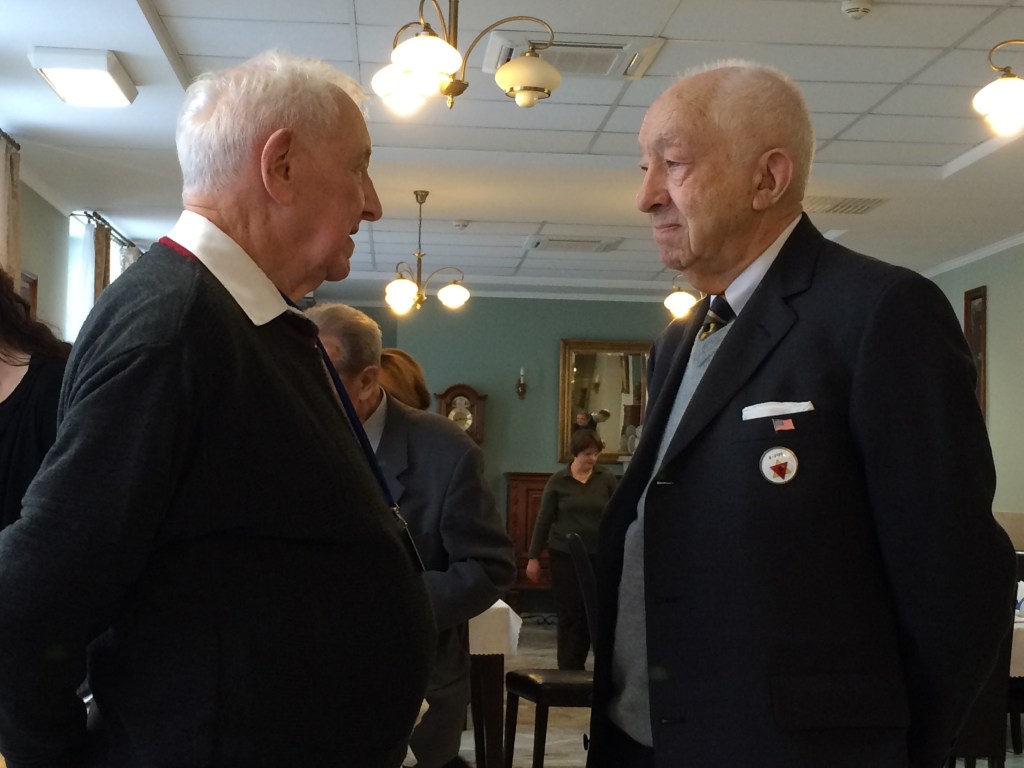
The first story I heard was his escape. In December 1944, he was moved from Auschwitz to Dachau, and in the chaos of the war’s final months, he was marched out with the other prisoners. Somewhere along the way, he struck an SS guard with a shovel and ran. He hid in a barn. Then he heard tanks on the road and ran toward them, certain they were Soviet. They were American: the 101st Airborne. The soldiers took him in, gave him a uniform, nicknamed him “Little Davey,” and put him to work as an interpreter. In the last days of the war, the boy who had been a prisoner of the Reich fought against it.
I felt as if I were sitting in a movie theater. He paced it beautifully: the pauses, the turn, the moment the tanks came into view. It occurred to me that over many years and many tellings, he had learned how to tell that story well. As a theatre artist, I found that wonderful. A story told that well is a story that will be carried.
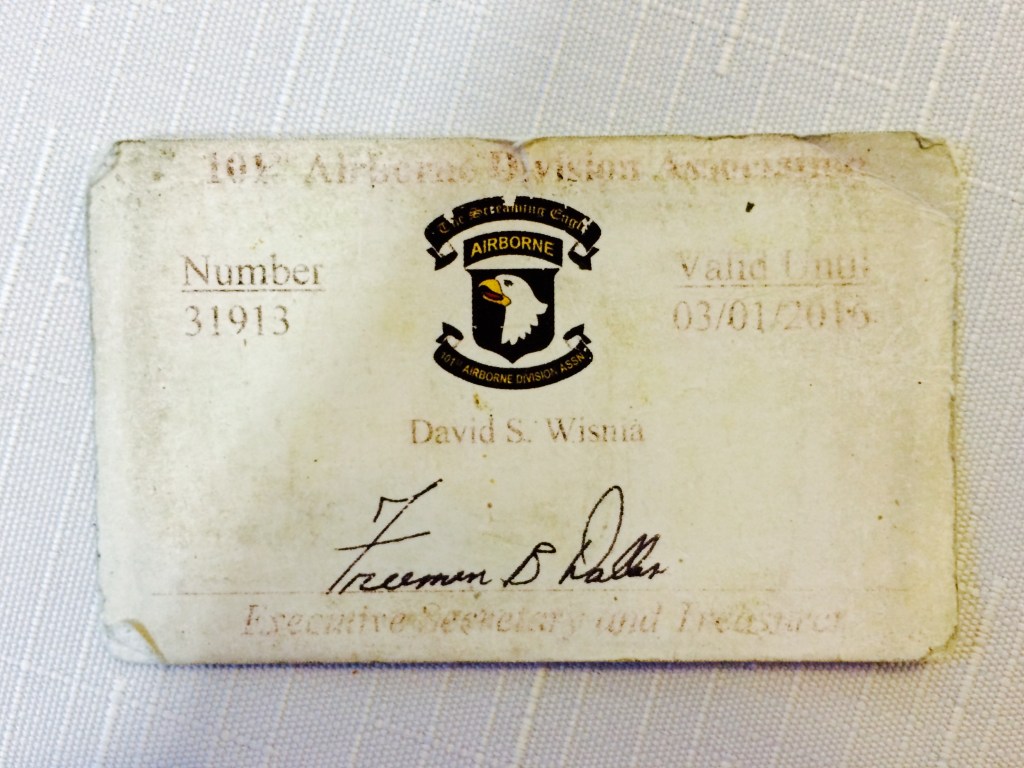
The rest came in pieces over the week, between breakfast and dinner. He had grown up in Warsaw in a family that loved music. His father adored opera, and as a boy David sang in synagogues, in theaters, and on Polish radio, training to become a cantor. Then the war came. His parents and his younger brother, Dov, were murdered. His older brother, Moshe, disappeared and was never heard from again.
David was sixteen when he arrived at Auschwitz-Birkenau. His first job was to walk the electrified fence, collect the bodies of prisoners who had thrown themselves against the wire, load them into a wheelbarrow, and push them to the crematorium. Then someone heard him sing. Fellow prisoners asked for songs first, and before long the SS were ordering him to sing at their gatherings. A voice that had been trained for prayer became, in that place, a reason to keep him alive. It brought him extra food and a new job in the camp’s so-called Sauna, disinfecting the clothing of new arrivals.
I learned only later that there had been love in Auschwitz, too. David met a young woman named Helen Spitzer, known as Zippi, who worked in the camp’s administration. They met in secret when they could, at enormous risk, and promised to find each other in Warsaw after the war. They didn’t. In 2016, more than seventy years later, David knocked on the door of her apartment in Manhattan, and she told him she had quietly kept his name off the transport lists, more than once.
After the war, David came to the United States, sold encyclopedias for a while, and then spent more than fifty years as a cantor, leading congregations in Pennsylvania and New Jersey in prayer and song.
That week, his voice filled our table, too. Alina, another survivor, had come with her granddaughter, Ewa. Between courses, the two survivors compared their numbers and their years in the camps, and then, more than once, David and Alina simply broke into song. “Bei Mir Bist Du Schoen” rose over the coffee cups and the bread, a swing tune from the 1930s sung by two people who had survived Auschwitz, while their grandchildren smiled. Watching them, I felt like a framed photograph on a wall, peering into a past I had never known.
In the Snow
On the evening of the ceremony, as darkness settled over the camp, the survivors and their families gathered in a large heated tent at the entrance to Birkenau. The rest of us stood outside, in the middle of the camp, watching on an enormous screen while the sound echoed off the brick barracks, the tall pines, and the concrete ruins of the gas chambers. Then David stepped to the podium and chanted El Maleh Rachamim, the Jewish memorial prayer for the souls of the dead.
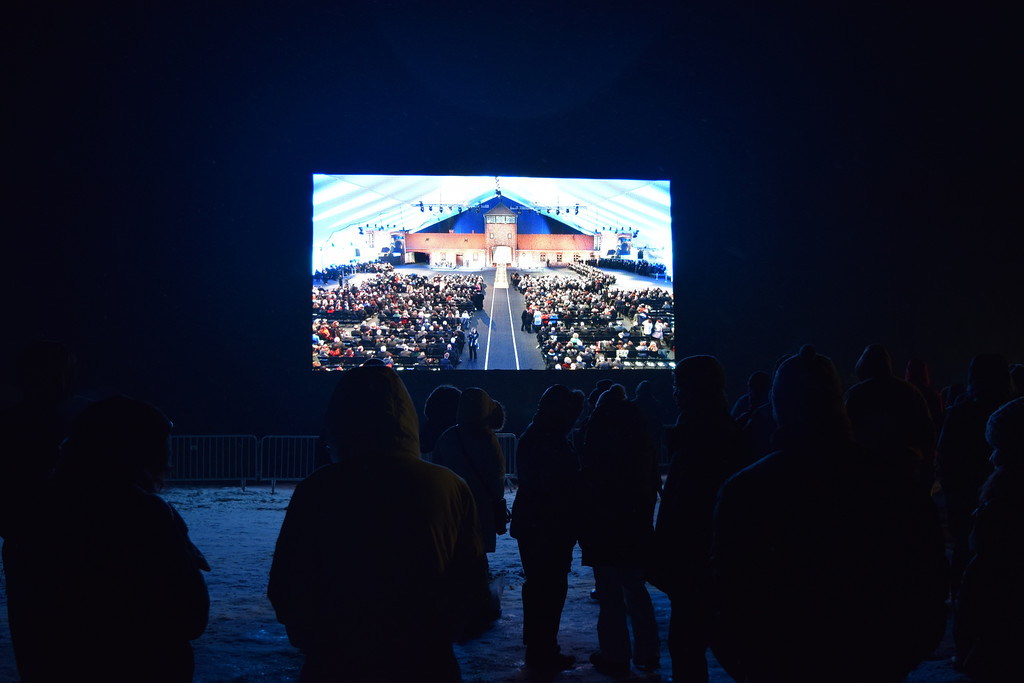
I stood in the falling snow, unable to feel my fingers or my toes. As David sang, I thought of the boy who had once pushed a wheelbarrow along that fence.
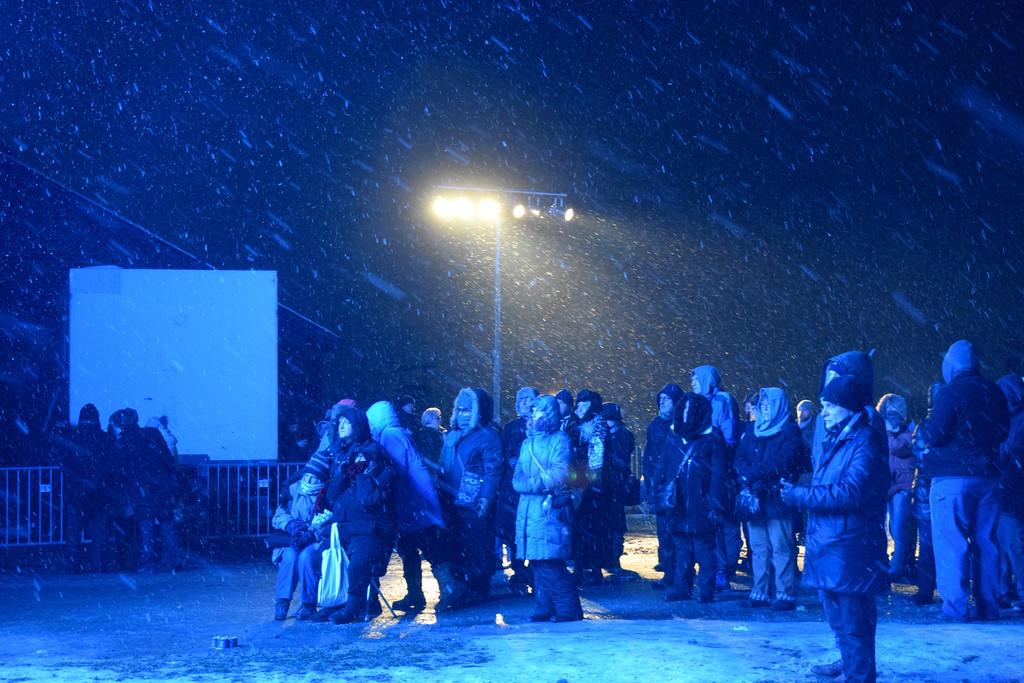
The SS had once ordered David to sing at their gatherings. Seventy years later, he stood at Birkenau and offered a prayer for the dead, his voice carrying across the camp as the snow fell around us. Once, singing had helped keep him alive. Now he had returned to give it freely. Nothing is ever just one thing.
Room for More
Over years of travel, interviews, and study, I began to see how differently survivors carried catastrophe into the years that followed. Trauma shaped every life in ways an outsider could scarcely measure. What struck me about Eva and David was the room they continued to make for other things: children and grandchildren, friendship, work, music, and laughter. Their histories included unimaginable suffering, but their lives had become so much larger than the places where they suffered.
Neither of them pretended Auschwitz was anything other than what it was. Eva spent decades insisting on the full truth of what Mengele did to her and to Miriam. David spent decades singing in synagogues and telling students exactly what he had carried in that wheelbarrow. But neither of them allowed the camp to have the last word on who they were.
Eva taught me a distinction I have returned to more times than I can count. Forgiveness, she believed, is something you do for yourself. It requires nothing from the person who harmed you: not an apology, not repentance, not even their awareness. It is a one-way street. Reconciliation is different. Reconciliation requires two people willing to sit at the same table, tell the truth about what happened, and rebuild trust slowly, in safety. Forgiveness can happen alone. Reconciliation never can.
I thought about that distinction often that week, watching the grandchildren of victims and the grandchildren of perpetrators finish each other’s stories over soup. None of them was responsible for what their grandparents had done or suffered. All of them had chosen to come to the same table anyway.
The Witnesses
The book of Hebrews describes a “great cloud of witnesses” surrounding those who follow God, the men and women of faith whose stories remain available to us as instruction and encouragement. I don’t imagine them sitting in the stands, literally watching. But I understand what it means to carry people with you.
I carry Eva’s insistence that the worst thing that happens to us does not get to decide who we become. I carry David’s voice in the snow. I carry Sister Mary’s reminder to take care of my own heart. And I carry a breakfast table in Oświęcim, where bread passed from hand to hand in four languages, a short walk from the gate.
David died on June 15, 2021, at the age of ninety-four. Eva died two years earlier, in Kraków, on one of the journeys she made every year to bring people to Auschwitz. Sister Mary died in Dublin in January 2023. I never saw her again, but when I heard, I felt the loss. The world had lost another beautiful thing. I still hear David singing. I still hear Eva laughing at her own terrible jokes. They are part of the cloud of witnesses I carry now, and I am grateful, every day, to have known them and to have sat at that table.
Sources
David Wisnia
- “Cantor, survivor David Wisnia dies at 94,” Jewish Exponent, June 2021: birth in Sochaczew, family, singing at Auschwitz, Dachau, the 101st Airborne, cantorial career, memoir, death at 94.
- David Wisnia obituary, Philadelphia Inquirer, June 18, 2021: brothers Dov and Moshe, songs composed in the camp, “Little Davey” and the 506th, death on June 15, 2021.
- “Lovers in Auschwitz, reunited 72 years later,” Irish Times (from the Washington Post): the corpse unit, the Sauna, Helen “Zippi” Spitzer, the escape from the death march, the 2016 reunion, “110 percent American.”
- “Cantor commemorates camp liberation,” New Jersey Jewish News, 2015: David chanting El Maleh Rachamim at the January 27, 2015, ceremony.
- David Wisnia, One Voice, Two Lives: From Auschwitz Prisoner to 101st Airborne Trooper (2015).
Eva Mozes Kor
- “Holocaust survivor and forgiveness advocate Eva Mozes Kor dies at 85,” CBS News, July 4, 2019: her death in Kraków during the CANDLES Museum’s annual trip to Poland.
Otmar von Verschuer
- “Science in the Lecture Hall,” Harnack House, Max Planck Society: Verschuer’s direction of the Kaiser Wilhelm Institute for Anthropology in Berlin-Dahlem, his former doctoral student Josef Mengele, and the institute’s samples from Auschwitz.
- “Mengele’s human experiments at Auschwitz-Birkenau,” Documentation and Cultural Centre of German Sinti and Roma: Mengele’s experiments on twins and the remains he sent to Verschuer’s institute.
The Center for Dialogue and Prayer
- “About Us,” Centre for Dialogue and Prayer in Oświęcim: the Centre’s founding, mission and location, and Father Manfred Deselaers, who has worked there since 1996.
- Education, Centre for Dialogue and Prayer in Oświęcim: its programs of education, prayer and reconciliation.
Sister Mary O’Sullivan, RSM
- Mary O’Sullivan, “Experiences of Hospitality at the Centre for Dialogue and Prayer in Oswiecim/Auschwitz,” Congregation of the Sisters of Mercy, March 6, 2015: her own account of the same week, including David, his grandson Avi, survivor Alina and her granddaughter Ewa, the singing at their table, and El Maleh Rahamim at the commemoration.
- “Sister Mary O’Sullivan RSM (24.05.1947–21.01.2023),” Centre for Dialogue and Prayer in Oświęcim: her service at the Centre from 2009 to 2020 and her death in Dublin.
- “Sr. Mary O’Sullivan RSM has completed her ministry at CDiM,” Polish Council of Christians and Jews, 2020: her years of service and her 2015 recognition as a “Person of Reconciliation.”
Personal recollection
- The author’s experiences at the 70th anniversary of the liberation of Auschwitz, January 2015, including conversations with David Wisnia, Sister Mary, and fellow guests at the Center for Dialogue and Prayer.


Leave a Reply